BC Ferries Hybrid Fleet Renewal Enhances Connectivity

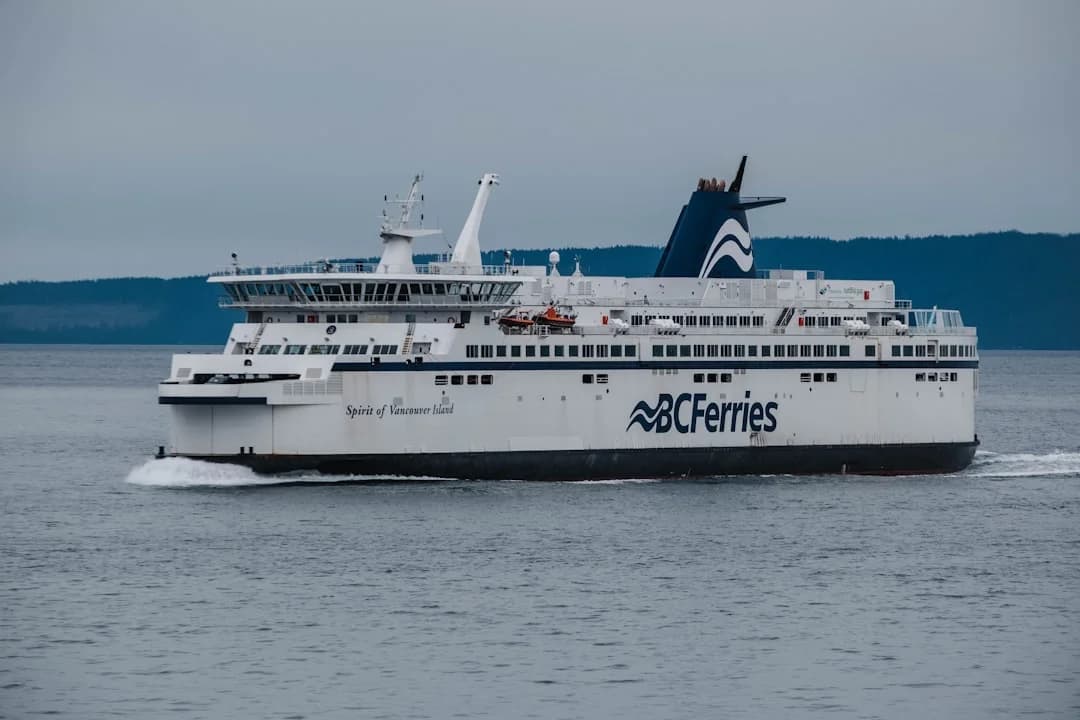
Photo by Raymond Wong on Unsplash
BC Ferries is advancing its hybrid-electric fleet renewal with a rapid cadence designed to reshape coastal travel in British Columbia. The operator announced a multi-year program to expand and electrify its fleet, anchored by ongoing Island Class developments and the procurement of four New Major Vessels. The milestone push aims to increase capacity, improve reliability, and slash emissions across the province’s coastal routes. This is not merely a fleet upgrade; it’s a strategic shift toward cleaner energy, standardized operations, and a more resilient network for communities that rely on ferries for daily travel, work, and emergency connectivity. Six battery-electric hybrid Island Class ferries are already in service, with four more under construction that will be capable of operating on 100% electric power, once shore-based charging infrastructure is in place. (bcferries.com)
BC Ferries also disclosed a broader deployment timeline supported by public funding and strategic partnerships. The latest framework shows four additional Island Class vessels arriving in 2026, with the remaining two following by early 2027, and all four entering service by 2027. In parallel, the organization is progressing with four New Major Vessels (NMVs) that are projected to enter service between 2029 and 2031, reinforcing a long-term fleet renewal plan that seeks to modernize the fleet while maintaining service stability on busy routes. These moves are underpinned by financing arrangements and shore-side electrification plans designed to enable battery-electric operation across the network. (bcferries.com)
The context for this renewal is clear: BC Ferries is transforming a large, complex coastal system into a more standardized, energy-efficient operation that can adapt to evolving demand. The Island Class program remains central to that transformation, with the six in-service ships and four under construction representing the most expansive single-class expansion in BC Ferries’ history. The vessel program is explicitly linked to planned shore-side charging upgrades and grid collaborations that will enable full battery-electric operation where grid and terminal infrastructure allow. The company notes that this shift aligns with broader environmental and economic goals in the region, including reducing underwater noise and greenhouse gas emissions while supporting local jobs and investment. (bcferries.com)
What Happened
Island Class expansion and service readiness
- The Island Class now comprises the largest share of BC Ferries’ fleet expansion, with six vessels already in operation and four more under construction. When all four of the new Island Class ferries enter service, the Island Class will total 10 ships, making it the largest BC Ferries vessel class. This milestone is targeted for early 2027, and the project is designed to deliver a 71% increase in vehicle capacity and a 135% increase in passenger capacity compared with 2019 benchmarks. (bcferries.com)
- The four new Island Class vessels under construction are named to reflect partnerships with local First Nations communities, highlighting a broader commitment to community engagement and cultural recognition. The first two vessels, Island xwsaĺux̌ul and Island sarlequun, are forecast to start service by summer 2026 on Route 19 (Nanaimo Harbour – Gabriola Island). The other two, Island Gw a’y a m and Island K’asa, are expected to begin service by early 2027 on Route 23 (Campbell River – Quadra Island). These vessels will be nearly identical to the existing Island Class but will include enhancements to enable full battery-electric operation when shore charging is available. (bcferries.com)
New Major Vessels procurement
- BC Ferries has advanced plans to replace aging vessels with four New Major Vessels (NMVs), designed with diesel-battery hybrid propulsion and future-ready electrification capabilities. A strategic procurement process culminated in selecting China Merchants Industry Weihai Shipyards (CMI Weihai) to build the NMVs, with anticipated service entry across 2029–2031. The NMVs are also projected to carry significantly higher passenger and vehicle capacities to meet anticipated growth. The project is sized to include on-site construction oversight and long-term economic benefits for British Columbia. (bcferries.com)
- BC Ferries and its leadership emphasized the NMVs’ role in stabilizing operations as aging vessels are retired and refits are staged. In statements from BC Ferries’ CEO, Nicolas Jimenez, the choice of CMI Weihai was framed around safety, reliability, and value for customers, underscoring the disciplined approach to fleet renewal. “CMI Weihai is a global leader in passenger ferry construction, and shipbuilding more broadly,” Jimenez noted, highlighting a bid that balanced technical capability with on-time delivery and cost considerations. (bcferries.com)
Financing and shore-power infrastructure
- The Canada Infrastructure Bank (CIB) has played a pivotal role in financing BC Ferries’ electrification and fleet renewal. In 2025, the CIB announced a second investment as part of a broader package to fund island-class electrification and the supporting charging infrastructure. The initial $75 million investment is earmarked for four hybrid battery-electric Island Class ferries and the necessary shore-side charging, with completion targeted for 2027. The financing structure also includes a potential additional loan tranche to support NMVs and related electrification upgrades, illustrating a coordinated approach to fleet modernization. These arrangements are intended to reduce service disruptions, lower operating costs, and enable a path toward more electric-powered operations as the grid and charging networks expand. (bcferries.com)
- In a separate but connected development, BC Ferries’ leadership highlighted the plan to invest in shore-side charging infrastructure at key terminals to enable battery-electric operation during idle times and improving overall energy efficiency. The company’s terminal upgrade program is explicitly tied to the new vessel designs, acknowledging that electrification is not just about the ships but the entire ecosystem that supports reliable, low-emission service. The Island Class project’s energy strategy benefits from partnerships with BC Hydro to install charging infrastructure, with a concrete milestone stating the Nanaimo Harbour terminal electrification is on track for summer 2026 and remaining terminals by early 2027. (bcferries.com)
Why It Matters
Capacity, reliability, and service equity
- The Island Class expansion is positioned to deliver meaningful improvements in travel reliability and capacity across major routes. The Island Class projects are designed to support two-ship service on certain corridors and to redeploy existing vessels to optimize schedule reliability. On specific routes, the upgrades translate to tangible capacity increases: Crofton–Vesuvius Bay sees a 20% capacity boost and higher frequency; Quadra–Cortes gains about 70% capacity with a larger vessel deployment; and a dedicated relief vessel helps maintain service continuity during refits. These changes represent a substantial shift in how coastal British Columbia communities experience ferry service, moving toward more predictable schedules and reduced wait times. (bcferries.com)
- The Island Class and NMV programs are also about resilience. The ability to rotate ships across routes during maintenance and the introduction of standardized vessel classes are intended to streamline maintenance, inventory, and crew training. A more standardized fleet reduces operational complexity and expands BC Ferries’ capacity to respond to disruptions quickly, which is especially important on high-traffic corridors that connect major hubs like Vancouver, Nanaimo, and Campbell River. (bcferries.com)
Environmental and community benefits
- A core driver of the renewal is environmental stewardship. The Island Class ferries use battery-hybrid propulsion to reduce emissions, and the ships are designed to operate on renewable electric power once shore-based charging infrastructure is available. The environment gains are complemented by a broader strategy to minimize underwater noise and to enable the transition toward full electrification as clean energy infrastructure becomes accessible. A stated objective is to reduce emissions substantially while preserving the coastal ecosystem. The project’s environmental impact is underscored by estimates showing the anticipated CO2 reductions and the broader CleanBC alignment. (bcferries.com)
- The community dimension of the renewal is evident in how vessel naming and cultural partnerships are integrated into the Island Class program. The four forthcoming Island Class vessels feature names gifted by local First Nations, and the program includes extensive engagement with Indigenous communities, reflecting a holistic approach to modernization that respects local cultures and contributes to regional economic activity. The naming and engagement efforts are reflected in the Island Class project pages and ongoing updates. (bcferries.com)
Economic and regional development implications
- The fleet renewal program is widely positioned as an engine of regional economic activity. The NMVs are expected to contribute billions in economic output over their lifespans, with substantial wage and GDP impacts, and the broader electrification strategy will require investments in port infrastructure, maintenance capacity, and local supply chains. BC Ferries has highlighted the economic ripple effects, including payrolls, job-years, and related investment in downstream industries. The CIB-backed financing frames the renewal as a regional growth initiative as much as a transportation project. (bcferries.com)
- The island-class electrification is also connected to grid modernization and energy policy in British Columbia. The partnership with BC Hydro for shore-side charging infrastructure underscores the cross-sector collaboration necessary to realize the environmental and reliability benefits of the fleet renewal. The Nanaimo Harbour terminal electrification milestone illustrates how transportation and energy policy intersect in practical, on-the-ground projects. (bcferries.com)
What’s Next
Delivery schedule and next milestones (2026–2031)
- The Island Class expansion is advancing toward full service within the next two years, with the first two of the four new Island Class vessels expected to arrive in British Columbia in spring 2026 and the remaining two in fall 2026, followed by full operation by 2027. By that time, BC Ferries will have 10 Island Class ships operational, reinforcing the system’s capacity and reliability on busy routes. This milestone is part of a broader journey that also includes standardization goals to reduce complexity and improve maintenance efficiency across the fleet. (bcferries.com)
- The NMV program is on a longer horizon, with four NMVs expected to enter service between 2029 and 2031. The NMVs’ larger capacity and diesel-battery hybrid propulsion are designed to provide a significant uplift in throughput while enabling a path to future full electrification as the grid and fuel infrastructure evolve. The delivery window aligns with the plan to modernize the core routes that carry the bulk of BC Ferries’ traffic and to support the system during refits and fleet rotations. (bcferries.com)
Infrastructure and policy context
- The shore-side charging infrastructure is a crucial enabler for battery-electric operation across the Island Class and NMV fleets. The infrastructure build-out, funded in part by the CIB and government partners, is designed to be scalable and adaptable as more vessels come online and as energy policy evolves in British Columbia. The Nanaimo Harbour electrification target for summer 2026 and the other terminals’ electrification by early 2027 provide a concrete timeline for grid readiness and port readiness that stakeholders can track as the program unfolds. (bcferries.com)
- The strategic financing package, including the CIB’s second investment and potential NMV financing, helps BC Ferries manage capex while maintaining service levels and minimizing fare pressures. While the full economics are complex, BC Ferries has framed these arrangements as essential to maintaining service quality and affordability for customers in a context of aging fleets and increasing demand. The CIB’s loan structure is intended to support both vessel procurement and electrification infrastructure, which are interconnected aspects of the fleet renewal. (bcferries.com)
What to watch for and how to stay informed
- Monitor the Island Class delivery milestones and terminal electrification progress. The Island Class project pages and BC Ferries’ news releases provide periodic updates on vessel arrivals, keel and launch milestones, and terminal upgrades. For example, the Island Class page tracks vessel names, service start dates, and route assignments, while updates like the May 2025 milestone week provide a concrete sense of progress on the construction timeline. (bcferries.com)
- Track NMV procurement and service entry windows. BC Ferries’ NMV program is a multi-year effort with a distinct delivery trajectory, including the 2024–2025 procurement decisions, the CM Weihai construction contract, and the 2029–2031 in-service target. The NMV program’s milestones will shape capacity and schedule reliability on major Vancouver Island–Vancouver routes, as well as the broader system’s resilience. (bcferries.com)
- Watch for environmental and economic impact metrics. The renewal program includes explicit environmental goals, including emissions reductions and noise considerations, and it is tied to broader policy objectives such as CleanBC and regional economic development. The economic impact studies and the environmental performance expectations associated with NMVs and Island Class vessels will be key indicators for policymakers, stakeholders, and the public. (bcferries.com)
Closing
BC Ferries’ hybrid-electric fleet renewal represents a carefully staged, data-informed approach to modernizing one of the world’s largest ferry networks. The combination of Island Class expansion, New Major Vessel procurement, and targeted shore-side electrification positions the system to deliver more frequent sailings, higher capacity, and lower emissions across coastal British Columbia. The recent funding announcements and procurement decisions—paired with timelines that extend into the early 2030s—underscore a long-term plan that weighs reliability, environmental stewardship, and economic impact in equal measure. For readers who rely on BC Ferries for daily travel, work, or tourism, the outlook is for a more capable, cleaner, and more predictable coastal network in the years ahead. As BC Ferries continues to publish milestones and progress updates, observers can expect a steady stream of data-driven insights about how this hybrid-electric fleet renewal translates into real-world improvements for residents and visitors alike. Readers can stay updated through BC Ferries’ fleet renewal pages and the company’s latest-news feed, where milestones, routes, and terminal upgrades are regularly documented. (bcferries.com)