BC Rental Protection Fund milestone: 2,000 homes reached

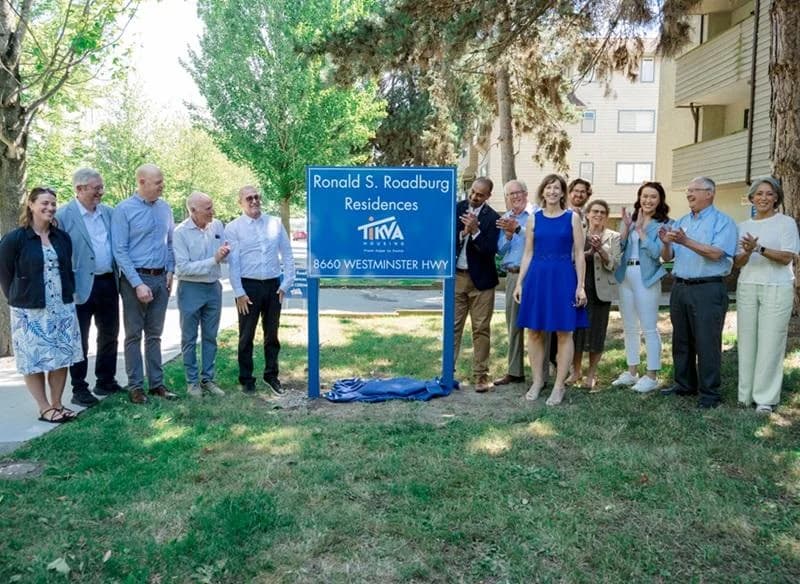
In a landmark update for British Columbia’s housing policy, the BC government and the Rental Protection Fund (RPF) announced a significant benchmark on February 2, 2026: the fund has surpassed its original goal and now protects well over 2,000 affordable rental homes across the province. In a news release issued from Vancouver, officials confirmed that the fund has protected nearly 2,200 homes to date, exceeding the three-year target set when the fund launched in 2023 with a $500-million provincial investment. The milestone arrives as non-profit housing partners finalize new acquisitions in Vancouver and White Rock, underscoring the program’s rapid expansion and its potential to stabilize rents for thousands of renters in some of B.C.’s tightest markets. The news also confirms that more than 50 properties are now protected under the program, reaching far beyond its initial footprint and signaling a broader shift toward preserving existing rental stock as a core tool in housing affordability. This milestone matters not only for renters who gain long-term affordability but also for communities watching commercial market pressures, redevelopment cycles, and demographic trends shape local housing futures. (news.gov.bc.ca)
The fund’s administrators emphasize that this achievement is more than a headline—it translates into tangible stability for thousands of households. Since its launch, the Rental Protection Fund has supported acquisitions that keep rents well below market levels and protect residents from displacement. The February 2 update places the number of protected homes at nearly 2,200, with the portfolio now spanning 50 properties across British Columbia, from Fort St. John to Vancouver, including a notable recent push into East Vancouver and White Rock. The official statements highlight that the fund’s impact is measured not just in units secured, but in the people and communities those homes shelter for the long term. The fund’s leadership notes that this is just the beginning, with continued acquisitions planned as capital remains available. Christine Boyle, BC’s Minister of Housing and Municipal Affairs, framed the milestone as a concrete demonstration of the value of protecting homes people already rely on, rather than letting them drift toward market-based uncertainty. She emphasized that secure homes reduce the risk of eviction and abrupt rent increases, a policy outcome that has broad social and economic benefits for residents and neighborhoods alike. “By surpassing our goal so quickly, we’re showing that protecting homes people already rely on is one of the most impactful tools we have to ease pressures on renters,” Boyle stated. (news.gov.bc.ca)
Section 1: What Happened
Milestone Reached
A new chapter for the Rental Protection Fund
The February 2, 2026 government release confirms that the fund has exceeded its original mandate—the goal was to protect 2,000 homes within three years, and the fund has achieved that target in less than three years, with ongoing protection as funds remain available. In the government’s words, “B.C.’s Rental Protection Fund has surpassed its original goal of protecting 2,000 rental homes in less than three years,” with thousands of renters benefiting from the program’s protections. The overall portfolio now protects nearly 2,200 homes and supports more than 4,000 British Columbians, illustrating a rapid scale-up from its 2023 inception. The vitality of this milestone lies in the combination of public funding, non-profit governance, and targeted acquisitions designed to keep rents affordable and tenancies stable. Katie Maslechko, the Fund’s CEO, framed the milestone as a validation of the model: “For long-time renters, acquisitions like these mean being able to breathe a little easier,” she said, underscoring the real-life implications of a stabilized rental market. (news.gov.bc.ca)
Recent Acquisitions
Vancouver and White Rock emerge as new anchors
The latest acquisitions reflect a deliberate strategy to expand in high-demand urban markets while maintaining affordability for long-term residents. In Vancouver, two properties—Chelsea Capri at 520 N. Nanaimo St. and Chelsea Cove at 2280 McGill St.—comprising 20 homes each, were acquired with fund support. These properties sit close to one another, offering rents that are substantially below local market averages. Chelsea Capri and Chelsea Cove provide not only long-term stability but also continuity of community programs and resident supports associated with New Chelsea Society, which leads these efforts in the city’s Grandview-Woodlands neighborhood. The acquisitions include units with rents that are more than 50% below area market averages, with studio units historically priced around $1,100 and larger units up to about $1,500 for a two-bedroom. Ahmed Omran, CEO of New Chelsea Society, described the acquisition as a meaningful extension of the organization’s community programs and supports, emphasizing the goal of extending stability and services to residents who have lived in these buildings for years. The Vancouver entries, together with White Rock’s cluster, illustrate the Fund’s multi-jurisdictional reach and its willingness to act quickly to secure affordable housing in dense markets. (news.gov.bc.ca)
White Rock portfolio expands affordability
In White Rock, More Than a Roof Housing Society acquired 37 homes across three properties within 600 meters of one another: Merklin Manor (20 homes), Spring Villa (9 homes), and Montague Place (8 homes). These properties join the Vancouver acquisitions in reinforcing the Fund’s strategy of protecting long-standing communities by purchasing existing rental buildings and preserving their affordability. Rental rates in these White Rock properties are reported as approximately $800 to $1,550 per month, with averages roughly 45% below local market rates, illustrating how the Fund translates capital into tangible rent relief for seniors, workers, and households on tight budgets. Lee-Anne Michayluk, CEO of More Than a Roof Housing Society, highlighted the program’s role in fostering resilient neighborhoods by prioritizing sustainable, affordable housing solutions. This White Rock cluster demonstrates the Fund’s capacity to coordinate multi-site acquisitions that maximize impact within a narrow geographic footprint. (news.gov.bc.ca)
Geographic Reach
A province-spanning footprint with a focus on community stability
The February 2026 release frames the Fund’s footprint as provincial, with property protections confirmed across more than 50 buildings, spanning diverse communities from Fort St. John to Vancouver. The background materials accompanying the release note that the Fund has protected thousands of homes and renters across 52 properties to date, reflecting a deliberate geographic spread that avoids over-concentration in any single market while prioritizing communities with the greatest risk of displacement or disruption. The government materials point to a broader strategy: maintaining affordability in both urban centers and smaller communities, using non-profit housing organizations as the primary vehicle for acquisitions. The portfolio's geographic breadth is paired with a patient, mission-driven approach to investment—prioritizing long-term affordability and tenancy stability over short-term market gains. The backgrounders also reveal that the Fund’s acquisitions have included pre-qualified non-profits, with more than 35 partner organizations actively engaged in acquisitions, illustrating a mature network of partners ready to scale. (news.gov.bc.ca)
Section 2: Why It Matters
Renters’ Stability and Long-Term Affordability
Direct benefits to households
A central takeaway from the milestone is the direct protection it affords to renters. The Fund’s core mechanism—capital contributions to non-profit housing providers—enables the purchase of existing rental buildings and co-ops, thereby stabilizing tenancies and anchoring rents in affordable ranges. Historically, the Fund has reported that rents secured through the program are well below local market rates; in Vancouver properties, rents frequently run well under market averages, with concrete examples showing studios around $1,100 and two-bedroom units near $1,500, depending on property and unit size. In White Rock, typical rents for protected units fall within roughly $800 to $1,550, averaging about 45% below market. These figures illustrate how financial support from the Fund translates into tangible savings for tenants, reducing the risk of displacement in markets where rents can rise rapidly. Christine Boyle, BC’s Housing Minister, has framed this as a core advantage of the program: it “protects people from housing insecurity by investing early, working with non-profit partners and centering affordability.” The combination of price discipline and tenancy protections aligns with broader policy objectives to stabilize, rather than just expand, the rental stock. (news.gov.bc.ca)
Market and Economic Impacts
A data-driven approach to housing policy
Beyond the immediate rent relief, the milestone signals a broader recalibration in how public capital can unlock private and non-profit assets for the public good. The Fund’s architecture—capital contributions to non-profit housing providers to acquire rental buildings—serves as a lever to preserve affordability while leveraging philanthropic and private sector capital. The government’s own documentation notes a track record of substantial leverage: the Fund has supported acquisition activity across dozens of communities, driving a measurable shift in the multi-family rental market. Analysts and housing advocates view the milestone as a practical demonstration of policy design that prioritizes preservation over new construction alone, offering a complementary pathway to increase the province’s stock of affordable rental homes while controlling rents in markets with steep price pressures. The BC government has also underscored that the Fund’s acquisitions have kept rents below market rates with inflation-adjusted adjustments, helping ensure long-term affordability for low-to-moderate-income households. This aligns with the Homes for People action plan’s broader aim to deliver stable, affordable housing while continuing to build new supply. (news.gov.bc.ca)
Policy Context and Public Support
The milestone in a policy arc
The Rental Protection Fund is part of a broader provincial strategy to address housing affordability through targeted interventions that protect tenants and preserve affordable stock. The Fund’s $500 million initial investment was designed to catalyze non-profit and cooperative ownership of existing rental buildings, with the explicit aim of stabilizing rents and reducing displacement risk. As the government notes, the fund’s mandate was to protect 2,000 homes within three years, a target that has already been exceeded, signaling a potentially durable approach to housing stability that could inform future policy choices. The public narrative around the milestone emphasizes a data-driven, outcome-focused approach to housing policy—one that prioritizes measurable results, community resilience, and ongoing collaboration with non-profit providers. The Fund’s leadership emphasizes that acquisitions are strategic and location-aware, with properties selected for proximity to services, transit, and community resources, reinforcing a holistic approach to housing stability that extends beyond bare unit counts. Quotes from government and non-profit leaders underscore the social benefits of secure homes for families, seniors, and workers, and they highlight the shared responsibility of government, fund administrators, and community partners in sustaining momentum. (news.gov.bc.ca)
Section 3: What’s Next
Next Milestones and Timeline
Continuing momentum with funds remaining
With the milestone achieved, the Fund’s leadership has signaled that acquisitions will continue, constrained by the availability of capital but driven by pre-qualified nonprofit partners and a steady pipeline of eligible properties. The February 2026 release notes that the Fund will “continue building on this momentum, multiplying its impact and securing affordable homes in communities across B.C.” as funds remain available. This framing suggests a two-year horizon of ongoing activity, with potential expansions into additional communities and perhaps further diversification of property types, all while maintaining a core focus on preserving affordability in established rental markets. The public communications emphasize a results-oriented trajectory: more properties, more renters protected, and a more resilient housing ecosystem. (news.gov.bc.ca)
Future Partnerships and Funding
An expanding network and sustained investment
The Fund’s background materials indicate a robust ecosystem of partners—more than 35 pre-qualified organizations and a portfolio that has grown to more than 52 properties across BC. This expanding network is a deliberate strategy to decentralize acquisition activity and ensure a broad geographic footprint, including rural and smaller communities. The government pages note that the Fund’s approach leverages capital contributions to help non-profit housing organizations acquire properties, while renewal grants support ongoing building improvements that maintain safety and quality of living for residents. The combination of capital, ongoing support, and a wide partner network is designed to scale the program’s impact in the coming years, with the government’s own data indicating a track record of thousands of residents protected and a portfolio that continues to grow as long as capital remains available. The press materials also highlight that the Fund’s average rents are kept well below market while adjusting to inflation, a policy detail that is central to maintaining long-term affordability as the portfolio expands. (news.gov.bc.ca)
Closing
The BC Rental Protection Fund milestone mirrors a broader trend in which governments, nonprofits, and community housing providers align to preserve existing affordable housing stock in the face of rising market pressures. By surpassing 2,000 protected homes and moving toward 2,200, the Fund demonstrates a concrete, numbers-driven approach to reducing displacement and stabilizing rents in both urban hubs and smaller communities. The announcements underscore that this is not merely a symbolic victory; it is a practical step that translates into real outcomes for renters and neighborhoods—outcomes that can be tracked, reported, and refined over time. For readers following technology- and market-driven trends in housing, the Fund’s model offers a case study in how targeted, well-funded public programs can scale quickly, partner effectively with nonprofits, and deliver measurable social value. As the Province continues to monitor outcomes and refine its approach, the Rental Protection Fund remains a central instrument in BC’s broader housing strategy, with ongoing acquisitions anticipated as funding permits and as partnerships mature. Readers seeking ongoing updates can follow the Fund’s updates and the Province’s housing news feeds for the latest property acquisitions, rent data, and impact analyses. (news.gov.bc.ca)