BC ZEV Act Amendments and Public Charging Expansion 2026

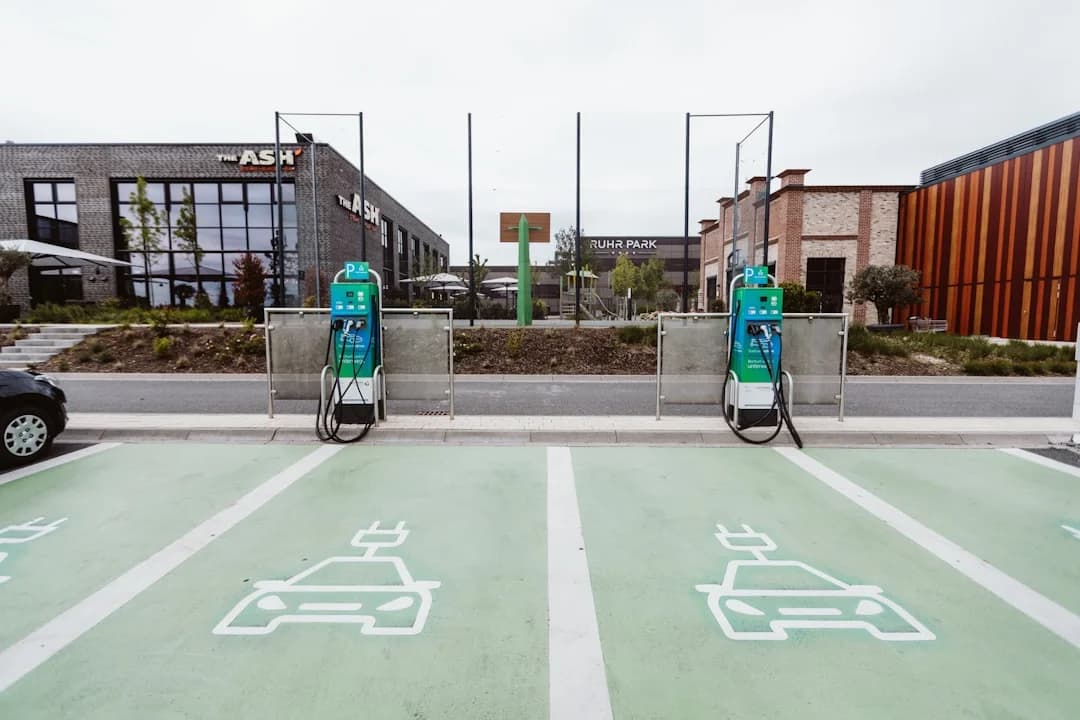
Photo by Compleo Charging on Unsplash
The Government of British Columbia released a landmark update on April 1, 2026, detailing the BC ZEV Act amendments and the province’s public charging expansion for 2026. The announcement positions British Columbia as a front-runner in North American electric-vehicle (EV) adoption while recalibrating targets to align with evolving market conditions and federal strategies. The immediate news is twofold: the ZEV Act will undergo amendments that tighten the path to 2035, while BC will push forward with an ambitious public charging expansion funded through the CleanBC Go Electric program. This combination signals a continued commitment to expanding EV accessibility and reducing greenhouse gas emissions, even as regulatory targets adjust to federal expectations. (news.gov.bc.ca)
The release emphasizes a data-driven trajectory for the coming years. It notes that amendments will reduce the 2035 ZEV sales target from 100% to 75% and remove the explicit prohibition on selling new internal-combustion-engine vehicles after 2035, while shifting the 2026 and 2030 targets to the ZEV regulation to enable greater flexibility. The government frames these changes as a way to provide certainty for automakers, support consumer choice, and maintain progress toward climate goals despite market disruptions and global supply dynamics. The legislative amendments are slated to be completed with regulation updates by fall 2026, maintaining a 26% ZEV sales compliance requirement for 2026 and 2027 while allowing room to adapt for 2028–2030 based on federal standards. (archive.news.gov.bc.ca)
In parallel with the regulatory recalibration, British Columbia is expanding its public charging network. The government confirms funding for 75 new public EV charging projects across communities throughout the province, funded at approximately $19.1 million through the CleanBC Go Electric public charger program. The expansion includes 277 direct-current (DC) fast-charger ports and 51 Level 2 ports, a mix designed to improve long-distance travel and daily commuting alike. More than four dozen communities are anticipated to benefit, including major urban centers like Vancouver and Richmond and key corridor communities such as Revelstoke and Kamloops. This push reflects BC’s intent to reduce charging gaps, improve accessibility, and support a growing fleet of ZEVs. (archive.news.gov.bc.ca)
As context, BC’s charging footprint has been expanding steadily in recent years. By January 1, 2026, the province reported more than 8,800 public charging ports (6,443 Level 2 ports and 2,417 DC fast ports), which represents an 86% increase from 2023. The April 1, 2026 release notes that Go Electric funding has already supported hundreds of charging projects since the program’s inception in 2020, underscoring the long-running effort to build a robust charging network in British Columbia. The BC government highlights that BC remains a leader in charging infrastructure deployment within Canada, a position reinforced by ongoing investments and expansions announced alongside the ZEVA amendments. (archive.news.gov.bc.ca)
This announcement also situates BC’s actions within a broader policy landscape, noting that the amendments align provincial targets with the federal government’s updated ZEV goals and vehicle-emissions standards. The government points to November 2025 updates to the ZEV Regulation that began to reward automakers for expanding ZEV access through incentives such as discounts, financing options, and charging infrastructure supports. The combination of provincial amendments and federal alignment is presented as a pathway to maintain competitiveness for BC automakers and suppliers while ensuring that consumers have meaningful EV choices. (archive.news.gov.bc.ca)
Contextualizing the move, industry stakeholders promptly welcomed the clarity provided by the amendments and the continued investment in charging infrastructure. In the background materials accompanying the release, voices from the Electric Mobility Canada and Clean Energy Canada emphasized affordability, consumer choice, and the importance of reliable charging networks to sustain EV adoption momentum. The background section also includes perspectives from the Canadian Charging Infrastructure Council (CCIC), which highlighted the importance of a stable policy framework to attract investment and ensure a practical transition for homeowners, renters, and businesses. While the quotes are part of a background package, they reflect the industry’s expectation that regulatory clarity and continued funding will help deliver on the province’s CleanBC and broader decarbonization objectives. (archive.news.gov.bc.ca)
What happened in practical terms is straightforward: the BC ZEV Act amendments and public charging expansion 2026 represent a coordinated policy and infrastructure push to accelerate EV adoption, while allowing for regulatory flexibility compatible with federal standards. The specific changes to the ZEVA framework include reducing the 2035 target to 75%, maintaining the prohibition on ICE-only sales after 2035 in a modified form, and shifting 2026 and 2030 targets into the ZEV Regulation for adaptability. In effect, British Columbia is preserving momentum toward electrification with a more flexible set of rules that can better accommodate evolving vehicle technology, supply chain constraints, and cross-border policy shifts. The regulation amendments are expected to be finalized by fall 2026, with enforcement rules adjusted for 2028–2030 based on updated federal emissions standards. (archive.news.gov.bc.ca)
Section 1: What Happened
Policy Changes
- The Province announced amendments to the Zero-Emission Vehicles Act that reduce the 2035 ZEV sales target from 100% to 75%. This change is framed as aligning BC’s goals with the federal government’s updated ZEV policy and emission standards, while preserving consumer access to a broad mix of vehicles and options. The reduction to 75% is designed to maintain a credible path toward electrification without overburdening automakers amid market disruptions. The target adjustment is a central pillar of the BC ZEV Act amendments and public charging expansion 2026. (archive.news.gov.bc.ca)
- The amendments also remove the explicit prohibition on the sale of new internal-combustion-engine vehicles from January 1, 2035, which represents a meaningful shift in the regulatory approach to ICE vehicles and creates space for transitional arrangements and market adaptation. This change is presented as part of a broader recalibration intended to support industry flexibility while continuing to pursue decarbonization goals. (archive.news.gov.bc.ca)
- In addition, BC is shifting the 2026 and 2030 ZEV sales targets to the ZEV Regulation, allowing the provincial framework to respond more nimbly to market conditions and federal policy developments. The shift signals a move away from fixed statutory targets to a dynamic regulatory target that can be updated in response to demand, supply, and technology advances. Amendments to the regulation are anticipated by fall 2026, with 2026–2027 compliance expected to remain at 26% of sales. This approach seeks to balance industry certainty with necessary adaptability. (archive.news.gov.bc.ca)
Funding and Infrastructure
- The provincial government announced a major expansion of the public charging network, funding 75 new public EV charging projects across communities in British Columbia. The program, part of CleanBC Go Electric, represents a significant investment in charging readiness to accompany rising ZEV adoption. The 75-project portfolio is designed to improve charging access in urban centers and along major travel corridors, reducing range anxiety and supporting trip planning for EV drivers. (archive.news.gov.bc.ca)
- The expansion includes 277 DC fast-charger ports and 51 Level 2 ports, totaling 328 new ports. The funding amount for this tranche is $19.1 million, reflecting a targeted approach to deploy a mix of fast and standard charging to meet different user needs, from daily commuters to long-distance travelers. The distribution includes 41 communities across the province, including metropolitan hubs and rural towns. (archive.news.gov.bc.ca)
- The public charging push is complemented by BC Hydro’s ongoing expansion of its network, with a stated target to reach roughly 800 ports by spring 2026. This expansion is part of BC Hydro’s broader EV strategy to provide reliable, accessible charging infrastructure as the province’s EV fleet continues to grow. The BC Hydro update highlights several new charging sites and planned deployments to improve coverage along key routes and in population centers. (bchydro.com)
Timeline and Implementation
- The government underscored that amendments to the ZEV Act will be complemented by regulation updates, with amendments to the regulation expected by fall 2026. The 26% ZEV sales compliance target for 2026 and 2027 will serve as the immediate enforcement framework, with guidance for 2028–2030 to follow once federal plans on fleet emissions standards are clearer. This timeline reflects a cautious but steady approach to scaling electrification while ensuring policy alignment at the federal level. (archive.news.gov.bc.ca)
- The April 1, 2026 release situates these changes within the broader CleanBC policy framework and notes that the amendments build on November 2025 ZEV regulation updates that introduced credits and incentives for automakers to improve EV access. This historical context helps explain how BC is aiming to preserve momentum even as market conditions evolve. (archive.news.gov.bc.ca)
Section 2: Why It Matters
Market and Industry Impacts
- The BC ZEV Act amendments and public charging expansion 2026 are designed to preserve a stable policy environment that supports automaker investment while allowing for flexibility in response to supply chain dynamics, market demand, and international policy shifts. By maintaining a 26% compliance requirement for 2026–2027 and aligning targets with federal plans, British Columbia aims to avoid abrupt policy shocks that could deter buyers or suppliers while still pushing the market toward higher EV adoption. The impact on automakers will depend on how quickly the market absorbs new models, how pricing evolves, and how incentives from federal and provincial programs interact with local regulations. The BC release emphasizes the need for policy that supports consumer choice and affordability, which remains a central theme of the BC ZEV Act amendments and public charging expansion 2026. (archive.news.gov.bc.ca)
- From a consumer standpoint, the amendments—especially the retention of a defined ZEV target with a framework that can adapt to market conditions—are intended to maintain confidence in the availability of EVs and charging options. The government’s messaging centers on increasing consumer choice, reducing emissions, and expanding charging infrastructure to make EV ownership more convenient. Industry stakeholders have responded with cautious optimism, noting that clear signals about the policy path help manufacturers and dealers plan product mix, pricing, and financing options in a more predictable environment. The background section highlights the role of policy signals in enabling industry investment and consumer access. (archive.news.gov.bc.ca)
Public Charging Expansion Effect
- The 75 new charging projects, including 277 DC fast ports and 51 Level 2 ports, signify a substantial increase in public charging capacity across BC. This expansion is particularly relevant for long-distance travel corridors and high-traffic urban centers, where fast-charging access reduces downtime for EV drivers and helps normalize EV use for households without private charging. The anticipated 328 new ports across 75 sites will complement existing networks and support a growing number of ZEVs on BC roads. The program’s geographic dispersion—41 communities in total—aims to reduce regional charging gaps and improve accessibility, which is a key factor in sustaining EV adoption momentum. (archive.news.gov.bc.ca)
- BC Hydro’s network expansion also contributes to the overall charging ecosystem, with plans to reach 800 ports by spring 2026 and the deployment of higher-capacity chargers (including 400 kW units) to accelerate charging speeds. This component of the broader charging strategy supports both everyday commuting and longer trips, reducing charging friction for current and prospective EV owners. The BC Hydro update underscores the province’s commitment to a resilient and scalable charging backbone. (bchydro.com)
Broader Context and Alignment
- The BC ZEV Act amendments and public charging expansion 2026 come amid a broader North American push toward electrification, including federal policy adjustments and investments in charging infrastructure. The April 1, 2026 release notes the need to align with federal fleet emission standards, while Canada’s federal programs are funding charging infrastructure to support EV adoption in British Columbia. This alignment helps BC position its market as stable and attractive to automakers, suppliers, and investors looking for predictable policy signals and access to government-backed charging deployments. (archive.news.gov.bc.ca)
- The overarching CleanBC strategy continues to anchor BC’s EV ambitions, with ongoing funding and incentives designed to reduce the total cost of ownership for EVs and expand charging availability. The combination of targeted regulations, strategic charging investments, and cross-jurisdiction coordination is intended to accelerate electrification while ensuring affordability and practical access for BC residents. Industry observers emphasize that a well-communicated, data-driven approach is essential to maintaining momentum in a market that faces competing pressures, including price volatility and supply chain constraints. (archive.news.gov.bc.ca)
Section 3: What’s Next
Regulatory Milestones
- Regulation updates are slated for fall 2026, at which time BC will implement the revised ZEV regulation aligned with the amended ZEVA framework. The timing suggests a deliberate cadence: announce changes in spring 2026, prepare the regulation in the following months, and implement the revised targets and compliance framework by fall 2026. Stakeholders will want to monitor the exact language of the amended regulation, particularly the 2028–2030 planning horizon and any transitional provisions for automakers affected by the revised targets. The BC government’s timeline is explicit about this fall 2026 update. (archive.news.gov.bc.ca)
- The 2026–2027 compliance period is framed around a 26% target, with subsequent years informed by federal policy developments that shape fleet emissions standards. Observers should watch for updates to the target architecture beyond 2027 as federal timelines and vehicle availability evolve. The April 1, 2026 release provides the baseline for this transitional phase. (archive.news.gov.bc.ca)
Infrastructure Deployment and Monitoring
- The 75 new public charging projects will unfold over the coming months, with project announcements and site selections likely to appear in the CleanBC Go Electric program materials and provincial updates. The geographic distribution across 41 communities offers opportunities to study usage patterns, charging behavior, and the impact on EV ownership decisions. The funding envelope and port mix (277 DC fast + 51 Level 2) will enable analysis of utilization trends, dwell times, and grid interactions in different community contexts. Readers should expect follow-up reporting on site-level performance and project milestones as projects reach completion. (archive.news.gov.bc.ca)
- BC Hydro’s rolling expansion to 800 ports by spring 2026 provides a benchmark for performance tracking, including the introduction of high-capacity 400 kW chargers and the integration of fast-charging hubs along main travel routes. Observers will want to correlate these network enhancements with changes in charging wait times, average charging session duration, and regional utilization rates as the province’s EV fleet expands. The BC Hydro press release offers a forward-looking view of how high-capacity charging will shape the user experience. (bchydro.com)
What to Watch for in 2026–2027
- Policy alignment with federal standards will influence business planning for automakers and charging providers. The 2026 amendments, the fall 2026 regulation update, and the 2026–2027 target period will all be monitored to assess how BC balances market realities with climate objectives. The ongoing collaboration with federal regulators and industry groups, as reflected in the public statements and background materials, will be a key signal for the market. (archive.news.gov.bc.ca)
- EV adoption momentum will hinge on a combination of price, incentives, model availability, and charging accessibility. BC’s integrated approach—targeted ZEV amendments alongside infrastructure investments—aims to reduce barriers to EV ownership and encourage a broader mix of consumers to switch from internal combustion engines. The April 2026 release highlights affordability and consumer choice as central policy goals, which will be tested as the market evolves. (archive.news.gov.bc.ca)
Closing
British Columbia’s approach to the BC ZEV Act amendments and public charging expansion 2026 reflects a deliberate attempt to balance ambitious decarbonization goals with market realities. By recalibrating the 2035 target to 75%, retaining a 2026–2027 compliance baseline, and accelerating charging infrastructure deployment, the province seeks to sustain EV adoption while providing automakers and consumers with a predictable, flexible policy environment. The immediate actions—75 new charging projects across 41 communities with 328 new ports, plus continued BC Hydro network expansion—underscore BC’s commitment to a robust EV ecosystem and a reliable charging network that can support a growing fleet. As the regulatory timetable unfolds through fall 2026, observers will be watching how the revised targets interact with federal standards, vehicle availability, and the real-world charging experience for British Columbians. This is a pivotal moment for BC’s CleanBC goals, and continued reporting will track whether the policy framework translates into tangible improvements in EV adoption, charging accessibility, and lower emissions across the province. (archive.news.gov.bc.ca)