Cascadia Sustainable Aviation Accelerator Launches SAF Push

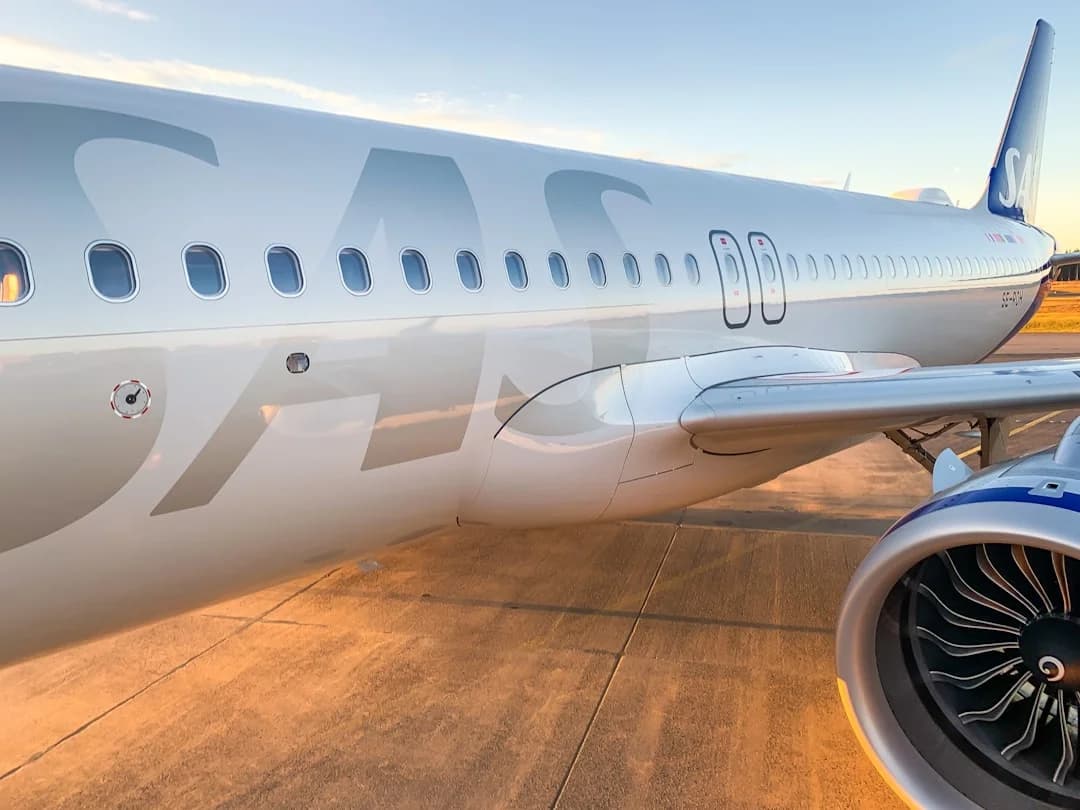
Photo by Niklas Jonasson on Unsplash
The Cascadia Sustainable Aviation Accelerator is officially underway, with a formal launch on January 8, 2026, in Mukilteo, Washington. Washington state leaders, industry partners, researchers, and public officials joined private supporters to unveil the Cascadia Sustainable Aviation Accelerator (CSAA), a cross-sector initiative aimed at accelerating the production, deployment, and adoption of sustainable aviation fuel across the Pacific Northwest. The event, held at the Boeing Future of Flight facility, marked a milestone in regional efforts to decarbonize air travel and capitalize on a potential economic uplift tied to SAF. The launch set an ambitious tone: CSAA would serve as a public-private coalition designed to accelerate market formation, de-risk investments, and speed access to SAF across the aviation value chain. Initial funding of $10 million from a 2025 Washington state appropriation plus a $10 million philanthropic gift was announced to support the program’s start, with a broader strategy to mobilize industry players and public resources in the coming years. The announcement highlights that the Cascadia Sustainable Aviation Accelerator positions the Pacific Northwest as a global hub for SAF innovation, drawing on the region’s aerospace legacy and proximity to feedstock and clean energy resources. (cascadiaaccelerator.org)
In the weeks following the launch, CSAA’s leadership outlined a practical path forward: a phased approach that pairs shared services across technology, policy, finance, and infrastructure to reduce the barriers that have historically hindered SAF scale. Among the coalition partners are Snohomish County, Earth Finance, Washington State University, the Port of Seattle, Alaska Airlines, Amazon, and Boeing, with a commitment to connect producers, buyers, and researchers in a single ecosystem. The CSAA portal and accompanying materials describe a “shared services” model designed to streamline access to test facilities, feedstock networks, and capital—efforts intended to bend the SAF cost curve and accelerate market adoption. This framing aligns CSAA with broader regional ambitions to strengthen the aviation supply chain while delivering measurable environmental benefits. The official launch materials emphasize that the CSAA is backed by both public funding and private philanthropy, a combination that supporters argue is essential to moving SAF from pilot projects into commercial-scale operations. (cascadiaaccelerator.org)
The Pacific Northwest context provides an important backdrop for CSAA. Washington state officials and regional partners have long signaled that the region can become a global hub for SAF, leveraging local feedstocks, established aviation infrastructure, and a skilled workforce. The new accelerator is framed as a mechanism to translate regional strengths into scalable SAF production and market access, with the potential to support up to one billion gallons of SAF production by 2035 if the program achieves its milestones. That aspirational target is echoed in speeches from state leaders and in the CSAA communications materials, which describe SAF as the most viable path to achieving meaningful decarbonization for air travel in the coming decades. The initiative also notes the broader climate and economic rationale: reducing emissions from aviation while creating high-skill jobs and attracting investment to the Cascadia region. (cascadiaaccelerator.org)
Section 1: What Happened
Announcement and Launch Event
CSAA officially debuted on January 8, 2026, with a public launch event at the Boeing Future of Flight facility in Mukilteo, Washington. The event brought together Governor Bob Ferguson, industry leaders from Alaska Airlines, Amazon, Boeing, and SkyNRG, along with university researchers and state policymakers, to announce the coalition and its mission. The press materials described CSAA as a cross-sector coalition designed to accelerate SAF across the Pacific Northwest, positioning the region as a leading accelerant for sustainable aviation fuel production and deployment. The keynote remarks framed the accelerator as a once-in-a-generation opportunity to realign policy, industry investment, and research capability toward scalable SAF production. The formal launch document notes the partnership with the Washington State Department of Commerce and the plan to operate as a nonprofit entity supported by state funding and philanthropic contributions. (cascadiaaccelerator.org)

“This initiative will be successful because it is grounded here, in the communities where aviation, manufacturing and clean energy intersect,” said Snohomish County Executive Dave Somers, who serves as chair of the CSAA board of directors. “CSAA builds on the infrastructure, workforce and partnerships we have already put in place, and this is just the beginning.” The event also featured leaders from Boeing, Alaska Airlines, Hawaiian Airlines, and Amazon, who described CSAA’s potential to align policy, financing, and technical development across the SAF ecosystem. (geekwire.com)
Funding and Partners
The funding package announced at launch included $10 million from a 2025 Washington state appropriation, complemented by a $10 million philanthropic gift, underscoring a bipartisan and cross-sector commitment to SAF. This dual support structure aims to catalyze a broader investment pipeline, with CSAA functioning as a nonprofit that can coordinate public programs and private capital toward SAF infrastructure and supply chain development. In accompanying materials, CSAA highlighted its coalition of participating organizations, including Snohomish County, Earth Finance, Washington State University, Port of Seattle, Alaska Airlines, Amazon, and other regional stakeholders. The coalition’s composition reflects an intentional blend of government, academia, industry, and finance designed to move SAF from early-stage demonstrations to commercial scale. (geekwire.com)
Early Infrastructure Plans and Path to Paine Field
Shortly after the launch, CSAA indicated that it would relocate to a temporary commercial space at Everett’s Paine Field airport while a longer-term facility is planned. The rollout described in industry coverage emphasizes the Paine Field R&D center as a centerpiece for the region’s SAF work, with the goal of combining research capacity, test facilities, and market access in one strategically located hub. In the weeks after the launch, media and partner updates indicated construction timelines with a target completion around 2029, positioning the Paine Field site as a flagship location for SAF pilots, demonstrations, and early-stage commercialization. The plan envisions integrating feedstock networks, testing infrastructure, and offtake arrangements with regional airlines and other buyers to demonstrate scalable SAF production and supply. (geekwire.com)

Public-Private Collaboration and Strategic Focus Areas
CSAA’s leadership outlined a multi-pronged approach to building SAF markets. The coalition emphasizes four core areas: (1) shared R&D infrastructure to lower the cost and risk of SAF development; (2) secure energy supply and power-to-liquid pathways to enable green production; (3) offtake optimization to de-risk investment by aligning producers with downstream buyers; and (4) policy advocacy to promote supportive SAF and clean fuel standards. The CSAA site frames these elements as a systems-level intervention, arguing that CASAA’s approach can unlock capital, accelerate technology transfer, and reduce the time to scale. The cross-sector nature of the initiative—spanning government, academia, industry, and philanthropy—reflects an understanding that a single actor cannot move SAF to scale alone. (cascadiaaccelerator.org)
Section 2: Why It Matters
decarbonization trajectory and SAF market potential

CSAA is positioned within a broader push to decarbonize aviation through SAF, which is widely viewed as the most feasible near- to mid-term solution for reducing aviation emissions. The CSAA materials and independent coverage describe SAF as a drop-in fuel that can be used in existing aircraft with manageable adjustments to supply chains and infrastructure. Supporters argue that scaling SAF in the Pacific Northwest could help reduce aviation emissions by up to 80% relative to conventional jet fuel, a claim echoed by public statements and coverage of the launch. The initiative’s ambition to reach up to one billion gallons of SAF production by 2035 underscores the scale that CSAA believes is achievable in the region, given the right mix of policy support, investment, and industry collaboration. However, observers also acknowledge that achieving these targets will require sustained funding, regulatory clarity, and resilient feedstock supply chains, given SAF’s current cost and market barriers. (cascadiaaccelerator.org)
“Sustainable aviation fuel puts the Cascadia region at the forefront of the next major chapter of the clean energy transition that will shape how the world is powered,” said Washington State Governor Bob Ferguson during the launch. The governor’s framing reflects a broader belief that the CSAA can combine climate objectives with regional economic opportunity, aligning with state and urban policy priorities to support green industry, workforce development, and innovation ecosystems. (cascadiaaccelerator.org)
regional economic impact and jobs
Beyond emissions reductions, CSAA’s supporters highlight potential economic benefits for the Cascadia region. The CSAA ecosystem seeks to attract investment in SAF facilities, feedstock networks, blending terminals, and related infrastructure, with the aim of creating high-skill jobs in engineering, operations, and research. The PSRC coverage of the initiative notes that public investment and private philanthropy are supporting the launch and ongoing activities, signaling confidence in the region’s ability to translate SAF innovation into tangible economic outcomes. The broader regional context includes Boeing’s long-standing aerospace presence, Alaska Airlines’ operational footprint, Amazon’s logistics network, and Washington State University’s research capacity—all of which could influence the speed and scale of SAF adoption. While the exact job projections remain contingent on pipeline development and policy implementation, the coalition’s framing emphasizes durable, local economic resilience through energy transition investments. (psrc.org)
policy alignment and supply chain coordination
CSAA’s emphasis on policy advocacy and supply chain development aligns with broader federal, state, and regional efforts to foster SAF markets. By focusing on clean fuel standards, procurement strategies, and infrastructure development, CSAA seeks to reduce policy and market friction that has historically hampered SAF commercialization. The initiative’s approach to coordinating with feedstock suppliers, storage and blending facilities, and power sources for SAF production is designed to create a more integrated regional ecosystem. Observers note that successful implementation will require harmonizing standards across jurisdictions, aligning incentives for fuel producers and airlines, and ensuring that public funds are complemented by private capital in a way that avoids market distortions. The CSAA materials and related reporting emphasize the need for ongoing collaboration among government agencies, universities, and industry players to maintain momentum and credibility for the region’s SAF ambitions. (cascadiaaccelerator.org)
potential challenges and balanced perspectives
While CSAA represents a significant and well-funded effort, experts caution that achieving substantial SAF deployment will face several headwinds. These include the need to reduce the cost gap between SAF and traditional jet fuel, scale feedstock supply chains securely, and secure long-term offtake agreements with airlines and logistics operators. Some observers point to the volatility of energy markets, regulatory changes, and the global variability of SAF supply as potential constraints. In addition, critics may call for greater transparency around the governance of the CSAA, performance metrics, and accountability for public funds. The balanced view is that CSAA is a promising catalyst, but its ultimate success depends on sustained, transparent collaboration and the ability to translate ambitious targets into concrete projects and measurable reductions in emissions. The public launch materials and partner coverage emphasize a pragmatic path forward, even as stakeholders acknowledge the complexity of the SAF transition. (geekwire.com)
public perception and stakeholder engagement
Engagement with local communities, airports, employers, and residents is a recurring theme in CSAA communications. The coalition’s emphasis on industry partnerships, workforce development, and regional decarbonization aligns with public-interest considerations about air quality and economic opportunity. The initiative’s communications materials and media coverage describe a coalition that includes labor groups, municipal and county officials, and environmental advocates, highlighting a broad-based interest in the SAF transition. As CSAA moves from launch to implementation, the effectiveness of stakeholder engagement—ranging from worker training programs to community benefit agreements—will be an important determinant of public acceptance and long-term success. (geekwire.com)
Section 3: What’s Next
short-term milestones and timeline
CSAA’s immediate horizon centers on establishing a functional governance structure, securing ongoing funding, and finalizing the temporary space at Paine Field while construction of a permanent facility progresses toward a 2029 completion target. The initial launch was accompanied by a formal commitment to accelerate SAF production and market development, and observers will be watching for measurable milestones in 2026 and 2027, including the signing of offtake agreements, pilot project deployments, and the initiation of shared R&D programs. The January 8 launch kicked off a multi-year timeline that builds on a blend of public funding and philanthropic support to catalyze SAF supply chain development and regional capacity. The CSAA communications indicate a phased approach to scaling, with early wins expected in testing, demonstration facilities, and early-stage commercialization, followed by broader market uptake as supply chains mature. (cascadiaaccelerator.org)
infrastructure development and Paine Field plans
A central element of CSAA’s near-term activity is the Paine Field infrastructure plan. The accelerator plans to relocate into a temporary commercial space at Everett’s Paine Field while a dedicated facility is developed. In the longer term, CSAA hopes to complete construction of a new center by 2029, which would provide a more comprehensive hub for SAF research, testing, and industry collaboration. The Paine Field site is positioned to host pilot-scale facilities, feedstock networks, and collaboration spaces for universities, industry partners, and policymakers. The progress of this infrastructure development—permitting, construction timelines, and negotiations with airlines and fuel producers—will be closely watched across the regional aviation and energy sectors. The upcoming milestones will likely be reported in public statements and partner updates as CSAA moves from planning into execution. (geekwire.com)
policy, partnerships, and market signals to watch
Analysts will be keenly watching how CSAA translates its high-level ambitions into policy actions and market signals. Key indicators include the establishment of SAF-friendly procurement policies, clearer clean fuel standards, and tangible offtake agreements that provide long-term revenue certainty for SAF producers. In addition, partnerships with major regional players—such as Boeing, Alaska Airlines, Amazon, and WSU—will be critical to demonstrate demand and to drive investment in SAF facilities and feedstock supply chains. The CSAA’s ability to coordinate across government agencies, academic institutions, and industry players will be a major determinant of success, particularly in light of evolving state and federal energy policies and the global SAF market dynamics. (psrc.org)
Closing
As CSAA transitions from its January launch into a planning-and-implementation phase, observers will assess not only emissions reductions but also regional economic outcomes and the region’s standing as a SAF hub. The Cascadia Sustainable Aviation Accelerator’s early momentum—the combination of state funding, private philanthropy, and a broad coalition of industry and research partners—signals a serious commitment to moving SAF from demonstration to deployment. For readers following technology and market trends, CSAA represents a case study in how a regional coalition can mobilize capital, streamline access to infrastructure, and align policy with private investment to accelerate a complex energy transition. The coming years will reveal how effectively CSAA can translate ambitious goals into real-world SAF production, meaningful emissions reductions, and durable economic benefits for the Pacific Northwest. (cascadiaaccelerator.org)
In summary, the Cascadia Sustainable Aviation Accelerator marks a watershed moment for the region’s aviation industry, with a clear focus on practical actions that bring SAF closer to commercial reality. As CSAA moves forward, BC Times will continue to monitor milestones, funding updates, and collaborative initiatives that influence SAF production and adoption in the Cascadia corridor. The initiative’s progress will shape not only regional air travel but also the broader conversation about how public-private partnerships can accelerate sustainable energy transitions in complex, capital-intensive industries. Stay tuned for ongoing coverage of CSAA developments, including announcements about new partnerships, pilot projects, and policy updates that could redefine the pace of SAF scale in the Pacific Northwest. (cascadiaaccelerator.org)