Delta Upgrades Flood Protection Infrastructure in BC

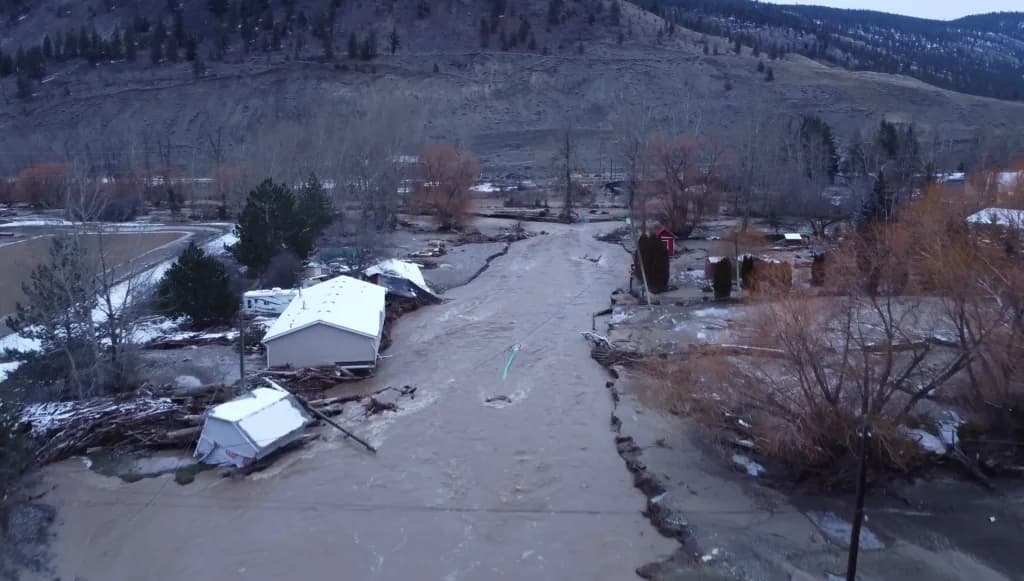
BC Times — Independent journalism covering British Columbia, Vancouver, and the Pacific Northwest — delves into Delta Upgrades Flood Protection Infrastructure and what these moves mean for residents, ecosystems, and regional planning. In a region where the coastline meets a dense network of communities, the phrase Delta Upgrades Flood Protection Infrastructure has become more than a slogan; it signals a shift in how cities prepare for rising water, heavier rain events, and the creeping realities of climate change. Our reporting ties together municipal initiatives in Delta with provincial and federal programs that fund and steer flood protection upgrades across the West Coast, all while centering local voices.
Delta Upgrades Flood Protection Infrastructure is not a single project but a suite of measures that many communities are pursuing in response to climate pressures. On the Fraser River delta and along Boundary Bay, the City of Delta has championed dike enhancements, drainage system improvements, and adaptive shoreline design. These efforts are often funded through a mix of provincial grants, federal investments, and municipal leadership, reflecting a broader pattern of collaboration across levels of government. In July 2023, Delta announced a provincial grant to advance Boundary Bay dike improvements, a milestone that underscored the city’s commitment to flood resilience and safer neighborhoods. This kind of funding helps communities raise their defences, protect critical infrastructure, and maintain essential services during extreme weather. (delta.ca)
Delta Upgrades Flood Protection Infrastructure in Practice: What’s Changing and Why It Matters Delta’s flood protection upgrades sit at the intersection of engineering, urban planning, and community well‑being. The Boundary Bay dike project, supported by provincial funds, illustrates how upgrades can be targeted to specific hot spots where flood risk intersects transportation corridors, agricultural lands, and residential neighborhoods. The funding enabled transition from planning to action, including the potential to raise dikes and incorporate fill material sourced from nearby construction activity, which helps control costs while minimizing environmental disruption. Mayor George V. Harvie framed the effort as essential to protecting the environment, public safety, and infrastructure in a climate that is increasingly unpredictable. This is exactly the type of multi‑stakeholder effort that Delta Upgrades Flood Protection Infrastructure seeks to demonstrate in practice. (delta.ca)
In another important strand of Delta Upgrades Flood Protection Infrastructure, the federal government’s involvement has grown in recent years. In November 2024, federal officials announced a $7.6 million investment to safeguard Delta against more intense rainfall and flood events, funding two drainage pump stations and supporting associated infrastructure. The project aims to reduce water ponding on roads, protect key transportation corridors including Highway 99 and the Deltaport rail line, and strengthen the region’s resilience to climate‑driven storms. This is a concrete example of how Delta Upgrades Flood Protection Infrastructure are financed through federal‑provincial partnerships, with local governments delivering on the ground improvements. (canada.ca)
Delta Upgrades Flood Protection Infrastructure is a team effort. The same federal funding framework extends to other Fraser River and coastal communities in British Columbia, with related projects announced around Port Coquitlam and Tahsis that share a common goal: improve flood defenses, protect critical assets, and sustain local economies in the face of climate risk. For Delta specifically, the plan includes new drainage pump stations like the 84 Street Drainage Pump Station and the Silda Drainage Pump Station, designed to move stormwater efficiently to drainage outlets and reduce the likelihood of roadways and rail corridors becoming blocked during heavy rain events. The broader value of these investments is not only measured in inches of flood protection but in the continuity of commerce, schooling, healthcare, and daily life during storms. (canada.constructconnect.com)
Historical Context: A City With a Long History of Flood Mitigation Delta’s current momentum sits atop a long arc of flood protection work. Notably, in 2011, Delta celebrated the completion of upgrades to the Oliver Pump Station and several Boundary Bay dike sections, aimed at extending asset life and safeguarding fish habitat while expanding protective capacity. Those upgrades highlighted the dual purpose of flood defenses: protect people and property while preserving ecological integrity. The experience from nearly a decade earlier informs contemporary decisions about where and how to upgrade Delta Upgrades Flood Protection Infrastructure today. (canada.ca)
A Broader West Coast Perspective: Province‑Wide Strategy and Investment Beyond Delta’s borders, British Columbia has signaled a provincial commitment to flood protection through strategic funding and program design. In March 2024, BC announced a substantial package to bolster local flood defenses through the Community Emergency Preparedness Fund (CEPF), part of the province’s flood strategy. The goal is to enable more than 50 local projects, ranging from structural improvements to enhanced flood mapping and community preparedness. This provincewide strategy provides a framework for Delta’s ongoing upgrades, aligning local projects with a coordinated, climate‑ready approach that other communities can imitate. As Bowinn Ma, BC’s minister of emergency management and climate readiness, noted, “The climate crisis is here and we need communities to adapt and strengthen their defences against flooding and other extreme-weather events.” This sentiment underpins Delta Upgrades Flood Protection Infrastructure and similar efforts across the region. (vancouver.citynews.ca)
Vancouver’s Coastal Resilience Playbook and Lessons for Delta While Delta is the focus, Vancouver and the broader metro area offer relevant lessons in coastal resilience and flood protection upgrades. Vancouver’s Cambie Street Bridge upgrades, for example, include climate-resilient shoreline design components like a tidal terrace that enhances flood and erosion protection in an urban setting. These city initiatives illustrate the broader shift toward integrating flood protection with climate adaptation and public access to waterfronts. The Cambie Street project demonstrates how infrastructure upgrades can simultaneously improve resilience, public space, and habitat considerations, a model that resonates with Delta’s ongoing work on Boundary Bay dikes and adjacent shoreline features. (vancouver.ca)
A Structured View: What Delta Upgrades Flood Protection Infrastructure Looks Like in Practice To better understand the components of Delta Upgrades Flood Protection Infrastructure, consider the core elements that frequently appear in provincial and federal funding announcements, municipal plans, and stakeholder updates:
- Dikes and shoreline defenses: Elevating and strengthening dikes to withstand higher flood levels and storm surges.
- Drainage and pumping systems: Pump stations, force mains, and drainage networks that move water away from roads, railways, and critical facilities.
- Seawalls and tidal terraces: Engineered shoreline features that reduce wave impact, support habitat, and provide public access to waterfront spaces.
- Floodplain management and land use planning: Updated maps and zoning to reduce exposure and guide development away from high‑risk areas.
- Fish passage and ecological considerations: Design elements that minimize ecological disruption while protecting communities.
Delta Upgrades Flood Protection Infrastructure is inherently multidisciplinary, requiring civil engineers, ecologists, urban planners, and local volunteers to collaborate. The federal and provincial funding streams are structured to support these combined outcomes, enabling Delta to pursue multiple lines of defense in parallel. For instance, the Boundary Bay dike improvements project received provincial support and is part of a broader program to build resilience against rising sea levels and extreme weather. This approach mirrors other Canadian initiatives that link flood defense upgrades to environmental stewardship and economic continuity. (delta.ca)
A Practical Look at Recent Delta Upgrades Flood Protection Infrastructure Projects Delta’s public-facing updates highlight several concrete components of the upgrades:
- Boundary Bay dike improvements: A focused project to raise and defend a critical section of the Boundary Bay dike, incorporating materials sourced locally to manage costs and reduce environmental disruption. The project fits within a broader climate adaptation framework that targets vulnerable waterfronts along the Fraser River delta. (delta.ca)
- Drainage pump stations: The federal funding announcement outlines two pump stations intended to address water ponding and protect essential transportation corridors as the climate warms. These stations are designed to route stormwater to the Boundary Bay dike discharge point and to mitigate flooding risk in key catchments. (canada.ca)
- Silda and 84 Street sites: The Silda Drainage Pump Station and the 84 Street Drainage Pump Station represent targeted improvements to local drainage networks, reducing flood risk for roadways, rail lines, and commercial areas. The projects also include improvements to backflow prevention and fish-friendly design considerations where feasible. (canada.constructconnect.com)
- Community engagement and design exploration: Delta’s Ladner Waterfront Flood Protection Strategy illustrates ongoing public engagement around waterfront resilience, highlighting how conceptual designs and stakeholder input shape the next stages of Delta Upgrades Flood Protection Infrastructure. (letstalk.delta.ca)
Case Study Takeaways: How These Upgrades Translate to Daily Life For residents, businesses, and commuters in Delta, the practical implications of Delta Upgrades Flood Protection Infrastructure appear in several ways:
- Road and rail reliability: Upgraded drainage reduces road flooding and helps keep rail corridors operational during storms, limiting disruptions to supply chains and daily commutes.
- Public safety: Dike improvements and enhanced flood defenses reduce the risk of inundation for homes, schools, and essential services, contributing to a sense of security in vulnerable neighborhoods.
- Economic resilience: Protecting industrial zones, farms, and ports supports regional economies and preserves jobs during climate-related events.
- Environmental stewardship: Where possible, upgrades are designed to minimize ecological impacts, support fish passage, and integrate natural shoreline features that bolster habitat—an increasingly important criterion in public infrastructure projects. (canada.ca)
A Quick Reference: Delta Upgrades Flood Protection Infrastructure in a Table
| Component | Purpose | Typical Benefit | Stakeholder Involvement |
|---|---|---|---|
| Dikes and shoreline defenses | Increase elevation and strength to resist higher flood levels | Reduced risk of coastal flooding for neighborhoods and critical infrastructure | Municipal, provincial, and federal partners; community input |
| Drainage pump stations (84 Street, Silda) | Move stormwater quickly to discharge points and prevent ponding | Fewer flooded roads and railway corridors; more reliable transportation networks | Federal funding; local engineering teams |
| Seawalls and tidal terraces | Protect shoreline and provide safe public access | Reduced erosion; enhanced habitat and public waterfront spaces | City planners; environmental groups; residents |
| Flood mapping and land-use planning | Improve risk understanding and guide development | Smarter development choices; better preparedness | Provincial agencies; municipalities; First Nations |
| Public engagement and design exploration | Incorporate community needs and preferences | More acceptable solutions with local buy-in | Let’s Talk Delta; public consultations |
Note: The table reflects common elements seen in Delta Upgrades Flood Protection Infrastructure programs across Delta and similar West Coast communities, drawing on documented projects and funding streams. For specific project names and dates, see the cited government and municipal sources above. (delta.ca)
Voices From the West Coast: Quotes and Public Sentiment Quotes offer a human lens on Delta Upgrades Flood Protection Infrastructure. As a widely cited public statement from BC’s broader flood strategy notes, “The climate crisis is here and we need communities to adapt and strengthen their defences against flooding and other extreme-weather events.” That sentiment underpins the practical work happening in Delta and across British Columbia, where residents and business owners watch water levels and drainage forecasts with heightened attention. The real-world impact of these upgrades is felt when a pump station reduces flood risk to a busy roadway or when a raised dike withstands an unusually high tide. These are not abstract metrics; they are daily experiences for people who depend on resilient infrastructure to move goods, commute to work, and care for their families. (canada.constructconnect.com)
Residents and local businesses are also invited to participate in ongoing dialogues about Ladner Waterfront and other waterfront upgrades. Public engagement portals and local news updates emphasize the importance of community input in shaping Delta Upgrades Flood Protection Infrastructure. The Ladner waterfront consultation demonstrates how citizens can contribute to a conceptual design that prioritizes climate resilience while maintaining access to public spaces and amenities. This approach—bridging engineering with citizen feedback—helps ensure that upgrades reflect real-world needs as the climate evolves. (letstalk.delta.ca)
A Note on Data Gaps and Current Status While Delta has made notable strides, some details about ongoing phases, exact timelines, and final capacities for every pump station or dike segment remain to be clarified in public updates. As with many municipal infrastructure programs, progress is incremental, and funding commitments may unfold over multiple years. Our reporting highlights where public documentation exists (for example, provincial CE PF funding and federal announcements) and where additional data would help readers understand the full scope of Delta Upgrades Flood Protection Infrastructure. Where data are not readily available, we mark those sections clearly and point readers to official updates as they are issued. For now, the record shows a clear trajectory toward stronger flood defenses, backed by multi‑level funding and direct community engagement. (canada.ca)
Beyond Delta: Lessons for the Pacific Northwest in Flood Resilience Delta’s approach resonates with broader Pacific Northwest strategies, where communities in Vancouver and other coastal areas are pursuing similar upgrades. Vancouver’s climate-aware shoreline improvements and the province’s flood strategy provide a shared template: combine structural defenses with nature-based features, prioritize critical infrastructure, and maintain open channels for public input. The West Coast context is increasingly about integrated, multi‑layered defenses that can adapt over time as sea level rise and rainfall patterns shift. In that sense, Delta Upgrades Flood Protection Infrastructure is part of a regional movement toward resilient coastal living, rather than a isolated municipal project. (vancouver.ca)
A Perspective from BC Times: Why This Coverage Matters to Readers BC Times consistently aims to connect national and provincial policy with neighborhood experiences. The Delta Upgrades Flood Protection Infrastructure narrative is a case study in how a city translates funding into tangible protections that people can see, touch, and rely on. Our coverage addresses not only the engineering specifics but also the social dimensions—how residents, farmers, commuters, and small businesses adapt to a climate that is changing the rules of shoreline and riverine defense. We also emphasize transparency: where data exist, we present them; where data are pending, we spell out the questions that require further investigation. This approach reflects BC Times’s mission to deliver in-depth reporting on environment, community, and local governance along the West Coast. Our readers benefit from a nuanced understanding of what Delta Upgrades Flood Protection Infrastructure entails, how it interacts with provincial and federal programs, and what it means for BC’s coastal future. (canada.ca)
Incorporating Voices and Stakeholders: A Roundup of Key Players
- City of Delta leadership and staff: Local governance, project management, and on‑the‑ground implementation of Boundary Bay dike and drainage improvements.
- Province of British Columbia: Funders of CEPF and other climate adaptation programs that enable local flood defense upgrades.
- Government of Canada: Federal investments in flood protection and critical infrastructure upgrades that connect with municipal projects.
- Local residents and businesses: Stakeholders in Ladner, Boundary Bay communities, and surrounding areas who experience the day-to-day impacts of flood risk and protection measures.
- Environmental and Indigenous groups: Partners in ensuring that flood defense upgrades respect ecological integrity and local land‑use rights. These players collectively shape Delta Upgrades Flood Protection Infrastructure through funding, planning, and ongoing dialogue with the public. Citations from official sources illustrate how this ecosystem of partners operates in practice. (delta.ca)
The West Coast Promise: A Short Reflection As climate pressures intensify, Delta Upgrades Flood Protection Infrastructure embodies a pragmatic, multi‑level effort to safeguard people, property, and nature. It is a forward‑looking approach that prioritizes resilience, adaptability, and community engagement. The path involves dikes, pumps, and shoreline designs, but the destination is broader: a region that can absorb shocks, maintain essential functions, and preserve the character of coastal communities for generations to come. In the words of a familiar proverb that often appears in discussions about long-term planning, “The best time to plant a tree was 20 years ago; the second best time is now.” In Delta, the second best time is now, and the city is taking deliberate steps to ensure a safer future through Delta Upgrades Flood Protection Infrastructure. The work continues, with updates from provincial and federal partners and ongoing input from residents who call Delta home. (canada.constructconnect.com)
FAQs and Quick Takeaways for Readers
- What is Delta Upgrades Flood Protection Infrastructure? A suite of flood defense improvements in Delta, BC, including dikes, drainage pump stations, and shoreline design upgrades, funded by municipal, provincial, and federal partners.
- Why now? Climate change is driving stronger storms and higher flood risk, so communities are investing in more robust defenses and better preparedness. The province’s flood strategy supports local projects, while federal funding targets critical infrastructure. (vancouver.citynews.ca)
- Who pays? A mix of provincial grants (e.g., Boundary Bay dike improvements), federal investments (e.g., drainage pump stations), and municipal leadership fund the upgrades. Local engagement ensures projects reflect community needs. (delta.ca)
- What’s happening in Delta specifically? Key components include Boundary Bay dike improvements in Delta, plus drainage pump stations planned to reduce ponding and protect transportation corridors. Public updates emphasize ongoing consultation and phased implementation. (delta.ca)
- How does this connect to broader policy? The province’s CEPF and the BC Flood Strategy connect Delta’s local work to province‑wide resilience goals, aligning neighborhood projects with regional climate adaptation objectives. (vancouver.citynews.ca)