Electric Container Trucking ELECTRA at Port Vancouver

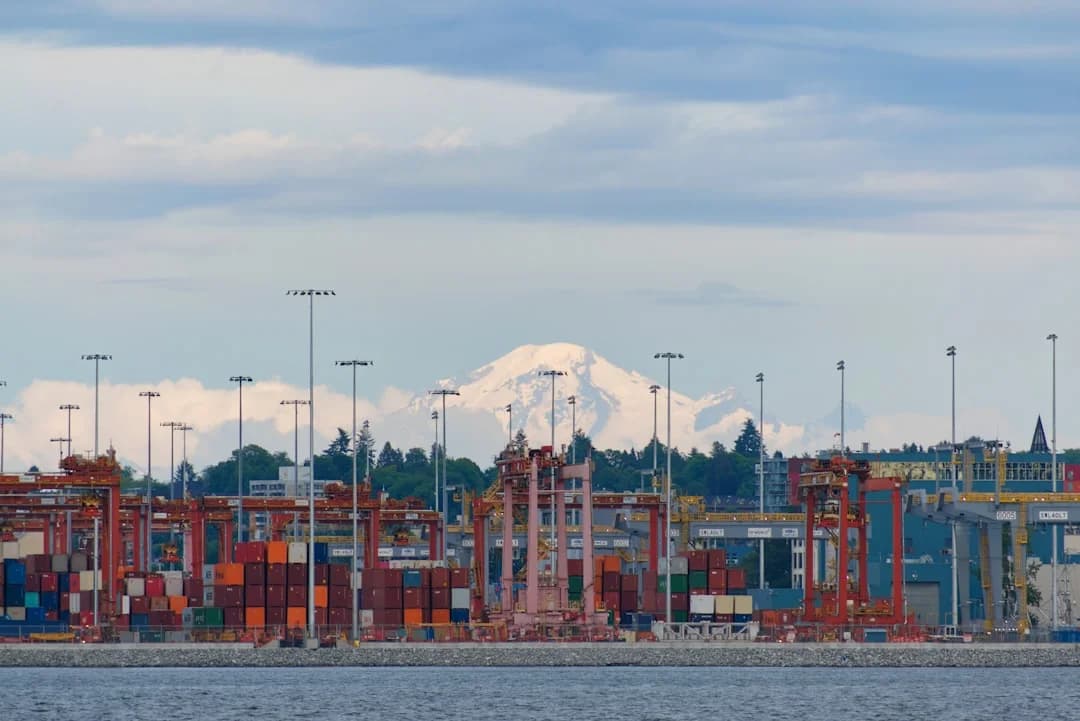
Photo by Anastasiya Dalenka on Unsplash
The Port of Vancouver is moving a notch closer to eliminating diesel from one of its most congested corridors: the drayage trucks that shuttle full containers between the marine terminals and inland destinations. The Vancouver Fraser Port Authority has launched ELECTRA, the Electric Container Trucking Program, a battery-electric drayage pilot designed to test state-of-the-art electric trucks in real port operations. The pilot places six battery-electric Class 8 trucks on the road across five participating trucking companies, marking a significant milestone in Canada’s broader push to decarbonize heavy-duty freight. The initiative comes as policymakers, industry players, and researchers seek concrete, field-tested data on performance, charging logistics, total cost of ownership, and emissions reductions in port drayage. This opening phase is designed not just to prove technology works, but to generate the evidence needed to inform future investments and policy decisions across Canada’s supply chains. Electric container trucking pilot ELECTRA at Port of Vancouver is quickly becoming a reference point for how port authorities, energy providers, and trucking firms collaborate to accelerate electrification of the heavy-duty freight sector. (porttechnology.org)
The program is part of a broader Low Emission Technology Initiative and is supported by a CAD 3 million funding package drawn from Transport Canada, the Province of British Columbia, and the Vancouver Fraser Port Authority, with additional support through BC Hydro’s EV Fleet Programme. The objective, according to program organizers, is to remove barriers to fleet electrification in container trucking by offering subsidized five-year leases, charging infrastructure, maintenance, driver training, and access to a centralized software platform that consolidates vehicle, charger, and utility data in a single dashboard. In this sense, ELECTRA is not merely about purchasing electric trucks; it’s about creating an end-to-end ecosystem that makes electric drayage both technically feasible and economically attractive for fleets operating across the Port of Vancouver and beyond. Four trucks are already in service, with two more expected to enter service before the end of 2026, signaling near-term scale-up and data collection opportunities that can shape policy and industry practice. The ELECTRA program sits within the Low Emission Technology Initiative, a joint funding partnership between the VFPA and the Province of British Columbia, and it is delivered in collaboration with 7Gen, a turnkey electrification partner. (porttechnology.org)
Today’s coverage also highlights that ELECTRA brings together five BC trucking firms—Aheer Transportation Ltd., Lally Bros. Holding Ltd., Simard Westlink Inc., TransBC Freight Ltd., and West Coast Freight Ltd.—each registered in the VFPA’s Truck Licensing System following a 2024 expressions-of-interest process. The six trucks deployed under ELECTRA are being rolled out across participating depots, with BC Hydro and the port authority coordinating electricity supply and grid readiness to ensure reliable charging. The plan is to collect and share performance data with industry and government partners for the first 12 months of operation, creating an evidence base to inform broader adoption of battery-electric container trucking. Execution and delivery are led by 7Gen, responsible for vehicle procurement, charging infrastructure, software, and carbon-credit solutions. This is a coordinated, multi-stakeholder effort designed to demonstrate practical pathways to decarbonize a core segment of Canada’s freight corridors. (porttechnology.org)
In practice, ELECTRA functions as a catalyst for change at a moment when port electrification projects are accelerating globally. The program is designed to address several well-known barriers to fleet electrification: high up-front costs, the challenge of securing reliable charging at multiple depots, maintenance and parts availability for heavy-duty electric fleets, and the need for robust data to validate long-term financial viability. The Port Technology International report, published on May 27, 2026, highlights that ELECTRA’s package includes subsidized five-year leases, charging infrastructure, maintenance, driver training, and a central dashboard combining vehicle, charger, and utility data. The program’s data collection plan envisions a 12-month window of real-world performance metrics that will be shared with industry and government partners, helping to shape policy and investment decisions around electrified drayage. (porttechnology.org)
What Happened Launch Details and Scope The ELECTRA program represents a deliberate, staged introduction of battery-electric container trucks into the Port of Vancouver’s drayage ecosystem. According to Port Technology International, the Vancouver Fraser Port Authority launched ELECTRA as part of the broader Low Emission Technology Initiative, with the objective of accelerating the adoption of lower-emission technologies across port operations. The program provides participating fleets with subsidized five-year leases, charging infrastructure support, routine maintenance, driver training, and access to a centralized software platform that aggregates data from vehicles, chargers, and electrical grids in a single dashboard. The initial deployment included four trucks already in service, with two additional units expected to come online by year-end 2026. The plan calls for collecting performance and operational data for the first 12 months of each truck’s operation to inform broader adoption strategies. (porttechnology.org)
Participants and Fleet Rollout ELECTRA’s rollout brings together six battery-electric Class 8 trucks operated by five BC trucking companies: Aheer Transportation Ltd., Lally Bros. Holding Ltd., Simard Westlink Inc., TransBC Freight Ltd., and West Coast Freight Ltd. The participating fleets were identified in 2024 through the VFPA’s expressions of interest process and subsequently mobilized to integrate the trucks into their depots with appropriate charging and maintenance support. The initial deployment has four trucks in service, with two more trucks expected to be added before the end of 2026, which will bring the total to six and allow for broader coverage of port-area drayage routes. The involvement of five separate fleets demonstrates a cross-fleet collaboration model that can help normalize electric drayage across multiple operators, reducing the risk that the technology rests on a single carrier or depot. (porttechnology.org)
Delivery and Execution The ELECTRA program is being delivered in partnership with 7Gen, described as a turnkey fleet electrification partner capable of handling vehicle procurement, infrastructure upgrades, software, and carbon-credit solutions. This arrangement ensures that the fleets receive not just trucks but an integrated package that includes charging infrastructure, maintenance, and data analytics. The deployment also features collaboration with BC Hydro to verify electricity supply for charging and ensure grid readiness at participating depots. The program’s backing by Transport Canada, the Province of British Columbia, and the VFPA demonstrates a strong public-private partnership model designed to de-risk the transition to electric drayage. The overall package—five-year leases, charging infrastructure, maintenance support, driver training, and data visibility—reflects a holistic approach intended to overcome the financial, technical, and operational barriers that often stall large-area electrification efforts. (porttechnology.org)
Immediate Milestones and Data Plan A key element of ELECTRA is the data-driven approach to decision-making. The initial phase aims to generate a baseline data set on vehicle performance (range, charging time, downtime), maintenance needs, driver experience, and depot operations. The plan is to share this information with industry and government partners to inform broader adoption of battery-electric container trucking. The timeline includes bringing two additional trucks online within 2026, completing deployment across the six-vehicle fleet, and initiating the 12-month data collection window to produce a robust evidence base for policy-makers, other ports, and fleets contemplating electrification. The five participating fleets are expected to contribute operational data that can help identify best practices for charging strategies, vehicle utilization, and maintenance scheduling. (porttechnology.org)
Near-Term and Long-Term Financing and Partnerships CAD 3 million in total program funding is a collaboration involving Transport Canada, the Province of British Columbia, and the VFPA, with additional support from BC Hydro. This multi-source funding structure is designed to demonstrate how public funds, industry contributions, and utility-based incentives can be aligned to reduce the risk of fleet electrification for container trucking. The ELECTRA program’s exposure to federal, provincial, and utility support illustrates a layered funding model that other regions may emulate as a pathway to scale. The collaboration with 7Gen provides not only the vehicle and charging equipment but also software and carbon-credit services, enabling fleets to quantify and optimize emissions reductions. In short, ELECTRA combines vehicles, charging, software, finance, and regulatory support into a single program, which may serve as a blueprint for similar initiatives at other Canadian ports and across North America. (porttechnology.org)
Why It Matters Emissions and Air Quality Implications The ELECTRA program explicitly targets a hard-to-decarbonize segment of the freight sector: port drayage. Battery-electric Class 8 trucks have the potential to dramatically reduce tailpipe emissions in key port zones, where trucks often operate in dense urban areas with significant air-quality concerns. While the first 12 months of operation will be focused on data collection rather than long-range outcomes, early indications from port electrification programs globally suggest meaningful reductions in local pollutants and greenhouse gas emissions when fleets transition from diesel to electric power, particularly in congested port corridors with high daily vehicle turnover. The VFPA and its partners are positioning ELECTRA as a data-driven test case to quantify those benefits in a real-world Canadian context. In the longer term, the program could provide the empirical evidence needed to inform policy measures, incentive structures, and infrastructure investments that accelerate electrification across Canada’s ports and inland trucking corridors. (porttechnology.org)
Market and Industry Implications From a market perspective, ELECTRA represents a multi-fleet, multi-depot approach to electrification, rather than a single-carrier pilot. This diversification helps mitigate carrier-specific risks and demonstrates the feasibility of scaling electric drayage across different business models and operational footprints. The involvement of multiple depots and charging locations requires careful coordination of electrical supply, charging station siting, and depot-level maintenance, all of which are addressed through the 7Gen partnership and BC Hydro’s support. The data-sharing component of ELECTRA is particularly important for fleet operators who need credible performance benchmarks—such as energy consumption per mile, charging duration per shift, and maintenance costs—before making sizable capital investments in electric powertrains. The program’s approach aligns with broader industry reports that emphasize the importance of standardized data platforms and cross-industry collaboration to accelerate decarbonization in heavy-duty trucking. (porttechnology.org)
Policy and Public-Private Collaboration ELECTRA is emblematic of how port authorities can catalyze technology adoption by aligning policy signals with industry incentives. The initiative demonstrates a model in which government funding, port authority leadership, utility-scale charging programs, and industry players share risk and reward. The central data platform not only helps participating fleets optimize operations but also provides policymakers with a transparent, auditable data set to inform decisions about future incentives, standards, and regulatory frameworks. In this sense, ELECTRA operates on multiple fronts: it tests technology, demonstrates economic viability, and informs policy—an integrated approach that could influence how other ports, municipalities, and provinces structure similar programs. (porttechnology.org)
What It Means for Port Operations and the Supply Chain From an operational perspective, the ELECTRA rollout can influence port throughput and vessel productivity in several ways. If electric drayage proves reliable, it could reduce engine-idling time at depots, enhance air quality around terminal areas, and contribute to more predictable energy costs through predictable electricity pricing and stoichiometric efficiency gains. The data-driven deployment allows for careful monitoring of charging demand, depot energy requirements, and the practicality of scheduling around charging windows. While the initial phase focuses on six trucks, the anticipated expansion to six vehicles in total during 2026 and beyond suggests a path toward more comprehensive electrification, particularly if performance and total-cost-of-ownership metrics align with expectations. The broader context includes Canada’s Northwest Ports Clean Air Strategy and other regional electrification efforts, which collectively push the region toward lower-emission port operations. (container-news.com)
Participant and Depot-Level Impacts For participating fleets, ELECTRA offers more than just access to electric trucks. The five-year leases reduce the upfront capital barrier that often prevents fleets from adopting new technologies. The charging infrastructure packages reduce the risk of underutilized or underpowered depots by ensuring that depots have reliable, scalable electricity access to support multiple trucks. Maintenance support and driver training address the operational learning curve associated with high-performance electric trucks, while the software dashboard enables fleets, depots, and utilities to coordinate energy usage, uptime, and maintenance planning. This holistic support package can help fleets evaluate the real-world economics of electrification more accurately, including potential savings from reduced fuel costs, maintenance, and downtime, as well as the potential revenue streams from carbon credits. (porttechnology.org)
What’s Next Near-Term Rollout and Milestones The immediate next milestone for ELECTRA is the onboarding of two additional trucks by the end of 2026, bringing the fleet to six electric trucks. This expansion will enable broader coverage across the port’s drayage network and provide more comprehensive data for analysis. The 12-month data collection window will then yield a richer dataset on range, charging times, maintenance intervals, and utilization patterns, which in turn will inform potential adjustments to fleet mix, charging strategies, and depot infrastructure. The VFPA and 7Gen teams will continue to work with partner fleets to optimize deployment, including potential updates to the software platform to capture more granular data on energy usage and battery health. The cross-fleet collaboration model will also help identify best practices and standard operating procedures that can be shared across other ports and jurisdictions seeking to replicate ELECTRA’s approach. (porttechnology.org)
Longer-Term Prospects and Industry Implications Looking beyond the current year, ELECTRA could catalyze broader market changes in British Columbia and across Canada. If ELECTRA demonstrates reliable performance and favorable total cost of ownership figures, it may encourage other port authorities, trucking associations, and provincial energy programs to replicate the model—combining subsidized leases, charging infrastructure, maintenance support, and data-sharing platforms with multi-fleet participation. The data-driven approach could also support policy initiatives aimed at accelerating the electrification of heavy-duty trucking, including incentives for depot charging, grid readiness, and energy management for fleets operating near port zones. While long-range outcomes depend on several variables—battery costs, charging technology advancements, and grid capacity—the ELECTRA pilot provides a tangible, live-case demonstration that policymakers and industry stakeholders can study in detail. (porttechnology.org)
Closing
In short, ELECTRA marks a meaningful inflection point for port electrification in Canada. By combining six battery-electric trucks with three layers of public and private support, VFPA and its partners are embedding a structured, data-driven approach to decarbonizing a central nerve of Western Canada’s supply chain. The initial four-truck deployment with two more slated for 2026 sets the stage for a broader conversation about the energy, economics, and logistics of electric drayage in major ports. As data accumulates over the first 12 months of operation, stakeholders will gain a clearer view of how quickly electric container trucking can scale, what operational changes are needed at depots, and how policy can better align incentives with real-world performance. For readers following technology and market trends in transportation, ELECTRA offers a concrete, Canada-specific example of how to move from pilot to platform-scale adoption in the heavy-duty trucking sector. The program’s success could influence not only British Columbia’s port operations but also the broader North American freight landscape, where emissions regulations, energy costs, and consumer expectations are driving rapid modernization of the logistics network. As Canada’s ports continue to pursue decarbonization, ELECTRA stands as a real-world test bed that may help accelerate the transition toward sustainable, resilient supply chains. (container-news.com)
As the data comes in and the six-truck ELECTRA fleet matures, BC Times will continue to monitor the program’s performance, its impact on depot operations, and its influence on fleet economics. Updates will be shared through VFPA communications, Port Technology International, Container News, and industry outlets that track port-deployment and electrification trends. Stakeholders and readers can expect ongoing reporting on how ELECTRA informs future investments, policy considerations, and best practices for electric drayage in Canada and beyond. The program’s evolving data story will offer valuable insight into the practical realities of electrifying heavy-duty trucking in one of North America’s busiest port complexes, with potential implications for grid planning, vehicle procurement, and the timing of next-generation battery developments for commercial fleets. (porttechnology.org)