Electric Seaplanes Vancouver Island Mobility

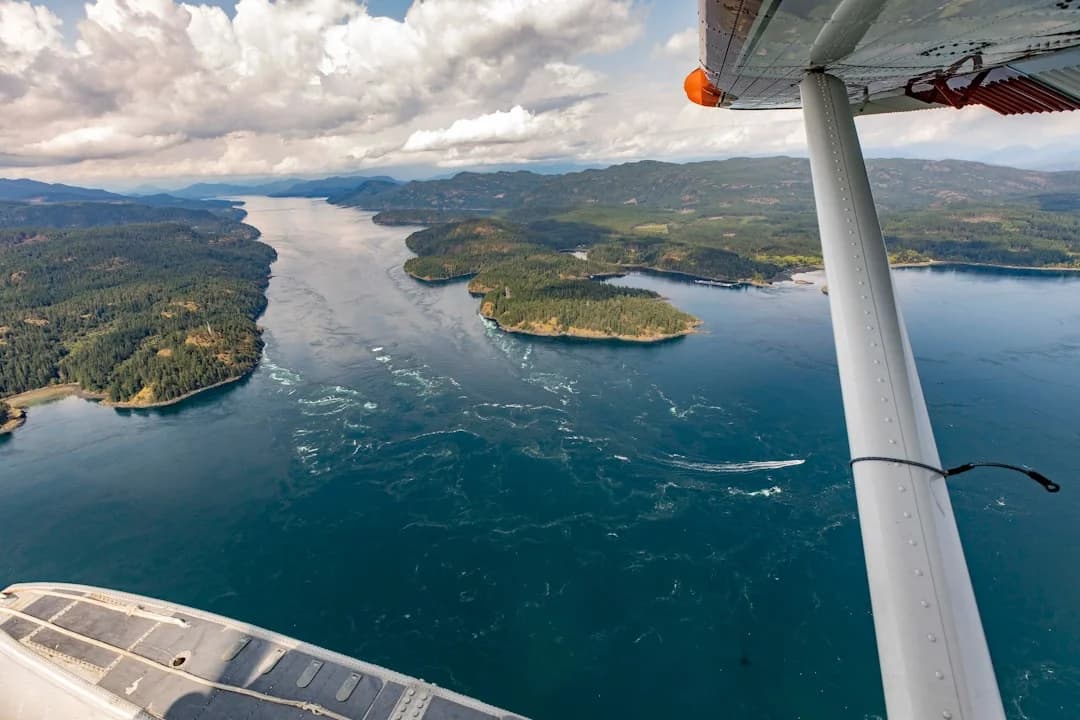
Photo by Thomas Lipke on Unsplash
The coming years promise a pivotal shift in how people travel around the Vancouver Island region and its Gulf Islands. Electric seaplanes Vancouver Island mobility is moving from a niche breakthrough toward broader regional deployment as Harbour Air aligns with magniX to electrify its seaplane fleet, and as new routes begin to connect urban centres, remote communities, and cross-border destinations. This evolution matters not only for travelers seeking faster, congestion-free options, but also for policymakers and businesses aiming to reduce emissions, boost tourism, and strengthen supply chains across the coastline. The most newsworthy developments center on fleet electrification plans, the regulatory path toward certification, and a pair of high-profile route expansions that bring electric-powered flight closer to everyday use on Vancouver Island and in the wider Pacific Northwest. (magnix.aero)
Harbour Air and magniX recently crystallized a major milestone in the electric aviation story that underpins Vancouver Island mobility: a Letter of Intent to purchase 50 magni650 electric engines to power Harbour Air’s fleet, with the first electric propulsion upgrades expected to begin in 2026. The agreement marks a clear commitment to scale electric propulsion across Harbour Air’s fleet and even extend it to third-party conversions. The collaboration follows a historic precedent—the world’s first all-electric commercial aircraft, the eBeaver, conducted its first test flight in December 2019—demonstrating the viability of electric propulsion in the point-to-point, short-haul seaplane market. As company leaders describe it, electrifying Harbour Air’s fleet is a strategic step toward quieter, cleaner regional aviation that better serves coastal communities and business travelers alike. (magnix.aero)
The background matters: Harbour Air teamed with magniX to launch the eBeaver program, retrofitting a De Havilland DHC-2 Beaver with an electric propulsion system. That first flight—on December 10, 2019—set a landmark benchmark for electric seaplanes and helped spur subsequent research, testing, and industry partnerships. The early demonstrations, which included a multi-flight prototype program and ongoing testing to advance certification, laid the groundwork for a broader electrification effort that’s now intensifying with 50 new magni650 engines. (aopa.org)
Two high-profile route expansions are shaping the day-to-day reality of Vancouver Island mobility and influencing how people think about regional travel. Harbour Air announced direct seaplane service between downtown Vancouver Harbour (Coal Harbour) and Campbell River, a route that will begin on July 6, 2026 and run on a seasonal basis through early autumn. The new service will land at the Campbell River Water Aerodrome, delivering a non-stop, air-based connection to one of Vancouver Island’s fastest-growing gateway communities. Travel times are expected to be under 45 minutes, offering a compelling alternative to ferries or road-based travel. This development is especially meaningful for residents and visitors who want quicker access to Campbell River’s outdoor-recreation and tourism offerings. (coasthotels.com)
In addition, Harbour Air has announced a broader Pacific Northwest expansion that includes a direct Victoria-Seattle route. The Victoria-based news outlet Victoria Buzz reported that the Victoria-Seattle service would launch on June 11, 2026, providing the first non-stop link between Vancouver Island’s capital and Lake Union in Seattle. The expansion reflects a broader strategy to create cross-border, all-weather, coastal mobility options that bypass congested land corridors and ferry networks while leveraging Harbour Air’s existing coal-harbour and coal-harbour-like operations. While the cross-border service will operate seasonally, it underscores the growing role of electric and hybrid-electric coastal aviation in regional mobility. (victoriabuzz.com)
This month-to-month progress sits atop a multi-decade arc of electrification in Harbour Air’s seaplane operations. In 2021, Harbour Air, magniX, and Swiss startup H55 announced a collaboration to certify the first all-electric Beaver (the eBeaver) through a supplemental type certificate program, a critical step toward broader regulatory acceptance and market adoption. The partnership signaled a shared objective: to validate electric propulsion for commuter seaplanes and then apply those learnings to scale across Harbour Air’s fleet and beyond. The 2021 certification collaboration, along with ongoing work to meet Transport Canada and other safety standards, forms the regulatory backbone of the 2026 pilot and eventual commercial rollout. (prnewswire.com)
What Happened
Harbour Air’s electrification program has travelled from a proof-of-concept to a formal fleet-modernization initiative with explicit procurement commitments. In April 2024, magniX announced that Harbour Air had signed a Letter of Intent to purchase 50 magni650 electric engines. The engines are intended to power Harbour Air’s De Havilland DHC-2 Beaver fleet, beginning with conversions in 2026. The announcement underscored the joint aspiration to create an all-electric or predominantly electric regional seaplane fleet and to extend electrification-related services to other operators and retrofit projects. The LOI also highlighted the role of magniX’s 650-kW propulsion units in enabling longer-duration missions, increased safety margins, and improved reliability through electrified propulsion. (magnix.aero)
The historical underpinnings for this momentum lie in the eBeaver program, the world’s first all-electric commercial aircraft to fly. In December 2019, Harbour Air and magniX achieved a landmark flight with the eBeaver—a six-passenger DHC-2 Beaver retrofitted with a 750-horsepower magni500 electric motor. The flight demonstrated the feasibility of electric power for a short-haul, quiet, and emission-free passenger service and established a blueprint for future certification, standardization, and fleet-wide electrification. It remains a touchstone for subsequent developments and is frequently cited to illustrate the industry’s trajectory toward electric regional aviation. (aopa.org)
Beyond a single program, Harbour Air and magniX have framed the ePlane effort as part of a broader push toward sustainable regional aviation. The magniX press release highlights multiple successful applications of its electric propulsion systems, including the eBeaver and other electrified platforms, and positions the partnership with Harbour Air as a central pillar of a future in which quiet, efficient electric flight serves coastal economies and smaller urban centers alike. The press release also notes Earth Day framing and emphasizes the demand for clean, quiet, and efficient air travel in the region and beyond. (magnix.aero)
On the ground, the practical impact for Vancouver Island mobility is increasingly tangible. Harbour Air’s direct Vancouver-to-Campbell River route signals a maritime-to-air mobility shift on the island’s east coast, reducing reliance on ferries and potentially shortening travel times for residents and visitors headed to central Vancouver Island. The Campbell River service, scheduled to begin July 6, 2026, is described by Harbour Air and local partners as a seasonal, high-frequency service that ties directly into Campbell River’s gateway role for fishing, ecotourism, and outdoor recreation. The service is expected to land at Campbell River’s water airport and connect with existing coastal routes, providing a new layer of intermodal connectivity for the region. (harbourair.com)
The cross-border Victoria-Seattle route, if realized as scheduled for early summer 2026, would introduce a crucial cross-border mobility option that complements the island-focused services. The Victoria Buzz report and Harbour Air’s public statements frame the Victoria-Seattle route as a landmark extension that not only expands travel options for Vancouver Islanders but also strengthens tourism and business ties across the border. The route’s launch aligns with pre-existing Harbour Air operations linking Vancouver, Victoria, and Seattle’s seaplane facilities, but with new direct cross-island connectivity that simplifies planning for travelers who previously faced multi-leg itineraries or land-sea transfers. (victoriabuzz.com)
Why It Matters
Environmental and emissions considerations sit at the core of why electrification matters for Vancouver Island mobility. The magniX-Harbour Air partnership frames electric propulsion as a means to deliver quieter operations, lower local emissions, and a more sustainable travel option for short-haul coastal travel. The April 2024 LOI announcement explicitly anchors the program in the broader effort to decarbonize regional aviation and points to a future in which electron-powered seaplanes can operate with commercial viability and regulatory acceptance. The environmental argument is complemented by a practical one: the island’s geography—a mosaic of coastal towns, Gulf Islands, and limited bridge access—creates a natural case for direct seaplane links that bypass long ferry queues and congested road corridors, supporting a lower-emissions mobility mix for residents and visitors alike. The emphasis on cleaner propulsion is also echoed in the LOI press materials, which reference Earth Day and the urgency of sustainable aviation solutions. (magnix.aero)
Regionally, the mobility implications for Vancouver Island communities are significant. The introduction of direct Vancouver Harbour to Campbell River service offers a new transport artery that can shorten travel times and diversify options for commuters, business travelers, and tourism. Campbell River, as a gateway community with outdoor recreation and fishing industries, benefits from improved access for visitors and supply chains; the seaplane connection adds a complementary layer to existing road and ferry networks, potentially stimulating local economies and enabling more flexible scheduling for operators who rely on seasonal demand. The Campbell River-based service, with flights landing at the Campbell River Water Aerodrome, illustrates how seaplane mobility can be integrated into a regional transport ecosystem that includes land-based airports, ferries, and private boats. (coasthotels.com)
Tourism and economic development are central to broader acceptance of electric seaplane mobility on Vancouver Island. Victoria’s tourism ecosystem already highlights Harbour Air as a sustainable transport option that connects city centers to regional destinations, with direct services between Vancouver and Victoria offering both practical travel options and scenic experiences. The expansion into cross-border services and island-focused routes is likely to attract visitors seeking time-efficient coastal travel, while also enabling local operators to diversify revenue streams through seasonal services and new markets. Local tourism boards and hospitality partners highlight Harbour Air’s role in connecting coastal communities and providing a unique vantage point for travelers exploring Vancouver Island’s coastline. The Victoria Harbour-to-Seattle route expansion, in particular, underscores how cross-border mobility can support tourism demand and business travel during peak seasons. (tourismvictoria.com)
A critical context for stakeholders is the regulatory and certification path for electric seaplanes. The 2021 collaboration involving Harbour Air, magniX, and H55 aimed to obtain certification for the eBeaver, a project that represented a major milestone in the path toward certified electric propulsion for commercial seaplanes. The partnership’s stated objective was to obtain a Supplemental Type Certificate (STC) for the eBeaver and then progress toward more comprehensive airworthiness certification, a process that typically involves rigorous safety testing, battery qualification, and propulsion-TOSA (type of system) integration reviews. The regulatory framework remains a major factor in determining the pace of electrification and whether 2026 milestones can translate into fully certified, revenue flights across multiple routes. These certification efforts are referenced in multiple press materials and industry coverage, underscoring the forward-looking nature of the program even as it navigates the regulatory environment. (prnewswire.com)
Furthermore, the economic and operational implications for other Vancouver Island mobility operators are worth watching. Seaplane operators like Seair Seaplanes, which operate routes from Vancouver Harbour and YVR to Nanaimo and Gulf Islands, stand to benefit from a broader regional mobility ecosystem in which electric propulsion reduces operating costs, reduces noise, and expands capacity on busy routes. While Seair’s fleet remains primarily piston-powered and not electrified to date, the presence of a more electrified Harbour Air operation could push other players to pursue modernization, electrification, or hybridization strategies to maintain competitiveness and align with regional decarbonization goals. The island’s seaplane network already serves key corridors and destinations, and the electrification push could reshape route economics, scheduling, and customer preferences over time. (tourismvictoria.com)
What’s Next
Timeline and near-future milestones provide a practical framework for readers watching Electric seaplanes Vancouver Island mobility evolve. First, the magniX-Harbour Air partnership anchors a 2026 start for upgrading the Beaver fleet with magni650 electric engines. The press materials and industry coverage indicate that the first aircraft will be upgraded to electric propulsion in 2026, initiating a broader modernization program that could extend across Harbour Air’s broader fleet in subsequent years. This is the foundation for an eventual all-electric or highly electrified regional seaplane network, contingent on regulatory approvals and the successful integration of new propulsion systems. (magnix.aero)
Second, the Campbell River service launch on July 6, 2026, marks a concrete entry point for electric seaplane mobility into Vancouver Island life. The seasonal service—connecting downtown Vancouver Harbour to Campbell River Water Aerodrome—will test demand patterns, cross-island travel times, and integration with Campbell River’s tourism and local economy. For readers, the service will likely alter travel planning for weekend getaways, fishing trips, and business visits, while also providing a case study for other island routes seeking to replicate or adapt the model. The service’s schedule and travel times are highlighted in Harbour Air’s published materials and in partner communications. (coasthotels.com)
Third, the Victoria-Seattle route expansion, with an anticipated launch on June 11, 2026, ventures into cross-border mobility and a new horizon for island travelers seeking direct access to a major U.S. city. This route expansion can diversify travel options for residents, influence tourism flows, and stimulate cross-border business activity during peak seasons. It also acts as a test bed for cross-border regulatory coordination and the operational challenges of maintaining a high-frequency, cross-border flight schedule in a hybrid electric-propulsion context. Victoria Buzz’s reporting on the Victoria-Seattle route indicates the scope of this expansion and the demand signals that airlines monitor for seasonal service planning. (victoriabuzz.com)
Fourth, the broader electrification roadmap—emerging from the magniX Harbour Air agreement—will influence downstream decisions by other operators and policymakers on Vancouver Island and the wider Pacific Northwest. The LOI’s emphasis on 50 magni650 engines and the intent to power third-party conversions signals a potential ecosystem of retrofit capacity and maintenance infrastructure, potentially spurring local employment and supplier development around electrified propulsion and battery systems. The collaboration’s alignment with environmental goals and its potential to attract investment into the regional clean-tech sector are themes repeatedly emphasized in industry coverage and government-facing materials. (magnix.aero)
What to Watch For
-
Certification progress and timelines: As the programme moves from prototype and testing into pilot operations, observers should track Transport Canada and other authorities' certification milestones for eBeaver or Magni650-powered Beavers, and any regulatory adjustments that facilitate electric aviation in seaplane operations. The historic STC pathway and ongoing collaboration with H55 provide a framework, but every certification step will shape practical deployment timelines. (prnewswire.com)
-
Route performance, demand, and pricing: The Campbell River and Victoria-Seattle routes will test demand elasticity for electric short-haul seaplane travel. Airlines and tourism operators will monitor load factors, ticket pricing, seasonal demand, and cross-border travel patterns to determine the viability of expanding electric routes island-wide and regionally. The published route announcements include introductory fare ranges and seasonal schedules; these figures will be refined as operations mature. (victoriabuzz.com)
-
Infrastructure and maintenance readiness: The success of a broader electrification program depends on battery technology reliability, charging and maintenance infrastructure at seaplane bases, and the ability to service retrofitted DHC-2 Beavers and any next-generation electric platforms. magniX’s engagement with Harbour Air and press materials emphasize the importance of an integrated ecosystem for propulsion system support and third-party conversions, signaling that maintenance and supply chains will be a critical area to watch. (magnix.aero)
-
Competitive landscape and alternative propulsion: The wider electric aviation community is evolving quickly, with other players pursuing electric, hybrid, or hydrogen concepts for regional aviation. The interplay between Harbour Air’s electrification, cross-border routes, and the broader market could influence the pace at which other operators on Vancouver Island or along the Puget Sound region pursue electrification or hybridization. Industry commentary highlights the importance of ongoing partnerships, standardization, and regulatory alignment to keep momentum. (prnewswire.com)
Closing
Electric seaplanes Vancouver Island mobility is rapidly moving from a landmark demonstration to a tangible expansion of regional mobility. The combination of a concrete plan to electrify Harbour Air’s fleet, a 2026 timetable for new, direct routes (including Campbell River and the Victoria-Seattle corridor), and ongoing collaboration with propulsion innovators highlights a region at the forefront of sustainable, high-speed coastal transportation. For residents, travelers, and local businesses, these developments promise improved travel times, reduced congestion, and cleaner, quieter flight experiences that blend seamlessly with Vancouver Island’s natural and economic landscapes. As the region watches the certification process unfold and new routes take shape, the public will have a front-row seat to the evolution of electric seaplanes as a core element of island mobility. Readers can stay updated through Harbour Air’s announcements, MagniX communications, and local tourism and municipal portals that monitor transport developments and service changes across Vancouver Island. (magnix.aero)