Grey Whale Collision with Sea-Doo Off Vancouver 2026

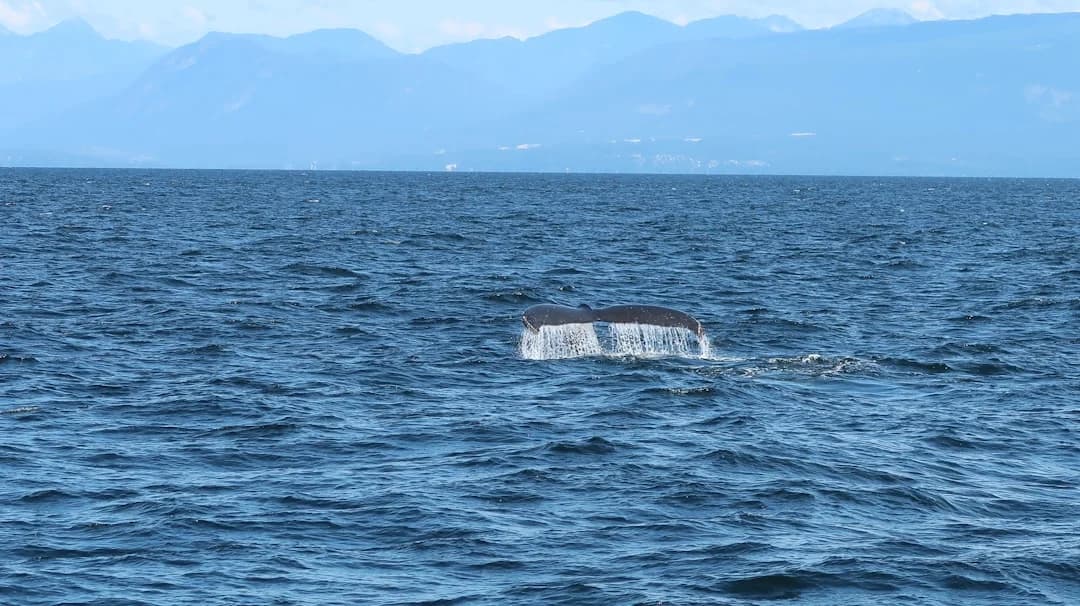
Photo by Florian Müller on Unsplash
The incident unfolding along Vancouver’s urban coast on May 4, 2026 placed a singular spotlight on the interaction between people, watercraft, and wildlife in one of North America’s busiest whale-watch corridors. A Sea-Doo rider collided with a grey whale just off Stanley Park, an event witnessed by onlookers along the Kitsilano shoreline and captured on multiple angles. The rider was seriously injured and transported to hospital, while officials immediately opened a federal investigation to determine whether regulations and safety protocols were followed in what many observers described as a preventable encounter. This event, described in real time by local outlets and national agencies, highlights not only an emergency response but also the broader questions of wildlife safety, boater education, and the evolving regulatory landscape around human-wildlife interactions in urban waters. The collision is widely referenced in reporting as part of a broader pattern of grey whale activity near Vancouver, raising the stakes for operators, regulators, and researchers who are watching a species that has increasingly appeared closer to shore in recent weeks. The incident underscores the need for robust data-informed risk management as communities balance recreation with conservation goals. (vancouver.citynews.ca)
By the evening of May 4, Vancouver officials were already mobilizing a coordinated response. Vancouver Police Department said it was assisting a federal investigation into the collision, with the Fisheries Department having jurisdiction to assess the whale’s health and the incident’s wildlife implications. While the operator of the Sea-Doo sustained serious injuries and was transported to hospital, authorities indicated that the whale’s health remained uncertain as officials sought to document the incident and prevent similar events in the future. Within hours, researchers from Marine Education and Research Society (MERS) publicly identified the whale as Grey Whale CRC-2688, noting that the animal appeared to be moving and feeding in the area, though it was too early to determine the full impact of the strike. The federal notification to Fisheries and Oceans Canada (DFO) signaled the start of a policy-oriented review alongside the ongoing medical and wildlife assessments. (vancouver.citynews.ca)
The next day, officials offered a more hopeful update about the whale’s condition, even as the investigation continued. Fisheries Department communications indicated that the grey whale was seen feeding and moving normally the following day, suggesting some resilience despite the high-speed impact. Vancouver Police reiterated that the case remained under federal oversight, with investigators meeting the operator and multiple witnesses while medical teams treated the rider on scene and later at a hospital. Observers noted that the whale’s exact health status could be difficult to determine in a dynamic marine environment, and agencies cautioned the public to respect the 100-meter safe distance rule around all whales, a rule that has real implications for the use of watercraft in urban marine spaces. (ckpgtoday.ca)
Section 1: What Happened
Timeline of events
The collision and immediate aftermath

-
On Monday evening, May 4, 2026, a Sea-Doo operator collided with a grey whale as the animal surfaced near Siwash Rock off Stanley Park in Burrard Inlet. The crash sent the watercraft into the air, and witnesses reported the rider being ejected and suffering serious injuries. Paramedics and Royal Canadian Marine Search and Rescue teams responded to the scene, and the rider was transported to a hospital in serious but stable condition. The incident drew a crowd of onlookers and prompted police and rescue teams to manage the shoreline area while capturing video footage from multiple angles. (vancouver.citynews.ca)
-
The whale’s immediate status remained unclear in the early hours, but initial reporting indicated it surfaced again and appeared to be moving. Marine safety authorities reminded boaters about minimum distance requirements, underscoring the ongoing risk to both people and wildlife in congested coastal zones. The federal Fisheries Department was notified and began its assessment as part of the joint investigation with the Vancouver Police Department. (vancouver.citynews.ca)
Location, species, and early observations
-
The incident occurred in front of Stanley Park, near Siwash Rock, a well-known waypoint along Vancouver’s waterfront where whale sightings have been reported in the weeks leading up to May 2026. Marine researchers quickly cataloged the animal identity—Grey Whale CRC-2688—based on prior sightings and distinct markings, a step that helps researchers track post-incident recovery and movement patterns in a crowded urban coastal environment. (vancouver.citynews.ca)
-
Public reporting, including a Vancouver CityNews account, documented the exact moment the Sea-Doo struck the whale and the craft became airborne, a scene that intensified the conversation around water-safety practices in high-traffic areas. The operator was rescued from the water by a nearby sailboat and later treated for injuries, with Coast Guard assistance noted in official statements. The eyewitness video evidence prompted calls for enhanced enforcement and education to prevent similar incidents in the future. (vancouver.citynews.ca)
Official responses and investigations
-
Vancouver Police Department confirmed that they were assisting a federal investigation into the collision, with Fisheries and Oceans Canada (DFO) taking the lead on wildlife-health considerations and potential regulatory implications. Investigators spoke with the operator and multiple witnesses, emphasizing a fact-based approach to determining causation, safety lapses, and potential policy adjustments. (vancouver.citynews.ca)
-
In subsequent days, Fisheries Department officials provided updates on the whale’s condition, noting that while health assessments in wild marine mammals are challenging, the whale was observed feeding and moving normally on Tuesday, indicating that the animal survived the initial encounter. This development, coupled with ongoing witness testimony and video review, positioned the case as a cornerstone for evaluating how urban-water activities intersect with protected marine life in Canadian waters. (ckpgtoday.ca)
-
The broader regulatory context—specifically the requirement for vessels to maintain at least 100 meters from all whales—was reiterated by authorities, reinforcing a standard that has direct implications for watercraft operators, tourist operators, and recreational users in Vancouver’s coastal zones. The incident also highlighted cooperation between municipal police, federal agencies, and non-profit research groups in rapid data collection and public communication. (vancouver.citynews.ca)
Key facts about the incident
- Date and time: May 4, 2026, around 7:30 p.m. local time, with subsequent public statements and coverage through May 5–6, 2026. (vancouver.citynews.ca)
- Location: Off Siwash Rock near Stanley Park, Burrard Inlet, Vancouver, British Columbia. (vancouver.citynews.ca)
- Participants: One Sea-Doo rider (injured) and the grey whale identified as Grey Whale CRC-2688 by MERS researchers. (vancouver.citynews.ca)
- Health status: Rider transported to hospital in serious but stable condition; whale health status initially uncertain, with sightings of the animal continuing in the area. (vancouver.citynews.ca)
- Regulatory and investigative steps: Federal Fisheries Department (DFO) notified; Vancouver Police Department assisting; wildlife-health assessments and potential regulatory implications are under review. (vancouver.citynews.ca)
Official responses and investigations
- The initial statements from the Vancouver Police Department framed the incident as a law-enforcement and wildlife-surveillance matter, with RCMSAR and other partners supporting the on-scene response. The Fisheries Department’s ongoing role in health assessment and regulatory evaluation reflects a broader, cross-agency approach to urban-wildlife incidents in Canada’s Pacific waters. (vancouver.citynews.ca)

Section 2: Why It Matters
Wildlife safety and regulatory implications
- The incident spotlights the delicate balance between recreation and wildlife protection in urban coastal environments. The 100-meter distance rule, reiterated by authorities, is a foundational safety standard designed to minimize disturbance and risk to marine mammals. In a city with busy waterways and dense pedestrian viewing areas, adherence to this standard is not just a legal obligation but a practical safeguard for both animals and people. The public communication around the rule emphasizes the scale of responsibility for operators and bystanders alike. (vancouver.citynews.ca)

-
Researchers and wildlife-advocacy groups have stressed the potential for ongoing confusion or variation in enforcement, particularly in high-traffic periods when whale activity can be episodic but highly visible. The identification of Grey Whale CRC-2688 by MERS, and the subsequent tracking of the animal after the collision, signals a data-driven approach to understanding how urban-wildlife interactions unfold in real time and how such events shape future policy adjustments. This alignment between on-the-ground reporting and scientific cataloging is a notable trend in how Canada’s maritime stakeholders are incorporating real-world data into decision-making. (vancouver.citynews.ca)
-
The incident also arrives within a broader context of increasing public attention to urban whale corridors, where repeated sightings have raised questions about vessel-speed restrictions, education programs for watercraft operators, and the effectiveness of current enforcement mechanisms. CityNews Vancouver highlighted ongoing sightings and the importance of “whale-safe boating” education as part of a growing movement among researchers and environmental groups to reduce collisions and entanglements. This conversation intersects with technology and market trends around monitoring, reporting, and risk-management tools used by coastal authorities, NGOs, and industry participants. (vancouver.citynews.ca)
Public response and stakeholder perspectives
-
Eyewitness accounts and media coverage captured a broad spectrum of reactions—from calls for stricter enforcement and better enforcement visibility to appeals for more responsible behavior by recreation users in whale-rich waters. The incident catalyzed discussions among stakeholders about how best to communicate risk in real time and how to translate public attention into durable safety practices. Journalists and researchers underscored the importance of speed-control technologies, geofenced zones in busy marine spaces, and improved public messaging to prevent reckless behavior near large marine mammals. (vancouver.citynews.ca)
-
Wildlife experts, including representatives from MERS and the Marine Education and Research Society, emphasized the need for education and behavior change, particularly among first-time or casual watercraft users who may not appreciate the proximity risks to sensitive species. They argued that the event should be a catalyst for enhanced outreach materials, more accessible reporting channels for incidents, and stronger incentives for compliant operation near urban whale habitats. While some observers lament the loss of wildlife in high-profile incidents, researchers stressed that the data gathered from this collision could inform targeted improvements in regulatory design and enforcement strategies. (cjme.com)
Broader context for watercraft safety and urban whale corridors
- Urban waterways around Vancouver have long been a focal point for both tourism and wildlife conservation. The May 2026 incident adds to a growing body of evidence that crowding, speed, and proximity to marine mammals can create high-risk situations, even for experienced operators. Industry observers point to opportunities for technology-driven solutions—such as automated speed-regulation systems, real-time wildlife alert networks, and enhanced training modules for operators—to reduce the likelihood of future collisions. Public agencies and non-governmental organizations are increasingly collaborating to design and test such interventions in a crisis-informed, data-driven manner. (vancouver.citynews.ca)
Section 3: What’s Next
Next steps in investigation and potential policy reviews
-
The federal Fisheries Department’s ongoing health assessment of the grey whale and the Vancouver Police Department’s role in the investigative process will shape both the immediate and longer-term policy responses. While it may take days or weeks to determine whether the incident resulted from operator error, equipment failure, or environmental factors (such as sea state or whale movement patterns), the authoritative bodies will compile the evidence to assess potential penalties, regulatory adjustments, or new enforcement measures. In parallel, researchers will monitor the whale’s post-incident movements to understand recovery trajectories and any indirect effects on local whale-watching practices. (ckpgtoday.ca)
-
Policymakers and regulators may consider revisiting urban-water management plans that define safe harbors for watercraft near areas with high whale activity. This could include revising speed limits in particularly sensitive zones, expanding mandatory education for watercraft operators about urban whale corridors, or piloting technology-based cues that alert operators when large marine mammals are in the vicinity. In a data-driven framework, agencies could also adopt standardized reporting templates for incidents, enabling consistency in how incidents are analyzed and compared across seasons and regions. (vancouver.citynews.ca)
Watch for updates and future actions
-
As authorities compile the final investigative report, expect continued public communication from the Fisheries Department and Vancouver Police Department about the incident’s outcomes and any policy changes. Media outlets across Canada’s regional networks have already signaled the potential for this event to influence wildlife-safety discourse, boating regulations, and operator training programs in urban waters. Observers should monitor official statements, agency portals, and primary-source releases from DFO for the most accurate, timely updates. (cjme.com)
-
Researchers and advocacy organizations may publish follow-up analyses on the incident’s implications for coastal ecology, vessel-traffic management, and the broader market for safety-focused watercraft technology. As new data becomes available, industry participants—ranging from watercraft manufacturers to safety-tech startups—could respond with product designs and service models aimed at reducing risk in whale-rich urban environments. The practical takeaway for the sector is a clearer signal that safety, data, and education are increasingly interwoven with operational viability in urban coastal economies. (ckpgtoday.ca)
What This Means for BC’s Tech and Market Landscape
-
The Grey whale collision with Sea-Doo off Vancouver 2026 incident sits at the intersection of urban wildlife management and the evolving technology-and-policy ecosystem that supports safe coastal recreation. In a market where watercraft operators, tourism outfits, and public agencies rely on real‑time data to navigate risk, the incident underscores a growing appetite for solutions that blend monitoring, education, and enforcement. For technology providers, there is a clear path to developing tools that help operators comply with distance regulations, avoid high-risk zones, and respond quickly when wildlife is present. For policymakers, the event provides a concrete case study for testing whether existing guidelines suffice or require enhancements to address the realities of dense urban coasts. (vancouver.citynews.ca)
-
From a market perspective, the incident could accelerate investments in training programs, certification for water-sport operators, and the expansion of wildlife-monitoring infrastructure in popular coastal corridors. Public attention and media coverage—spurred by the visibility of an urban whale feeding alongside a crowded shoreline—often translates into regulatory momentum, and it may prompt more robust data-sharing partnerships between researchers, rescue organizations, and industry players. As BC Times tracks technology adoption and market responses, readers can expect deeper dives into what new safeguards, devices, and standards are likely to emerge in the coming months. (vancouver.citynews.ca)
Closing
The May 4, 2026 collision near Stanley Park has already become a touchstone for how Vancouver, and coastal communities more broadly, balance recreation with wildlife preservation. The immediate human toll is sobering, the animal’s welfare remains under assessment, and the regulatory conversation is only beginning. As authorities complete their investigations, the data and public discourse that emerge will help shape safer practices for watercraft operators, more effective wildlife-protection strategies, and clearer expectations for communities that live with both the thrill of the coast and the vulnerability of its resident giants. BC Times will continue to monitor official updates from DFO, the Vancouver Police Department, and research groups such as MERS to deliver timely, data-driven coverage that informs readers without sensationalism.
On Vancouver’s waterfront, the lessons from this incident are not just about what happened, but about what could be prevented in the future. The collaboration among regulators, researchers, and the public today may yield stronger protections for wildlife, safer operating practices for watercraft, and a more resilient, informed community that can enjoy coastal life while safeguarding its most iconic marine neighbors. Staying informed means watching for official updates, supporting responsible boating education, and recognizing that every near-miss offers data that can prevent a future tragedy. (vancouver.citynews.ca)