LNG Canada Phase 2 Expansion Advances Toward 2026 FID

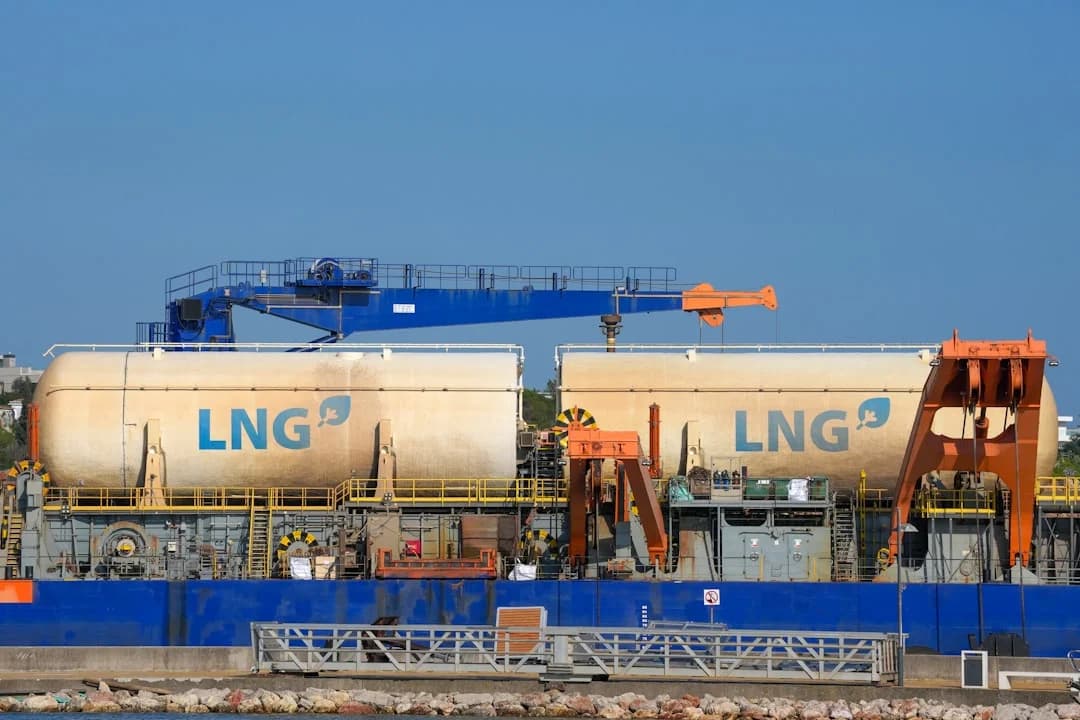
Photo by Markus Kammermann on Unsplash
In a development with potential implications for global LNG markets and Western Canada’s energy sector, LNG Canada Phase 2 expansion moved forward this week as key government and industry participants announced enhanced investment cooperation aimed at advancing a possible Final Investment Decision in 2026. The joint venture behind LNG Canada, a consortium that includes Shell, Petronas, PetroChina, Mitsubishi Corp., and Korea Gas Corporation, said it would work closely with federal and provincial authorities to address remaining items necessary to progress toward a potential FID for Phase 2. The government side signaled this effort as a national and provincial priority, underscoring the project’s significance for export capacity, regional employment prospects, and Canada’s role in global LNG supply chains. The formal framework coordinating these efforts was outlined in a May 14, 2026 announcement, with the Major Projects Office (MPO) activity and intergovernmental collaboration highlighted as central to accelerating review timelines and permitting processes. (canada.ca)
This development comes as LNG Canada and its five joint venture participants continue to advance the Phase 2 planning pipeline, including ongoing front-end engineering and design work and commercial term discussions tied to Coastal GasLink’s Phase 2 pipeline expansion. In recent months, engineering and FEED work has progressed under a pair of contracts designed to solidify the technical scope and cost basis for a large-scale expansion that would potentially double the plant’s LNG export capacity. The government’s framing of the agreement emphasizes collaboration with First Nations and other regional stakeholders as part of a broader, coordinated effort to bring Phase 2 closer to a potential FID, later in 2026. (canada.ca)
The immediate market context is clear: LNG Canada’s Phase 2 expansion would be a defining step in Canada’s LNG trajectory, potentially boosting export capacity from the current baseline to roughly the 28 million tonnes per annum (Mtpa) range, depending on the final project scope and approvals. Industry observers note that a formal FID by year-end 2026 would align with broader energy sector timelines that view 2026 as a pivotal window for major Canadian energy projects. Analysts, including those covering Canadian LNG developments, have highlighted the strategic importance of a timely FID for securing long-lead equipment, financing, and supplier commitments. While the exact schedule remains contingent on regulatory, indigenous consultation, and financing outcomes, the current momentum signals a renewed push to translate planning into commercial decision-making. (capp.ca)
Opening paragraph The opening note of LNG Canada Phase 2 expansion signals a renewed priority for Canada’s energy export strategy. The government’s willingness to coordinate with LNG Canada and provincial partners—alongside a robust FEED process with recognized engineering firms—is designed to de-risk the pathway to a potential FID in 2026. The government release framed the agreement as a concrete step toward closing the “final items” needed for a decision, reflecting a broader push to accelerate projects of national significance, particularly those with the potential to expand export infrastructure and create regionally concentrated employment. The timing coincides with a period when global LNG demand dynamics and North American energy logistics continue to evolve, placing Canada at a crossroads between expanding capacity and navigating environmental considerations and supply chain realities. (canada.ca)
Section 1: What Happened
Timeline of developments
September 2025: PMO referral and national prioritization

In September 2025, LNG Canada’s Phase 2 expansion was referred by the Prime Minister to Canada’s Major Projects Office for expedited consideration. This referral established the formal channel through which federal and provincial authorities would coordinate with LNG Canada to address remaining approvals, permits, and policy alignment required for a potential 2026 Final Investment Decision. The timeline underscores the project’s status as a nationally significant initiative and places Phase 2 within a framework of cross-government collaboration designed to reduce typical regulatory delays without compromising due process. The reference to MPO oversight signals an intent to streamline review while maintaining rigorous environmental and community engagement standards. (canada.ca)
May 14, 2026: Enhanced investment cooperation under a formal agreement
On May 14, 2026, the Government of Canada, the Government of British Columbia, and LNG Canada announced an agreement on enhanced investment cooperation. The release indicated a joint, collaborative approach to close the final items necessary to support a potential 2026 Final Investment Decision for LNG Canada Phase 2 expansion. The announcement framed the effort as a shared priority and noted ongoing work with First Nations, aligning with Canada’s broader objectives for major infrastructure projects that seek timely approvals while protecting environmental and community interests. This milestone followed months of FEED activity and commercial discussions and explicitly tied progress to the possibility of a 2026 FID. (canada.ca)
August 2025 and March 2026: FEED engine accelerates with contracting momentum
In August 2025, Fluor’s joint venture with JGC Corporation was awarded the Front End Engineering and Design (FEED) contract for LNG Canada Phase 2 expansion, marking a formal and external validation of the project’s engineering scale and cost-planning phase. The FEED work is intended to define the scope, estimate costs, and establish a robust basis for the later, more detailed engineering and procurement activities needed for an FID. Later, in March 2026, Técnicas Reunidas Canada E&C was selected to carry out FEED services for Phase 2 as part of an integrated approach with Coastal GasLink. These two contracts illustrate a broad, multi-vendor FEED framework designed to support a credible path to a potential FID by year-end 2026. The combination of FEED awards demonstrates a sustained, industry-grade planning cadence that underpins confidence in the project’s technical viability. (worldoil.com)
Supporting context: Capacity, scope, and infrastructure alignment
Analyses and industry reports consistently describe LNG Canada Phase 2 expansion as a doubling of the facility’s export capacity, moving from the current 14 Mtpa in Phase 1 to potentially 28 Mtpa with Phase 2. While project details remain subject to final approvals and project economics, several sources corroborate the two-train concept and the scale of investment under discussion, with estimates commonly centering on multi-billion-dollar capital outlays and long lead times for equipment and construction. The broader context includes related pipeline and integration work with Coastal GasLink Phase 2, including expansions to support increased gas throughput. Analysts and industry trackers emphasize that such coupling of LNG export capacity with pipeline capacity is typical for major expansions and requires coordinated timing across multiple regulators and partners. (capp.ca)
The governance and partnership structure
LNG Canada’s Phase 2 expansion remains a joint venture across five corporate partners: Shell, Petronas, PetroChina, Mitsubishi Corporation, and Korea Gas Corporation (KOGAS). This consortium structure remains central to decision-making, financing, and risk-sharing for the project. The May 2026 government announcements explicitly reference collaboration with First Nations and regional stakeholders, acknowledging the need for social license and community-based considerations alongside technical and financial milestones. The governance framework is designed to align private-sector capital plans with public policy objectives and Indigenous rights and economic participation. (canada.ca)
Commercial and pipeline milestones
A significant companion development is the agreement on commercial terms for the Phase 2 pipeline project between LNG Canada and Coastal GasLink, which helps to set the stage for a potential FID by aligning cost allocations, capacity expansions, and project finance timeframes. Industry observers note that such commercial terms are a prerequisite to de-risking the pipeline portion of Phase 2 and that the electrical and technical integration between the LNG facility and the pipeline network is a critical line item in the overall project plan. This development is widely reported inEnergy-focused outlets and industry analyses, illustrating the interconnected nature of Phase 2’s feasibility. (rbnenergy.com)
FEED progress and contractor engagement
FEED awards and scope
The FEED work awarded to Fluor/JGC (as reported in 2025) and the later award to Técnicas Reunidas for FEED services reflect the industry-standard practice of securing credible engineering partners to translate high-level concepts into executable project design. FEED activities are crucial to refining cost estimates, sequencing, and risk allocation as the project moves toward a final investment decision. The Edison-level scope typically includes defining process configurations, equipment lists, major utilities, site preparation needs, and capital cost ranges, all of which feed into financing models and regulatory filings. The ongoing FEED work also informs supply chain planning and contractor mobilization timelines, which are essential for a project of LNG Canada Phase 2’s scale. (nasdaq.com)
Engineering implications for capacity and timing
Industry reporting indicates that the Phase 2 facility would entail additional liquefaction trains and supporting infrastructure, with the objective of delivering a total export capacity around 28 Mtpa. Engineering work is expected to cover not only the trains themselves but also related utilities, storage, marine facilities, loading capabilities, and export gas handling systems. The pace of FEED development, coupled with government coordination, is a key determinant of the timeline to FID, because it directly affects cost certainty, financing readiness, and contractor engagement. Analysts highlight that the pace of FEED completion and the consolidation of commercial terms with Coastal GasLink’s Phase 2 expansion are major inputs to whether a 2026 FID is achievable. (capp.ca)
What’s Next in the near term
The decision window and potential triggers for FID

Market observers and industry participants have highlighted the expectation that LNG Canada Phase 2 could reach a Final Investment Decision by the end of 2026, subject to the successful resolution of remaining permitting, Indigenous consultation, and financial structuring. Reuters coverage on May 14, 2026, cited Canada’s Natural Resources Minister suggesting a decision window by year-end, reflecting the government’s emphasis on timely but thorough review processes for large-scale energy projects. While a firm public-date commitment from all parties remains contingent on the completion of outstanding steps, the combined FEED momentum and enhanced investment cooperation provide the practical underpinnings for a decision within the stated horizon. (lse.co.uk)
Financing, suppliers, and contracting readiness
If FID proceeds, LNG Canada Phase 2 would trigger multi-year procurement programs for major equipment, construction services, and marine infrastructure. The scale implies a substantial multi-billion-dollar capital expenditure, with liquidity and financing conditions likely shaped by global LNG demand, commodity price trends, and credit markets. The industry has noted that securing long-lead equipment and fabrications would require early visibility into shipper demand, buyer commitments, and term sheets with major lenders. The FEED stage’s completion would serve as the basis for more precise financing negotiations and risk-adjusted returns calculations for project sponsors and partner companies. (worldoil.com)
Indigenous partnership and community engagement
The May 2026 government releases emphasize continued collaboration with First Nations and local communities as part of the project’s social license and governance framework. This engagement is not only an ethical and legal requirement but also a practical element of project risk management and workforce planning. The engagement approach includes early and ongoing consultation, opportunities for economic participation, and a clear framework for benefit-sharing that aligns with Canada’s inclusive development goals. Observers stress that the success of Phase 2 will depend in part on the ability of LNG Canada and its partners to maintain constructive dialogues with Indigenous communities along the Coastal GasLink corridor and in Kitimat. (canada.ca)
Section 2: Why It Matters
Market and global LNG implications
Canada’s role in global LNG supply and competition

LNG Canada Phase 2 expansion represents a potential accelerant for Canada’s role in the global LNG market, particularly in meeting growing demand from Asian buyers and other importing regions. By potentially doubling export capacity, Canada could become a more influential supplier in the Atlantic-Pacific LNG trade routes, depending on international market dynamics and project timelines. The ongoing discussions and agreements among federal and provincial authorities, coupled with private-sector commitments, reflect a broader policy objective to diversify energy exports, improve energy security for customers, and create a more resilient Canadian LNG value chain. Industry analyses and government briefings position Phase 2 as a strategic project with cross-border economic implications, including potential effects on regional job creation and supply chain development. (capp.ca)
Price and demand outlook
Global LNG demand has been characterized by volatility, with price signals and buyer commitments influencing project economics. Analysts note that a timely FID by 2026 would be favorable for capitalizing on current demand trends, while a delayed decision could compress project economics if financing costs rise or if buyer commitments shift. The Phase 2 expansion would be sized to meet incremental demand growth while integrating with existing export capacity, offering potential price resilience for a Canadian export program that seeks to diversify its buyer base and contract terms. While precise market forecasts vary, the general consensus among major market analyses is that a larger, more diversified LNG export capacity from Canada would contribute to a more flexible North American LNG supply landscape. (hartenergy.com)
Capacity and throughput considerations
LNG Canada Phase 2 is widely discussed in industry circles as a two-train expansion with a total target capacity near 28 Mtpa. This figure is repeatedly cited in policy summaries, market analyses, and industry trackers as the baseline for the expansion’s potential outcome, though final capacity will depend on the official FID scope and regulatory approvals. The current Phase 1 facility operates at 14 Mtpa, and credible projections link Phase 2 to a doubling of throughput, with corresponding adjustments to pipeline capacity and marine logistics. These capacity considerations are central to evaluating the project’s scale, financing needs, and potential macroeconomic impact on Western Canada’s energy sector. (giignl.org)
Economic and regional impact
Local employment and supply chain effects
A project of LNG Canada Phase 2’s magnitude is expected to generate a substantial regional economic ripple, including construction activity, long-term operation and maintenance jobs, and supplier opportunities across British Columbia and Western Canada. The collaboration framework with First Nations and regional stakeholders adds a dimension of community engagement and value capture that goes beyond direct employment. While the exact job creation numbers will depend on project timing and the final FID, industry observers generally anticipate meaningful, long-duration employment and training opportunities across multiple trades and professional disciplines. The government’s emphasis on coordinated investment signals a recognition that Phase 2 could be a meaningful driver of regional economic activity if timely progress is achieved. (canada.ca)
Indigenous participation and benefit-sharing
The Phase 2 planning process has increasingly integrated Indigenous partnerships as a core element of project development. The government’s engagement framework underscores the expectation that LNG Canada will work with First Nations along the pipeline and terminal footprint to ensure meaningful benefits, participation opportunities, and robust environmental and cultural safeguards. While the specifics of benefit-sharing arrangements continue to evolve, the emphasis on Indigenous collaboration aligns with Canada’s broader policy direction for major resource projects and has the potential to shape project risk profiles and sequencing. (canada.ca)
Environmental and regulatory context
As with any large LNG development, environmental considerations, spill risk management, marine and land-use planning, and climate policy alignment weigh into the decision-making process. The FEED work and regulatory engagement are designed to address these considerations early, reducing the likelihood of late-stage surprises. The Government of Canada’s recent announcements emphasize a transparent, collaborative approach to approvals that balances project economics with environmental stewardship and community well-being. Stakeholders will be watching how environmental reviews, local permitting, and Indigenous undertakings interact with the project’s capital scheduling and financing plans. (canada.ca)
Broader energy policy and regional significance
Policy alignment and national significance
LNG Canada Phase 2 expansion sits at the intersection of provincial energy strategy, federal policy on resource development, and Canada’s climate and energy objectives. The enhanced investment cooperation framework is a mechanism to align these policy streams with project economics, ensuring that a potential FID reflects consistent standards of environmental protection, Indigenous rights, and regional benefits. The alignment is particularly critical given the project’s scale and its potential to influence Canada’s export mix, energy security, and relations with global LNG buyers. Analysts see this alignment as a precedent for how future major energy projects could be expedited through formal, cooperative governance models while maintaining rigorous oversight. (canada.ca)
Section 3: What’s Next
Timeline, next steps, and watch points
Short-term milestones (months ahead)
- FEED progress completion and validation: The ongoing FEED work being conducted by Fluor/JGC and Técnicas Reunidas will continue to refine process configurations, cost estimates, and project scope. The outcomes of these FEED efforts are critical inputs for the formal project economics and financing plan should the FID proceed.
- Finalization of commercial terms with Coastal GasLink: The commercial alignment for Phase 2’s pipeline component will be a crucial gating item. The industry has highlighted the importance of clear, long-term capacity commitments and cost arrangements to de-risk financing. (nasdaq.com)
- Indigenous and regulatory milestones: Ongoing consultations, impact assessments, and regulatory approvals will continue to shape the timetable. The government’s enhanced investment cooperation seeks to streamline these processes while preserving environmental and community safeguards. (canada.ca)
Medium-term outlook (late 2026 and beyond)
- Potential Final Investment Decision (FID): If the items identified in the May 2026 agreement are satisfactorily closed, and financing is secured, LNG Canada Phase 2 could reach an FID by the end of 2026, paving the way for procurement, construction planning, and mobilization to begin in 2027. Several market analyses and industry updates support this as a plausible timeline, while noting that the actual date will depend on multiple interdependent factors. (lse.co.uk)
- Construction and commissioning path: A successful FID would trigger a multi-year construction program, potentially extending into the early to mid-2030s, with milestones tied to equipment deliveries, compressor stations, pipeline In-service deadlines, and marine infrastructure readiness. The scale of the project suggests extended capital mobilization, with potential multiparty contracting and staged commissioning. (rbnenergy.com)
What to watch for as the year unfolds
- Financing clarity: How banks, lenders, and export credit agencies price the project and the terms that will govern long-lead equipment procurement and project finance.
- Market demand signals: The pace of LNG demand recovery or shifts in buyer commitments, particularly in Asia, will influence the perceived risk-adjusted returns of Phase 2 and may affect decision timelines.
- Regulatory and community processes: Any developments in Indigenous agreements, environmental reviews, or port and marine approvals will be critical to the project’s ability to stay on track for a 2026 FID.
- Supplier engagement and lead times: With the magnitude of the project, securing reputable suppliers and long-lead equipment will be a focal point of the planning and procurement phases, influencing project risk and schedule. (worldoil.com)
Closing
As LNG Canada Phase 2 expansion advances through a coordinated, government-supported pathway, the project sits at a pivotal juncture for Canada’s LNG ambitions and regional economic development. The May 2026 enhanced investment cooperation framework represents more than a procedural milestone; it signals a deliberate effort to align private-sector capital, public policy, and community interests in a manner designed to de-risk a multibillion-dollar expansion. The coming months will determine whether the project can secure a 2026 FID and begin the next phase of construction and commissioning, or whether the path will pause to address outstanding regulatory, financing, or community considerations. For readers and stakeholders tracking LNG Canada’s trajectory, the key indicators will be the FEED outcomes, the finalization of the Coastal GasLink Phase 2 commercial framework, and the government’s progress toward formal approvals and financing arrangements. Stay tuned to continued reporting as new updates emerge on the LNG Canada Phase 2 expansion and its implications for Canada’s energy export strategy. (canada.ca)