Look West Marine Technology Testbed Expands Across BC

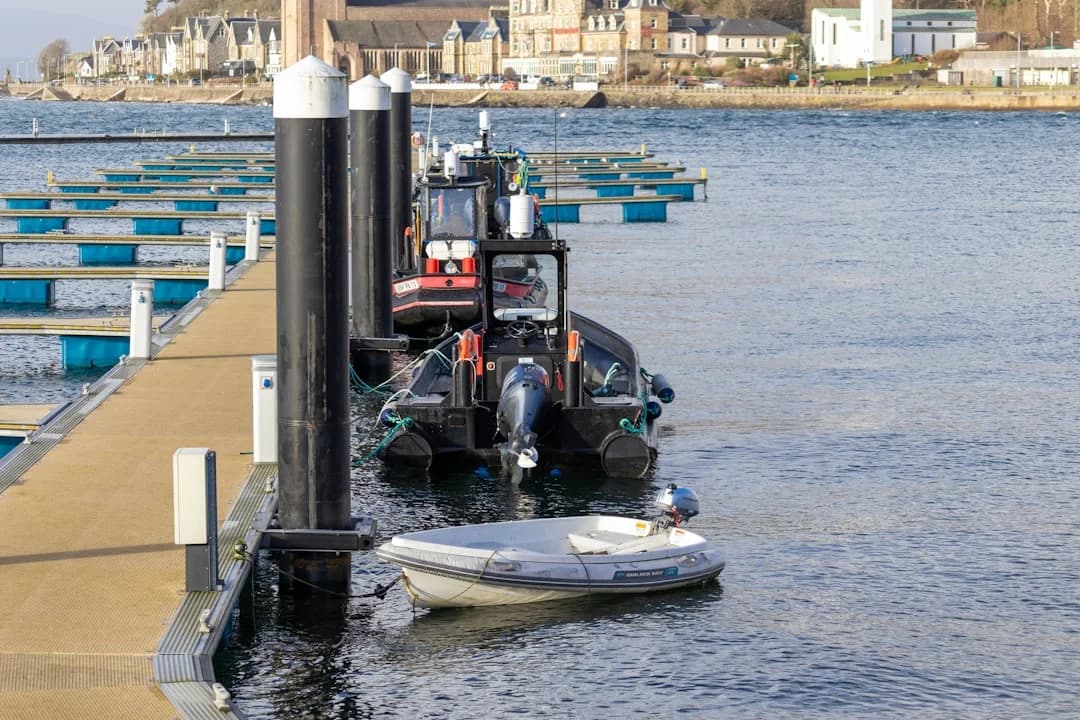
Photo by Andrew Dawes on Unsplash
British Columbia’s government and its innovation partners today unveiled a provincewide marine and coastal testbed, a concrete step in the Look West strategy designed to accelerate coastal technology, environmental monitoring, and resilience across the province. The Look West marine technology testbed—launched March 27, 2026, in Vancouver and across multiple coastwise sites—constitutes the seventh real-world testbed within the province’s Integrated Marketplace program. The announcement signals a shift toward deploying homegrown solutions at scale, with a focus on decarbonization, efficiency, and sovereignty in British Columbia’s expansive marine economy. This development matters because it creates a structured, funding-backed pathway for small and medium-sized BC tech firms to test, validate, and scale technologies in environments that mirror commercial maritime operations, government facilities, and Indigenous-led stewardship initiatives. The province’s testbed strategy aims to translate lab concepts into market-ready products while providing reference cases to attract buyers and investors globally. The Look West marine technology testbed, as described by government officials, is a tangible mechanism to connect provincial innovation with national defense and economic objectives, aligning with BC’s broader Look West plan to grow jobs, diversify markets, and strengthen Canada’s coastal security posture. (news.gov.bc.ca)
In the immediate terms, the new testbed will host a suite of pilot projects that showcase how BC-made solutions can address real-world marine challenges. The province’s press materials identify targets such as power supply, offshore energy, naval defense, marine robotics, vessel optimization, ocean-observing systems, connectivity, and coastal-resilience tools. The aim is to create a real-world environment where technology developers can test, deploy, and scale innovations, then translate outcomes into market-ready deployments with industrial buyers across Canada and beyond. The initiative sits within Innovate BC’s Integrated Marketplace framework, a program designed to de-risk technology adoption by pairing BC innovators with industrial customers and reference sites. The announcement also notes that the Look West strategy seeks to secure a more meaningful share of federal defense contracts for BC-based suppliers while expanding diversification across technology sectors. These elements collectively position the Look West marine technology testbed as a high-priority, multi-stakeholder project with potential for durable economic and security benefits. (news.gov.bc.ca)
The financing and the scale of the initiative are non-trivial. Quick facts released with the announcement show the province’s Integrated Marketplace program carrying as much as $41.5 million from the BC Ministry of Jobs and Economic Growth and $11.7 million from PacifiCan (the federal regional development agency). The initiative joins six other active testbeds across BC and emphasizes reducing emissions, boosting efficiency, and growing the economy while creating good-paying jobs. The announcement also highlights that some testbed projects may involve dual-use technologies, reflecting the broader Look West objective of aligning economic development with national security priorities. The project’s funding and governance structure—delivered through Innovate BC—illustrates how BC is formalizing a pipeline from pilot to scale. (news.gov.bc.ca)
Section 1: What Happened
Overview of the Look West marine technology testbed launch
British Columbia publicly launched a provincewide marine and coastal testbed on Friday, March 27, 2026, as a new element of the Look West strategy. The news release, issued from Vancouver and backed by the Ministry of Jobs and Economic Growth, states that the testbed is designed to help BC tech companies test their technology for environmental monitoring, vessel optimization, coastal resilience, and Canadian sovereignty. The testbed’s purpose is to provide a real-world environment where innovations can be tested, deployed, and scaled with the assurance of a pathway to market. The initiative is described as the province’s seventh Integrated Marketplace testbed, a point underscoring the program’s scale and maturity. The release also emphasizes that this Look West marine technology testbed is designed to de-risk technology adoption for industry customers while accelerating the commercialization of BC innovations. (news.gov.bc.ca)
Timeline and milestones tied to the province’s Look West strategy
- March 27, 2026: Public announcement and launch of the Look West marine technology testbed in Vancouver, outlining its scope, funding, and participating partners. The news release identifies the testbed as the seventh in the Integrated Marketplace program and notes plans to apply Made-in-BC technology to several high-priority marine challenges. The timing marks a concrete milestone for the province’s Look West plan to mobilize innovation as a driver of jobs and national security-related outcomes. (news.gov.bc.ca)
- By design, the testbed links to a broader ecosystem that includes Innovate BC’s Integrated Marketplace, a platform purpose-built to connect BC solution providers with real-world industrial uses—from port operations to coastal infrastructure—so that innovations can move from test to deployment with lower risk and faster market access. The integration with PacifiCan and the significant provincial funding underscores the government’s priority on translating research and pilot projects into scalable regional and national impact. (news.gov.bc.ca)
Early pilot projects and participating partners
The Look West marine technology testbed’s initial portfolio includes three documented pilots that illustrate the program’s dual aim of practical performance and measurable impact:
- Cleaner, more efficient vessels: Offshore Designs, in collaboration with KOTUG Canada and the SC’IȺNEW First Nation, will deploy underwater robotic vessel-cleaning technology tested in Beecher Bay with a $290,000 Integrated Marketplace investment. The project aims to reduce fuel consumption and underwater noise while enabling local vendors to quantify long-term operational benefits. (news.gov.bc.ca)
- Indigenous-led salmon monitoring and enhanced data: The Lax Kw’alaams First Nation, Ocean Aid, and Salmon Vision are partnering to augment Indigenous-led salmon population monitoring with AI-enabled data streams. The province has invested more than $360,000 through the Integrated Marketplace to reduce manual labor, improve crew safety, cut emissions, and support sustainable monitoring and selective harvest, integrating traditional stewardship with modern analytics. This project exemplifies Look West’s emphasis on Indigenous partnerships and data-enabled environmental stewardship. (news.gov.bc.ca)
- Smarter shore power and decarbonization: VoltSafe will deploy a smart shore-power solution at the Royal Vancouver Yacht Club’s Jericho marina. With $387,000 provided through the Integrated Marketplace, the live test will evaluate safety, reliability, and operational benefits in a real marina setting, with potential downstream benefits for emissions reductions across small vessels and local harbors. The BC government positions this initiative as a demonstration of Look West’s clean-energy maritime priorities and safety objectives. (news.gov.bc.ca)
Beyond these three projects, the release notes that the Integrated Marketplace has already helped BC companies scale pilots to international markets. It highlights that A&K Robotics has deployed Cruz Mobility Pods internationally (Madrid-Barajas Airport) after a successful Vancouver International Airport pilot, and MarineLabs has secured contracts with terminal operators along the U.S. Gulf Coast, leveraging testbed testing with Prince Rupert Port Authority. The Look West marine technology testbed thus serves as both a local capability and a signal to global buyers that BC solutions can operate under real-world conditions and scale to worldwide deployments. (news.gov.bc.ca)
Funding and governance: how the testbed is financed and run
A key facet of the Look West marine technology testbed is its funding architecture and delivery mechanism. The province notes that the Integrated Marketplace is funded by BC’s Ministry of Jobs and Economic Growth (up to $41.5 million) with a federal contribution through PacifiCan (up to $11.7 million). The program is delivered by Innovate BC, a Crown agency that supports BC companies in scaling innovations from pilots to market uptake. The Look West strategy, of which the Integrated Marketplace is a component, explicitly addresses job creation, diversification of markets, and the growth of targeted sectors such as technology, aerospace, and marine. The release emphasizes that the testbed is designed to connect BC tech with industrial buyers, providing a “reference case” that helps BC companies market their solutions to customers around the world. Peter Cowan, president and CEO of Innovate BC, described the effort as a powerful model for advancing safety, sustainability, and economic growth in BC’s coastal economy. Ravi Kahlon, the Minister of Jobs and Economic Growth, framed the testbed as a concrete embodiment of Look West, combining innovation with local collaboration to deliver benefits for people and communities. (news.gov.bc.ca)
Section 2: Why It Matters
Impact on the coastal economy, jobs, and regional competitiveness
The Look West marine technology testbed is positioned to influence British Columbia’s coastal economy in several interlocking ways. First, the program is designed to attract, test, and demonstrate BC-made innovations that can improve environmental monitoring, vessel efficiency, and coastal resilience. These improvements have direct implications for ports, fisheries, and maritime services across the coast, helping to reduce emissions and increase productivity. In the framing of BC’s Look West strategy, the Integrated Marketplace acts as a pipeline for innovation to move from pilot to procurement, thereby creating a pathway for local companies to secure reference customers and expand into international markets. This mechanism aligns with BC’s broader goal of building a more resilient, export-oriented economy that leverages the province’s geographic advantages for maritime industries. The public funding and cross-government coordination behind the testbed underscore government commitment to turning research into jobs, a pragmatic approach to industrial strategy that many observers view as a model for other sectors. (news.gov.bc.ca)

Photo by Slim MARS on Unsplash
The governance architecture and sovereignty implications
The Look West framework explicitly links coastal tech deployment to Canada’s broader strategic interests, including sovereignty in maritime operations and defense procurement. The government notes that some testbed technologies may be considered dual-use, underscoring the potential to bridge civilian market needs with national security considerations. The Look West plan includes a target for BC to secure a meaningful share of federal defense vessel contracts, which positions the province as a credible supplier of advanced naval and maritime systems. This framing matters for regional technology ecosystems that want to align product development with public-sector buyers, while also ensuring that innovation remains anchored in BC’s workforce and supply chains. The integrated approach—linking environmental monitoring, coastal resilience, and defense-supply opportunities—illustrates how BC intends to translate coastal tech leadership into durable economic and strategic advantages. (news.gov.bc.ca)
Real-world pilots as proof points for industry and policymakers
The initial trio of projects provides concrete proof points that BC’s coastal tech ecosystem can deliver measurable benefits. For example, the KOTUG Canada and Offshore Designs collaboration on underwater vessel-cleaning technology aims to deliver fuel savings and noise reduction, which has implications for operational efficiency and environmental stewardship. The Lax Kw’alaams First Nation-led salmon monitoring initiative demonstrates how Indigenous knowledge and AI-enabled analytics can enhance ecological stewardship while creating pathways for employment and community leadership in tech-enabled conservation. The VoltSafe shore-power project tests a critical decarbonization strategy in active marina environments, potentially scaling to other ports and maritime facilities if results are favorable. Taken together, these pilots show how Look West aims to blend environmental, economic, and sovereignty goals into a coherent portfolio that can be measured against clear performance indicators and procurement outcomes. (news.gov.bc.ca)
Section 3: What’s Next
Timelines, next steps, and key milestones to watch
- Scaling pilot deployments: If the Look West marine technology testbed proves successful, expect a pipeline of additional pilot projects under the Integrated Marketplace umbrella. The press materials indicate that new testbed deployments will be designed to address additional priority areas, including ocean-observing systems, connectivity, and supply-chain optimization. The exact list of forthcoming pilots was not disclosed in the initial release, but the framework is designed to accommodate multiple concurrent projects across BC’s coastal communities. (news.gov.bc.ca)
- Expanding stakeholder participation: The Look West strategy emphasizes partnerships across government, Indigenous communities, universities, and industry. Expect more formal announcements detailing new partner organizations, funding allocations, and project scopes as Innovate BC and PacifiCan align on 2026–2027 work plans. The Look West strategy’s emphasis on broad collaboration suggests a growing ecosystem of technology providers, research institutions, and coastal communities contributing to the testbed’s evolution. (www2.gov.bc.ca)
- Procurement and export outcomes: A central objective of the Integrated Marketplace is to de-risk technology adoption and create market opportunities. As projects mature, BC companies should begin to see more procurement opportunities with industrial buyers in Canada and abroad. BC government officials highlighted the aim to help firms translate pilot results into export-ready capabilities, which will be a critical indicator of the program’s success over the coming 12–24 months. (news.gov.bc.ca)
What to watch in the broader Look West ecosystem
The Look West strategy positions coastal tech as part of a larger national and regional economic development agenda. The Look West pdf frames strategic priorities such as diversifying markets, expanding maritime infrastructure, and aligning procurement with innovation and sovereignty goals. Observers will be watching how the integrated marketplace and its testbeds, including this new Look West marine technology testbed, translate into a more robust BC tech export profile, stronger port efficiency, and a more resilient coastline in the face of climate change and growing maritime traffic. The strategy explicitly ties innovation to job creation, and policymakers will be evaluating progress through metrics such as jobs created in marine tech, contracts awarded to BC vendors, emissions reductions realized, and the number of innovations adopted by industrial buyers. (www2.gov.bc.ca)
Industry and policy context that frames the testbed’s significance
BC’s Trade and Invest BC program and the broader Look West strategy provide a policy and economic backdrop for the new testbed. The province has long highlighted BC as a hub for ocean technology, with a history of deploying large-scale marine observatories and research infrastructure along the coast. The Look West plan documents emphasize the role of BC-based companies in defense and maritime procurement, along with the province’s unique geographic advantages. The combination of public funding, cross-government coordination, and a pathway to export markets suggests that the Look West marine technology testbed is intended not merely as a pilot project, but as a durable component of BC’s industrial strategy for the oceans economy. (www2.gov.bc.ca)
Closing
The Look West marine technology testbed signals a significant step in British Columbia’s effort to fuse innovation, coastal resilience, and national security in a single, investable program. By tying together environmental monitoring, vessel optimization, indigenous stewardship, and shore-power decarbonization within a provincewide framework, BC is attempting to create a scalable template for other sectors seeking to balance economic development with responsible governance. The early pilots offer tangible proof points that BC-made technologies can operate in real-world marine settings, deliver measurable benefits, and attract international attention. As Innovate BC and its partners monitor the pilots and begin onboarding additional projects, readers can expect ongoing updates on how the Look West marine technology testbed translates into jobs, investment, and better coastal outcomes for communities across the province. For ongoing coverage, BC Times will track project results, funding updates, and procurement milestones as the Look West strategy continues to unfold across British Columbia’s coastline. (news.gov.bc.ca)