Mass Timber Construction in British Columbia: Tech Trends

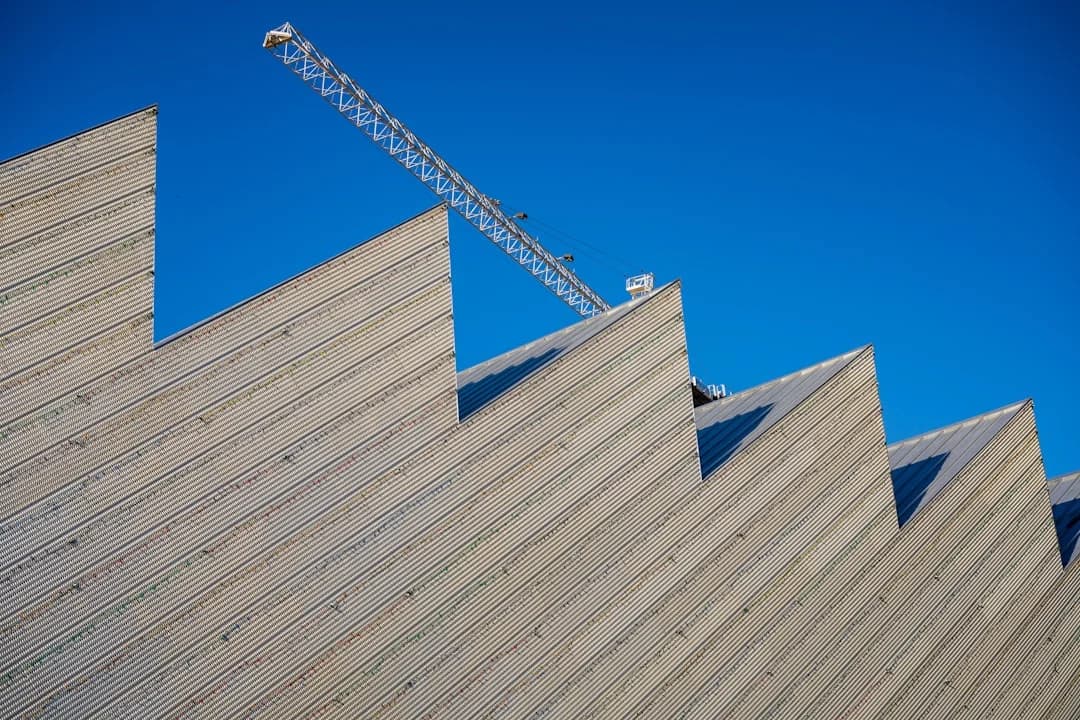
Photo by Olga Iacovlenco on Unsplash
Mass timber construction in British Columbia is entering a sharper inflection point. In mid-2026, the province continued to expand where and how mass timber can be used, aligning building codes, government programs, and industry investments to accelerate low-carbon, faster-build projects. The timing matters: as BC codifies taller timber structures and federal and provincial bodies boost funding for mass timber innovation, developers, architects, and builders are adapting their workflows to accommodate engineered wood at scale. This shift is not just about constructing taller buildings; it’s about strengthening BC’s wood products ecosystem, expanding jobs, and reducing the carbon footprint of construction. BC’s leadership in mass timber—already evident in projects and policy over the past decade—reached another decisive phase in 2026, with updates to codes and programs that are shaping the technology and market trends across the province. (www2.gov.bc.ca)
BC’s mass timber story isn’t new, but it’s moving from niche pilot projects to mainstream market momentum. The BC government’s mass timber page emphasizes a multi-year action plan that includes expanding supply, modernizing regulations, and growing the workforce. The page notes that BC has expanded mass timber construction opportunities to taller buildings—up to 18 storeys—and that owners and developers can build nearly any building type using mass timber under the updated codes. This expanded height threshold has already unlocked new markets, enabling everything from schools and libraries to offices and housing to be designed and built with mass timber. The broader climate rationale remains central: mass timber can store carbon and replace more carbon-intensive materials, contributing to lower-emission construction while delivering other benefits such as time savings through prefabrication. (www2.gov.bc.ca)
Looking at the policy and funding landscape, the Province’s mass timber leadership intersects with federal commitments. On May 14, 2026, Natural Resources Canada announced a $12.4-million federal investment in 14 projects across British Columbia designed to advance low-carbon wood technologies, expand the use of mass timber in construction, and diversify Canada’s forest-product markets. The Richmond, BC-based release highlights that these programs—covering investments in forest industry transformation, green construction through wood, Indigenous initiatives, and the Global Forest Leadership Program—are designed to accelerate adoption of wood solutions in mid- to high-rise buildings and strengthen regional economies. In parallel, BC’s own 2026-27 budgetary commitments through Forestry Innovation Investment (FII) outline multi-million-dollar plans to boost market development, training, and research in mass timber and prefab. The combination of federal funds and provincial programs signals a coordinated push to grow BC’s mass timber supply chain and construction activity. (canada.ca)
Mass timber’s profile in BC is anchored by landmark buildings and iconic milestones. The province’s narrative cites the Brock Commons Tallwood House at the University of British Columbia as a watershed project—opened in July 2017, it was once the world’s tallest hybrid mass timber building. That achievement helped catalyze subsequent policy and design guidance, contributing to later updates that expanded mass timber options in the building code. The BC government’s mass timber pages also point to the Wood Innovation and Design Centre in Prince George as an early demonstration of local wood technology, with Brock Commons serving as a reference point for later code and design developments. These milestones are frequently cited in BC’s official materials as proof points for what mass timber can achieve when a policy and market ecosystem align. (www2.gov.bc.ca)
A broader industry context reinforces why mass timber matters for BC’s technology and market trends. BC’s mass timber leadership is underpinned by a strong manufacturing base and a global outlook. The province reports having more mass timber buildings per capita than most North American jurisdictions, with a stock that exceeded 285 known mass timber structures by the end of 2020. That early density laid the groundwork for subsequent scale-up in design, engineering, and offsite fabrication. In 2025, Woodrise Vancouver showcased BC’s global impact: hundreds of participants from dozens of countries, BC’s share of North American mass timber manufacturing, and continued government support for demonstration projects and training. The event illustrated how BC intends to sustain momentum by blending policy, industry collaboration, and international outreach. (www2.gov.bc.ca)
Beyond projects and policy, BC’s mass timber push is also framed by research, standards development, and workforce training. The province’s mass timber action plan emphasizes modernization of regulations, professional training, and a stronger interface among forestry, manufacturing, construction, and Indigenous communities. The official materials describe a path that includes mass timber demonstrations, code development, and targeted research to address performance, fire safety, and design practices. The BC government also highlights a long-standing Wood First policy that has shaped provincial procurement and catalyzed the use of wood in provincially funded projects since the late 2000s. Although the Wood First Act predates modern mass timber proliferation, its core idea—prioritizing wood in public construction—remains a cultural and regulatory backbone for today’s mass timber agenda. (www2.gov.bc.ca)
Section 1: What Happened
Policy evolution and code changes
- Expanded mass timber opportunities to 18 storeys have become effectively operational in BC codes, expanding the range of projects that can use mass timber beyond low- to mid-rise buildings. The BC Mass Timber page explicitly states that BC has expanded mass timber construction opportunities for taller buildings, up to 18 storeys high, enabling a broader set of building types to be constructed with mass timber. The accompanying materials point to the “Advancing Mass Timber in BC Codes” document that lays out the specifics of height, encapsulation requirements, and building-type allowances. This shift is a direct result of coordinated code development and regulatory modernization designed to reduce barriers to mass timber adoption. (www2.gov.bc.ca)
- Public-facing background materials from 2023 highlighted an explicit pathway toward 18-storey mass timber in the BC Codes 2024 changes, with public comments that informed regulatory updates and a timeline aiming for adoption in spring 2024. The December 2023 BC Housing news release detailed the proposed changes and the goal of expanding mass timber opportunities, including taller buildings and a broader set of building types (schools, shopping centres, industrial facilities). The public process and subsequent updates underscore BC’s commitment to codifying mass timber as a core construction method. (archive.news.gov.bc.ca)
- The BC Codes modernization is complemented by dedicated mass timber guidance within the province’s own Codes and Standards ecosystem, including the BC Building Code 2024 amendments for mass timber. The ministry’s documentation and the “Advancing Mass Timber in BC Codes” brief articulate how the changes were designed to unlock mass timber adoption at scale, including specific envelope and encapsulation requirements that align with safety standards. (www2.gov.bc.ca)
Investment and market development
- In May 2026, Canada’s federal government announced a $12.4 million investment across BC to support low-carbon wood technologies and expand mass timber use in construction. The release highlights the role of NRCan’s programs in funding mass timber projects, applying to design, permitting, research, and construction activities that showcase new mass timber capabilities. This national-level support complements provincial work and signals a synchronized strategy to scale BC’s mass timber sector internationally. Richmond, BC, was among the focal locations for these investments. (canada.ca)
- BC’s Forestry Innovation Investment (FII) program continued to fund market diversification and workforce development for 2026-27, with more than $9 million planned for market initiatives and more than $4 million for Wood First education, design support, and technical training. The detailed breakdown shows investments in Vietnam, China, India, Japan, the UK, and other markets, with dedicated activity to advance mass timber and prefabricated wood construction. The plan also emphasizes technical support for building officials, engineers, architects, and wood manufacturers to accelerate private and public sector uptake. This multi-pronged funding approach demonstrates how BC intends to create demand, build capacity, and sustain momentum for mass timber. (news.gov.bc.ca)
- A key program in BC’s mass timber ecosystem is the Mass Timber Demonstration Program, which provides funding to support new mass timber systems and construction processes. The program emphasizes knowledge-sharing and results dissemination to pave the way for more mass timber projects, including cross-collaboration with universities, industry associations, and First Nations partners. The BC government’s pages show that demonstration projects and associated research were central to BC’s strategy for mass timber scale-up. (www2.gov.bc.ca)
Notable projects and milestones
- Brock Commons Tallwood House at UBC remains a touchstone in BC’s mass timber narrative. Opened in July 2017, it was widely recognized as the tallest hybrid mass timber building at the time and influenced subsequent model-building, fire-design, and code provisions that extended tall timber construction. This project continues to be cited as a benchmark for how mass timber can be deployed at scale in a university setting and beyond. (www2.gov.bc.ca)
- The Wood Innovation and Design Centre in Prince George stands as an early exemplar of how BC-based mass timber technology can be integrated into innovative architectural forms. It, along with Brock Commons, serves as a reference point for ongoing conversations about code adoption and design best practices. These projects are frequently referenced within BC’s official mass timber materials as proof of feasibility and performance in real-world settings. (www2.gov.bc.ca)
- Wood Rise 2025, staged in Vancouver, underscored BC’s leadership in mass timber globally. The event drew international participants and highlighted BC’s market share in North American mass timber manufacturing, the province’s capacity to supply a significant portion of the region’s demand, and government commitments to ongoing demonstrations and training. The event also highlighted a $2 million commitment to Mass Timber Demonstration Program activities and the ongoing expansion of BC’s wood-construction ecosystem. (britishcolumbia.ca)
Section 2: Why It Matters
Impact on developers, builders, and the supply chain
- The 18-storey expansion for mass timber in BC codes expands the envelope of projects eligible to use engineered wood in mid- to high-rise developments. This change directly affects developers evaluating project feasibility, timelines, and carbon footprints—particularly in dense urban settings where rapid construction and reduced site disruption are highly valued. By enabling taller timber buildings, BC broadens the market for mass timber products and encourages prefab and off-site manufacturing pipelines. BC’s official materials frame this as a pathway to secure supply chains, support local mills, and accelerate the delivery of housing and commercial spaces. (www2.gov.bc.ca)

- The federal investment program and BC-specific market development funding work in tandem to create demand and capability. For developers, this translates into clearer funding channels, more readily available design guidance, and a more predictable regulatory environment for timber-based projects. The NRCan release highlights how mass timber technologies will be deployed in construction projects, while BC’s FII strategy details market diversification activities that facilitate cross-border sales, code adoption, and training across design and construction disciplines. For BC communities, this combination of policy, funding, and demonstration projects aims to sustain local jobs and keep mills operating. (canada.ca)
- The Mass Timber Demonstration Program remains a key mechanism to accelerate learning, share results, and reduce barriers for subsequent projects. The program’s emphasis on collaborative research with universities, industry bodies, and government affiliates helps build a cumulative knowledge base around mass timber design, performance, and fabrication processes. These learnings contribute to more efficient permitting, more consistent design methodologies, and a broader willingness among architects and engineers to specify wood-based systems in a wider array of building types. (www2.gov.bc.ca)
Environmental and climate implications
- Mass timber’s climate rationale remains central to BC’s strategy. Wood products store carbon over long time horizons, and when mass timber replaces carbon-intensive materials like concrete and steel, overall project emissions can be reduced. BC’s own materials emphasize these environmental benefits and position mass timber as part of broader decarbonization efforts in the construction sector. The 2026 policy and funding updates underscore a shared objective: to unlock low-carbon construction with scalable supply chains and skilled design and construction professionals. (www2.gov.bc.ca)
- The long-running Wood First approach and the province’s mass timber program collectively signal a cultural shift in BC’s construction ecosystem toward wood-first or wood-friendly practices within a modern, code-compliant framework. The combination of policy, training, and industry collaboration aims to maintain BC’s leadership position in a global market increasingly attentive to sustainable building materials. (bclaws.gov.bc.ca)
Global competitiveness and markets
- BC’s 2025–2026 activity around mass timber includes international engagement, market development, and a leadership role in North American mass timber production. The Woodrise 2025 summary notes that BC holds a meaningful share of the continent’s mass timber market and can contribute a significant portion of supply, supported by a robust workforce and a dense network of design and construction firms. This positioning matters for BC’s ability to attract foreign investment, partner with global firms, and export mass timber technologies and expertise. (britishcolumbia.ca)
- Canada’s federal measures complement BC’s regional strategy by reinforcing support for market development in key regions and targeted collaborations with industry players. The federal programs specifically reference state-of-the-art wood technologies and the use of mass timber in a variety of building types—an alignment that helps BC manufacturers compete in both domestic and international markets. As BC’s mass timber ecosystem matures, these federal supports will likely help sustain growth and reduce barriers to adoption in new markets. (canada.ca)
Section 3: What’s Next
Timeline and next steps
- Code adoption and industry standard updates will continue to evolve as BC, and Canada more broadly, integrate feedback from public consultations and technical advisory groups. The 2023–2024 period saw rapid action on building code amendments, with planned adoption milestones tied to spring 2024 and ongoing refinement thereafter. In 2026, ongoing code refinement and alignment with national frameworks are expected to support additional mass timber use across a broader spectrum of building types and occupancies. Builders and regulators should monitor BC Codes and BC Building Code amendments for the latest changes. (archive.news.gov.bc.ca)
- Workforce development and training will remain essential to scale. BC’s BCIT-based mass timber training initiatives and related programs are expanding, with multi-year funding that supports curricula, skill-building, and professional training for designers, engineers, and trades. With the Wood First and Mass Timber Demonstration efforts in place, BC is actively cultivating a workforce ready to design, permit, and construct mass timber projects at scale. The BC government highlights a 2023–2026 investment arc and training hubs that are integral to building capacity in the province. (britishcolumbia.ca)
What to watch for in the near term
- More project announcements featuring mass timber in BC’s urban cores. As codes permit taller timber construction and as federal and provincial funding flows continue, expect a pipeline of multi-use and residential projects that leverage engineered wood to meet density, speed, and sustainability goals. The mass timber ecosystem’s growth will be measured not only by completed buildings but also by the number of mass timber demonstrations, the pace of permitting, and the expansion of local manufacturing capacity. (www2.gov.bc.ca)
- Increased cross-border collaboration and export activity. BC’s leadership in mass timber is increasingly tied to export potential and global markets. Canada’s federal investments and BC’s market development programs point toward a more integrated supply chain that can deliver BC-made mass timber products to markets beyond Canada, with ongoing attention to regulatory alignment and trade partnerships. The Woodrise event and BC’s global market briefs underscore the province’s intent to translate policy and technology into tangible international opportunities. (canada.ca)
Closing
Mass timber construction in British Columbia is not a single project or policy moment; it is a sustained effort to retool how BC designs, builds, and markets wooden construction at scale. From the historic Brock Commons Tallwood House to today’s 18-storey code allowances and multi-million-dollar funding programs, BC is pursuing a path that blends technology, policy, and market development to reduce emissions, support jobs, and accelerate housing and infrastructure delivery. For readers following technology and market trends, the BC approach offers a living case study in how a regional economy can leverage its natural resources, manufacturing capabilities, and skilled workforce to shape the future of sustainable construction. Stay tuned to BC Times for ongoing coverage of code updates, project pipelines, and the evolving economics of mass timber in British Columbia.