Offshore Wind Energy Expansion BC Pacific Northwest 2026

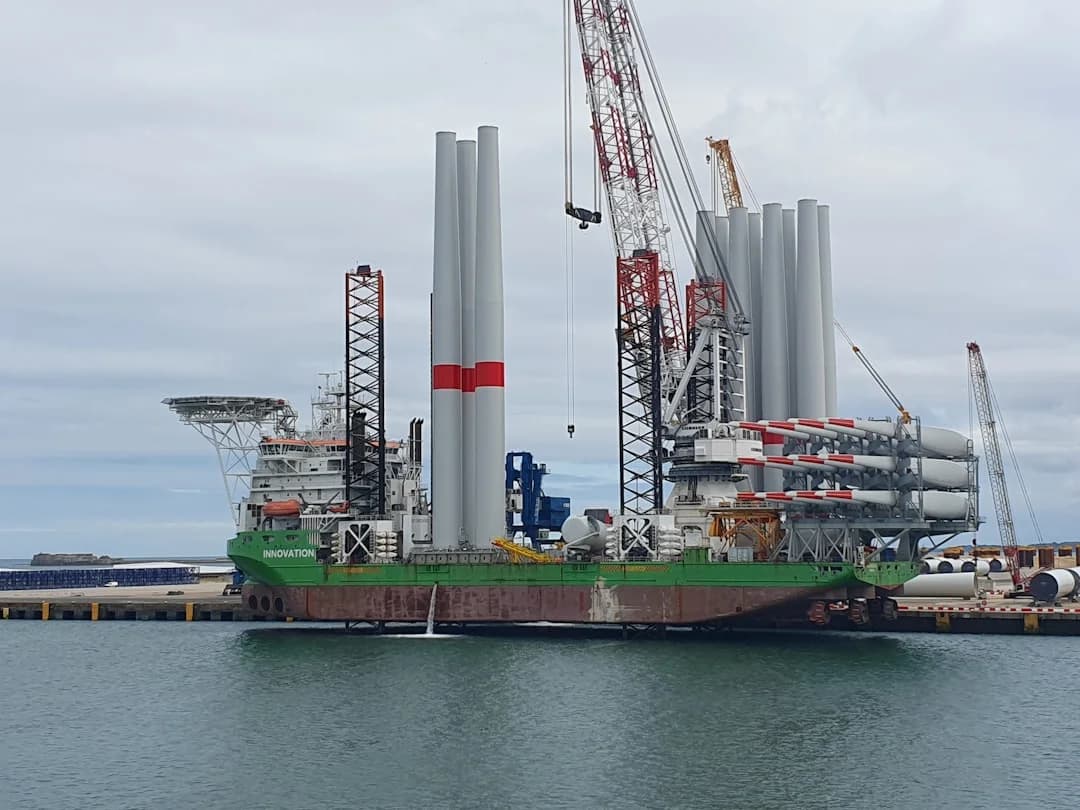
Photo by Rob Webbon on Unsplash
The Offshore wind energy expansion BC Pacific Northwest 2026 is taking shape as regulators in British Columbia and across the Pacific Northwest coordinate new grid upgrades, policy reforms, and prospective offshore projects. Analysts are watching how recent regulatory changes on the British Columbia side, coupled with Oregon’s evolving offshore wind roadmap and West Coast transmission planning, could accelerate a regional shift toward offshore wind as a meaningful part of decarbonization. In 2026, the region’s approach blends onshore grid enhancements, cross-border energy strategy, and pilots that could prove whether offshore wind can scale efficiently in a coastal economy.
For BC and the Pacific Northwest, 2026 marks a year of careful calibration rather than sudden, large-scale turbine installs. The pace is being shaped by formal administrative steps, stakeholder engagement, and a broader federal-state discussion about transmission, siting, and community benefits. This balance of caution and ambition matters because the region faces rising demand for clean electricity, a need for reliable transmission, and a strategic interest in developing coastal economies through high-skill manufacturing, operations, and research activities tied to offshore wind. The latest signals suggest that the North Coast Transmission Line in British Columbia and Oregon’s offshore wind roadmap will drive both investment decisions and potential job creation in the near term, while continuing to test the feasibility and environmental considerations unique to the B.C. coast and West Coast waters. (bchydro.com)
What Happened
Regulatory advance in British Columbia and permitting changes
In 2026, British Columbia took a substantive step toward accelerating the permitting pathway for wind and other renewable energy projects. The British Columbia Energy Regulator (BCER) introduced a Renewable Energy Projects Regulation that took effect on March 10, 2026, establishing a streamlined, centralized regulatory framework for wind, solar, and transmission line projects under the province’s Renewable Energy Projects (Streamlined Permitting) Act. This regulatory shift is designed to shorten timelines and provide clearer oversight for clean-energy developments, including potential offshore wind energy initiatives that would interface with BC’s grid. The measure also marks BCER’s formal role as the primary permitting authority for renewable-energy facilities and associated transmission upgrades as part of a broader modernization effort. (bc-er.ca)
Beyond the regulation, British Columbia’s land-use framework explicitly identifies ocean energy opportunities and clarifies Crown land allocation for offshore activities, environmental assessment expectations, and the interface with BC Hydro planning. The province notes that ocean-energy work, including offshore wind, will be subject to Crown-land policy and agency coordination, with BC Hydro and other ministries playing integral roles in siting, grid connection, and onshore/offshore interfaces. These policy statements, combined with the BCER shift, signal a multi-year ramp for wind-energy integration that could eventually encompass offshore projects if and when siting, fisheries interactions, and coastal ecosystems are responsibly managed. (www2.gov.bc.ca)
In parallel, BC Hydro’s capital planning underscores the importance of transmission upgrades to enable wind-generation connections. The 2025-2026 energy-economy materials emphasize projects like the North Coast Transmission Line, which would twin a 500 kV corridor from Prince George to Terrace to support growing demand in the North Coast, port electrification, mineral activity, and potential wind development. The province has also signaled a broader push to streamline environmental reviews for key renewables and transmission lines, aligning policy with faster decision cycles for renewable assets while maintaining environmental protections. (bchydro.com)
Key background context for BC offshore wind remains the NaiKun Offshore Wind Energy Project (Haida Gwaii), a historically proposed BC offshore wind project that underwent a 2009 environmental assessment. The NaiKun assessment report documents the scope, potential regional benefits, and environmental considerations of offshore wind development in shallow BC waters, illustrating the long arc of offshore wind discussions in the province and the kinds of challenges that any future project would face in terms of permits, wildlife and fisheries, and port logistics. While NaiKun did not proceed as of 2026, the document provides important baseline for understanding regulatory and community considerations in BC’s offshore wind dialogue. (projects.eao.gov.bc.ca)
West Coast planning and pilots moving forward in Oregon and across the US West Coast
In Oregon, officials released an Offshore Wind Energy Roadmap Public Draft in late 2025, with formal public review extending into early 2026 and public meetings scheduled around April 2026. The roadmap outlines multiple pathways for offshore wind development, including a pilot program that would allow a measured, staged approach to offshore wind in Oregon’s coastal waters. The plan emphasizes standards for permitting, tribal engagement, environmental protections, and timeline clarity, aiming to guide policymakers and the public through decisions on whether to pursue offshore wind and, if so, what form it should take. The Oregon Department of Land Conservation and Development circulated a public-draft OSW roadmap as part of House Bill 4080 (2024) guidance, and the plan has spurred public discussions about potential siting, permitting, and community benefits. (oregon.gov)
Public response to Oregon’s roadmap has included extended comment periods and coverage by regional media, highlighting both interest in offshore wind’s potential and concerns from coastal communities, fishermen, and local stakeholders about siting, benefits, and risks. Notably, Oregon’s public-comment window was extended through April 2026, reflecting a broader effort to incorporate diverse voices into the roadmap as state agencies weigh options ranging from pilot project concepts to full-scale development. The Oregon-focused dialogue thus remains a live, evolving process in 2026, with a formal deadline for input and a forthcoming legislative review. (oregoncapitalchronicle.com)
Beyond Oregon, West Coast planning and transmission studies are advancing at a federal level. The U.S. Department of Energy highlights a multi-jurisdictional approach to West Coast offshore wind transmission planning, examining how to interconnect potential wind resources from California, Oregon, and Washington. The literature review and subsequent studies emphasize high-voltage transmission planning, HVDC substations, and the importance of port infrastructure to enable scalable manufacturing, assembly, and maintenance for offshore wind on the Pacific Coast. The DOE’s West Coast transmission work is a critical backbone for future offshore wind development, even as individual state decisions vary and siting challenges persist. (energy.gov)
In practice, the Northwest has seen a broader emphasis on research, stakeholder engagement, and cross-border coordination to inform policy and siting decisions. The Pacific Offshore Wind Consortium and related initiatives monitor transmission, workforce development, and community impacts, underscoring the need for careful alignment among Canada, the United States, and regional utilities. These efforts are essential for translating offshore wind potential into reliable, affordable power while managing the economic and environmental footprint of large-scale offshore energy projects. (powc.us)
Timeline and specific dates shaping 2026
- March 10, 2026: The Renewable Energy Projects Regulation took effect in British Columbia, centralizing and streamlining permitting processes for wind, solar, and transmission-line projects under the BC Energy Regulator (BCER). This development is intended to accelerate project approvals while preserving environmental and community safeguards. (bc-er.ca)
- 2025–2026: Oregon’s Offshore Wind Energy Roadmap advanced through public review, with formal public meetings and drafts circulated in early 2026. The roadmap identifies four potential pathways, including a pilot program, and sets a timeline for completion in mid-2026 for legislative consideration. Public input opportunities continued into April 2026. (oregon.gov)
- 2025–2026: The West Coast transmission planning effort, led by DOE and partners like Pacific Northwest National Laboratory (PNNL) and the National Renewable Energy Laboratory (NREL), explored how to interconnect floating and fixed-bottom offshore wind along the California–Oregon–Washington coast, highlighting potential scaling and cost dynamics. These analyses inform state planning and grid investment decisions that would accompany offshore wind deployments. (energy.gov)
- 2026 and beyond: Cross-border and regional planning continue to emphasize grid upgrades, environmental safeguards, and community engagement as prerequisites for offshore wind growth in the BC–Pacific Northwest corridor. The region’s policymakers and utilities are increasingly coordinating on shared infrastructure needs, including transmission lines, port modernization, and workforce development initiatives, to ensure any offshore wind investments yield regional benefits. (bchydro.com)
Why It Matters
Grid resilience and power system integration

Photo by Ralph Olazo on Unsplash
Offshore wind energy expansion BC Pacific Northwest 2026 matters because it reflects a strategic shift in how the region plans to meet rising electricity demand with low-carbon resources. The North Coast Transmission Line project in British Columbia—intended to twin a major HV transmission corridor—highlights a structural enabler for offshore wind growth by expanding the province’s ability to move clean energy from wind-rich northern areas toward urban centers and export markets. Transmission planning is not merely about adding capacity; it’s about creating a grid architecture that can accommodate intermittent generation, storage, and cross-border energy trade. The regulator’s streamlined permitting approach and BC Hydro’s integrated planning work together to reduce the time-to-market for wind developments while keeping environmental safeguards in place. These dynamics are essential as the region contemplates the long-term potential of offshore wind to diversify its energy mix and create resilient energy systems. (bchydro.com)
In the United States, West Coast transmission planning reinforces the same logic from a broader geographic vantage point. DOE’s West Coast Offshore Wind Transmission studies emphasize the necessity for cohesive interconnection strategies, HVDC substation design, and cross-state coordination to unlock offshore wind’s value. The high upfront cost of HVDC networks and the strategic value of interregional coordination are balanced against long-term savings through improved reliability, energy security, and reduced wholesale energy costs. As these studies show, the West Coast is not just assessing whether offshore wind can be built; it is evaluating how to connect it to the grid in a way that minimizes disruptions to existing infrastructure and maximizes regional benefits. (energy.gov)
Floating offshore wind, a prominent potential pathway along the Oregon Coast, could alter the economics and logistics of offshore wind on the West Coast. Oregon’s Roadmap emphasizes research and demonstration projects that could establish floating platforms as a viable alternative where water depth or seabed conditions are challenging for fixed-bottom turbines. The Roadmap’s emphasis on HVDC integration, port capabilities, and supply-chain readiness highlights a multi-decade horizon in which floating offshore wind might play a central role in the region’s long-term decarbonization strategy. This is especially relevant for the Pacific Northwest, where deep-water scenarios are common and port infrastructure investments could become a competitive advantage for regional jobs and industry. (oregon.gov)
Economic and workforce implications for coastal communities
offshore wind expansion in the BC Pacific Northwest region has significant implications for coastal communities, fisheries, and port economies. The West Coast planning literature notes potential impacts on fisheries and Coast Guard operations that must be addressed through stakeholder engagement and careful project design. The OPB report on West Coast offshore wind planning underscores the need for better planning, clearer communications, and more meaningful community feedback to win local support and avoid conflicts that could stall development. Community engagement is not an optional add-on; it is a prerequisite for sustainable, timely development that benefits local workers and coastal economies. The Oregon roadmap explicitly calls for workforce development, community input, and partnership with tribes, all of which are critical to ensuring that offshore wind contributes to local prosperity rather than becoming a source of conflict. These concerns underscore the need for robust environmental and social impact assessments and transparent governance frameworks. (opb.org)
Policy coherence across borders and jurisdictions
The “Pacific Northwest clean-energy investment 2026” landscape, as discussed by BC Times and regional energy policymakers, highlights the role of cross-border policy coherence in accelerating offshore wind. With Canada and the United States pursuing parallel decarbonization goals, alignment around transmission investments, permitting timelines, and first-nations and community partnerships is essential to maximize the region’s wind potential. The Oregon roadmap’s emphasis on four pathways, including pilot and broader deployment scenarios, points to a phased approach that can accommodate diverse political and regulatory trajectories across state lines and provincial boundaries. The policy coherence question—how to align BC’s streamlined permitting with Oregon’s phased roadmap and California’s broader offshore wind ambitions—remains a central issue for 2026 and beyond. (oregon.gov)
Historical context and cautionary lessons
The NaiKun Offshore Wind Energy Project Assessment Report from 2009 provides a historical lens on offshore wind in BC, illustrating the long lead times, multi-stakeholder engagement, and complex environmental considerations involved in offshore wind development on Canada’s West Coast. While NaiKun did not advance to construction, the report’s thorough treatment of environmental, fisheries, and community concerns underscores why current policy institutions emphasize stakeholder engagement and transparent decision-making. The existence of these prior efforts helps explain why BC’s 2026 regulatory changes and the BCER's role are significant—they reflect a shift toward more predictable permitting while preserving rigorous safeguards. (projects.eao.gov.bc.ca)
What’s Next
2026–2027: Roadmap finalization, pilot deployments, and regulatory alignment
Oregon’s Offshore Wind Energy Roadmap is slated to be finalized in the mid-2026 timeframe, with the roadmap’s four pathways guiding future policy and targeting possible pilot deployments. The draft roadmaps and public meetings will help set the stage for legislative and regulatory actions in the 2027 session. The roadmap’s emphasis on standard-setting, tribal engagement, and environmental protections means that any pilot offshore wind activities would include concrete governance benchmarks, environmental monitoring, and community benefit strategies. Oregon’s timeline indicates the state intends to proceed with a measured approach, allowing time for information gathering, stakeholder input, and iterative policy development before committing to large-scale offshore wind investments. (windtech-international.com)
2026–2030: Transmission, port readiness, and regional integration
West Coast transmission planning will continue to mature, with the DOE and regional laboratories refining interconnection concepts, HVDC strategies, and interregional energy coordination mechanisms. The cost and complexity of building the requisite HVDC networks mean that 2026–2030 will likely see continued investment in transmission corridors, substation upgrades, and cross-border interties, with offshore wind generation progressively integrated as these systems come online. The Oregon Roadmap’s Appendix materials and the DOE’s West Coast transmission work together point to a long-range, multi-year process in which wind generation, storage, and transmission must be developed in a coordinated fashion. Readers should expect ongoing updates on interconnection studies, port capacity expansion, and workforce development initiatives tied to these regional transmission and offshore wind efforts. (oregon.gov)
Monitoring and public engagement milestones
Public engagement will be an ongoing feature of the process in 2026 and beyond. The Oregon public-comment extension through late April 2026 and scheduled public meetings in April 2026 illustrate the state’s commitment to broad participation. As these processes continue, stakeholders—including coastal communities, fisheries, tribes, and environmental groups—will have opportunities to influence siting, mitigation strategies, and economic benefits. The West Coast focus on stakeholder trust and decision transparency, highlighted by the OPB report, signals a broader expectation that federal and regional agencies will be more responsive to community input in future lease and development cycles. (oregoncapitalchronicle.com)
Closing
The evolving narrative around Offshore wind energy expansion BC Pacific Northwest 2026 is one of careful planning, regulatory modernization, and informed debate about how best to harness offshore wind’s potential for clean, reliable power while preserving coastal ecosystems and supporting local economies. In British Columbia, regulatory modernization and grid-connection planning set a framework for possible offshore wind activities that could align with the province’s Clean Power Action Plan and North Coast Transmission Line ambitions. In the Pacific Northwest, Oregon’s OSW Roadmap provides a structured path for pilots and eventual larger deployments, while federal and regional transmission studies lay the groundwork for a resilient, integrated offshore wind future across the coast. The confluence of provincial reforms, state roadmaps, and cross-border transmission planning suggests that 2026 is less a year of turbines turning than a year of laying the groundwork for a broader offshore wind era—one that could unfold gradually, with measured pilots, enhanced grid readiness, and thoughtful engagement with coastal communities.

Photo by Karwin Luo on Unsplash
Readers seeking ongoing updates should follow announcements from the British Columbia Energy Regulator, BC Hydro’s transmission planning releases, and the Oregon Department of Land Conservation and Development as these entities release roadmaps, draft standards, and potential pilot solicitations. In the meantime, the West Coast wind conversation continues to unfold, with grid interconnections, environmental safeguards, job opportunities, and cross-border cooperation at the center of decisions that will shape the region’s energy future for years to come. For now, the best lens on Offshore wind energy expansion BC Pacific Northwest 2026 remains a data-driven, transparent approach that foregrounds credible planning, stakeholder engagement, and credible timelines.
The latest developments also reinforce the importance of a diversified energy strategy. As the region experiments with offshore wind’s potential, policymakers are aligned in prioritizing grid upgrades, port readiness, and a robust supply chain that could deliver not only electricity but also skilled jobs and regional economic resilience. The coming years will reveal how much of the promise of offshore wind can be realized in the Pacific Northwest, and how BC’s regulatory modernization and Oregon’s roadmap will interact to produce a coherent, multi-jurisdictional path forward. The story is still being written, but the signs in 2026 point toward a more deliberate and collaborative process that could unlock meaningful offshore wind capacity across the BC–Pacific Northwest corridor. (bc-er.ca)