Pacific Northwest tech and clean-energy momentum 2026

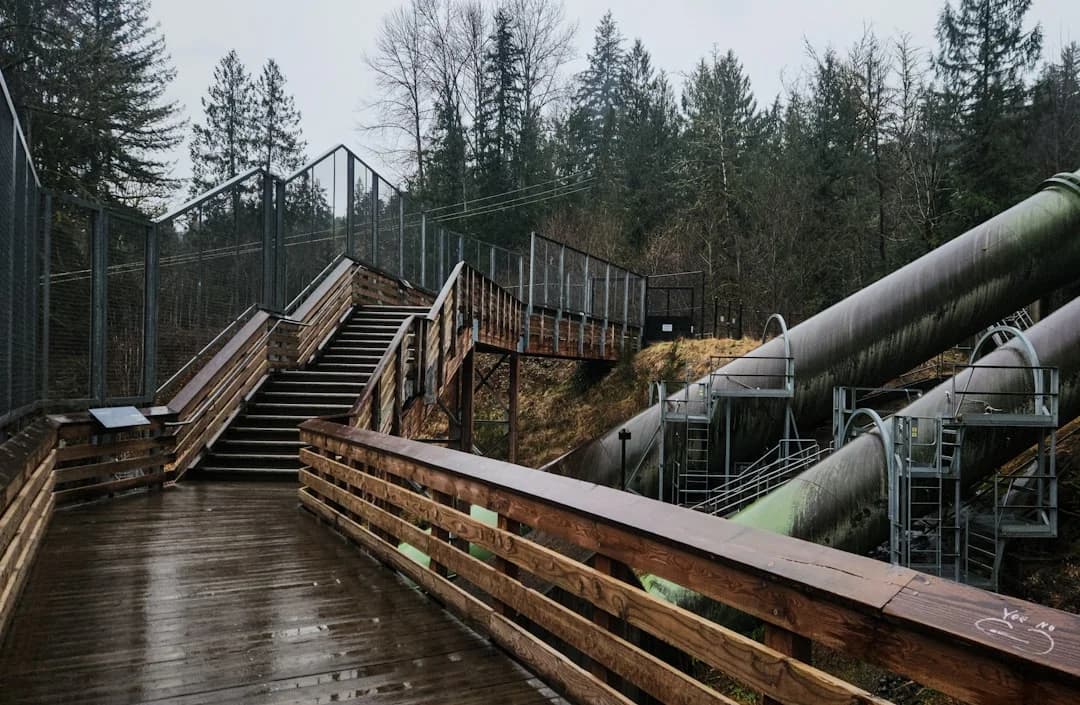
Photo by Zoshua Colah on Unsplash
The Pacific Northwest is entering 2026 with a visibly stronger alignment between technology and clean-energy initiatives, spanning Washington, Oregon, and nearby cross-border activity in British Columbia. In March, official dashboards and private-sector programs are stacking up a clear, data-backed picture: Pacific Northwest tech and clean-energy momentum 2026 is not a slogan but a mosaic of investments, policy milestones, and private-market activity that are reshaping the region’s growth trajectory. From state-level climate investments to private financing for EVs, storage, and advanced materials, the region is building a more integrated model for innovation, resilience, and shared prosperity. This momentum matters because it affects job creation, energy prices, grid reliability, and the region’s competitiveness in a broader North American tech economy. (ecology.wa.gov)
Across the Pacific Northwest, the news and announcements of 2026 are converging on a common theme: deploying technology to accelerate the energy transition while expanding high-value tech sectors. Washington’s Climate Commitment Act remains a central lever, directing how capital is spent to reduce emissions and support vulnerable communities, with more than $1.5 billion invested in the 2023–2025 biennium and a direct impact of nearly 9 million metric tons of emissions reductions projected over the life of funded projects. Oregon’s Clean Fuels Program is celebrated as a decade-long policy success that displaced over 1.5 billion gallons of petroleum and cut 14.6 million metric tons of pollution, while driving roughly $100 million annually in clean-energy investments. In Oregon, the Drive Change Fund is accelerating electrification across municipalities and nonprofits, and a major transmission project in the Columbia River corridor could unlock 1,100 megawatts of clean power to service major population centers. Taken together, these factors illuminate why Pacific Northwest tech and clean-energy momentum 2026 is more than headline chatter—it's a converging set of outcomes with measurable economic and environmental consequences. (ecology.wa.gov)
Opening Paragraph 3 (context and cross-border momentum): In addition to policy-driven spending, private-sector and cross-border dynamics are reinforcing momentum. Public utilities and private funds in Washington and Oregon are rolling out programs to accelerate electrification, grid resilience, and clean-energy innovation, while Vancouver-area tech ecosystems in nearby British Columbia are building parallel AI and cleantech capabilities that could feed into regional supply chains. This cross-border momentum is not just geographic trivia; it shapes the region’s ability to attract talent, capital, and strategic partnerships that accelerate technology deployment. Vancouver’s 2026 tech trends—centered on AI, talent concentration, and cross-border collaboration—illustrate how the wider Pacific Northwest is evolving as a transnational tech and clean-energy corridor. (bctimes.ca)
What Happened State-level climate and energy investments Washington’s Climate Commitment Act and related programs are delivering a visible, data-driven impact on the state’s climate and economy. A November 2025 update, with revisions through January 2026, details that more than $1.5 billion in Climate Commitment Act revenue was invested in Washington communities during the 2023–2025 biennium. The spending is designed to reduce emissions, boost resilience, and advance equity, with nearly 60% of investments reaching vulnerable communities and roughly $330 million expected to directly reduce greenhouse gas emissions by about 9 million metric tons over the life of these projects. The data dashboard and accompanying release emphasize transparency and continued refinement as emissions data are updated. This is a milestone in Washington’s ongoing effort to translate cap-and-invest dollars into measurable climate and community benefits. (ecology.wa.gov)
Oregon’s decade of Clean Fuels Program progress and momentum Oregon’s Clean Fuels Program (CFP) marked a significant milestone in February 2026—the program’s 10th anniversary—highlighting its role in reducing pollution and catalyzing investment in cleaner transportation and related infrastructure. The program has displaced more than 1.5 billion gallons of petroleum fuel and cut about 14.6 million metric tons of climate pollution, delivering roughly $100 million annually in clean-fuels-related investments across the state from 2015 through 2024. The CFP is cited as a cornerstone of Oregon’s climate strategy, with Governor's policy guidance and cross-border alignment helping to sustain momentum even as federal policy evolves. Critics and supporters alike view the CFP as a practical model for deploying market-based mechanisms to accelerate decarbonization at scale. (climatesolutions.org)
Private-sector and utility-led electrification and funding programs Portland General Electric (PGE) opened its 2026 Drive Change Fund on February 3, 2026, with applications open through March 31, 2026. The program, funded through Oregon’s Clean Fuels Program, has a track record of supporting electrification projects since 2019, having backed 135 projects across 128 organizations and municipalities for more than $23 million to date. The fund’s focus is to reduce transportation emissions by supporting electric vehicles, charging infrastructure, and related implementation costs for public and nonprofit entities. The Drive Change Fund represents a practical mechanism to translate climate policy into on-the-ground mobility improvements, aligning with broader Oregon energy and transportation goals. (portlandgeneral.com)
Columbia River transmission expansion and regional power connectivity In early March 2026, regional energy stakeholders and policymakers were evaluating a proposed Cascade Renewable Transmission System—a nearly $2 billion project designed to move 1,100 megawatts of renewable power from The Dalles to a Portland-area substation. If built, the buried cable would significantly expand transmission capacity across the Columbia River, enabling more wind and solar generation to reach high-demand urban centers. Supporters argue it would bolster regional reliability and decarbonization, while critics warn of environmental and cultural impacts and call for thorough, transparent permitting and review processes. Permitting and environmental reviews remain ongoing with multiple agencies, and construction could begin as early as 2028 if approvals materialize. (axios.com)
Washington and regional grant programs fueling clean-energy innovation Beyond CCA-driven investments, Washington’s Commerce Department highlighted a $37 million, 46-project round funded by the Climate Commitment Act, together with additional state backing to advance research, development, and the deployment of clean-energy technologies. The grants support a wide spectrum—from energy storage and grid modernization to solar and community resilience projects—demonstrating how public funding complements private capital to broaden the region’s clean-energy infrastructure. The program underscores the region’s multi-pronged approach: policy-driven revenue, mission-driven public funding, and private-sector innovation working in concert. (commerce.wa.gov)
Cross-border momentum and regional accelerators A Vancouver, BC context shows parallel growth in AI-enabled tech and cleantech, with notable talent concentration and targeted public funding to accelerate AI adoption and cross-border collaboration. While these trends originate in Canada, they intersect with Pacific Northwest markets through talent mobility, shared research ecosystems, and cross-border investment. Vancouver’s 2026 data emphasize AI talent density, cross-border funding opportunities, and policy signals that support large-scale tech scale-ups—points that matter for regional planning and investment strategies in Washington and Oregon as they pursue a more integrated Northwest tech and energy economy. (bctimes.ca)
Why It Matters Economic and job-market implications The 2024–2026 momentum in Pacific Northwest tech and clean-energy momentum is producing tangible economic signals. Leading regional analyses indicate ongoing growth in energy efficiency and substantial investments in clean-energy projects that create jobs, diversify regional economies, and reduce emissions. The Northwest Power and Conservation Council notes sustained progress in energy efficiency, with program budgets rising in 2022–2024 and forecasts showing continued momentum into 2025–2026, contributing to a reduced need for new generation while supporting growth in data centers, electrified transportation, and grid modernization. This efficiency-first approach translates into long-term consumer savings and a more resilient regional grid. In the broader context, energy demand is projected to rise with growth in data centers, EVs, and manufacturing; however, efficiency gains and renewables remain central to controlling costs while expanding capacity. (publicpower.org)
Equity, health, and community resilience A salient theme in 2026 is the explicit prioritization of equity and resilience in clean-energy investments. Washington’s CCA investments include a majority share directed to vulnerable communities, enabling cleaner air and improved climate resilience for populations disproportionately affected by pollution. Oregon’s CFP framework centers equity by channeling funds toward communities and programs that reduce health and environmental burdens, with significant savings in avoided health costs and improved access to cleaner transportation options in rural and underserved areas. These outcomes illustrate how climate policy can generate measurable social benefits beyond emissions reductions. (ecology.wa.gov)
Regional energy planning and grid reliability The Pacific Northwest continues to emphasize energy efficiency as a core resource, with multiple reports showing that efficiency remains a major driver of cost-effective capacity in the region. At the same time, cross-border collaboration and large-scale renewable deployment—alongside potential new transmission capacity like the Cascade project—are central to meeting rising demand and achieving decarbonization goals without compromising reliability. This multi-pronged approach—efficiency, renewables, and strategic transmission—illustrates a mature, data-informed framework for managing the Northwest’s dynamic energy landscape. (publicpower.org)
Talent, startups, and innovation ecosystems The Pacific Northwest’s tech momentum is reinforced by a growing startup and talent pipeline, with Washington and Oregon continuing to attract venture funding and growth-stage rounds in software, health tech, and cleantech. While the headline-grabbing layoffs in some large tech employers in 2025–2026 reflect broader market cycles, the region’s underlying strength—dense talent pools, proximity to major universities and research labs, and public-private funding—continues to support a robust innovation economy. The broader cross-border context with British Columbia’s AI and cleantech activity adds another dimension to the region’s growth potential, particularly in fields like healthcare software, AI-driven manufacturing, and climate-tech infrastructure. (geekwire.com)
What’s Next Near-term milestones and watchpoints
- Drive Change Fund deadline: Applications close March 31, 2026. Expect a wave of proposals from school districts, municipalities, and nonprofits seeking to accelerate electrification and charging infrastructure, with winners likely announced in spring and summer 2026. This program mechanism demonstrates how state-enabled funds can accelerate local clean-energy adoption in practical, tangible ways. (portlandgeneral.com)
- Cascade Renewable Transmission System timeline: Pending environmental review and permitting across Oregon, Washington, and federal authorities; construction could begin as early as 2028 if approvals occur. The project’s progress will be a bellwether for regional transmission expansion and the ability to move renewable energy from eastern markets to urban load centers. (axios.com)
- Oregon CFP and state energy planning: Oregon’s focus on climate-action policy, supported by executive guidance and legislative priorities, suggests continued growth in clean-fuels markets, electrification projects, and cross-jurisdiction collaboration with Washington. The policy environment in 2026 is likely to yield more targeted investments in electrified mobility, distributed energy resources, and transit electrification. (climatesolutions.org)
- Regional energy-demand forecast: The Northwest’s 20-year electricity demand forecast indicates continued growth due to data centers, EV adoption, and new manufacturing; policymakers and utilities will need to balance efficiency gains with new generation and storage. The 2025–2026 outlook emphasizes ongoing planning to manage load growth while preserving reliability and affordability. (publicpower.org)
Cross-border indicators to monitor
- Vancouver and BC IT/AI investments: Vancouver’s AI-led growth, talent concentration, and cross-border funding signals can influence regional collaboration and market access for Northwest firms. Policymakers in Washington and Oregon may watch cross-border partnerships and capital flows as potential accelerants for scale-ups and technology transfer. (bctimes.ca)
- Energy-efficiency targets and compliance: The NPCC’s ongoing planning work and state-adopted energy-efficiency targets will shape investment priorities and the mix of demand-side and supply-side resources in the near term. Utilities and regulators will be watching for cost-effective efficiency options that align with 2027 targets and beyond. (publicpower.org)
Closing As 2026 progresses, the Pacific Northwest region is building a more integrated tech and clean-energy economy. The combination of state-level climate funding, policy-driven incentives, and private-sector programs is translating into tangible investments, job opportunities, and improvements in energy resilience. The momentum is not only about headlines; it is about longer-term infrastructure, talent, and market-building efforts that position Washington, Oregon, and their cross-border partners for durable growth in a rapidly evolving energy and technology landscape. Readers should stay tuned for quarterly updates from state agencies, utility commissions, and regional energy councils as dashboards are refreshed and new announcements roll out across the Northwest.
To stay updated on Pacific Northwest tech and clean-energy momentum 2026, monitor quarterly summaries from the Washington State Department of Ecology and Department of Commerce, the Oregon Department of Energy and Department of Environmental Quality, and regional energy councils, as well as credible regional outlets covering tech and energy policy developments. The interwoven pathways of policy, finance, and private-sector innovation will continue to shape a data-driven, resilient Northwest in 2026 and beyond. (ecology.wa.gov)