Pattullo Bridge replacement Opens Four Lanes Riverview

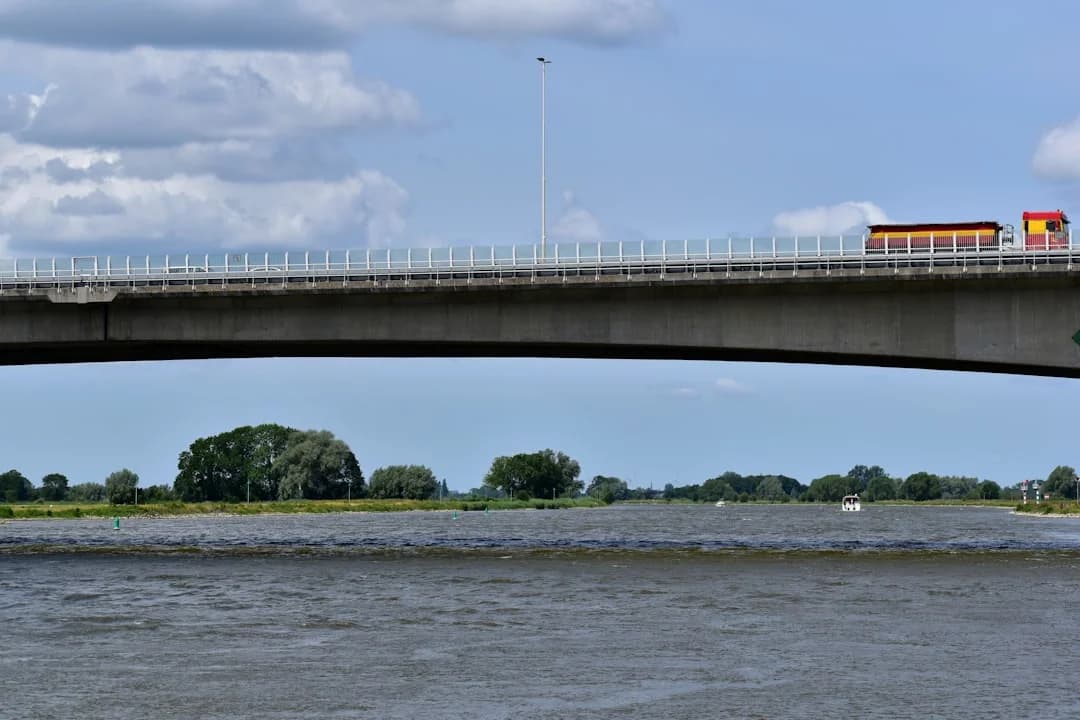
Photo by Ries Bosch on Unsplash
The Pattullo Bridge replacement project reached a major milestone this weekend, with the stal̕əw̓asəm (Riverview) Bridge opening four lanes to vehicle traffic on February 14, 2026. The moment marks a turning point in British Columbia’s largest regional infrastructure effort in years, transitioning daily traffic from the aging Pattullo Bridge to a modern crossing designed to improve safety, capacity, and resilience along a critical Fraser River corridor. The opening came after months of staging and closures intended to move traffic onto the new structure while work continued to complete connecting ramps and multi-use pathways. Officials emphasized that the new bridge is built to current seismic and roadway design standards and to serve the region’s growing mobility needs for decades to come. The historical significance of this milestone is underscored by government and industry sources, which describe the stal̕əw̓asəm Bridge as a four-lane crossing with a centre median and barrier-separated walking and cycling lanes, signaling a major upgrade to regional transportation corridors. (news.gov.bc.ca)
As part of the transition, the Pattullo Bridge permanently closed to vehicular traffic on February 14, 2026, after the four-lane stal̕əw̓asəm Bridge opened. Deconstruction of the Pattullo Bridge is scheduled to proceed in the coming months and years, with crews mobilizing to remove the old structure while ensuring ongoing access for pedestrians and emergency services as needed. The shutdown of the Pattullo Bridge follows earlier closures and traffic-pattern changes designed to facilitate a safe handover to the new crossing. The project’s communications emphasize that once traffic fully shifts to the stal̕əw̓asəm Bridge, the Pattullo Bridge will be removed gradually, with deconstruction expected to take roughly two years. This milestone is seen as a catalyst for regional mobility improvements, industry logistics, and ongoing public works activity in Metro Vancouver. (pattullobridgereplacement.ca)
In the days leading up to the four-lane opening, provincial authorities announced a temporary closure window to secure the transition. Starting at 8 p.m. on Friday, February 6, 2026, the Pattullo Bridge and the stal̕əw̓asəm (Riverview) Bridge were closed to traffic for about one week to complete essential connections to roadways on both sides of the new bridge. The temporary shutdown was designed to protect workers and travelers as the new bridge ramp connections were finalized and the traffic pattern was realigned. After the initial closure period, traffic was gradually shifted onto the stal̕əw̓asəm Bridge, with the new structure featuring three active lanes (two northbound, one southbound) while the Pattullo Bridge maintained one southbound lane to accommodate ongoing Royal Avenue ramp work. By late February, the plan called for the stal̕əw̓asəm Bridge to carry all traffic with four wider lanes and a centre median, signaling the full transition away from the Pattullo Bridge. Pedestrian and cyclist access remained part of the broader, phased handover, with a separate path being connected along the east side of the new crossing in spring 2026. (news.gov.bc.ca)
What happened, in a nutshell, is that the Pattullo Bridge replacement project successfully delivered a modern crossing—the stal̕əw̓asəm (Riverview) Bridge—to handle the region’s traffic demand, while initiating the decommissioning of the old Pattullo Bridge. The new crossing is designed to improve safety, reliability, and freight movement for residents and businesses from Surrey to New Westminster and beyond. The official communications and press materials emphasize that the stal̕əw̓asəm Bridge’s four-lane configuration, along with its planned multi-use path connections, will enhance mobility for commuters, transit, and goods movement across this vital Fraser River crossing. The transition is part of a broader program to upgrade regional transportation infrastructure in British Columbia, a program backed by government agencies and industry partners, with progress tracked through regular status updates and media releases. (news.gov.bc.ca)
Section 1: What Happened
Four Lanes Open on stal̕əw̓asəm Bridge
Opening milestone and traffic shift
On Saturday, February 14, 2026, at approximately 7 a.m., all four lanes of the stal̕əw̓asəm Bridge opened to vehicle traffic, marking a formal completion of the main crossing and the transfer of travel from the Pattullo Bridge to the new structure. The four-lane configuration includes a centre median and barrier-separated walking and cycling lanes, designed to improve safety and efficiency for car users, truck traffic, cyclists, and pedestrians alike. This transition is a core element of the Pattullo Bridge replacement project’s objective to provide a modern, resilient crossing across the Fraser River. The official project materials note that the new bridge will support safer, more reliable commutes and improved goods movement across the regional corridor. (news.gov.bc.ca)
Deconstruction begins as the old bridge closes
Following the four-lane opening, the Pattullo Bridge was closed for deconstruction, with crews beginning the demolition process to remove the aging structure and to complete the final connections to roadways on both sides of the crossing. Deconstruction is planned to occur over the next two years, reflecting the scale and complexity of removing a major river crossing while maintaining safety and access to essential routes for the traveling public. This phased demolition is a deliberate part of the overall plan, ensuring that the region’s transportation network remains functional throughout the transition. The messaging from the government emphasizes that the deconstruction timeline is a long-term process, with the majority of work occurring in the coming months and years as the Columbia Street on-ramp and other connections are finalized. (news.gov.bc.ca)
Detours and ramp connections during the handover
As part of the handover process, traffic shifts and detours were implemented to facilitate the transition. Access to the stal̕əw̓asəm Bridge was then routed via McBride Boulevard and the new Royal Avenue on-ramp in New Westminster, with additional access via King George Boulevard in Surrey. The project’s communications specified that the traffic pattern changes were to be clearly signed, with traffic control personnel on site to assist as needed. The temporary detours were designed to minimize disruption while enabling the critical work to connect the new crossing with the surrounding road network. In the immediate post-opening period, the traffic pattern included three active lanes on the stal̕əw̓asəm Bridge (two northbound, one southbound) while the Pattullo Bridge still provided one southbound lane to complete the Royal Avenue ramp connection. These arrangements were explicitly described in government communications and project updates as part of the phased rollover. (news.gov.bc.ca)
Pedestrian and cycling access during the transition
Pedestrian and cyclist access remained a central consideration throughout the handover, with a dedicated multi-use path expected to connect to the stal̕əw̓asəm Bridge in spring 2026. The inclusion of barrier-separated walking and cycling lanes on the new bridge is intended to promote safe, integrated active transportation across the Fraser River while the surrounding infrastructure is completed. The project materials note that pedestrian and cyclist access was planned to be restored progressively as the path connections were completed, reflecting a broader commitment to sustainable mobility alongside the vehicular transition. (news.gov.bc.ca)
Permanent Closure of Pattullo Bridge
Decommissioning timeline and rationale
With the stal̕əw̓asəm Bridge now fully open to traffic, the Pattullo Bridge is scheduled for deconstruction in a phased manner. The scope of the Pattullo Bridge replacement project includes the complete removal of the old structure, the completion of Columbia Street on-ramp work and the associated highway interchanges, and the construction of connections for the new multi-use paths. The decommissioning is expected to take approximately two years, during which crews will carefully dismantle elements of the old structure while maintaining essential traffic patterns on the new crossing and surrounding roads. This phased approach balances safety, traffic flow, and long-term regional mobility goals. (news.gov.bc.ca)
The role of public communications and public safety
Public communications from the Ministry of Transportation and Transit and the Pattullo Bridge Replacement Project emphasized transparent, timely updates throughout the transition. The key themes highlighted included safety, traffic reliability, and the long-term benefits of the new crossing for both passengers and freight operators. The ministry’s communications stressed that the sidewalk on the Pattullo Bridge would remain open during certain phases to maintain pedestrian access, and that emergency-vehicle access would be maintained at all times. These considerations reflect the project’s commitment to minimizing disruption while achieving the cross-river capacity upgrade. (news.gov.bc.ca)
Connecting Infrastructure: The On-Ramps, Detours, and Active Transportation
On-ramp and off-ramp changes
The new crossing’s connectivity hinges on the Columbia Street on-ramp and the Royal Avenue on-ramp, among other connections. The February 13, 2026 project update notes that the Columbia Street on-ramp to the stal̕əw̓asəm Bridge was planned to open in summer 2026, with a staged approach to detours and road closures designed to minimize local disruption while enabling the ramp connections and the bridge’s full integration into the regional network. The eventual goal is a seamless flow between the stal̕əw̓asəm Bridge and surrounding arterials, improving access to the Fraser River corridor for both vehicles and non-motorized users. (pattullobridgereplacement.ca)
Detours and local traffic changes
In addition to the major ramp changes, Detours around Columbia Street, including the loop ramp to the Pattullo Bridge and a temporary closure of Columbia Street between McBride Boulevard and Elliot Street, were implemented to facilitate construction activities and to minimize conflicts with through traffic. The project’s publicly released timelines indicate that the closure of the loop ramp to the Pattullo Bridge would begin on February 14, and local closures along Columbia Street would persist for approximately four to six weeks beginning February 26. These detours were designed to maintain local access to businesses and residences while the new connections were established. The official guidance stresses that detours would be clearly signed and accessible via major detour routes to minimize confusion for commuters. (pattullobridgereplacement.ca)
Active transportation and path connections
A key component of the Pattullo Bridge replacement project is the integration of multi-use paths along the new crossing. While vehicular traffic was prioritized in the early post-opening period, the project’s communications indicate that pedestrian and cyclist access via the east-side path would be available in spring 2026, with a dedicated shuttle service for cyclists planned as part of active-transportation accommodations during transitional phases. The emphasis on an accessible, connected path network aligns with broader BC goals to promote active transport and safer, more sustainable mobility across urban river crossings. (news.gov.bc.ca)
Section 2: Why It Matters
Impact on Commuters, Businesses, and Regional Mobility
Short-term travel impacts

The Pattullo Bridge replacement project’s immediate impact centers on routing, lane configurations, and detour patterns that affect daily commutes. With the stal̕əw̓asəm Bridge in operation as the primary Fraser River crossing, travelers across New Westminster and Surrey faced a realignment of routes during the transition. The new crossing’s four lanes and centre median are designed to reduce bottlenecks and improve predictability for motorists, transit operators, and freight movements. Government communications stress that the new bridge’s reliability, seismic performance, and safer design will translate to faster, more predictable travel times for commuters and reduced congestion during peak periods. The real-world effects on travel times will depend on how quickly the old Pattullo Bridge is deconstructed and how smoothly the new on-ramps integrate with adjacent arterials. (news.gov.bc.ca)
Economic implications for the region
From a market and industry perspective, a modern, four-lane crossing across the Fraser River is a strategic asset for the Lower Mainland. Improved movement of goods and people along a critical corridor can support regional supply chains, reduce freight costs, and bolster access to commercial corridors in Surrey, New Westminster, and beyond. The Pattullo Bridge replacement project is positioned within broader infrastructure investment programs that aim to support long-term economic growth, resilience, and competitiveness in British Columbia. While precise post-transition economic data will emerge over time, government and industry communications consistently frame the replacement as a catalyst for more reliable regional connectivity and an enabling platform for ongoing development along the river corridor. (news.gov.bc.ca)
Safety, resilience, and modern design
A central justification for the Pattullo Bridge replacement project is safety. The stal̕əw̓asəm Bridge features four wider lanes with a centre median and barrier-separated walking and cycling facilities, aligning with modern design standards and seismic criteria. These features are intended to reduce crash risk, improve pedestrian separation from vehicle lanes, and create safer conditions for people moving across the river by bike, foot, or car. The emphasis on safety, resilience, and modern standards is consistent with provincial commitments to upgrade critical infrastructure with durable, future-ready designs that can withstand seismic events and changing traffic patterns. The modernization also supports safer freight movement, which is a meaningful factor for regional economic stability. As with any large-scale public project, the benefits will accumulate over time as traffic flows stabilize and the path network is completed. (news.gov.bc.ca)
Community, Indigenous Naming, and Public Engagement
First Nations naming and recognition
An important cultural and community dimension of the Pattullo Bridge replacement is the recognition of Indigenous communities connected to the region. The stal̕əw̓asəm name, understood as “a space where you can view the river,” reflects collaboration with local First Nations groups, and the English name for the crossing is Riverview. Government communications highlight that the naming recognizes long-standing connections to the area and the role of First Nations in the project’s design and interpretation. This naming alignment is part of a broader shift toward inclusive engagement and respect for Indigenous perspectives in large infrastructure projects. The public-facing materials emphasize cultural recognition alongside safety and mobility improvements. (news.gov.bc.ca)
Public engagement and information transparency
Throughout the Pattullo Bridge replacement project, ministry communications have stressed the importance of timely updates, accessible information, and channels for public questions and feedback. The project’s official information sheets, hotline numbers, and web updates are designed to keep residents, businesses, and commuters informed about detours, ramp openings, and future milestones. The emphasis on ongoing communication aligns with best practices for major public works, helping to minimize uncertainty and manage expectations during a multi-year transition. (news.gov.bc.ca)
What It Means for the Region’s Transportation Network
Regional connectivity enhancements

The Risings across the Fraser River across the EquiNow corridor—by delivering a four-lane, newer crossing—are expected to yield broader improvements in regional connectivity beyond the immediate corridor. The stal̕əw̓asəm Bridge is part of a larger effort to modernize transportation infrastructure in Metro Vancouver, with implications for traffic dispersion, transit reliability, and freight efficiency across the region. The official statements emphasise that the new crossing is designed to integrate with the broader transportation network, aiming to reduce delays and improve overall travel times for a wide spectrum of users, including commercial drivers who rely on predictable routes for deliveries and supply chain operations. (news.gov.bc.ca)
Public safety and system resilience
A critical dimension of the Pattullo Bridge replacement project is resilience—both in terms of structural safety and reliability under load. The new stal̕əw̓asəm Bridge’s design features are intended to withstand seismic events and deliver robust performance under future traffic growth. This resilience is central to the project’s justification, given the Fraser River’s strategic importance for regional mobility and economic activity. While the immediate focus remains on the transition, the long-term value proposition centers on a safer, more reliable crossing that can better accommodate fluctuations in traffic volumes and modal shifts toward active transportation where feasible. (news.gov.bc.ca)
Section 3: What’s Next
Timeline, Next Steps, and What to Watch For
Summer 2026: Columbia Street on-ramp opening and path connections
Looking ahead to summer 2026, the Columbia Street on-ramp to the stal̕əw̓asəm Bridge was planned to open as part of the continuing integration work. The ramp connection is essential for completing the linkage between local streets and the new crossing, enabling smoother access for drivers entering from New Westminster and Surrey. In addition, continued work on the east-side multi-use path is expected to progress toward full pedestrian and cyclist access, with the path opening scheduled for spring 2026. The project materials indicate that detour routes will be maintained and signposted as these connections are finalized. (pattullobridgereplacement.ca)
Late 2026 into 2027: Deconstruction and full system handover
With the stal̕əw̓asəm Bridge fully open and the Pattullo Bridge deconstruction underway, the project remains on track to complete the removal of the Pattullo structure over the next two years. This multi-stage decommissioning will include continued work on the Columbia Street and Highway 17 connections, as well as the stabilization and removal of the Pattullo Bridge, and finalizing any remaining active transportation elements tied to the east-side path. While some components of the project may wrap up earlier or later than anticipated, the official communications indicate a two-year timescale for Pattullo Bridge demolition and a staggered completion of ancillary connections. Observers will be watching the timeline to see how traffic patterns stabilize in the final months of construction and how the road network adapts to the new, four-lane crossing. (news.gov.bc.ca)
Monitoring and ongoing updates
As with any large-scale public works project, ongoing updates will be critical for residents, businesses, and commuters who rely on reliable travel across the Fraser River. The Pattullo Bridge replacement project maintains a dedicated information channel and 24/7 helplines for construction inquiries, as well as a regularly updated schedule of milestones, traffic advisories, and detour plans. For readers and stakeholders seeking the latest details, official channels such as pattullobridgereplacement.ca and bc gov news releases provide authoritative, timely information on lane configurations, ramp openings, detours, and milestone completions. The transfer of traffic patterns and the final deconstruction phases will continue to be communicated to ensure safe and efficient travel across the river. (pattullobridgereplacement.ca)
Closing
The Pattullo Bridge replacement project represents a landmark evolution in British Columbia’s transportation infrastructure. The stal̕əw̓asəm (Riverview) Bridge’s four-lane opening, coupled with the progressive deconstruction of the Pattullo Bridge, marks a decisive shift toward a safer, more reliable, and better-connected cross-river network for residents, commuters, and businesses in the greater Vancouver region. As the summer 2026 on-ramp openings unfold and the east-side path connections complete, travelers can anticipate a more predictable, efficient experience across the Fraser River. The region’s mobility and economic vitality will be tested in the coming years as full deconstruction progresses, but the early signs point to a successful transition that preserves safety and enhances regional resilience. For ongoing updates, readers are encouraged to monitor Pattullo Bridge Replacement Project communications and BC Gov News releases, which provide the latest traffic advisories, construction milestones, and accessibility information for pedestrians and cyclists. (news.gov.bc.ca)