Permanent Daylight Saving Time British Columbia 2026

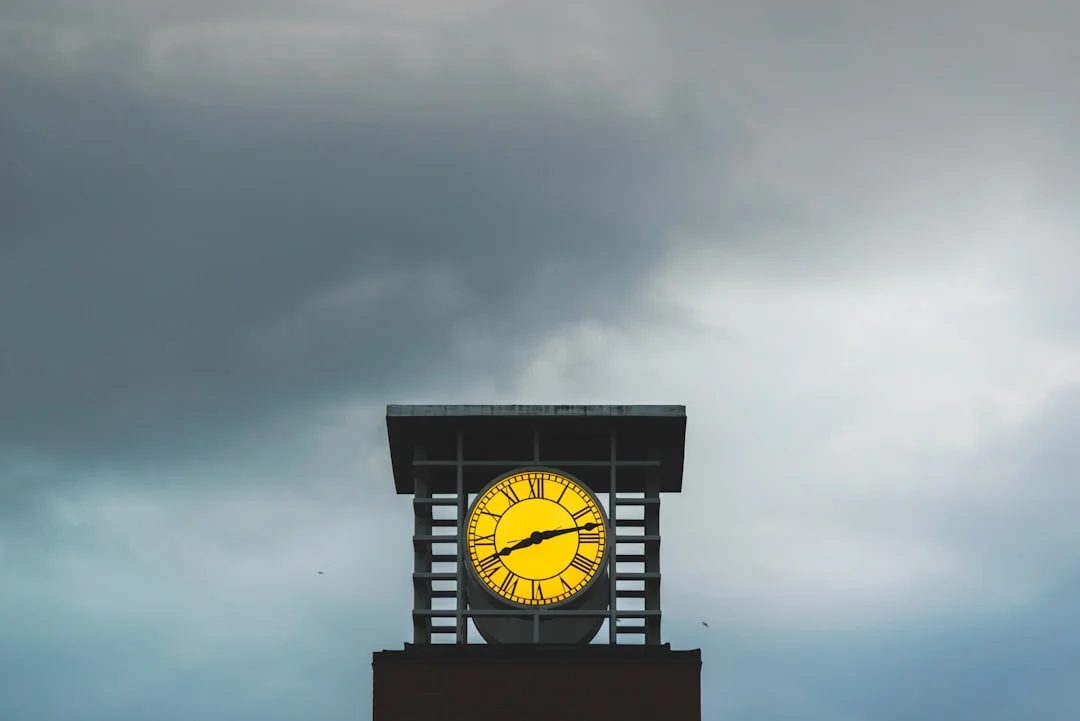
Photo by Aditya Chinchure on Unsplash
British Columbia is entering a new era of time observance with Permanent daylight saving time British Columbia 2026. After decades of clock changes in March and November, the province announced and enacted a plan to observe year-round daylight saving time, effectively keeping clocks on UTC-7 year-round. This historic shift, which began with the spring forward on Sunday, March 8, 2026, aims to reduce disruptions for families, simplify scheduling for businesses, and provide extended evening daylight during the winter months. The change marks the end of the twice-yearly clock adjustments that have shaped life across the province for generations, a decision backed by extensive public engagement and updated legal regulations. The immediate impact is evident in the transition timeline, as households and organizations adjust to a single, stable time reference that aligns with Pacific Time year-round. The move also highlights broader conversations about cross-border coordination with American states in the same time zone and the evolving role of time policy in technology, logistics, and daily commerce. This news is especially pertinent to BC’s tech sector, transportation networks, energy management systems, and consumer behavior, where even small shifts in daily timing can ripple through workflows, schedules, and demand patterns. As BC Times covers this development, readers will see how Permanent daylight saving time British Columbia 2026 reshapes markets and technology strategies across the province. (www2.gov.bc.ca)
What Happened
Announcement Details
On March 2, 2026, the Government of British Columbia formally announced that the province would adopt permanent year-round daylight saving time (DST), with clocks already shifted forward one hour on Sunday, March 8, 2026. The official news release stated that this transition would be the last clock change in BC, and that the new time zone—referred to as Pacific time—would keep the offset at UTC-7 year-round. The government’s press materials highlighted the intended goals: improve public health, reduce disruptions for families, simplify scheduling, and provide an extra hour of evening light during the winter months. This is not a mere ceremonial change; it is backed by regulatory amendments designed to align BC with its new, permanent DST posture and to coordinate the transition with other time-keeping practices across the region. The public message emphasized that the switch would be implemented through the Interpretation Amendment Act, which remains the legal mechanism enabling permanent DST in the province, and that the regulation came into force to support the March 8, 2026, milestone. For those who focus on governance and policy, this marks a rare example of a province delivering a long-promised policy shift through a concrete regulatory timetable. (archive.news.gov.bc.ca)
Timeline and Key Dates
The March 8, 2026 transition is the focal date that defines Permanent daylight saving time British Columbia 2026. On that Sunday, BC clocks sprang forward by one hour as part of the last necessary adjustment, after which no additional changes would occur in the fall. The government’s documentation notes that BC would observe Pacific time year-round, effectively ending the seasonal changes and settling into a fixed UTC-7 offset. Importantly, BC allowed eight months for businesses and residents to prepare for an upcoming November 1, 2026 date, when clocks would traditionally revert to standard time. Under the permanent scheme, however, there would be no reversal; the time would remain constant, aligning BC with Pacific Time across seasons. The transition to Pacific time as the province’s year-round label is part of a broader alignment strategy with Western North American jurisdictions that observe similar time patterns during different parts of the year, and it reflects proactive coordination in an era of increasing cross-border commerce and digital infrastructure. In practical terms, many routine activities—scheduling software, public transit timetables, and energy management systems—will need only minor adjustments after the March 2026 change, given the extended daylight in evenings during winter months and the more stable daily rhythm the policy intends to create. The government’s materials also note that some northern and eastern BC communities historically following Mountain Time were brought into closer alignment with the rest of the province, while still preserving local autonomy to choose their observed time zone if they prefer. (archive.news.gov.bc.ca)
Regional Variations and Local Autonomy
While Permanent daylight saving time British Columbia 2026 standardizes the majority of the province to Pacific Time year-round, a few regional nuances remain. Northeastern BC and the Kootenays—areas that historically observed Mountain Time in some configurations—will continue to align with the rest of BC under Pacific Time for the most part, though localities may retain distinctive time-zone labels if they choose. Southeastern BC communities that historically observe a mix of Mountain Standard Time and Mountain Daylight Time will now be aligned with Alberta for their winter-to-summer switch, continuing to follow UTC-7 in winter and UTC-6 in summer as part of the provincial framework, depending on local decisions. The government emphasizes that local governments retain the power to determine which time zone they observe and can opt to transition to permanent daylight time and Pacific Time in concert with the rest of BC if they prefer. This approach acknowledges the practical realities of regional economies, transportation links, and community needs while preserving a unified provincial baseline for most residents and businesses. The policy document explicitly highlights the existence of a few communities that observe Mountain Time and explains how those regions will integrate into the new Pacific Time scheme, aligning with the rest of BC while allowing for local customization. (www2.gov.bc.ca)
Why It Matters
Health, Sleep, and Daily Routines

Photo by Matt Tsai on Unsplash
The BC government’s rationale for Permanent daylight saving time British Columbia 2026 centers on health and daily routine stability. The change is intended to reduce sleep disruption caused by twice-yearly clock changes and create a more predictable daily rhythm for families, workers, students, and seniors. In the 2019 public engagement that preceded the policy, BC engaged more than 223,000 residents, and an overwhelming 93% supported adopting year-round DST. This level of public support, coupled with reported health and well-being benefits, underpins the policy. The government points to evidence that more consistent daily schedules can improve sleep patterns, reduce the cognitive and behavioral impacts of time shifts, and increase opportunities for evening activities—an especially important consideration in northern latitudes where winter daylight is limited and the social and economic benefits of extended daylight hours persist through the darker months. For policymakers and health professionals, the shift is framed as a public-well-being initiative that also reduces the operational complexities of managing seasonal time changes for schools, hospitals, and emergency services. The literature cited by BC’s administration includes a Stanford Medicine study on the effects of changing clocks, which adds an external scientific dimension to the rationale for permanent DST. (archive.news.gov.bc.ca)
Economic, Operational, and Tech Implications
From a market and technology perspective, Permanent daylight saving time British Columbia 2026 reduces the recurring costs of reprogramming, reconfiguring, and revalidating scheduling systems, business processes, and critical infrastructure each spring and autumn. The BC government highlights an “administrative burden” reduction for small businesses and service providers, including those who previously had to adjust point-of-sale systems, payroll software, and logistics planning every year. The change also promises more consistent planning across transportation networks and technology services, which matters to sectors like logistics, warehousing, and ride-hailing platforms that rely on synchronized timetables and demand forecasting. The consensus among provincial officials is that the savings in operational complexity and the reliability of schedules can translate into tangible productivity gains for digital platforms, manufacturing services, and retail, particularly in the winter months when daylight is scarce but consumer activity tends to rise in the early evening. Industry associations have signaled cautious optimism that permanent DST can support a more stable business environment and reduce the need for frequent software updates tied to seasonal time changes. (www2.gov.bc.ca)
Cross-Border Coordination and Regional Context
Permanent daylight saving time British Columbia 2026 is not an isolated policy within Canada; it sits within a broader regional context of time observance across North America. The BC government notes that recent actions in the United States have influenced BC’s approach to time zones, with cross-border alignment considerations shaping the decision. By adopting a stable UTC-7 offset year-round, BC aligns with Pacific Time observed in portions of neighboring jurisdictions during certain seasons, while remaining distinct in naming conventions (the province will use Pacific Time as the year-round label). This cross-border dynamic matters for multinational companies, cross-provincial supply chains, and technology platforms that operate across the Canada-US border, where scheduling, payroll, and customer service operations must adapt to a consistent time reference. The long-term expectation is that other Western states, Canadian provinces, and neighboring territories may follow suit or explore similar alignments, which could lead to broader regional standardization over time. The government’s position underscores the likelihood of ongoing interjurisdictional dialogue about time observance as a practical policy tool rather than a ceremonial adjustment. (archive.news.gov.bc.ca)
Public and Community Impacts
Public engagement on time observance in 2019 demonstrated strong support for permanent DST among British Columbians. With 223,000 participants and 93% backing year-round DST, the policy’s legitimacy rests in part on citizen sentiment. The regional nuances, including areas that observe Mountain Time and those that align with Alberta in winter, reflect BC’s attempt to balance uniformity with local realities. In practice, communities may experience a mix of transitional challenges and immediate benefits: schools and daycare centers will need to adjust to the now-permanent offset year-round, while energy consumers could see changes in peak demand timing as evening light persists longer into the dark months. Local governments’ ongoing authority to determine the observed time zone means communities can implement further refinements if needed, ensuring that the policy remains responsive to local economic conditions, cultural preferences, and transportation needs. For businesses, this means revising hours of operation, updating marketing campaigns to reflect the consistent time frame, and coordinating with suppliers and customers across the provincial and cross-border landscape. (www2.gov.bc.ca)
Broader Context: Health, Energy, and Social Impacts
The health and energy implications of permanent DST continue to be debated in broader national and international discourse. While BC’s government highlights potential health benefits and increased evening activity, some researchers and commentators point to mixed evidence regarding long-term health outcomes and circadian alignment. The Times and other outlets have covered the health- and productivity-related arguments surrounding permanent DST, noting that different regions weigh potential sleep disruption against evening daylight benefits differently. As Permanent daylight saving time British Columbia 2026 unfolds, readers should monitor ongoing studies, cross-border research collaborations, and policy evaluations that evaluate how year-round daylight saving time affects sleep health, cardiovascular outcomes, and daytime functioning across diverse populations. The policy’s public-health rationale remains central to its acceptance, even as technical and economic considerations continue to shape industry responses. (time.com)
What's Next
Implementation Tasks for 2026–2027
With the March 8, 2026 clock adjustment behind BC, the province embarked on a multi-month implementation phase to solidify Permanent daylight saving time British Columbia 2026 as the standard. Government materials describe a deliberate, collaborative process spanning March to November 2026, during which organizations, small businesses, and public-sector partners partner with provincial authorities to ensure a smooth transition to permanent DST. This period is designed to address logistical considerations across sectors, including transportation timetables, public services, education schedules, and digital infrastructure, which require minimal disruption while maintaining public safety and reliability. The government emphasizes that the transition to Pacific Time as BC’s year-round time zone would be completed by the November timeframe, with public communications and operational planning continuing into early 2027 to ensure that systems and processes remain aligned with the new standard. For technology teams, this means an ongoing update cycle and validation phase for scheduling software, payroll systems, and IoT devices that reference local time. (archive.news.gov.bc.ca)
What to Watch For
Several key indicators will signal how Permanent daylight saving time British Columbia 2026 is functioning in practice. First, local governments’ decisions on time observance will shape regional differences within the province, particularly in communities that have historically pursued Mountain Time or mixed practices. Observers should monitor announcements from municipal councils and regional districts about any formal adjustments to time observance, labels, or跨-border alignment strategies. Second, cross-border coordination with U.S. states sharing the Pacific Time basin could influence transport and logistics planning, given that many Western states maintain DST behaviors that interact with Canada’s new permanent scheme. Trade groups and industry associations will likely publish impact assessments on supply chains, retail activity, and energy demand, providing early signals about the policy’s economic effects. Third, technology and software providers—ranging from payroll services to public transit apps—will publish updates to reflect the year-round offset, ensuring that digital tools operate without misalignment. The government’s approach to public communication—particularly around the eight-month preparatory window—will be a critical measure of how effectively BC manages the transition and how quickly businesses adapt to the new reality. (archive.news.gov.bc.ca)
Transition for Transportation, Utilities, and Technology
Transport networks rely heavily on precise timing. With Permanent daylight saving time British Columbia 2026 in effect, transit authorities, airlines, and freight operators will revalidate schedules to reflect the fixed Pacific Time offset. Utilities and energy management platforms will adjust load forecasting models to accommodate the shifted daily light exposure in winter evenings, which can influence heating demand and consumer behavior. For the technology sector, the change underscores the importance of robust time synchronization across distributed systems, including cloud-services architectures that rely on coordinated universal time (UTC) references and local offsets. The Stanford Medicine study referenced by BC officials underscores potential health and performance implications associated with clock changes, but the move to a stable time reference is expected to reduce the frequency of disruptions and the cognitive burden on individuals and organizations. Observers will watch how quickly businesses implement software updates, how many institutions adopt the official naming convention of Pacific Time year-round, and whether any regional differences emerge in branding, marketing, or customer communications. (archive.news.gov.bc.ca)
Public Engagement and Policy Evaluation
In the aftermath of Permanent daylight saving time British Columbia 2026, BC’s policy makers are likely to conduct post-implementation evaluations to measure health, economic, and social outcomes. The 2019 engagement data—showing 93% support—provides a baseline of public sentiment, but real-world data after a few years of year-round DST will offer a clearer view of the policy’s effectiveness. BC’s approach to maintaining local autonomy where communities can determine their time observance adds a layer of complexity to policy evaluation, as regional responses to the new time framework may vary. Researchers, policymakers, and industry stakeholders will monitor metrics such as sleep health indicators, road safety data, demand curves for evening activities, and cross-border commerce volumes to understand the full implications of Permanent daylight saving time British Columbia 2026. Readers will benefit from ongoing reporting that consolidates these indicators and translates them into actionable insights for businesses, educators, and families. (archive.news.gov.bc.ca)
Closing
Permanent daylight saving time British Columbia 2026 represents a major shift in how the province structures daily life, business operations, and regional coordination. The March 8, 2026 transition marks BC’s final clock change, with Pacific Time as the year-round reference and a multi‑month pathway to full implementation. For residents and organizations, the change promises greater consistency, more usable evening light in winter, and reduced administrative burdens tied to seasonal time changes. As BC Times continues to cover the transition, readers can expect updates on regional variations, cross-border implications, and the evolving impact on technology and markets. To stay informed, monitor official BC government communications, municipal announcements, and industry analyses that track the practical effects of Permanent daylight saving time British Columbia 2026 on daily life and the province’s thriving technology sector. (www2.gov.bc.ca)

Photo by Lauren Kan on Unsplash