Salish Sea Freight Hub to Launch Mid-2026

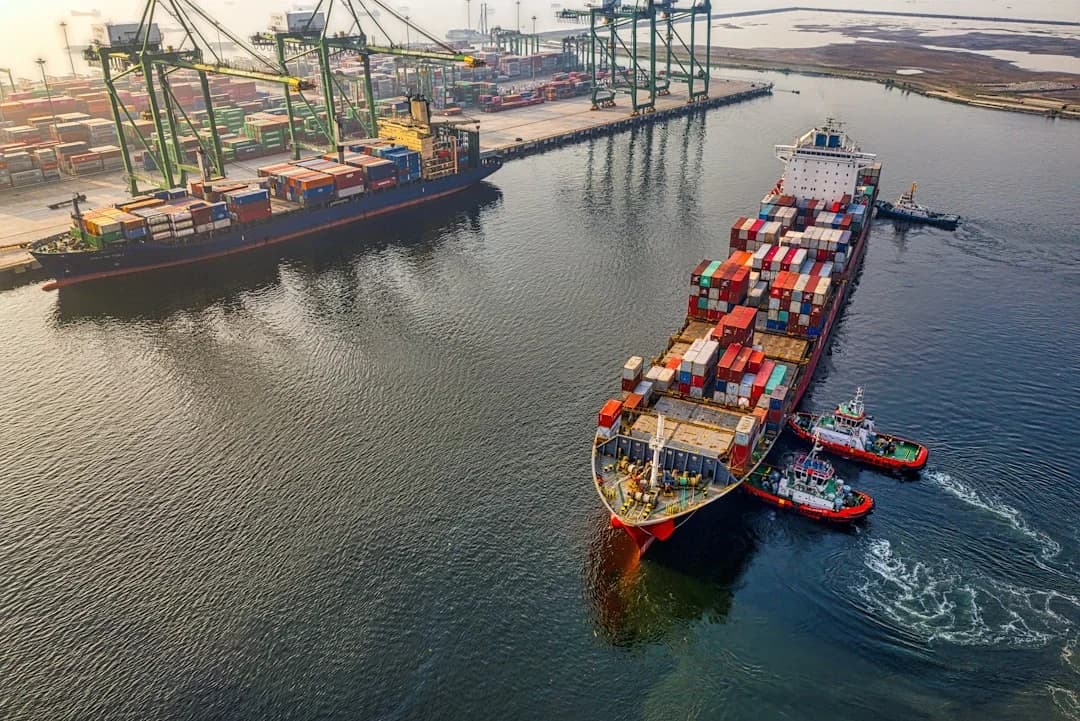
Photo by william william on Unsplash
Vancouver, British Columbia — In a move that could reshape coastal logistics in the Salish Sea region, DP World announced on January 6, 2026, that it is advancing construction of a CAD$22 million short-sea shipping facility in Vancouver. The Salish Sea Gateway coastal freight hub is designed to connect Vancouver Island with the Lower Mainland through a dedicated marine link, offering a low-emission alternative to truck and ferry movements and aiming to shift freight into a more resilient, coastal corridor. The company said the project is on track for a mid-2026 launch, with the facility expected to be fully operational by July 2026. This development comes as DP World continues to expand its Canadian port footprint and as Nanaimo’s Duke Point Terminal project moves forward in parallel, signaling a broader regional push to diversify transport modes and reduce congestion across the Pacific Northwest. (globenewswire.com)
The Salish Sea Gateway coastal freight hub sits at 855 Centennial Road in Vancouver, an address that DP World emphasizes as a dedicated container barge facility linking Nanaimo and Vancouver via low-emission coastal shipping. The design prioritizes faster access to global markets, reduced road congestion, and lower carbon emissions, aligning with DP World’s net-zero goals in Canada. The initiative also leverages a growing network of multimodal connections, with cargo moving between regional rail and established ocean services. As part of the broader program, the Nanaimo Duke Point Terminal expansion is advancing in parallel to strengthen Vancouver Island’s connectivity and expand regional trade capacity. (dpworld.com)
The Salish Sea Gateway project is built on several near-term milestones and public-private investments. DP World notes that the CAD$22 million project will introduce electric quay cranes, extended berths, and advanced cargo handling to meet evolving demand across the West Coast. In late April 2026, the company highlighted a significant milestone—the arrival of a new mobile harbour crane at the Vancouver terminal—marking progress toward mid-2026 launch and enhanced cargo-handling capability for barge operations. The crane arrival underscores DP World’s commitment to a scalable coastal shipping solution that can adapt to changing trade patterns while offering improved schedule reliability and faster cargo velocity. (dpworld.com)
Opening the door to a more integrated coastal corridor, the Salish Sea Gateway coastal freight hub is expected to unlock feeder-service opportunities through the Lower Mainland, helping to connect regional road and rail networks with global ocean carrier services. The push is framed as part of a broader strategy to diversify trade routes, improve resilience to disruptions, and support manufacturing investment and regional economic development across coastal British Columbia. In DP World’s own materials, the project is presented as a critical piece of the region’s trade infrastructure, designed to complement existing facilities on the Vancouver coast and to offer a cleaner, more efficient alternative to long-haul trucking and inter-island ferry movements. (dpworld.com)
What Happened
Announcement Details
-
On January 6, 2026, DP World publicly announced the Salish Sea Gateway coastal freight hub project in Vancouver, describing a CAD$22 million short-sea shipping facility designed to move cargo between Vancouver Island and the Lower Mainland via barge services. The company emphasized the environmental and efficiency benefits of shifting freight from road and ferry movements to a dedicated marine connection that links regional networks with global carriers. The launch was positioned as a mid-2026 milestone, with full operation anticipated by July 2026. (globenewswire.com)
-
The Vancouver terminal is described as a dedicated container barge facility located at 855 Centennial Road, Vancouver, BC, with a direct link to Nanaimo’s Duke Point Terminal. This configuration aims to deliver faster, lower-emission freight movement and to reduce local truck congestion by routing a portion of regional cargo along the Salish Sea rather than exclusively over road networks. The Salish Sea Gateway concept is presented as a step toward strengthening Canada’s coastal trade infrastructure and regional supply chains. (dpworld.com)
Timeline and Milestones
-
Mid-2026 Launch Target: DP World communications and GlobeNewswire coverage indicate a mid-2026 launch window for the Salish Sea Gateway, with ongoing construction and testing aimed at demonstrating service viability before full-scale operations begin. This timeline aligns with DP World’s public statements and accompanying press materials. In late April 2026, DP World also highlighted progress toward the mid-2026 target in its regional updates and noted that the project remains on track. (globenewswire.com)
-
July 2026 Operational Readiness: DP World’s Vancouver Short Sea Shipping page explicitly states that the Salish Sea Gateway Terminal is expected to be fully operational in July 2026, providing a specific month for initial ramp-up and service testing, followed by broader service expansion as demand materializes. This date is echoed in DP World’s mid-2026 launch messaging, reinforcing a clear near-term operational horizon. (dpworld.com)
-
Related Crane Milestones: The Salish Sea Gateway project has progressed with the arrival of a high-capacity mobile harbour crane at the Vancouver terminal on April 22, 2026 (delivered April 19, 2026). DP World framed the crane as a key asset for handling containers, breakbulk, and bulk cargo, enabling flexible operations across multiple berths and vessel types. The crane’s deployment is presented as a concrete step toward boosting terminal productivity and accelerating cargo transfers as the Salish Sea Gateway moves toward launch. (dpworld.com)
-
Duke Point Terminal Expansion as a Complementary Initiative: Separate but related, DP World’s Duke Point Terminal expansion in Nanaimo was first publicly launched with a ceremonial ground-breaking on April 8, 2025. The project aims to nearly double the berth length from 182 metres to 325 metres and lift cargo-handling capacity to about 280,000 TEUs per year, enabling larger international vessels and improved regional-to-global connectivity. The expansion includes a dedicated 26,000-square-foot storage area for pulp products and a shift to two fully electric quay cranes, reflecting a broader coastal strategy. The expansion is supported by a mix of federal and provincial funding and includes commitments from Snuneymuxw First Nation and the Port of Nanaimo. (dpworld.com)
-
Funding and Partnerships: The Duke Point expansion is emblematic of the broader public-private investment pattern underpinning BC’s coastal corridor strategy. The project drew support from the federal National Trade Corridors Fund (NTCF), providing $46.2 million, and a provincial contribution of $15 million, illustrating the scale of government backing for the Salish Sea-oriented coastal network. The Danube of local consultation and long-term land-use commitments (including Snuneymuxw First Nation’s involvement) signals a careful approach to Indigenous rights and community engagement that underpins project legitimacy. (dpworld.com)
-
Announced Impacts and Use Cases: DP World frames the Salish Sea Gateway as a platform for enabling high-frequency, low-emission short-sea service that can adapt to peak demand via dedicated vessels along the Georgia Strait. The press materials describe the hub as a tool to shift freight toward a more resilient, multimodal supply chain that can complement rail and road networks, improving reliability for exporters and importers while offering alternative routes during disruptions. The company emphasizes the potential for feeder services, regional trade diversification, and better access to global markets through Vancouver’s port system. (dpworld.com)
Why It Matters
Impact on Coastal Trade and Regional Supply Chains
-
Multimodal Resilience and Regional Connectivity: The Salish Sea Gateway coastal freight hub is positioned as a strategic layer in a broader coastal network designed to connect Vancouver Island’s production base with the Lower Mainland’s distribution footprint. By offering a dedicated barge link, DP World aims to reduce bottlenecks at truck gates and ferries, improving route reliability for shippers who want to minimize exposure to cross-border or inter-island congestion. DP World describes the facility as strengthening coastal trade and providing a more direct pathway to global markets via Vancouver. The architecture aligns with a regional push to diversify transport modes in the Pacific Northwest, where maritime access can offer an alternative during weather, ferry, or road disruptions. (dpworld.com)
-
Economic Growth and Investment Signals: DP World’s press materials describe the Salish Sea Gateway as a catalyst for trade growth, manufacturing investment, and long-term economic development across coastal British Columbia. The project’s design—connecting Nanaimo with Vancouver via a short-sea service—implicitly enables new feeder connections for regional producers and could expand the reach of BC-made goods into Asian and global markets through DP World’s network. The Duke Point expansion in Nanaimo complements this by enlarging capacity and enabling larger ships to call on Vancouver Island, thereby expanding the potential cargo base for the Salish Sea Gateway. The combined initiatives reflect a broader strategy to leverage BC’s geographic position as a gateway between North American markets and Asia. (globenewswire.com)
-
Environmental and Operational Benefits: The Salish Sea Gateway emphasizes environmental performance, including reduced truck traffic and lower emissions due to a coastal, barge-based movement of containers. The DP World materials highlight electric quay cranes and other modernizations to minimize energy use and emissions, which is consistent with Canada’s broader climate and port efficiency objectives. The emphasis on low-emission maritime transport aligns with global trends toward decarbonization of freight logistics and the push for greener port operations. DP World also notes the platform’s potential to improve schedule reliability and overall cargo velocity by leveraging coastal routes that bypass some congested road corridors. (dpworld.com)
-
Indigenous Partnerships and Community Engagement: The Duke Point expansion included formal cooperation with Snuneymuxw First Nation and a lease agreement with the Port of Nanaimo, underscoring the critical role of Indigenous partnerships in delivering major port projects on the BC coast. The expansion’s grounding included ceremonial events and statements from Indigenous leaders, signaling a broader trend in which coastal infrastructure projects in the Salish Sea region are developed with explicit commitments to local communities and treaty rights. This context matters for readers who track the social license aspects of large-scale infrastructure and trade projects. (dpworld.com)
-
Alignment with Canadian Trade Policy and Regional Strategy: The Salish Sea Gateway and Duke Point expansion sit within a framework of Canadian and provincial port development programs intended to boost regional resilience and global competitiveness. The funding mix (NTCF and provincial support) signals a government willingness to back coastal infrastructure as part of national and regional economic policy. For readers, this matters because such policy choices influence project timelines, the scale of investment, and the availability of complementary infrastructure (rail, roads, terminals) to connect coastal hubs with national and international markets. (dpworld.com)
Operational and Market Implications
-
Carrier and Service Implications: The Salish Sea Gateway is designed to integrate with DP World’s broader port and intermodal ecosystems, offering an additional route for cargo that can be moved with lower emissions and potentially faster turnarounds compared with some road-centric corridors. The direct Nanaimo-Vancouver connection opens up opportunities for feeders and regional distribution networks, potentially altering current freight patterns in the Strait of Georgia and beyond. The mid-2026 launch window, followed by July 2026 operational readiness, means shippers could begin testing and ramping volumes in the second half of 2026, depending on demand, regulatory approvals, and coordination with rail partners. (dpworld.com)
-
Competitiveness and Regional Trade Flows: As BC and western Canada position themselves as more integrated logistics hubs, the Salish Sea Gateway could influence regional trade flows by providing an alternate supply chain corridor that complements existing deep-sea terminals in Vancouver and rail connections to the interior. The Duke Point expansion’s capacity uplift to 280,000 TEUs per year reinforces the scale of the regional port system and provides capacity for growth in coastal shipping services. Observers expect that the combined initiatives may influence carrier scheduling, container optimization, and the pricing dynamics associated with coastal versus inland transport. (dpworld.com)
-
Environmental and Community Considerations: The emphasis on emissions reduction and electric port equipment indicates a deliberate attempt to balance growth with environmental stewardship. However, the scale of investment and the involvement of Indigenous communities and local governments mean that ongoing stakeholder engagement, environmental monitoring, and social license considerations will remain important in the months ahead. Community leaders in Nanaimo and other coastal communities have historically urged careful alignment with local needs and treaty obligations, which DP World’s Duke Point expansion process has publicly acknowledged. These considerations will shape the project’s perceived legitimacy and long-term success. (dpworld.com)
What’s Next
Near-Term Milestones Through Mid-2026
-
Operational Readiness and Ramp-Up: With July 2026 as the stated target for full operation, readers should expect a multi-month ramp-up phase starting in mid-2026 as DP World validates crane functionality, berthing schedules, and intermodal handoffs. The mobile harbour crane and other infrastructure enhancements are expected to enable higher container throughput, greater cargo versatility, and faster vessel turnaround times. Observers should watch for initial test runs, pilot cargo movements, and early service announcements from DP World or partner carriers. (dpworld.com)
-
Coordinated Milestones with Duke Point: The Nanaimo expansion’s completion and commissioning will influence the Salish Sea Gateway’s cargo base and route options. While the Duke Point project is broader than the Vancouver facility itself, its progress—especially berth upgrades and the shift to electric quay cranes—will affect scheduling, vessel calls, and the feasibility of more frequent coastal services between Nanaimo and Vancouver. The combination of the two projects creates a more robust coastal corridor that can absorb fluctuations in demand and disruptions. (dpworld.com)
Longer-Term Outlook and Related Projects
-
Market Growth and Service Diversification: If the Salish Sea Gateway proves successful, DP World and regional partners could explore additional coastal routes, feeder connections, and cross-border logistics options. The integration with DP World’s global network could unlock further scale economies and service diversification, including more frequent barge movements, expanded cargo types, and potential partnerships with rail operators to optimize end-to-end travel times. The ongoing emphasis on low-emission, coastal transport aligns with broader market expectations for greener supply chains and the evolving preferences of shippers seeking resilience against port congestion or inland bottlenecks. (dpworld.com)
-
Environmental, Social, and Governance (ESG) Trajectories: As coastal infrastructure grows, ESG considerations will remain central to project governance. DP World’s communications highlight emissions reductions, electrification, and the social license aspects of Indigenous partnerships, suggesting that the Salish Sea Gateway coastal freight hub’s ongoing development will be monitored for environmental performance and community impact. For readers and stakeholders, the next phase will likely involve reporting on emissions data, energy use, and community engagement outcomes as the project scales. (dpworld.com)
Closing
The Salish Sea Gateway coastal freight hub marks a notable inflection point for cargo movement along the British Columbia coast. By centering a dedicated barge facility in Vancouver and coordinating with Vancouver Island’s Duke Point expansion, DP World is aiming to deliver a lower-emission, more reliable coastal corridor that connects regional producers with global markets. The project’s CAD$22 million investment, explicit milestones for mid-2026 and July 2026, and the ongoing Duke Point development collectively illustrate a broader strategy to strengthen BC’s role as a coastal logistics artery in the Pacific Northwest. As with any large-scale infrastructure program, the trajectory will hinge on timely execution, effective stakeholder collaboration, and the ability to translate capacity into tangible reductions in road congestion and truck emissions. Observers, shippers, and port users should monitor DP World’s updates over the coming months for detailed service announcements, scheduling developments, and performance data as the Salish Sea Gateway coastal freight hub moves from plan to operation. (globenewswire.com)