Salish Sea Gateway Short-sea Shipping Nears Mid-2026 Launch

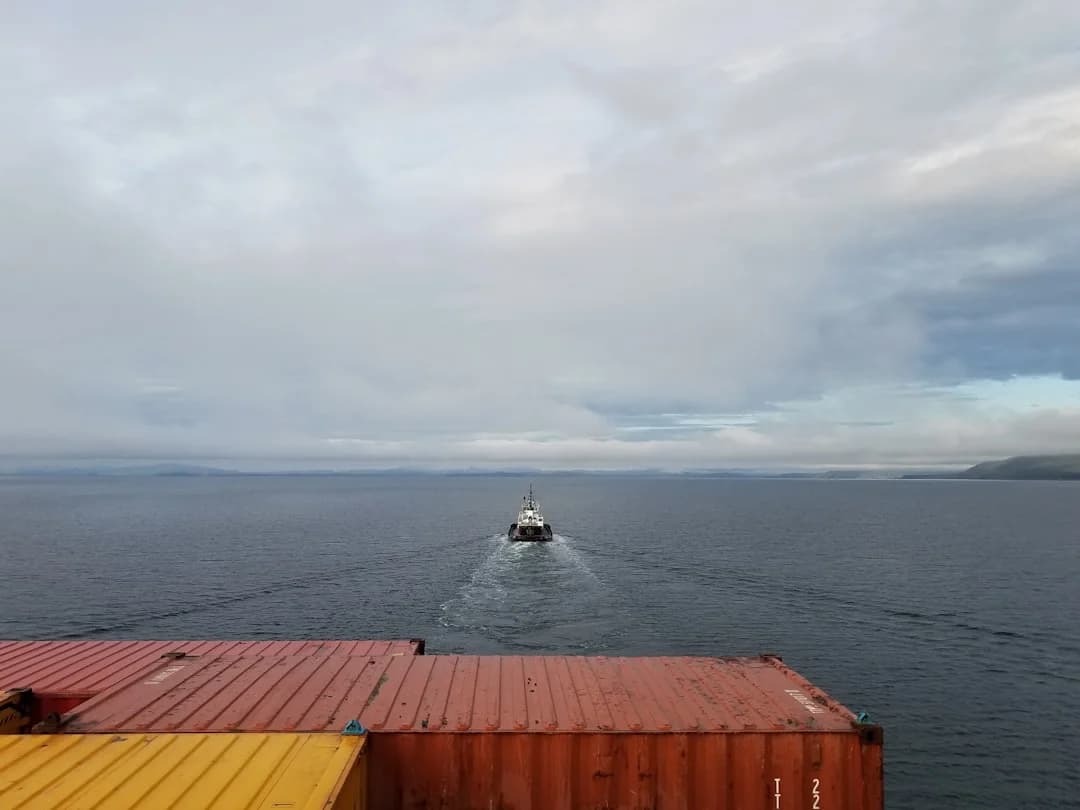
Photo by c h on Unsplash
DP World is moving decisively to strengthen British Columbia’s coastal trade network with a project named the Salish Sea Gateway short-sea shipping. The developer and operator behind the initiative, DP World Canada, announced that construction is underway on a CAD$22 million facility in Vancouver designed to connect Vancouver Island’s coastal markets with the Lower Mainland through high-frequency, dedicated short-sea services. Officials say the project is on track for a mid-2026 launch, aimed at shifting freight from truck-and-ferry movements to a more predictable, marine-focused corridor that links regional road and rail networks to global ocean carriers. The Salish Sea Gateway represents a core piece of DP World’s broader coast-to-coast strategy in Canada, and it sits alongside ongoing expansions at Nanaimo’s Duke Point Terminal to bolster Vancouver Island’s trade connectivity. (globenewswire.com)
This initiative arrives at a moment when western Canada retailers, manufacturers, and exporters have been seeking more reliable, multimodal routes to Asia and North American markets, particularly given ongoing congestion and bottlenecks at traditional gateways. DP World’s mid-2026 target is not just about moving containers more efficiently; it is about reshaping the logistics calculus for coastal BC, reducing long-haul truck trips, lowering emissions, and smoothing seasonal volatility in supply chains that rely on roads and ferries to traverse Georgia Strait. The Salish Sea Gateway is designed to operate as a dedicated coastal trade hub that offers frequent barge connections between Nanaimo and Vancouver, with direct access to rail networks and major highways to weave into North American networks and global ocean services. The plan has been framed as a long-term investment in resilience for coastal British Columbia and its trading partners. (globenewswire.com)
Opening the lens beyond Vancouver, DP World’s Duke Point Terminal expansion on Vancouver Island will complement the Vancouver facility by expanding berth length, increasing cargo capacity, and deepening the coast-wide short-sea network. The company’s March 2025 ground-breaking for the Duke Point expansion signals a broader push to integrate Island-to-mainland links with the Vancouver gateway, creating a two-pronged approach to coastal connectivity. The Duke Point project increases the berth length from 182 metres to 325 metres and raises annual TEU capacity to about 280,000 TEUs, enabling larger vessels to call and handling a broader mix of cargo, including specialized pulp products. The program’s funding package includes substantial public support, with the National Trade Corridors Fund contributing $46.2 million and BC’s Regional Port Enhancement Program contributing $15 million as part of the province’s Economic Recovery Plan. The project is under a 50-year lease between DP World and the Port of Nanaimo, and it includes free, prior and informed consent from Snuneymuxw First Nation, underscoring the Indigenous-led dimension of coastal development in the Salish Sea region. Together, the Duke Point expansion and the Salish Sea Gateway form a coordinated strategy to unlock feeder-service opportunities through the Lower Mainland and deepen Canada’s Pacific gateway. (dpworld.com)
Section 1: What Happened
Announcement Details
DP World Canada announced that the Salish Sea Gateway short-sea shipping facility is being built in Vancouver as a CAD$22 million project intended to shift freight from road-and-ferry movements to a dedicated marine connection. The project’s stated aim is to link regional road and rail networks with global ocean carrier services, creating a more reliable and higher-frequency coastal trade corridor across the Georgia Strait. The company notes that the facility is named in recognition of the Coast Salish Nations on whose traditional territories the project is located, highlighting an Indigenous-inclusive approach to regional trade infrastructure. The formal timeline emphasizes a mid-2026 launch for coastal freight services between Vancouver Island and the Lower Mainland. These details come from a GlobeNewswire press release that DP World distributed on January 6, 2026, which also describes the Salish Sea Gateway’s role as a dedicated coastal trade hub and its expected operational characteristics. (globenewswire.com)
DP World’s January 2026 update comes on the heels of earlier construction milestones and public announcements about the broader network expansion in the region. The Duke Point Terminal expansion at Nanaimo — a critical companion project in DP World’s Canadian portfolio — was formally announced with a ground-breaking ceremony in early April 2025. The Duke Point expansion will extend the berth length to accommodate larger international vessels and increase cargo handling capacity, while adding a dedicated short-sea shipping link between Nanaimo and Vancouver. The project’s physical enhancements and its role in enabling more frequent coastal connections are designed to reinforce Vancouver Island’s access to global markets and to broaden the corridor’s resilience against disruptions that can affect traditional truck-and-ferry routes. The Duke Point expansion is also framed as a tangible step in DP World’s strategy to grow Canada’s coast-to-coast footprint for short-sea shipping. (dpworld.com)
Timeline and Milestones
Key dates and milestones shaping the Salish Sea Gateway narrative include:
-
April 4, 2025: DP World breaks ground on the Duke Point Terminal expansion in Nanaimo. The expansion aims to nearly double the berth length from 182 metres to 325 metres and raise cargo-handling capacity, enabling DP World to serve larger ships and expand service offerings between Vancouver Island and the Vancouver area. The project also formalizes a shorter, more reliable coast-to-coast short-sea shipping connection between Nanaimo and Vancouver, broadening access to Asian markets. Public funding will partner with private investment, including a 50-year lease with the Port of Nanaimo and a mix of national and provincial support. This milestone underscores the company’s broader plan to knit together the Nanaimo and Vancouver hubs into a more resilient coastal network. (dpworld.com)
-
March 4, 2025: DP World’s Duke Point expansion ground-breaking event included the participation of Snuneymuxw First Nation, Port of Nanaimo, and other project partners, marking a formal government-community recognition of the project’s long-term implications for regional trade and reconciliation-based development. While the press materials emphasize the same project timeline, the event formalities reflect a coordinated approach to delivering infrastructure that serves multiple stakeholders and aligns with regional economic priorities. This milestone sits at the start of a multi-year construction window intended to deliver the berth and storage enhancements needed for the Salish Sea Gateway’s coastal-service ambitions. (dpworld.com)
-
January 6, 2026: DP World issues a formal GlobeNewswire release detailing the Salish Sea Gateway, including the facility’s target mid-2026 launch and its designed capacity to move cargo efficiently via dedicated short-sea services that connect Vancouver Island to the Lower Mainland and beyond. The release enumerates the facility’s planned features (high-capacity handling equipment, dedicated truck ingress/egress, and optimized transfer capacity for high-frequency barge connections) and reiterates the project’s broader role in strengthening BC’s coastal trade ecosystem. It also places the Salish Sea Gateway within a wider regional framework that links to DP World’s Nanaimo expansion and to Canada’s national and provincial trade initiatives. (globenewswire.com)
-
Early 2026 (ongoing): DP World continues to share milestones and progress updates about the Salish Sea Gateway construction, with ongoing site preparation, civil works, and utility installation reported as part of the project’s advancement in 2026. The GlobeNewswire release notes that construction milestones will be shared as the build progresses, signaling a continuous information flow to stakeholders and the public. The mid-2026 target remains the principal milestone, but the company and its partners underscore that the coastal network is intended to evolve with subsequent service introductions and potential ecosystem enhancements over time. (globenewswire.com)
Investment Details and Partnerships
The Salish Sea Gateway and Duke Point Terminal expansion are financed through a combination of private and public funding, reflecting a collaborative model for critical infrastructure in British Columbia. The Duke Point expansion, for example, involves a 50-year lease with the Port of Nanaimo and a funding mix that includes $46.2 million from the federal National Trade Corridors Fund (NTCF) and $15 million from British Columbia’s Regional Port Enhancement Program, part of the province’s Economic Recovery Plan. This combination signals a strong public-sector commitment to coastal trade development and an acknowledgment that cargo-efficient, low-emission maritime movement is a strategic national priority. The Salish Sea Gateway complements Nanaimo’s expansion by creating a continuous coast-to-coast corridor that aims to reduce truck-based freight movements in the Georgia Strait region and to offer an alternate, potentially lower-emission mode of freight movement across the region. The press materials also emphasize that the Saltish Sea Gateway will incorporate modern cargo-handling equipment, on-dock electric vehicle support, and dedicated access points to optimize the transfer process from vessel to shore and onto rail or road networks. (globenewswire.com)
Section 2: Why It Matters
Economic Impact and Regional Trade Benefits
The Salish Sea Gateway short-sea shipping project is positioned as a lever to increase the efficiency and resilience of British Columbia’s coastal supply chains. By shifting freight from a road-and-ferry model to a high-frequency coastal service, DP World expects to reduce bottlenecks associated with seasonal congestion and variable ferry schedules. The approach is designed to improve vessel turnaround times, provide more predictable service for importers and exporters, and unlock feeder-service opportunities that feed into larger North American and global networks. In DP World’s framing, the Salish Sea Gateway, together with the Nanaimo Duke Point Terminal expansion, will create a coastal corridor that binds Vancouver Island more tightly to the Lower Mainland’s gateway and, more broadly, to Asia-Pacific trade routes and North American inland markets. The media materials emphasize that this is not merely an infrastructure project but a strategic upgrade aimed at enabling long-term economic development, manufacturing investment, and more robust regional resilience across the BC coast. (globenewswire.com)
DP World’s press materials also highlight the potential for greenhouse-gas reductions through fewer truck movements as freight shifts to coastal ships and short-sea connections. The Salish Sea Gateway’s design—including dedicated transfer capacity to support frequent barge connections—serves as a practical model for reducing intermodal friction and improving environmental performance by consolidating movements into a more predictable, marine-based corridor. While the long-term environmental impacts depend on actual fleet choices and frequency, the project’s proponents frame it as a contribution to sustainable, low-emission regional logistics. The project’s environmental rationale aligns with broader BC policy goals around reducing trucking bottlenecks and emissions in important corridors that link key coastal communities to global markets. (globenewswire.com)
Market Context: Where Short-Sea Shipping Fits in BC and Canada
The Salish Sea Gateway sits within a broader context of BC’s coastal trade and Canada’s national logistics ambitions. DP World’s Canadian footprint spans Vancouver, Nanaimo, Fraser Surrey, Prince Rupert, and Saint John, forming a network intended to improve resilience and speed in cross-border and international trade flows. In Vancouver, for example, the DP World Vancouver terminal already emphasizes multimodal connectivity, including rail access to CN and CP networks and direct highway connections, positioning it well to act as the inland nexus for a growing coastal trading system. The Nanaimo and Duke Point expansions are designed to complement this network by establishing reliable links between Vancouver Island’s industrial hubs and the region’s mainland gateway. In this broader frame, DP World’s strategy reflects a growing industry consensus that short-sea shipping can be a meaningful instrument for reducing congestion at key ports, diversifying trade routes, and delivering more predictable service levels for shippers. The company’s public-facing materials and partner announcements underscore the role of short-sea shipping in Canada’s coastal logistics evolution. (dpworld.com)
Economic analysis from local industry observers and trade publications also notes that coastal corridors—particularly those linking Vancouver Island with Mainland British Columbia—have the potential to alter freight routing patterns, with downstream effects on the Port of Vancouver, distribution networks, and regional manufacturing supply chains. In the Salish Sea region, where geography makes road-ferry itineraries a prominent component of the logistics mix, the Salish Sea Gateway is positioned as a potential catalyst for more stable service frequencies, faster door-to-door shipments, and a more diversified set of options for shippers seeking alternatives to the heavy ferry schedule constraints. While the exact market share gains will depend on future vessel deployments, service frequencies, and customers’ adoption, the project’s milestones provide a clear signal that big players are betting on coastal shipping as a meaningful growth channel for Western Canada’s trade. (businessexaminer.ca)
Stakeholder Impacts and Community Considerations
The Salish Sea Gateway and the related Duke Point Terminal expansion place local Indigenous communities, port authorities, and regional economies squarely in the center of Canada’s coastal development narrative. The Duke Point project was carried forward with the Snuneymuxw First Nation’s consent and involvement, reflecting a growing emphasis on Indigenous partnership in major infrastructure programs. The deal structure also includes a substantial public funding layer designed to ensure that the economic benefits—new jobs, improved export capacity, and increased regional connectivity—translate into broader community and regional resilience. DP World’s press materials emphasize that the coastal network will support trade growth and manufacturing investment across coastal British Columbia, with ripple effects for supplier networks, logistics jobs, and ancillary services across the region. As the Salish Sea Gateway moves toward implementation, communities will be watching for indicators of local benefits, implementation timelines, safety and environmental safeguards, and ongoing collaboration with Indigenous nations and local municipalities. (dpworld.com)
Section 3: What’s Next
Implementation Timeline and Next Steps
With construction ongoing in early 2026 and a mid-2026 target for launching the Salish Sea Gateway, DP World and its partners have signaled a phased approach to delivering the coastal-service platform. The GlobeNewswire release outlines anticipated facility features and operational concepts, including:
- Modern cargo-handling equipment to support high-frequency short-sea service and efficient vessel-to-shore transfers.
- Dedicated truck ingress and egress to streamline the transition from vessel to inland networks while maintaining safety in port precincts.
- Optimized transfer capacity to enable reliable, high-frequency barge connections between Vancouver Island and the Lower Mainland, integrated with North American road and rail networks and global ocean carrier connectivity. (globenewswire.com)
In addition to the Salish Sea Gateway’s own construction schedule, the Duke Point Terminal expansion remains a critical ahead-of-2030 catalyst for the region’s coastal logistics. The Nanaimo expansion is designed to deliver a broader capacity envelope and more flexible operations that can accommodate larger vessels and expanded container volumes, laying the groundwork for a more robust Island-to-mainland feeder network that can feed into DP World’s broader trans-Pacific and intercontinental trade flows. The Duke Point project’s progress to date, including berth upgrades and new storage facilities, points to a multi-year build-out timeline with new service patterns likely to emerge as soon as late 2025 and into 2026. (dpworld.com)
What to Watch For in 2026 and Beyond
Readers should watch for several milestones as the Salish Sea Gateway moves from construction to operations. First, mid-2026 will be a critical inflection point when DP World aims to commence coastal freight services between Vancouver Island and the Lower Mainland. The new services are expected to connect with DP World’s broader Canadian port network, expanding feeder service options and enabling more predictable schedules. The degree to which the corridor reduces truck traffic and greenhouse gas emissions will depend on fleet choices, vessel frequencies, and customer uptake, but there is a clear policy and corporate emphasis on shifting short-haul freight away from truck-heavy routes where feasible. The company’s ongoing updates and press releases are likely to highlight service rollouts, pilot calls, and potential expansion into additional routes or ports, depending on demand and regulatory environments. (globenewswire.com)
Second, the integration with Vancouver’s existing container terminal operations is expected to intensify, with possible enhancements to intermodal connections, rail connections to CN and CP networks, and improvements in cargo scanning, reefer capacity, and yard automation. DP World’s Vancouver terminal page already emphasizes a highly integrated, multimodal capability, including direct rail connectivity and a modernized yard that supports efficient container handling, which should synergize with the Salish Sea Gateway’s short-sea activities. The combination of a Vancouver-based hub and a Vancouver Island feeder network could yield incremental gains in terminal productivity and service reliability for customers seeking alternatives to the current bottlenecks in Georgia Strait freight movement. (dpworld.com)
Third, the Duke Point Terminal expansion’s progress will be closely watched for its impact on Nanaimo and the broader Vancouver Island economy. The planned 280,000 TEU annual capacity and the longer berth are designed to enable larger ships to call more frequently, expanding the island’s access to global markets and enabling more diversified cargo types, including specialized loads. The synergy with the Salish Sea Gateway means the plan is not only about one terminal in one location; it is about establishing a connected, coast-wide maritime spine that could reconfigure regional supply chains over the coming decade. Public funding and Indigenous partnership will continue to shape project milestones, with community engagement and environmental safeguards likely to be ongoing themes as the network expands. (dpworld.com)
Closing
DP World’s Salish Sea Gateway short-sea shipping project marks a pivotal step in the evolution of Canada’s Pacific gateway strategy. By pairing a new Vancouver facility with an expanded Duke Point Terminal in Nanaimo, the company seeks to create a coastal corridor that reduces dependency on truck-and-ferry routes, strengthens regional trade resilience, and expands access to global markets for coastal British Columbia. The mid-2026 launch target, together with the Nanaimo expansion’s berth and TEU increases, underlines a long-term bet on coastal logistics as a critical driver of growth for the BC economy. As DP World and its partners advance construction, stakeholders across government, Indigenous communities, shippers, and regional businesses will be watching closely for service rollouts, performance metrics, and the broader economic impact of this coastal network. For ongoing updates, DP World’s press releases and official communications remain the primary sources for milestones, timelines, and future expansions of the Salish Sea Gateway and related projects. (globenewswire.com)
If you’d like, we can publish a companion explainer that maps the Salish Sea Gateway short-sea shipping route, compares it to traditional truck-ferry itineraries, and highlights potential case studies from early shippers or pilot customers as soon as more operators announce their participation. We’ll also keep you posted on any new data the port authorities release about corridor performance, frequency, and emissions reductions as the project moves toward its mid-2026 milestone.