UBC Researchers Develop Clean Energy Battery.. BC Innovates

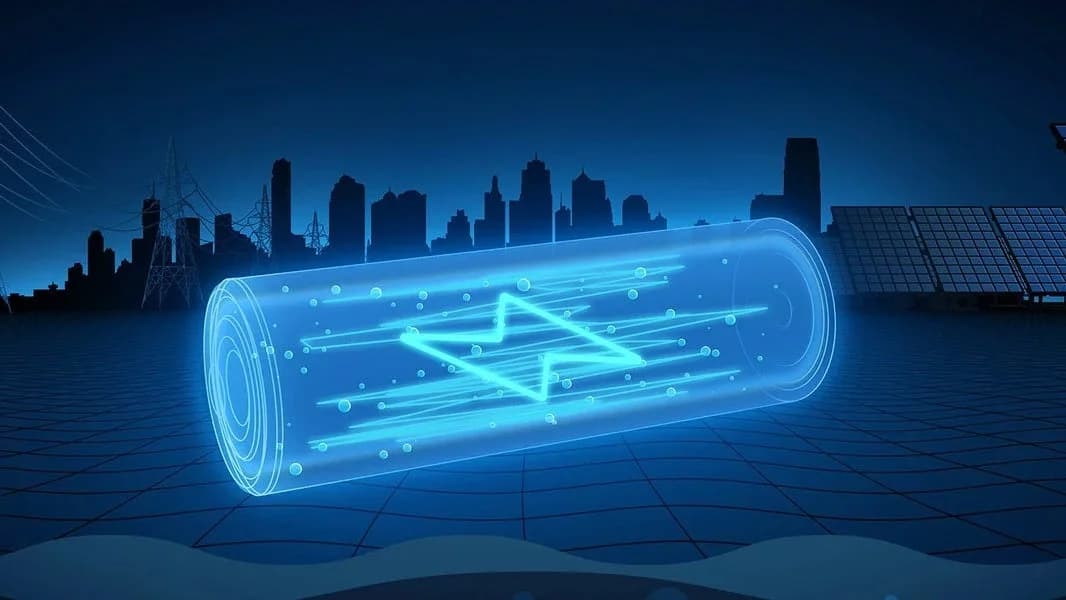
In British Columbia, a quiet revolution is taking place in university laboratories, startup garages, and government-funded research centers. At the heart of this movement is a simple idea: better batteries mean a cleaner, more reliable energy future for the West Coast and beyond. As BC Times – your independent source for British Columbia news, Vancouver perspectives, and Pacific Northwest reporting – investigates, the phrase "UBC researchers develop clean energy battery.." has become a shorthand for a broader wave of experimentation, collaboration, and practical testing that could reshape how we store, transport, and use energy in daily life. “UBC researchers develop clean energy battery..” is not just a tagline; it signals a broader strategy to push for safer chemistries, scalable manufacturing, and sustainable supply chains that keep the region at the forefront of green tech. This piece weaves context about BC's environment, industry, and public policy into a robust, longform look at where that effort stands today.
UBC’s Battery Research Landscape: Portals to the Future of Clean Energy
BC is home to a growing ecosystem of battery research that spans university labs, public-private partnerships, and regional testing facilities. The core idea is simple: to accelerate the net-zero transition, we need batteries that are safer, cheaper, more durable, and easier to source domestically. In Vancouver and the broader British Columbia region, research teams are pursuing a spectrum of approaches—from all-solid-state lithium batteries to zinc-ion chemistries and beyond. This multi-pronged strategy is visible in the campus research clusters, cross-campus collaborations, and industry ties that anchor BC’s battery story in practical applications as well as theoretical breakthroughs. The Battery Innovation Research Excellence Cluster, for example, frames its work around three pillars—technology development, environmental assessment, and socio-economic analysis—aiming to deliver robust, sustainable battery technology while evaluating its real-world footprint and feasibility. (battery-innovation.ok.ubc.ca)
In the same spirit of practical progress, UBC’s ongoing zinc-ion battery research has emerged as a notable milestone for greener energy storage. Reports from UBC’s network show researchers investigating how zinc-based chemistries could offer lower costs, safer operation, and more sustainable supply chains compared with traditional lithium-ion approaches. The cross-campus nature of these efforts—spanning UBC Okanagan and UBC Vancouver—illustrates how BC institutions are pooling resources to tackle safety and longevity challenges in energy storage. While zinc isn’t a silver bullet, it represents a meaningful pathway toward safer, more economical grid-scale storage. (news.ok.ubc.ca)
Stretchable, washable batteries have also captured the public imagination and the attention of BC-based engineers. In a field where wearables and soft electronics promise new consumer experiences, researchers have demonstrated flexible cells that survive bending, twisting, and even laundry cycles. This kind of result matters not just for gadget-makers but for future distributed energy devices embedded in clothing, medical textiles, and smart fabrics. The team’s emphasis on durability and manufacturability provides a model for translating lab-scale curiosities into market-ready products. “Wearable electronics are a big market and stretchable batteries are essential to their development,” one team member notes, highlighting the practical significance of long-lasting, safe battery designs. (engineering.ubc.ca)
"UBC researchers develop clean energy battery.." is more than a phrase—it's a lens on how BC is connecting science to society, policy to production, and education to local industry.
Why Battery Research Matters for British Columbia's Environment and Economy
British Columbia’s environment is a central part of its identity and policy agenda. Clean energy storage is not merely a technological pursuit—it affects renewable integration, regional grid resilience, and the feasibility of electric transportation across the province. Batteries determine how effectively solar and wind power can be captured and used when the sun isn’t shining and the wind isn’t blowing. In BC, where hydropower is a major asset, battery technology complements legacy assets by smoothing variability and enabling higher penetrations of intermittent renewables. The environmental implications of new battery chemistries—such as the life-cycle carbon footprint, recycling pathways, and end-of-life management—are not abstract concerns; they influence regulatory decisions, corporate sustainability reporting, and community acceptance. This framing—environmental stewardship linked to technological innovation—has become a hallmark of BC’s approach to energy transitions. (battery-innovation.ok.ubc.ca)

At the same time, BC’s innovation ecosystem seeks to keep critical energy infrastructure resilient in the face of climate risks, geopolitical dynamics, and supply-chain disruptions. The province has a notable track record of attracting investment and developing domestic capabilities in clean energy materials and processes. A prominent example is Mangrove Lithium’s financing to build a domestic refining plant in Delta, a development closely tied to UBC research leadership on electrochemical technologies. The project underscores how local science and regional industry can align to reduce dependence on distant supply chains while accelerating job creation in a high-tech sector. (chbe.ubc.ca)
BC Times’ coverage also recognizes the broader social implications of battery innovation. The shift to advanced energy storage intersects with labor markets, Indigenous and local communities, and policy frameworks designed to ensure responsible sourcing, environmental justice, and long-term benefits for residents. In this context, BC’s universities, including UBC, are not only doing science; they’re shaping a regionally grounded narrative about what a cleaner energy future looks like in practice. The interdisciplinary approach—bringing engineering, policy, economics, and environmental science into dialogue—addresses not only the “how” of battery technology but the “who pays” and “who benefits” questions that matter to citizens. (battery-innovation.ok.ubc.ca)
Core Technologies Under Investigation in BC: From Zinc-Ion to All-Solid-State
Battery technology is a broad field with multiple competing chemistries, each with its own advantages and trade-offs. In British Columbia, researchers are investigating several promising directions that could complement the province’s energy profile and supply chains.
-
Zinc-ion batteries: These systems use zinc chemistry to deliver safer, potentially lower-cost energy storage. Their advantages include abundant raw materials, non-flammable electrolytes, and potential grid-scale safety improvements. Early-stage research has focused on understanding dendrite formation and developing protective coatings to extend cycle life. As BC institutions collaborate across campuses, zinc-based approaches are gaining attention as a practical, near-term option for safe storage in the region. (news.ok.ubc.ca)
-
All-solid-state lithium batteries (ASSLBs): All-solid-state designs promise higher energy density and improved safety over conventional lithium-ion cells by replacing flammable liquid electrolytes with solid alternatives. University of British Columbia researchers are among the teams exploring materials science, manufacturing pathways, and the environmental and socio-economic implications of deploying ASSLB technology. This holistic view reflects a broader strategy to understand lifecycle impacts and to map local supply chains for a Made-in-Canada battery future. (battery-innovation.ok.ubc.ca)
-
Wearable and flexible batteries: Beyond grid storage, BC researchers have demonstrated stretchable, washable batteries that enable new classes of wearable electronics and soft devices. These innovations have broader implications for energy harvesting, medical monitoring, and smart textiles—fields where real-world durability and user experience matter as much as raw energy density. The work in this space has highlighted the importance of safe chemistries and robust packaging to survive daily wear and tear. (engineering.ubc.ca)
-
Industry-aligned manufacturing and supply chain studies: In parallel with material science, BC researchers are examining the economics and policy implications of battery production in the region. This includes lifecycle assessments, carbon footprints of manufacturing steps, and the feasibility of a domestic battery supply chain that reduces exposure to global price volatility and geopolitical shocks. The Battery Innovation Research Excellence Cluster exemplifies this broader approach, emphasizing environmental and socio-economic analyses alongside technical development. (battery-innovation.ok.ubc.ca)
In short, BC’s battery research portfolio blends deep science with practical considerations—cost, safety, scalability, and local impact. The region’s emphasis on cross-disciplinary collaboration, anchored by UBC’s programs and partner institutions, sets a model for other university-led energy initiatives. As one participating program states, the goal is to create “robust and sustainable battery technology” that supports a net-zero transition while continually evaluating its environmental and social footprint. (battery-innovation.ok.ubc.ca)
Real-World Initiatives Linking University Research to Industry
BC’s battery narrative is not purely academic. Several real-world initiatives connect university discoveries to tangible industrial outcomes, with government, startups, and multinational investors playing roles in translating lab-scale breakthroughs into market-ready products and regional jobs.

-
Mangrove Lithium’s Delta facility: The funding and development of a lithium refining plant in Delta demonstrate how BC’s research ecosystem can feed into regional capabilities for battery materials processing. This project, connected to UBC researchers’ leadership in clean energy and electrochemical technologies, points to a future where Canadian-produced battery materials contribute to both domestic and cross-border energy markets. The collaboration illustrates how university-led science can help diversify and strengthen North American supply chains. (chbe.ubc.ca)
-
Wearable battery commercialization prospects: The stretchable, washable battery work at UBC has drawn attention from industry players and media outlets. The practical emphasis on safe, flexible energy storage resonates with consumer electronics and medical devices where durability matters most. This line of research showcases how BC labs can seed technologies that bloom into consumer brands and industrial applications, if cultivated with appropriate funding and regulatory clarity. (engineering.ubc.ca)
-
Public discourse and media coverage: The BC media ecosystem has covered these advances in accessible terms, helping the public understand why battery research matters for daily life—from powering wearables to enabling a cleaner grid. Coverage also raises awareness of the environmental questions surrounding emerging chemistries and the importance of responsible end-of-life management and recycling pathways. Global News and Business in Vancouver have reported on UBC’s work and its implications, illustrating how local journalism helps translate laboratory milestones into community significance. (globalnews.ca)
A Closer Look: Hypothetical Scenarios and Possible Impacts for BC
To ground this discussion in concrete paths BC could pursue, consider a few hypothetical scenarios that illustrate how UBC-led battery research might unfold in the region. These scenarios are not claims of current events; they are speculative narratives designed to help readers understand potential trajectories and policy considerations.
-
Scenario A: Domestic supply chain resilience If all-solid-state lithium batteries move from lab-scale success to scalable manufacturing in BC, the province could cultivate a domestic supply chain for high-performance batteries. This would reduce dependence on international refining and component sourcing, support local jobs, and align with provincial climate targets. The environmental lifecycle of these batteries would be scrutinized through the Battery Innovation Research Excellence Cluster’s environmental assessment framework, ensuring that carbon footprints and recycling pathways are factored into planning. This outcome aligns with the cluster’s stated goals of environmental and socio-economic analysis. (battery-innovation.ok.ubc.ca)
-
Scenario B: Safer grid-scale storage via zinc-ion systems Widespread deployment of zinc-ion storage could complement the region’s renewable resources by providing safe, lower-cost options for grid storage. In this scenario, cross-campus collaborations help solve dendrite formation challenges and establish safe manufacturing practices. If realized, zinc-ion storage could provide a transitional technology that bridges today’s batteries with tomorrow’s solid-state solutions, particularly for distributed-energy resources in rural or remote BC communities. (news.ok.ubc.ca)
-
Scenario C: Wearables driving consumer-grade energy innovations Stretchable, washable batteries developed in BC labs could inspire a new wave of consumer electronics and medical devices that integrate power sources more naturally into fabrics and skins. Industry partnerships would be essential to standardize testing, ensure safety, and streamline supply chains for mass production. The public-facing narrative around safe, flexible energy storage would also inform regulatory practices related to consumer electronics safety and battery recycling. (engineering.ubc.ca)
These scenarios illustrate how the same basic research DNA—the kind that underpins the phrase “UBC researchers develop clean energy battery..”—could ripple outward to impact households, businesses, and communities across British Columbia. They also underscore the importance of a holistic approach that considers environmental impacts, cost trajectories, and social benefits as integral parts of technological development. (battery-innovation.ok.ubc.ca)
A Practical Comparison: Battery Technologies in Focus
The following table provides a concise, at-a-glance comparison of several battery technologies relevant to BC’s current research and potential deployment. It’s not a forecast, but it helps readers understand the trade-offs researchers and policymakers weigh as they plan for a cleaner energy future.

| Battery technology | Key advantages | Primary challenges | Most likely near-term use in BC | Notable BC-related developments |
|---|---|---|---|---|
| Zinc-ion batteries | Low cost, abundant Zn, safer in many chemistries, non-flammable electrolytes | Dendrite formation and cycle life; performance at scale | Grid storage and backup power in remote communities | Cross-campus zinc-ion studies at UBC; zinc-dendrite research to extend life. (news.ok.ubc.ca) |
| All-solid-state lithium (ASSLB) | High energy density, improved safety, potential for longer life | Material cost, manufacturing yield, temperature stability | Early-stage deployment in premium devices and specialty markets | UBC Battery Innovation Research Excellence Cluster focusing on technology development and lifecycle analysis. (battery-innovation.ok.ubc.ca) |
| Stretchable/wearable batteries | Flexibility, durability, integration with textiles; washes well | Material compatibility, manufacturing scale, cost | Wearables, medical textiles, smart clothing | UBC researchers demonstrated washable, stretchable battery; media coverage highlighted practical wearability. (engineering.ubc.ca) |
| Conventional Li-ion (for baseline) | Well-established supply chains, high energy density | Safety concerns (fire risk), cost fluctuations, recycling needs | General consumer electronics, EVs | Industry-wide benchmarks; BC’s research aims to outpace weaknesses with safer solid-state and alternative chemistries. (battery-innovation.ok.ubc.ca) |
This table is intended to be a practical reference for readers who want to understand how the BC research community’s focus areas relate to broader industry trends. The BC landscape emphasizes not only the chemistry but also lifecycle assessments, policy implications, and the economic viability of new battery ecosystems. The Battery Innovation Research Excellence Cluster explicitly positions itself as an interdisciplinary hub that integrates technology development with environmental and socio-economic analyses to shape responsible battery technologies for Canada and beyond. (battery-innovation.ok.ubc.ca)
The People, Places, and Partnerships Behind BC’s Battery Initiative
BC’s battery narrative rests on the collaboration between universities, industry, and government. UBC’s leadership in electrochemical technologies—paired with other BC research centers and startup ventures—helps translate academic insights into products and local jobs. The Mangrove Lithium case exemplifies how university research can seed industry opportunities that are visible in regional economic development. By tying research leadership to domestic refining capabilities, BC aims to reduce reliance on imported materials while creating pathways for Canadian innovation to scale. (chbe.ubc.ca)
Media coverage has played a crucial role in disseminating the story to a broader audience. The reporting around UBC’s flexible, washable battery and related advances demonstrates how science communication can make complex topics accessible without oversimplifying the science. This kind of reporting helps policymakers, educators, and the public understand why investment in battery research matters, and how BC’s unique geography—with access to ports, clean energy resources, and a strong technology sector—creates opportunities to test, refine, and deploy new energy storage solutions. (globalnews.ca)
Quotations from researchers often illuminate the practical realities and ambitions of these efforts. For example, a researcher from the stretchable battery project notes that the ability to survive laundry cycles is a crucial usability milestone: “Wearable electronics are a big market and stretchable batteries are essential to their development,” highlighting the link between laboratory innovation and consumer acceptance. Such statements anchor the technical discussion in real-world expectations, a vital aspect for readers seeking credible, grounded reporting. (engineering.ubc.ca)
The BC Times Perspective: Why This Story Matters to Local Audiences
BC Times is dedicated to independent journalism covering British Columbia, Vancouver, and the Pacific Northwest. The battery space touches many of our core beats: the environment, local industry, and community impacts. Battery research translates into cleaner air, more resilient energy systems, new jobs in tech sectors, and smarter public policy. In a region that values environmental stewardship alongside economic growth, these developments are not abstract—they shape everyone’s daily life, from the power in our homes to the reliability of our transportation networks and the cost of gadgets we rely on.
We also recognize that many questions remain: which battery chemistries will win in the long run, how Canada builds a domestic supply chain, and what the lifecycle costs of different technologies look like when scaled. Our coverage aims to present a balanced view, surface data gaps, and highlight the work of BC researchers who are pushing the envelope while keeping an eye on safety, sustainability, and social responsibility. The phrase “UBC researchers develop clean energy battery..” serves as a banner for this ongoing inquiry—an umbrella under which policy, business, and science communities can discuss practical next steps for the region.
FAQ: Common Questions About BC’s Battery Research Landscape
-
What does it mean when researchers talk about all-solid-state batteries? All-solid-state batteries replace the liquid electrolyte in traditional lithium-ion cells with a solid electrolyte, potentially increasing energy density and reducing safety risks. BC researchers are exploring materials, manufacturing pathways, and lifecycle considerations to determine feasibility and environmental impact for broad deployment. (battery-innovation.ok.ubc.ca)
-
Why is zinc-ion considered an important option for BC’s energy future? Zinc-ion batteries use zinc chemistry that can be cheaper and potentially safer, with non-flammable electrolytes and abundant zinc. They are attractive for grid storage and regional deployments where safety and cost matter, though challenges like dendrite growth must be addressed to improve longevity. (news.ok.ubc.ca)
-
How do wearables connect to larger energy storage goals? Stretchable and washable batteries address the needs of next-generation wearables and smart textiles, signaling a broader trend toward integrating energy storage into everyday objects. While the market-ready products may be years away, the engineering principles developed in BC labs are transferable to various applications. (engineering.ubc.ca)
-
What role does BC play in a domestic battery supply chain? BC is pursuing a holistic approach that combines research, manufacturing, and policy to strengthen domestic capacity, reduce reliance on imports, and establish sustainable energy markets. The Mangrove Lithium project illustrates how academic leadership can influence industrial investment in the region. (chbe.ubc.ca)
-
Where can readers learn more about BC’s battery initiatives? Universities such as UBC, along with partner institutions, publish updates and explain their research agendas through dedicated programs like the Battery Innovation Research Excellence Cluster. Local media coverage in outlets like Global News and Business in Vancouver also tracks notable milestones and industry implications. (battery-innovation.ok.ubc.ca)
Final Reflections: Looking Ahead for BC’s Battery Future
As BC continues to invest in battery research and to cultivate a domestic ecosystem that links science to industry, the broader question becomes: how quickly can breakthroughs move from the lab bench to real-world benefits for communities across the province? The ongoing work at UBC and partner institutions demonstrates a disciplined blend of curiosity and practicality. It’s not just about creating the next flashy material; it’s about building a trustworthy, scalable, and sustainable path to energy storage that serves households, businesses, and public services—especially in a region where environmental stewardship is a core value.
The phrase “UBC researchers develop clean energy battery..” has become a lens through which we can view this transition: a call to balance innovation with environmental responsibility, and ambition with accessibility. BC’s approach—integrating interdisciplinary research, industry collaboration, and thoughtful policy considerations—offers a model for other regions aiming to unlock safe, economical, and durable energy storage solutions. Our reporting will continue to track these developments, highlight success stories, and openly discuss the challenges that still lie ahead, always with an eye toward the communities that stand to benefit the most from a cleaner, more resilient energy future.
Acknowledgments to BC’s Battery Innovators
- Researchers and students at UBC and partner campuses who contribute to the Battery Innovation Research Excellence Cluster’s mission to deliver robust, sustainable battery technology. (battery-innovation.ok.ubc.ca)
- Industry partners and investors supporting domestic battery initiatives in British Columbia, including projects like Mangrove Lithium’s Delta refinery. (chbe.ubc.ca)
- Media outlets that translate technical advances into accessible reporting for the BC public, including coverage of washable stretchable batteries and related breakthroughs. (globalnews.ca)
If you’d like, I can expand any of these sections with additional data points, pull in more regional examples, or add a focused sidebar on policy developments affecting BC’s battery supply chain and environmental standards.