Vancouver 2026 World Cup Economic Impact: Tourism and Tech

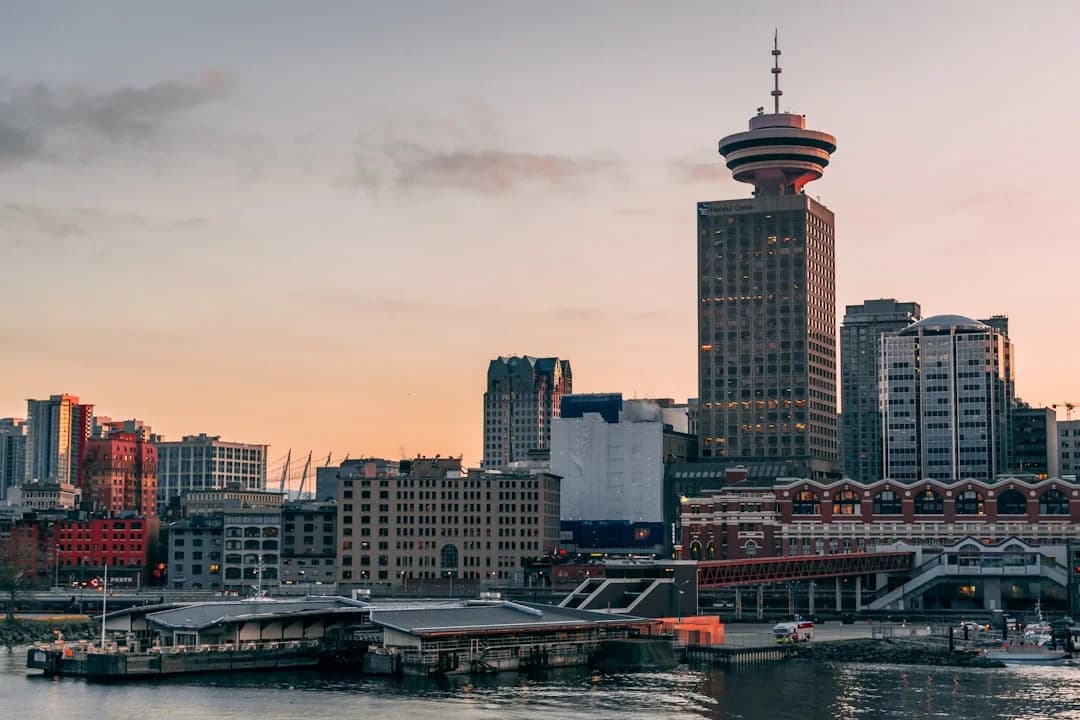
Photo by Aditya Chinchure on Unsplash
Vancouver is squarely in the global spotlight as FIFA World Cup 2026™ moves closer to kickoff. The city has been confirmed as a host city for the tournament, with BC Place Vancouver slated to host seven World Cup 2026™ matches. The event runs from June 11 to July 19, 2026, and Vancouver will host Canada’s group-stage clashes, including two games in the Vancouver area, as part of a broader cross-border schedule across Canada, the United States, and Mexico. This is a watershed moment for British Columbia’s tourism and tech-driven markets, bringing both immediate activity and longer-term implications for the region’s economy. Vancouver’s hosting plan is part of FIFA’s global rollout, which features 16 host cities and a mix of on-site infrastructure upgrades, fan experiences, and security investments designed to manage a mega-event at scale. (gpcustomersupportfwc2026.tickets.fifa.com)
Economic-impact projections accompanying the event emphasize a significant, near-term boost to tourism and hospitality, alongside longer-tail effects that could shape the region’s economic trajectory through the mid-2020s and beyond. Official assessments prepared by BC Stats, Destination BC, and partner agencies peg Vancouver’s World Cup footprint in the vicinity of roughly CAD 1 billion in regional GDP support for British Columbia, with hundreds of millions in tax revenues and a substantial flow of visitors who will extend their stays beyond the tournament window. These official baselines are designed to capture not just the direct spend in venues and hotels but the ripple effects across transportation, entertainment, and local services. In real terms, the projections frame Vancouver’s World Cup 2026 economic impact as a major, one-off economic event with enduring significance for the provincial economy. (vancouverfwc26.ca)
Section 1: What Happened
Host city status and match slate
Vancouver’s role as a FIFA World Cup 2026™ host city was reaffirmed in the run-up to the tournament, with BC Place Vancouver designated to stage seven matches. The upgraded stadium will feature enhanced accessibility, new hospitality spaces, and a modernized technology footprint to support fan experiences, broadcasting requirements, and on-site operations. This development aligns with FIFA’s broader host-city strategy, which positions Vancouver among a diverse set of venues across the Western Conference to deliver a world-class tournament experience. The Vancouver host city designation, and the seven-match slate at BC Place, reflect a coordinated plan involving the Province of British Columbia, the City of Vancouver, PavCo, and national partners. As part of the upgrade program, the venue received a hybrid grass pitch and enhanced team facilities to meet FIFA’s standards for international competition. The upgrades are also aimed at leaving a legacy for future events beyond 2026. “Hosting FIFA World Cup matches will drive tourism and bring significant economic benefits as soccer fans from around the globe discover why our beautiful province is such a great place to visit and invest,” said a senior provincial official, underscoring the near-term and longer-term stakes. (inside.fifa.com)
Timeline, dates, and key milestones
The 2026 World Cup runs from June 11 to July 19, 2026, a window that brings a concentrated influx of visitors and a decade-long set of “long-tail” opportunities for the province and city. Vancouver’s specific schedule includes Canada’s group-stage appearances in Vancouver—one of which, historically, has featured a high-profile matchup—alongside other Western-host city games in nearby stadiums. The event’s schedule and the precise match dates are published by FIFA, and local organizers have published a phased plan for fan events, security operations, and transportation changes around match days. The June 13 group-stage kickoff in Vancouver for Canada and the associated Team Canada fixtures highlight the immediate, high-visibility moment for local businesses and communities. (gpcustomersupportfwc2026.tickets.fifa.com)
Infrastructure investments and regulatory framework
A central prerequisite to Vancouver’s World Cup 2026™ participation has been the modernization of core infrastructure, especially BC Place. The upgrades include improved accessibility, expanded hospitality capacity, and cutting-edge technology, all designed to support a world-class event and extend the stadium’s long-term use for sports and entertainment. This renewal aligns with the host-city plan to balance event-day efficiency with a lasting community legacy. In parallel, Vancouver’s municipal governance has enacted specific by-laws and traffic measures to facilitate large crowds and complex security operations during the World Cup, including provisions for signage, street performance restrictions, and ticket-offence enforcement. The 2026 FIFA World Cup By-law No. 14514 lays out the enabling framework for event traffic, safety, and commercial activity, with schedules detailing the geographic scope of FIFA sites and measures to manage advertising, vending, and other routines in the event zones. This legal scaffolding helps ensure a smooth, compliant operation for match days and fan events. (inside.fifa.com)
Economic impact assessments and anticipated benefits
British Columbia and City of Vancouver officials have coordinated with destination-management agencies and federal partners to update the 2026 economic-impact outlook as conditions evolve. May 29, 2026 brought a refreshed cost-and-benefits briefing that reaffirmed the seven-match plan’s potential to drive tourism and related economic activity while signaling ongoing adjustments to costs and revenues as the event approaches. The May 2026 release cites a set of key economic indicators, including projected spectator counts, inbound visitors, and GDP effects, alongside safety and security allocations and revenue offsets from federal and other contributions. In short, the Vancouver event plan remains oriented toward maximizing net benefits while maintaining cost discipline in a high-profile, complex security environment. (vancouverfwc26.ca)
Accommodation and lodging dynamics
A critical prep-area for Vancouver’s World Cup 2026™ is the housing and lodging ecosystem. A forthcoming study conducted for the event—match-specific accommodation modeling—highlights a potential lodging gap, driven by heightened demand across hotels and short-term rental platforms. The Deloitte analysis (commissioned in part by Airbnb) quantifies a possible accommodation shortfall and translates it into measurable economic opportunity losses, including turnover, value added to the economy, and tax implications. The report estimates a substantial shortfall in hotel nights, with direct implications for local and regional economic activity if supply does not keep pace with demand. The analysis also projects that, in the absence of accommodation adjustments, Vancouver could see notable adverse effects on tourism spending and employment during the peak World Cup window. (news.airbnb.com)
Implications for governance, security, and public policy
Beyond the economic metrics, the World Cup 2026™ planning process in Vancouver has emphasized safety, security, and Indigenous partnership as central themes. The province and city highlight collaborative frameworks with Indigenous nations—the Musqueam, Squamish, and Tsleil-Waututh Nations—as integral to both planning and ceremony. The economic-impact narrative thus blends with social and cultural dimensions, illustrating how mega-events can catalyze investment, tourism, and community partnerships while requiring careful governance, policing, and event permitting, all governed by municipal By-laws and intergovernmental agreements. This broader approach is reflected in the event’s public statements, which frame the World Cup as a catalyst for local investment and a platform to showcase British Columbia’s cultural heritage and inclusive values. (vancouverfwc26.ca)
Section 2: Why It Matters
Direct and indirect economic benefits in Vancouver and British Columbia
The Vancouver region stands to gain a multi-billion-dollar ripple effect from the World Cup 2026™, with government-backed analyses projecting substantial GDP contributions and tax revenues. The latest official estimates suggest that Vancouver’s seven matches will contribute meaningfully to British Columbia’s economy, with total GDP effects running into the near term in the hundreds of millions and longer-term gains anticipated through enhanced tourism marketing, business investment, and global visibility. The public-facing numbers emphasize both immediate spending and the longer tail of visitor activity in the five years following the event, underscoring how host-city economics extend well beyond match days. (vancouverfwc26.ca)
Table: Selected economic-impact metrics (BC focus)
- Spectators attending seven BC Place matches: ~350,000
- Additional out-of-province visitors to B.C. during tournament and five-year tail: ~1,000,000
- GDP impact for B.C. economy: ~CAD 1.0 billion
- Provincial tax revenues linked to the event: >CAD 200 million Source: BC Stats/Destination BC collaborative update, May 2026. (vancouverfwc26.ca)
For context, FIFA’s broader pre-tournament assessment has indicated a strong positive signal for national-level economic output from World Cup 2026™, with the federation forecasting a substantial uplift in Canadian economic activity tied to the event. The pre-tournament analyses emphasize how cross-border logistics, media rights, and tourism spend converge to stimulate growth across multiple sectors. The country-wide narrative complements local Vancouver numbers with a national economic framework that underscores the World Cup’s potential to act as a macroeconomic catalyst. (inside.fifa.com)
Tourism, hospitality markets, and the price environment
The World Cup’s tourism footprint is expected to reshape Vancouver’s hospitality market during the event window. The Deloitte lodging study for Vancouver highlights the classic “quality” and “quantity” effects: a spike in room rates and a tight supply response during peak match days. The analysis indicates that hotel rates can surge significantly during mega-events, with historical comparisons showing dramatic ADR (average daily rate) increases in comparable Canadian markets during major events. The Vancouver-specific projections point to notable price pressure unless an expanded, diversified supply of accommodations—including traditional hotels and short-term rental units—comes online to meet demand. This dynamic is central to both the short-term consumer experience and the longer-run pricing discipline in Vancouver’s hospitality sector. (news.airbnb.com)
Employment, tax revenue, and long-tail opportunities
Break-even or positive net outcomes hinge on the event delivering job creation and sustained visitor spending. The Deloitte model translates accommodation gaps into job-years and tax impacts, highlighting a broader takeaway: even if temporary employment peaks during the World Cup, the event’s long-tail effects—such as ongoing hotel occupancy, business-to-business services, and consumer spending in adjacent sectors—can create enduring economic opportunities for Vancouver and the rest of British Columbia. The official BC statement frames these long-tail opportunities as a platform to attract new investment and strengthen regional supply chains, not just for the event but for related industries in the post-World Cup era. The provincial message emphasizes a strategic approach to turning event-driven investment into lasting regional growth. (news.airbnb.com)
Tech and market trends shaping the Vancouver experience
The Vancouver World Cup 2026™ program intersects with technology and digital-market trends in several tangible ways. The BC Place upgrades introduce enhanced on-site connectivity, digital fan experiences, and advanced venue operations—elements that align with a broader shift toward data-driven sports events. The event also spotlights Vancouver’s role as a tech-forward market where hospitality tech, digital ticketing, venue analytics, and security tech converge to deliver higher fan satisfaction and safer, more efficient operations. The official upgrade narrative emphasizes not only the immediate event-related benefits but also a lasting legacy of modernized infrastructure that can attract future technology-enabled events and investments. This tech-forward approach dovetails with the city’s broader market-trends story, positioning Vancouver as a hub for tourism innovation and event-driven digital solutions. (inside.fifa.com)
Community engagement, Indigenous partnerships, and cultural impact
Mega-events of this scale are judged not only on dollars and cents but on their social footprint. Vancouver’s FIFA World Cup 2026™ plan has foregrounded inclusive language and partnerships with Indigenous communities, including Musqueam, Squamish, and Tsleil-Waututh Nations. The event’s governance framework frames collaboration with Indigenous nations as a core component of the host-city strategy, reflecting a broader market-trends narrative that values cultural authenticity, community benefits, and responsible event hosting. This approach aligns with Destination BC and partner organizations’ emphasis on making the World Cup a catalyst for long-term social and economic development, rather than a one-off spectacle. (vancouverfwc26.ca)
Policy and regulation: ensuring a smooth, compliant event
The City of Vancouver’s by-law framework for the World Cup includes ticketing enforcement, signage rules, and street-performance permits designed to manage crowds and commercial activity during the tournament. This regulatory structure helps ensure a predictable operating environment for businesses, event organizers, and visitors. The by-law’s detailed schedules outline the boundaries of FIFA sites and related event zones, providing a clear, enforceable rule set that supports orderly traffic flow, safety, and consumer experience during match days. For local businesses, this regulatory backdrop offers clarity on permitted activities, such as advertising approaches and street vending, during the World Cup period. (bylaws.vancouver.ca)
What Vancouver’s host status means for long-term regional growth
Taken together, the Vancouver World Cup 2026™ initiative is more than a three-week showcase. It is a market signal for Vancouver’s economy—particularly in the technology-enabled services, hospitality, transportation, and retail sectors. The event’s marketing and tourism campaigns are designed to produce lasting reputational and economic gains, with public-sector investments aimed at expanding the province’s capacity to host large-scale events, attract investment, and develop sport-tech ecosystems that outlive the tournament. In this sense, the Vancouver 2026 World Cup economic impact is framed not only as a short-term stimulus but as a strategic investment in the region’s competitiveness and resilience in a global-market context. (vancouverfwc26.ca)
Section 3: What’s Next
Upcoming matches, venues, and schedule developments
The World Cup 2026™ schedule in Vancouver remains anchored to BC Place, with seven matches slated across the tournament window. The first game in Vancouver is set for mid-June, and the city will host Canada’s group-stage fixtures, including two matches that determine advancement scenarios in Group B. With kickoff dates now anchored on the FIFA calendar (June 11–July 19, 2026), local authorities and venue operators will intensify preparations for fan experience zones, security operations, and public-transport coordination as match days approach. The Vancouver host committee’s public communications emphasize readiness, security cooperation, and community benefits as priorities in the lead-up to the event. (inside.fifa.com)
Next steps for local businesses and readers
For local businesses, the World Cup 2026™ presents both opportunities and challenges. The lodging-market analysis highlights a critical need for scalable accommodation capacity to capture tourism spend and minimize price volatility. Businesses in hospitality, food and beverage, retail, and services should align with the Look West strategy and provincial tourism campaigns to maximize inbound visitor spending and to collaborate with Destination BC and Destination Vancouver on co-marketing initiatives. In the near term, monitoring hotel pricing trends, occupancy benchmarks, and foot traffic around match days will be essential to adjusting pricing and promotional strategies in real time. The ongoing cost-benefit updates from provincial and municipal partners provide a framework for evaluating the tournament’s evolving economic footprint, including the offsetting revenues and safety investments that support the event’s overall financial performance. (news.airbnb.com)
What to watch for in the regulatory and policy landscape
As Vancouver moves toward World Cup 2026™, the regulatory environment will continue to play a central role in shaping the event’s delivery. The 2026 FIFA World Cup By-law and related city policies set the rules for event spaces, signage, street vending, and ticket enforcement on match days. Observers should monitor the city’s official updates and the host committee’s communications for new guidance on traffic management, permit processes, and potential adjustments to by-law provisions as security and crowd-planning requirements evolve. These policy developments will influence how businesses operate during the World Cup window and what investments are required to ensure a successful and safe experience for residents and visitors alike. (bylaws.vancouver.ca)
How Vancouver will continue to benefit after the World Cup
Even after the final whistle, the World Cup 2026™ experience is expected to yield long-term benefits for Vancouver and British Columbia. The event’s legacy includes improved stadium infrastructure, enhanced fan experiences, and a stronger global brand for the region as a tourism and investment destination. The provincial and city leadership point to a broader strategic vision: to leverage the World Cup as a catalyst for ongoing economic development, workforce training, and international partnerships that extend beyond the tournament’s date range. While the near-term numbers provide a snapshot of impact, the long tail—fueled by improved infrastructure, elevated global visibility, and a more competitive tourism market—will shape Vancouver’s market dynamics for years to come. (vancouverfwc26.ca)
Closing
As Vancouver prepares to welcome millions of soccer fans and global markets to BC Place and the surrounding urban core, the Vancouver 2026 World Cup economic impact remains a data-driven story with tangible numbers and carefully constructed forecasts. The event’s success will hinge on effectively balancing immediate tourism spikes with a sustainable long-term economic strategy that translates temporary activity into lasting value for local businesses, workers, and communities. Readers and stakeholders can stay informed through official FIFA host-city pages, the City of Vancouver’s by-laws and updates, and BC government postings that track the evolving economics of this landmark event. The World Cup’s presence in Vancouver is not only about matches won or lost; it is about how a city mobilizes technology, markets, and partnerships to translate a global moment into durable benefits for families, neighborhoods, and the regional economy. (fifa.com)