Vancouver housing market 2025-2026: Trends and Outlook

The Vancouver housing market 2025-2026 is unfolding as a data-driven saga of pent-up demand meeting stubborn supply constraints, with rents retreating from record highs but remaining among the most expensive in North America. For BC readers and market participants, this period matters because even modest shifts in vacancy, pricing, and construction pace ripple through developers’ budgets, lenders’ risk assessments, and households’ housing choices. An authoritative, evidence-based view shows a market adjusting to a new macro backdrop—rates stabilizing at historically elevated levels, demographic pressures continuing to push demand, and a growing emphasis on rental housing as a strategic asset class. The latest rental-market data from CMHC confirms a departure from pandemic-era tightness, with vacancy climbing and rents evolving in ways that the tech-enabled housing ecosystem is now uniquely positioned to analyze and respond to. (archive.ph)
For a publication like BC Times, the takeaway is clear: the Vancouver metro is navigating a transition year-plus, not a dramatic boom or bust. Renter cohorts—especially in core urban neighborhoods—face higher turnover and more careful budget planning, while investors and builders recalibrate expectations around supply delivery, project timelines, and financing costs. The picture is nuanced: price momentum has cooled, rents are easing from peak levels but remain costly, and the market is increasingly shaped by data-informed decision-making, smarter project pipelines, and policy signals that steer density and affordability. This article synthesizes the latest peer-reviewed data, market syntheses, and field observations to map the 2025-2026 dynamic for Vancouver housing. (vancouver.citynews.ca)
Section 1 — What’s happening in Vancouver housing 2025-2026
Rental vacancy and rents
Overall vacancy trend
The Greater Vancouver rental market has moved from multi-decade tightness to a noticeably looser regime in 2025. CMHC’s 2025 Rental Market Report shows the Vancouver census metropolitan area (CMA) vacancy at 3.7%, the highest in more than three decades, signaling a shift in rental availability that influences pricing power and tenant choice. This rise aligns with a broader provincial pattern of rising vacancies in larger markets, though Vancouver remains among the most expensive rental markets in Canada. (archive.ph)
Market segments: condo vs purpose-built
Within the Vancouver CMA, the condo apartment market displays a distinct vacancy dynamic, with a 1.5% vacancy rate reported for condo units and a higher price tag on rents in some segments. The CMHC data also notes a higher average rent for two-bedroom condo units (around $2,900), underscoring the differential occupancy and pricing dynamics between purpose-built rentals and condo stock. This split matters for developers and investors who balance rental-model strategies (landlord- or institution-led) against homeowner-occupied condo projects. (archive.ph)
Rent trends across the metro
Rent trends in Vancouver have shown a notable decline from the peaks of the prior cycle. Early 2025 data show multi-month declines in asking rents across the city, with year-over-year reductions in several months. The national Rentals.ca data, echoed by local outlets, indicate Vancouver remains the most expensive market in Canada, even as the rate of rent growth slows and, in some months, turns negative. For example, January–February 2025 data show year-over-year declines in average rents, with 1-bedroom and 2-bedroom units posting meaningful drops. This is a crucial context for households budgeting housing costs in 2025–2026. (vancouver.citynews.ca)
A quick snapshot: table of 2025 metrics
| Metric | Value (2025) | Source |
|---|---|---|
| Overall vacancy rate (Greater Vancouver CMA) | 3.7% | CMHC 2025 Rental Market Report; BC Gov News summary |
| Condo apartment vacancy (2BR rent context) | 1.5% vacancy; 2BR rent around $2,900 | CMHC 2025 Rental Market Report |
| 2BR average rent (Vancouver CMA) | $2,363 | CMHC 2025 Rental Market Report; Vancouver CMA |
| 1BR average rent (Vancouver CMA, general) | Noted declines in late 2025; citywide high costs persist | Rentals.ca / CityNews summaries |
Notes: The vacancy figures come from CMHC’s 2025 Rental Market Report, with the Greater Vancouver CMA vacancy cited at 3.7% and condo-market vacancy at 1.5%. The rent figures include the CMA-wide 2BR average of about $2,363 and condo-market 2BR rent around $2,900, reflecting the premium for newer or purpose-built stock. These numbers underscore the ongoing tension between affordability and supply in core neighborhoods. (archive.ph)
Real-world case studies: two illustrative examples
- Brentwood completions and ripple effects in Burnaby: The CMHC market intelligence notes that high vacancies in Burnaby’s Brentwood area were likely influenced by recent condominium apartment completions, with new rental projects in Edmonds and Metrotown contributing to elevated vacancies in surrounding neighborhoods. This case study illustrates how new supply in one submarket can shift occupancy patterns in adjacent submarkets, affecting rent levels and leasing velocity in the near term. (archive.ph)
- Downtown core demand amid return-to-office dynamics: The same CMHC data highlights that the downtown core has shown stronger demand signals tied to hybrid and return-to-work patterns, with vacancies in downtown remaining lower than pandemic highs but at elevated levels compared with pre-pandemic baselines. This tension captures how office-to-residential demand shifts can shape rental absorption in premium districts. (archive.ph)
Who’s affected
- Tenants and renters: Higher vacancies can ease competition for units in some submarkets, particularly non-core areas, but core neighborhoods may still face premium rents and limited supply. The data indicate a divergent dynamic across Vancouver’s submarkets, requiring renters to weigh location, price, and commute in choosing a home.
- First-time buyers and move-up buyers: A cooler, more inventory-rich market can create negotiating room, but sustained affordability challenges persist in entry-level segments. Price behavior in 2025 shows some softening but not a simple back-and-forth to “cheaper forever” for first-time buyers.
- Landlords and developers: Rising vacancies, especially in larger condo completions, pressure yields and financing strategies. The distribution of stock across market segments matters for pricing, incentives, and timing of project launches. (archive.ph)
Prices, sales, and the broader market
Home price and sales momentum

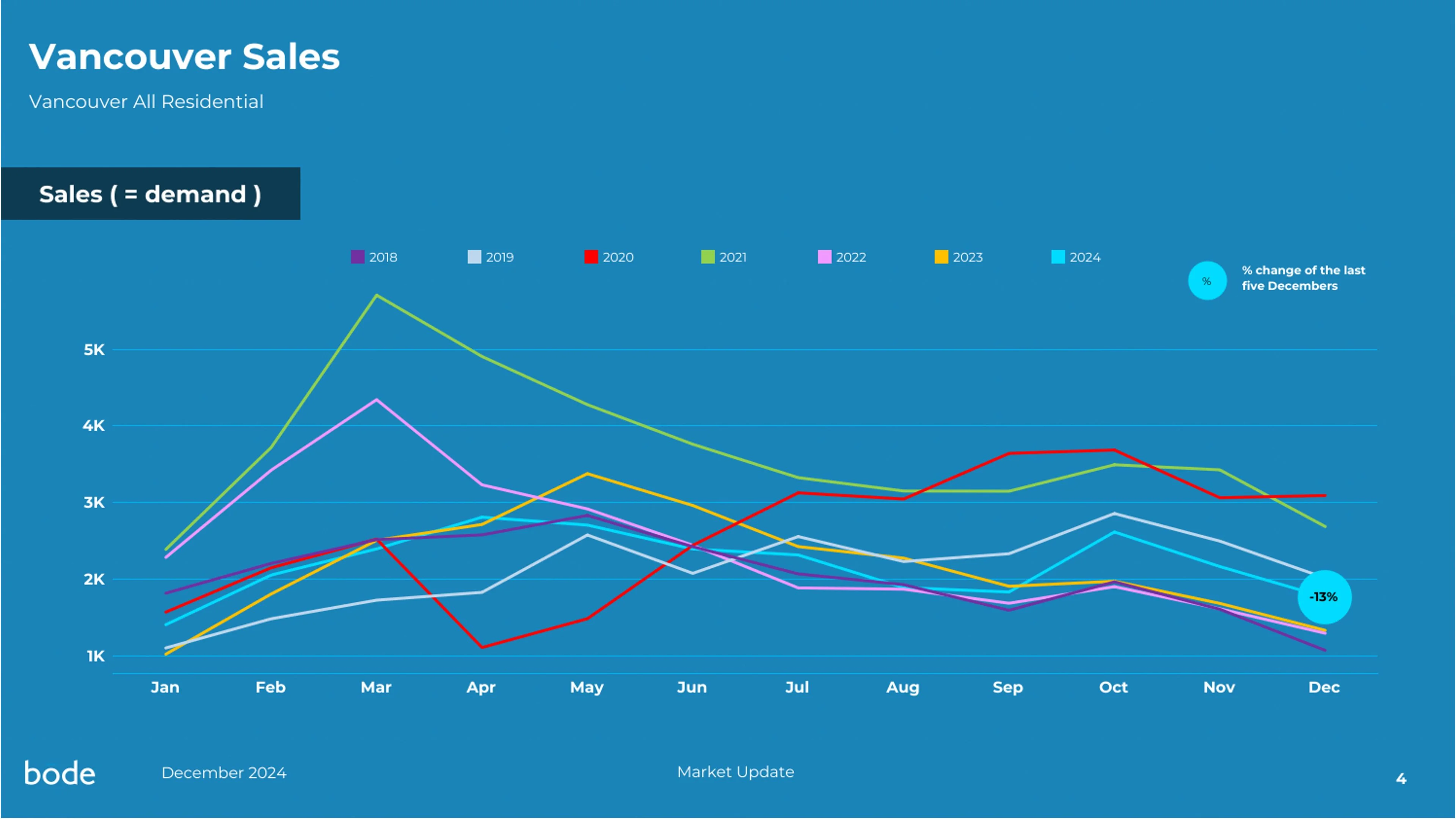
Commercial and residential market activity in 2025-2026 signals a broad cooling from the record pace of prior years. REMAX Canada and other market watchers reported a softer price trajectory in Greater Vancouver, with REMAX noting a 3.8% year-over-year price decline to roughly $1,243,360, alongside a sales decline of about 9.4% and a 23% jump in listings in 2025. The data suggest a shift from a seller’s market to a more balanced or buyer-leaning regime for many property types, especially in mid-market segments. Investors should plan for extended decision cycles and a wider spectrum of price negotiations. (mpamag.com)
Rents vs. ownership costs
The rent-dynamic narrative continues to intersect with ownership costs. While rents are easing from earlier peaks, Vancouver remains one of the nation’s most expensive rental markets, and the gap between rent and mortgage costs remains a key factor for readers evaluating long-term housing strategies. Mortgage-rate expectations, policy signals, and a slower but still-likely influx of new rental properties will shape affordability and renter mobility in the near term. Market commentary notes that 2026 could see a more balanced market, particularly in entry-level and mid-market segments, as supply expands at a measured pace. (mpamag.com)
Real-world examples and markets to watch
- GVR and MLS-based reports continue to show tepid sales volumes in 2025, with the November 2025 report highlighting a material year-over-year decline in transactions and a drop in benchmark price in many subregions. Dexter Realty and CBC analyses cited in news roundups show a slower-than-usual year for Greater Vancouver housing activity in 2025, a trend that could carry into early 2026 depending on rate moves and supply delivery. (gobcrealestate.com)
Section 2 — Why Vancouver housing market 2025-2026 is shifting
Market forces and the technology edge
Macro policy and rate environment
The Bank of Canada’s approach to interest rates in 2024–2025 has driven a gradually stabilizing cost of financing for homeowners and investors. After a long series of rate cuts, policy guidance in late 2024 through 2025 pointed toward rate stability with inflation trending toward target levels, a development that supports a more predictable mortgage environment but leaves payments higher than the ultra-low levels seen during the pandemic era. The Bank’s 2025 Financial Stability Report emphasizes that a substantial share of mortgages will renew in 2025–2026 and that many borrowers will face higher payments at renewal, albeit with an expected moderation in rate increases due to the backdrop of easing inflation. This has broad implications for housing demand, refinancing activity, and housing-market sentiment in Vancouver. (bankofcanada.ca)
Demographic and urban development forces
Canadian market researchers highlight population and urban-density dynamics that shape Vancouver’s housing story. PwC’s Canada-focused real estate outlook notes that zoning changes, density increases (laneways, smallplexes), and a continued emphasis on suburban townhome development are reshaping supply patterns. In the Vancouver context, such shifts can alleviate some pressure on entry-level housing and create opportunities in the suburbs while urban cores remain expensive. The report also highlights resilience in essential retail and mixed-use projects, underscoring how urban design and density trends influence housing markets. (pwc.com)
Supply acceleration vs. demand discipline
In late 2025, market watchers pointed to a return-to-normalization in demand paired with an uneven supply ramp. REMAX data and industry commentary suggest that supply delivery in 2026 will be a critical driver of price stability or further moderation, especially for lower-priced segments. The forecast from Canadian mortgage industry outlets indicates a period of strategic, rather than spectacular, growth, with a tilt toward balanced conditions depending on property type and location. This nuanced dynamic is essential for readers tracking investment timing, development feasibility, and policy impacts. (mpamag.com)
Technology and market dynamics
PropTech and data-enabled decision making

The Vancouver market in 2025-2026 has seen accelerating adoption of technology-enabled real estate analytics, including pricing models, demand forecasting, and inclusive access to rental inventory data. Professional commentary and industry analyses emphasize the role of data-driven pricing, market intelligence platforms, and digital marketing tools in shaping leasing velocity and buyer sentiment. This technological edge helps explain why the market can absorb new supply more efficiently in some districts while remaining tight in others. PwC’s broader regional trends report highlights density-driven development and tech-enabled market intelligence as core factors shaping 2025–2027 real estate dynamics in Canada. (pwc.com)
Market segmentation and technology-led leasing
With rising vacancy in some submarkets and persistent price pressure in others, developers and landlords are leaning into flexible leasing strategies, shorter-term incentives, and digital onboarding to attract tenants. The data-driven approach to leasing in Vancouver’s core and near-core districts is an example of how technology supports faster absorption of new stock, while neighborhoods with slower demand see more cautious pricing and longer vacancy periods. While explicit Vancouver-specific tech deployments aren’t exhaustively public, the trend aligns with national and provincial analyses of rental-market technology adoption and density-driven development patterns. (pwc.com)
Market factors in context
Economic resilience and affordability pressures
Canada’s housing market narrative in 2025-2026 remains one of resilience tempered by affordability challenges. The Bank of Canada and market analysts highlight a framework in which mortgage renewals, rate trajectory expectations, and household budgets influence demand in Vancouver. In particular, the renewal cycle in 2025–2026 implies higher required payments for many homeowners, potentially slowing turnover and supporting price stabilization in some segments while reducing speculative pressure in others. The Bank of Canada’s Financial Stability Report provides a data-driven lens for understanding these forces. (bankofcanada.ca)
Policy signals and municipal land-use changes
Municipal and provincial policy signals, including density increases and zoning changes aimed at adding more rental stock, can shift the supply curve over the next 12–24 months. PwC and related Canadian market analyses discuss the role of density-increasing zoning in creating opportunities for mid-market housing and more diversified product types, a dynamic that can influence price paths, vacancy, and construction timing in Vancouver. (pwc.com)
Section 3 — What Vancouver housing market 2025-2026 means for business, consumers, and industry
Business impact: developers, landlords, and lenders

- Developers: Expect more balanced negotiations in 2026, with entry-level and mid-market projects potentially performing better as inventory expands, particularly in suburban and secondary urban nodes. The REMAX price softness and rising listings imply longer sale cycles but also opportunities to capture buyer demand across price bands as supply improves. (mpamag.com)
- Landlords and property managers: Higher vacancies in some submarkets necessitate adaptive pricing and enhanced tenant experience initiatives to maintain occupancy. The downtown core demand signals suggest premium leasing opportunities persist for well-located, amenity-rich properties, even as overall vacancy trends ease. (archive.ph)
- Lenders and investors: Mortgage renewal dynamics, risk assessment for variable-rate products, and a more balanced market imply scrutinized underwriting for new builds. The Bank of Canada’s stability stance in late 2024–2025, combined with the 60% renewal cohort facing higher payments, informs risk management and pricing strategies for Vancouver-area loans. (bankofcanada.ca)
Consumer impact: renters and homebuyers
- Renters: The 3.7% vacancy rate and rent declines in 2025–2026 can offer more choice and potential price relief, though Vancouver remains a top-market in Canada. Renters may benefit from longer-term stability in some districts but should anticipate ongoing price discipline in core areas. (archive.ph)
- Homebuyers: With prices moderating and listings rising, entry-level buyers may gain negotiation leverage, especially in markets where supply expands. Yet the high baseline affordability challenge means that approaches like townhomes, co-ops, or suburban living could be more viable for first-time buyers. REMAX’s 2025 data underscore a softer market for buyers, with price declines and slower sales activity. (mpamag.com)
Industry changes: procurement, marketing, and operations
- Procurement and marketing: Digital marketing, virtual tours, and data-driven pricing will become more central to leasing and sales strategies as supply dynamics evolve. The technology-driven approach to pricing, demand forecasting, and inventory management will help property managers optimize occupancy and revenue in a shifting Vancouver market. (pwc.com)
- Workforce and operations: As the market stabilizes, property management and construction teams will emphasize efficiency, project scheduling, and cost containment to navigate higher financing costs and a more measured revenue environment. The macroeconomic backdrop—rates, renewals, and population growth—will shape hiring and supply-chain decisions in the real estate sector. (bankofcanada.ca)
Section 4 — Looking ahead: 6–12 month predictions and opportunities
Short-term outlook for 2026
- Price and sales: Expect continued price stabilization with potential for modest gains in select segments where supply remains tight and demand is resilient. The 2026 trajectory is likely to be more balanced than the 2024–2025 period, with a tilt toward buyers in some neighborhoods and sellers in others depending on property type and location. The REMAX and Canadian mortgage-trend analyses imply a multi-speed market across Vancouver’s districts. (mpamag.com)
- Rents and vacancies: Rent declines may plateau, with vacancy rates staying elevated relative to pre-pandemic levels but lower than the peak highs seen in 2020–2021 in some parts of the metro. The CMHC and Rentals.ca data signal a normalization process that could continue through 2026, particularly as new supply comes online in a measured fashion. (archive.ph)
Opportunities for investors, developers, and renters
- Rental-focused development: The demographic and policy environment supports continued emphasis on rental housing delivery, including mid-market and affordable rental product, to balance demand and provide long-term cash-flow stability for investors. PwC highlights density-driven growth and rental development as a broader national trend that Vancouver is mirroring in practice. (pwc.com)
- Suburban and secondary markets: Opportunities may increase in suburban Vancouver and nearby municipalities where affordability pressure is lower, and new transit-oriented developments unlock demand from young professionals and families seeking value. The market’s path toward a more balanced state in 2026 creates room for strategic acquisitions and land-banking in growth corridors. (mpamag.com)
How to prepare: actionable takeaways
- For buyers: Build a data-informed plan that considers rent-to-own options, townhome or condo-denser layouts in well-connected neighborhoods, and a conservative burn rate for mortgage payments in a higher-rate environment. Keep an eye on 2026 rate guidance and renewal windows to optimize timing.
- For renters: Prioritize locations with strong transit access and tenant protections, and explore buildings with flexible lease terms or amenity-rich offerings that offset rising living costs.
- For developers and investors: Use a phased supply strategy aligned with market absorption rates, emphasize mid-market and rental-product lines, and leverage PropTech tools to optimize pricing, leasing velocity, and occupancy.
Closing (no heading)
In sum, the Vancouver housing market 2025-2026 is characterized by a measured shift from peak pandemic-era dynamics to a more deliberate, data-driven equilibrium. Rental markets show a meaningful rerouting of vacancies and pricing power, while sales and price momentum cool in many segments. The convergence of macro-rate stability, municipal density initiatives, and a growing emphasis on rental development points to a practical, albeit nuanced, path forward for buyers, renters, developers, and lenders alike. As Vancouver continues to balance its status as one of Canada’s most desirable urban regions with the realities of affordability and supply, stakeholders should lean on timely data, rigorous scenario planning, and clear strategic objectives to navigate the next 6–12 months.