Vancouver Official Development Plan 2026: Trends & Outlook

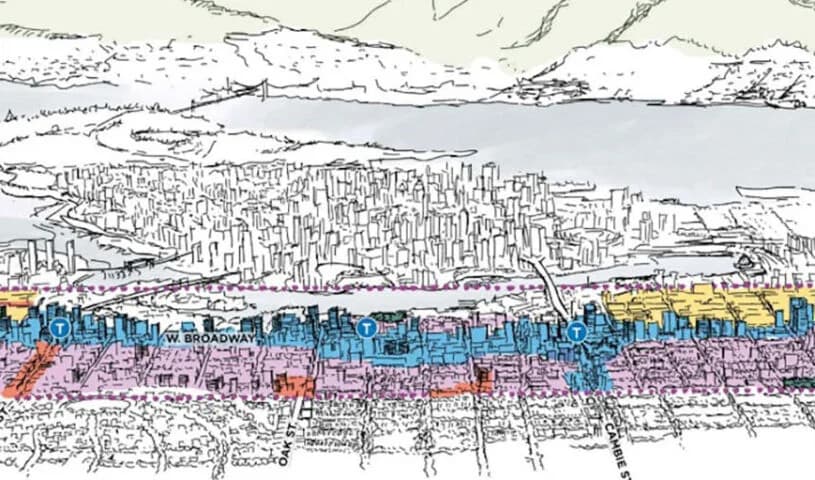
The Vancouver Official Development Plan 2026 is emerging as a pivotal policy framework that could reshape how land use, housing, and infrastructure evolve across the city and its surroundings. As City Council moves the draft into a formal public review and ultimately a June 2026 adoption, stakeholders are watching how this citywide policy integrates with provincial rules and the Vancouver Plan’s foundational directions. For BC’s technology and market ecosystems, the Vancouver Official Development Plan 2026 signals how land allocations, housing affordability, and amenity investments will align with growth trajectories over the next decade and beyond. The policy context is not abstract: it intersects with real-world finance, development pipelines, and the ability of tech firms and urban services to scale in a city widely recognized for its innovative economy. The City of Vancouver has publicly disclosed a public hearing scheduled for March 10, 2026, marking a key milestone in the ODP's path to adoption. This moment is more than ceremonial; it determines how future rezoning, land use designations, and infrastructure planning will unfold citywide. (vancouver.ca)
Beyond the local debate, the Vancouver Official Development Plan 2026 sits at the nexus of provincial housing policy, economic development, and climate adaptation commitments. Vancouver’s shift to a citywide ODP is being driven in part by new provincial legislation (Bill 18) and the imperative to demonstrate adequate land capacity and housing supply to meet growth targets. As the plan builds on the Vancouver Plan—approved in 2022—it adds necessary legislative alignment and clarity to implement long-term directions while preserving flexible responses to market dynamics. For readers in BC’s tech and business communities, the ODP’s timing matters: adoption by June 2026 is not only a regulatory milestone but a signal to investors about the city’s development tempo and policy certainty in a market known for rapid changes. (vancouver.ca)
Section 1 — What’s Happening
ODP Adoption Timeline
The City of Vancouver has framed the Vancouver Official Development Plan 2026 as the culmination of years of planning work that extends the Vancouver Plan into a binding, citywide policy document. The draft Vancouver ODP is slated for public review, with key milestones leading to adoption by June 2026. The city notes an explicit timeline that includes a public hearing in March 2026 and an autumn 2025 period of public engagement prior to formal adoption. This timeline is being tracked closely by developers, investors, and industry groups as it defines the pace and sequencing of rezoning decisions and land-use changes across the region. The timely alignment with provincial requirements underscores the urgency of the plan’s finalization. (vancouver.ca)
| Aspect | Vancouver Plan (pre-ODP) | Vancouver Official Development Plan 2026 (ODP) |
|---|---|---|
| Adoption target | Not citywide binding, more policy guidance | Citywide, binding policy to be adopted by June 2026 |
| Public engagement | Extensive input in Vancouver Plan era | Draft for public review in Oct 2025, public hearing in Mar 2026 |
| Key tools | Plan-based guidance, zoning under separate processes | New tools like Urban Structure Strategy and Generalized Land Use designations (GLU) |
| Rezoning implications | Individual applications governed by existing zoning | ODP governs framework; some changes anticipated in rezoning pathways |
| Official reference | Vancouver Plan (2022) | Vancouver Official Development Plan 2026 |
Public engagement and formal adoption timelines are critical because they shape market certainty. Vancouver’s public hearing date of March 10, 2026 and the June 2026 adoption target are explicitly stated in the city materials, linking policy outcomes to investor and developer planning calendars. (vancouver.ca)
Policy Foundations and Real-World Examples
The Vancouver ODP is described as the “key step in implementing the Vancouver Plan,” designed to roll city-wide land-use directions into a legislatively compliant framework. The plan is described as taking the content of the Vancouver Plan and adding necessary information to satisfy provincial legislation, with updates reflecting new Council direction since the Plan’s approval. This continuity is important for developers who have long cycles for large projects, since the ODP translates strategic directions into a citywide decision framework. Two real-world signals are worth noting: first, the ODP’s linkage to public engagement and first-principles directions from the Vancouver Plan; second, the drive to align with provincial constraints under Bill 18, which ties local planning to broader housing and growth targets. (vancouver.ca)
The Vancouver ODP timeline and structure reflect an integrated approach: the plan is meant to turn Vancouver Plan’s content into a formal city-wide instrument, ensuring consistency with provincial requirements while preserving avenues for public input and accountability. This integration matters for technology firms and innovators, which rely on predictable zoning outcomes and infrastructure timing to support pilot programs, testbeds, and scalable deployments in dense urban environments. A separate piece of context comes from broader regional coverage about plans to replace or supersede older planning paradigms with citywide development strategies. Planetizen notes that the ODP introduces major new designations and tools to guide development long-term, signaling a strategic pivot for Vancouver’s growth management. While Planetizen provides an analytic view, the core takeaway remains: the ODP elevates citywide land-use policy to a formal regime that can influence investment and project timing across multiple sectors. (planetizen.com)
Who’s Affected: Developers, Investors, and Residents
The transition from plan-level guidance to a binding ODP affects multiple stakeholder groups. For developers, the ODP’s adoption by mid-2026 means more clarity on where and how high-density and mixed-use projects can be pursued, how the city envisions employment lands near rapid transit, and how rezoning proposals may be treated under the new rules. For investors, the policy timeline offers a clearer sense of risk and opportunity windows, especially as the plan’s implementation interacts with market demand, housing affordability pressures, and anticipated infrastructure investments. For residents, the ODP’s emphasis on livability, affordability, and sustainable growth translates into more predictable infrastructure and amenity investments and potential shifts in the mix of housing types available near transit corridors. The ODP’s public engagement phase—highlighted by October 2025 draft review and the March 2026 hearing—serves as a critical forum for balancing housing needs with community concerns. (vancouver.ca)
Section 2 — Why It’s Happening
Market Forces Driving the ODP
The Vancouver Official Development Plan 2026 emerges in a climate where housing affordability, urban livability, and climate resilience are central to city governance and private investment decisions. Provincial policy frameworks, including new housing-related legislation, push municipalities to demonstrate land capacity and housing supply—and to do so with a clear, implementable plan. The City of Vancouver’s choice to convert Vancouver Plan’s strategic directions into a binding ODP is the city’s answer to those provincial expectations, aiming to streamline approvals, reduce ambiguity, and provide a transparent framework for public and private partners. This alignment matters for technology-forward developments that rely on a coordinated approach to zoning, transit-oriented development, and infrastructure investments. (vancouver.ca)
In parallel, BC’s tech ecosystem has grown into a substantial economic pillar, with thousands of companies and hundreds of thousands of high-skilled workers. The Pacific Economic Development Canada (PacifiCan) data show British Columbia hosting more than 12,000 tech companies employing over 182,000 skilled workers, signaling a mature, export-oriented ecosystem that benefits from streamlined regulatory and planning environments. Investments in AI, digital health, and other tech-enabled services at the provincial level—alongside initiatives to smarten infrastructure and test-market new solutions—underscore why a citywide development framework that accelerates permitted growth can be critical for tech-enabled urban services and commercial real estate. The policy alignment with these broader tech-market dynamics helps ensure Vancouver remains competitive in attracting and sustaining innovative companies. (canada.ca)
The emergence of the ODP also intersects with high-profile regional technology and events, such as Web Summit Vancouver, which is supported by government funding to position British Columbia as a leading hub for global technology, talent, and investment. PacifiCan’s portfolio highlights a broader strategy to support AI adoption, testbeds, and industry partnerships, reinforcing the synergy between city planning and technology-enabled economic development. As Vancouver looks to host more tech-forward opportunities, the ODP’s clarity and predictability will influence where and how such activities can expand within the city’s urban fabric. (canada.ca)
Industry and Social Drivers
Industry dynamics—particularly in construction, real estate, and technology—are pushing for more adaptable zoning, streamlined approvals, and better alignment between housing supply and employment centers. The ODP’s potential changes to rezoning processes, and the introduction of planning tools like the Urban Structure Strategy and Generalized Land Use designations (GLU), reflect a shift toward long-horizon planning that still accommodates near-term market realities. While the exact policy details are being refined through public hearings and council reviews, the direction signals a more proactive approach to balancing dense urban growth with community interests and environmental considerations. A commentary piece from Planetizen underscores how the ODP could modify rezoning requirements, including the controversial possibility that certain rezoning applications with substantial residential components may bypass traditional public-hearing triggers. This is a pivotal shift for developers and planners to watch as it could significantly alter application timelines and stakeholder engagement requirements. (planetizen.com)
Section 3 — What It Means
Business and Developer Impacts
For businesses and developers active in Vancouver, the shift to the Vancouver Official Development Plan 2026 signals both opportunities and constraints. On the upside, a citywide ODP promises greater policy clarity, which can reduce uncertainty in large-scale projects and enable more predictable capital planning. The plan’s emphasis on efficient land-use planning and alignment with transit-oriented development could create opportunities for integrated mixed-use developments that combine housing, offices, retail, and public amenities in walkable neighborhoods. On the downside, the formalized framework may introduce stricter oversight and more explicit yield expectations, potentially affecting project timing and feasibility in high-demand districts. The ODP timetable—moving toward adoption by June 2026 and with a public review in late 2025—suggests a window for developers to align their submissions with the policy’s anticipated direction and to prepare for potential changes in zoning and development approvals, including how employment lands near transit are treated and designated. (vancouver.ca)
A practical implication for the tech-enabled economy is the need to secure pilot sites, data centers, and AI testbeds within the ODP framework, paired with utility upgrades and transit improvements described in the city’s broader planning aims. The BC tech ecosystem’s scale—over 12,000 companies employing more than 182,000 workers—means that a clear development policy can influence site selection, labor markets, and access to talent. When city policy aligns with provincial tech initiatives, there is a higher probability of smoother approvals for projects that combine research, commercialization, and community benefits. The PacifiCan announcement of AI-focused investments and the city’s ongoing engagement with tech stakeholders around the ODP reflect a broader trend of policy-meets-technology in Vancouver’s development trajectory. (canada.ca)
Real Estate and Market Implications
From a real estate perspective, the ODP’s introduction of generalized land-use designations and zonal structure strategies could influence the distribution of housing and employment across the city. The policy’s emphasis on housing supply and affordability—closely tied to provincial housing directives—may drive changes in rezoning patterns, density allowances, and the mix of housing types near high-capacity transit. For developers accustomed to the Vancouver Plan framework, the ODP represents a consolidation of long-term directions into a city-wide instrument that may govern large-scale growth corridors and critical infrastructure nodes. In addition, the policy’s focus on sustainable urban form and climate resilience can steer the design of public spaces, energy systems, and mobility networks, creating a more holistic approach to city-building. The policy’s timing relative to June 2026 adoption means market participants should calibrate project calendars, budgeting cycles, and equity strategies to align with the new policy regime. (vancouver.ca)
Section 4 — Looking Ahead
Near-Term Outlook (6–12 Months)
In the 6–12 months ahead, several practical dynamics will shape how the Vancouver Official Development Plan 2026 plays out for markets and businesses:
-
Public engagement and final adoption: With a public hearing scheduled for March 10, 2026, and a citywide adoption target in June 2026, stakeholders in technology, finance, and development will be actively watching how the ODP translates Vancouver Plan principles into enforceable policy. This period will likely feature refined clarifications on designations, zoning changes, and the sequencing of approvals for major projects. The public review process in October 2025 sets a precedent for how input will be integrated into final policy language. (vancouver.ca)
-
Policy tools and market response: The ODP’s described tools—Urban Structure Strategy and GLU designations—signal a move toward long-horizon planning that still allows for market-responsive adjustments. Investors and developers should map project strings to these designations, assessing how density, land use, and infrastructure investments align with projected growth corridors and transit nodes. Planetizen’s analysis suggests that such tools could reshape how zoning and public hearings influence development, including potential changes to the public-hearing triggers for certain rezoning applications. This dynamic warrants careful risk assessment and scenario planning for portfolio projects. (planetizen.com)
-
Tech ecosystem momentum: BC’s tech sector remains a major growth engine, with significant private and public sector investments aimed at AI, digital health, and smart infrastructure. The policy environment that the ODP embodies can accelerate or constrain opportunities for testbeds, pilot deployments, and facility expansions, particularly in proximity to transit and housing growth areas. The federal-provincial collaboration and funding for tech initiatives—such as initiatives highlighted by PacifiCan—underscore the importance of aligning development plans with technology-driven economic development goals. For Vancouver, this means the ODP could become a blueprint that helps attract and anchor innovative firms, research partners, and talent, provided policy certainty is maintained. (canada.ca)
Opportunities for Businesses and Innovators
The Vancouver Official Development Plan 2026 could unlock several business opportunities, particularly for urban tech, modular construction, energy management, and mobility services. The plan’s emphasis on sustainable urban form, housing policy alignment, and transit-oriented development creates a fertile ground for:
- Pilot programs near compact, well-connected growth centers
- Public-private partnerships in infrastructure upgrades and resilience
- Real estate strategies that blend office, residential, and amenity spaces in high-frequency transit corridors
- Adoption of AI-enabled urban services, such as traffic optimization, energy management, and data-driven public engagement
The policy’s timing and design will determine how quickly these opportunities translate into actionable projects, but the underlying momentum is clear: an official development plan that points to a coordinated, citywide approach to growth tends to reduce policy friction for well-aligned, tech-enabled initiatives. (vancouver.ca)
Preparation for Stakeholders
To prepare for the Vancouver Official Development Plan 2026 era, stakeholders should:
- Map project portfolios to the forthcoming GLU designations and Urban Structure Strategy, identifying potential density opportunities, housing mix, and employment space targets.
- Strengthen engagement with City staff and elected officials during the October 2025 draft review and March 2026 public hearing, documenting alignment with community benefits and climate goals.
- Build scenarios for rezoning timelines under the ODP framework, including sensitivity analyses around changes to public hearing triggers and density allowances in key corridors (per the Planetizen analysis on proposed changes).
- Align tech investments with provincial initiatives and events, leveraging programs like those supported by PacifiCan to de-risk pilot deployments and accelerate commercialization within Vancouver’s growth corridors. (vancouver.ca)
Section 3 — What It Means (Expanded)
Business and Economic Effects
- Predictability and risk management: A binding ODP could reduce regulatory drift by translating long-term goals into concrete land-use rules. For developers and investors, improved predictability lowers the risk of misalignment between capital plans and policy direction, enabling more accurate project feasibility analyses.
- Market mix and housing affordability: The ODP’s housing emphasis intersects with market demand signals in technology hubs and employment centers. A more deliberate housing strategy near transit can influence employee retention and recruitment, crucial for tech firms seeking to attract specialized skills in a competitive market.
- Infrastructure orchestration: The ODP’s integration with the Vancouver Plan ensures that transport, utilities, and green infrastructure investments align with growth corridors. For private sector participants, this could reduce fragmentation in project delivery timelines when multiple agencies coordinate on critical infrastructure upgrades.
Citations: City of Vancouver ODP materials detail the adoption timeline and the plan’s purpose; PacifiCan data provide context on BC’s tech sector size and investment emphasis; Planetizen offers analysis of the policy’s potential changes to rezoning and public-hearing rules that could affect project timing. (vancouver.ca)
Consumer and Community Impacts
- Access to housing and amenities: The ODP’s framework positions housing supply and access to transit as central policy goals, with downstream effects on affordability, commute times, and access to services. A more cohesive land-use policy can influence where people live relative to workplaces, schools, and healthcare facilities.
- Public engagement and trust: The planned public hearing and review process provide a formal arena for residents to weigh in on major development directions. Transparent engagement helps build trust in how urban growth will unfold and how community benefits will be distributed.
Quoted insight: As Planetizen notes, new rezoning rules under the ODP could remove public hearings for certain sensitive applications if they meet specific residential thresholds—an aspect that underscores the need for stakeholders to stay engaged and informed throughout the process. This potential shift illustrates both efficiency gains and the importance of vigilant community oversight. (planetizen.com)
Section 4 — Looking Ahead (Predictions and Preparations)
6–12 Month Outlook
- Adoption milestone attainment: If the plan remains on track, Vancouver can adopt the Vancouver Official Development Plan 2026 by mid-2026, with earlier drafts guiding concurrent development activity. Expect detailed policy interpretation notes, mapping updates, and implementation guidelines released by City staff in the months surrounding adoption. (vancouver.ca)
- Market reorientation around transit hubs: As the ODP outlines how land near transit should be developed, developers and investors will increasingly focus on high-capacity corridors and major stations. The market shift toward transit-oriented development (TOD) could intensify competition for prime parcels but also unlock more value around station areas. Public and private investments in infrastructure—water, sewers, drainage, and housing facilities—could accelerate, consistent with the City’s broader capital planning posture. (vancouver.ca)
- Tech-enabled urban services deployment: BC’s tech ecosystem, with strong government support for AI and digital health initiatives, will likely see pilot deployments and scale-up in Vancouver’s development contexts, particularly where the ODP aligns with infrastructure readiness and innovation-friendly procurement. The PacifiCan program and related federal-provincial initiatives provide a backdrop for these activities. (canada.ca)
Opportunities and How to Prepare
- For developers: Begin aligning project concepts with the GLU designations and the USS framework, and prepare rezoning applications that reflect the ODP’s density and land-use expectations. Early conversations with city planners can help identify priority corridors and housing-employment integration opportunities.
- For tech firms and testbeds: Position pilot projects in areas optimized for transit access and infrastructure readiness; engage with public agencies to accelerate approvals for AI-enabled urban services, smart infrastructure, and data-driven public engagement pilots.
- For investors: Use the ODP adoption timeline to calibrate risk, pricing, and capital deployment strategies around corridors with clear density potential and expected infrastructure upgrades. Build flexibility into deal structures to accommodate evolving designations and review outcomes.
Quote: The policy’s evolution toward binding, citywide development planning—steered by provincial requirements and the Vancouver Plan heritage—creates a framework where tech-enabled urban services can be tested, scaled, and integrated into everyday city life. This alignment between policy and market opportunity is a defining characteristic of Vancouver’s growth story in 2026 and beyond. (vancouver.ca)
Comparison Table — ODP vs Vancouver Plan
| Topic | Vancouver Plan (2022) | Vancouver Official Development Plan 2026 (ODP) |
|---|---|---|
| Purpose | Guiding document for city-wide growth | Binding, city-wide development framework with formal adoption by 2026 |
| Legal status | Policy guidance; not binding | Legally binding instrument under provincial law requirements (Bill 18) |
| Tools & designations | Zoning and land-use ideas implemented via separate processes | New tools: Urban Structure Strategy and Generalized Land Use (GLU) designations |
| Public hearings | Standard municipal approvals process | Public hearings still part of the process; potential changes to triggers for certain rezoning cases (per policy debate) |
| Timeline | Approved 2022; ongoing implementation | Draft for public review Oct 2025; public hearing Mar 2026; adoption by Jun 2026 |
| Market impact | Directional guidance; some flexibility | Greater policy certainty; potential shifts in density, land-use, and infrastructure sequencing |
Note: The table summarizes the evolution from the Vancouver Plan to the Vancouver Official Development Plan 2026 as described in official City of Vancouver materials and independent analyses. Ongoing policy debate includes potential rezoning changes that could affect hearing requirements for certain residential-led applications. (vancouver.ca)
Closing The Vancouver Official Development Plan 2026 stands as a watershed moment for Vancouver’s growth narrative, tying long-range land-use directions to provincial housing imperatives, climate resilience, and a dynamic tech economy. For BC Times readers, the core takeaway is straightforward: expect a more unified city-wide policy framework by mid-2026 that will influence where and how housing, offices, and public amenities are deployed, with strong implications for tech-enabled urban services and the city’s economic vitality. Stakeholders should prepare now by mapping projects to forthcoming GLU designations, engaging in public review windows, and aligning with provincial and federal support programs that reinforce a vibrant, sustainable Vancouver.
As the plan moves toward adoption, BC’s technology and market communities can anticipate a policy environment that rewards ambitious, transit-oriented, and data-driven urban growth—and that provides clearer pathways to scale innovative solutions within Vancouver’s evolving urban fabric. The next 6–12 months will be critical for aligning regulatory certainty with market opportunity, and for ensuring that Vancouver’s development trajectory remains competitive, inclusive, and resilient.