Vancouver Pacific Central Rail Station Preclearance Opens

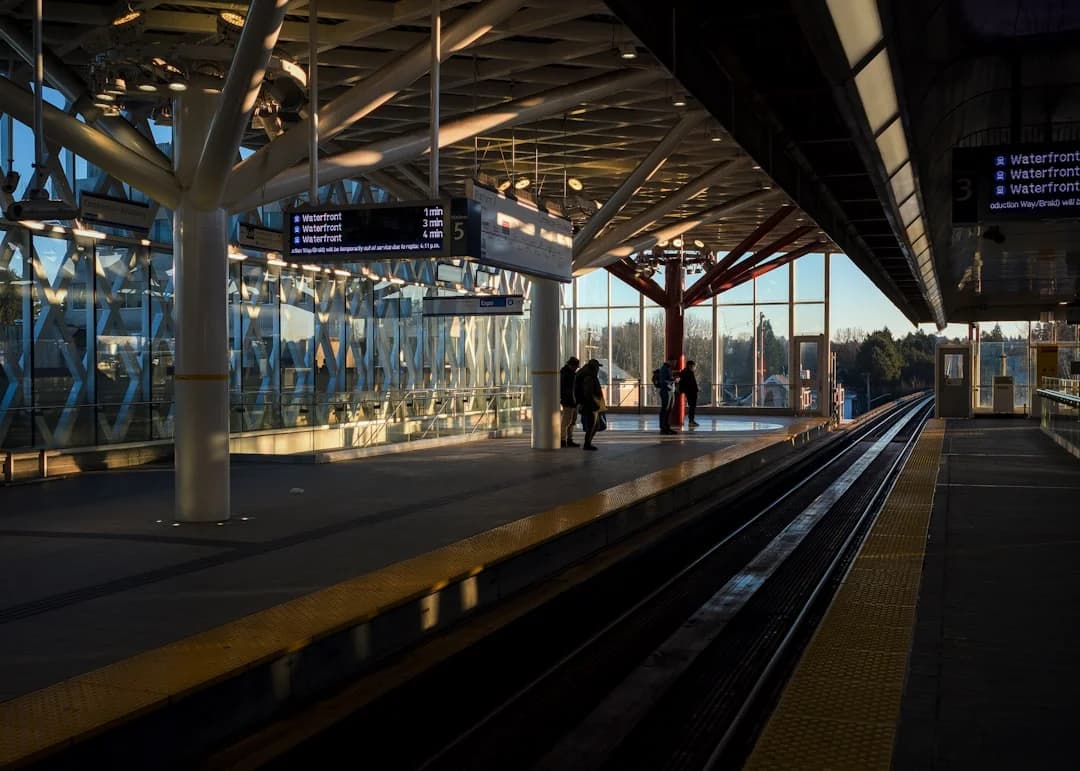
Photo by Albert Stoynov on Unsplash
The Government of Canada has announced the opening of a dedicated U.S. preclearance facility at Vancouver’s Pacific Central Rail Station, marking a milestone for cross-border rail travel. The June 10, 2026 news release from Public Safety Canada and Transport Canada confirms that Vancouver becomes Canada’s first railway location to offer full preclearance for U.S.-bound passengers, transitioning a long-standing boundary process into an on-site, before-departure experience. The move stands to streamline rail travel between British Columbia and the United States, particularly along the Vancouver–Seattle corridor, and it signals a broader push to modernize border procedures in a way that prioritizes passenger convenience while strengthening security and trade. As the government notes, travelers can now complete U.S. Customs and Border Protection (CBP) processes before departure, potentially shortening total journey times and reducing the need for border inspections at Blaine, Washington. This development is part of a larger bilateral effort to enhance cross-border mobility and economic activity. (canada.ca)
The announcement arrives amid growing attention to rail-based cross-border travel as a component of transportation resilience and regional economic integration. In practical terms, the Vancouver Pacific Central Rail Station preclearance facility means U.S.-bound Amtrak Cascades passengers — and other rail travelers using the Vancouver station — are processed by U.S. authorities before boarding, rather than undergoing inspections after crossing the border. The government framed the facility as a collaborative effort with U.S. CBP and Canadian security and transportation agencies, designed to deliver a faster, more predictable travel experience while maintaining robust border controls. The news release emphasizes benefits for travelers, rail operators, and the regional economy, highlighting the potential for greater tourism, trade, and connectivity between Canada and the United States. (canada.ca)
Opening a preclearance facility at a rail terminus also aligns with ongoing efforts to modernize border workflows. CBP’s preclearance program, which has historically focused on airports in multiple countries, is expanding to rail in Canada as demonstrated by the Vancouver site. The U.S. agency’s broader preclearance footprint includes several Canadian locations, with Vancouver listed among the preclearance-enabled rail and airport sites in public materials. This context helps explain the significance of moving preclearance from the border crossing to an integrated station environment, where security screening can be conducted before departure rather than en route or upon arrival. (cbp.gov)
Section 1: What Happened
Announcement details
Official confirmation and leadership
-
The Government of Canada formally announced the opening of a preclearance facility at Vancouver Pacific Central Rail Station on June 10, 2026, in Vancouver, British Columbia. The news release identifies the Honourable Gary Anandasangaree, Minister of Public Safety, and the Honourable Steven MacKinnon, Minister of Transport, as the principal spokespersons for this milestone. The release frames the event as the conversion of Canada’s first railway location to preclearance and highlights the collaboration with U.S. authorities to facilitate cross-border travel. Quick facts emphasize that travelers can now complete U.S. Customs, Immigration, and Agriculture inspections before departure at the Vancouver site, contributing to an enhanced passenger experience. (canada.ca)
-
The accompanying statements underscore a broader policy objective: to streamline border security while unlocking opportunities for trade and tourism across the Canada–United States border. The ministers’ remarks in the release stress that the facility supports safer, faster, and more dependable cross-border travel and trade, reflecting a shared commitment to improving mobility and regional economic integration. The release also notes that the project is part of a broader infrastructure and security framework that aims to reduce friction for travelers and streamline operations for rail carriers. (canada.ca)
Location and operational scope
-
The preclearance facility is located at Vancouver Pacific Central Rail Station, a key railway hub in Western Canada that serves both VIA Rail and Amtrak Cascades routes and functions as a major intermodal gateway. The station’s role in cross-border rail service has long been tied to U.S. passenger trains and regional tourism and trade flows, making it a logical site for an on-site preclearance operation. The government’s press materials describe the station as a pivotal point for rail travel between British Columbia and the United States, with the preclearance facility designed to integrate immigration, customs, and agriculture checks into the departure process. (canada.ca)
-
The installation builds on longstanding cross-border rail patterns in the region, where Amtrak Cascades trains have historically connected Vancouver with Seattle and Portland, and where border inspections have occurred at or near the Blaine border crossing. The new arrangement preserves rail service continuity while relocating the border clearance steps to the Vancouver station, a move that the government says will shorten travel time and simplify connections for travelers and freight customers. For historical context, U.S. preclearance and border inspection concepts have evolved over decades, with rail and airport facilities serving as focal points for coordinated border processing. (cbp.gov)
Quick facts and immediate impact
-
The government’s news release provides a concise snapshot of the change: U.S.-bound passengers can complete the CBP process before departure, after which trains proceed directly to connections or final destinations. The release also notes that the facility supports enhanced border security through early threat detection and strengthens cross-border tourism and economic activity by reducing friction in travel. In addition, the release frames the preclearance facility as a concrete example of U.S.–Canada collaboration on border management and security. (canada.ca)
-
Industry coverage quickly echoed the novelty of the development. Business Travel News highlighted that Vancouver’s rail preclearance facility marks a significant milestone as the first rail preclearance location in North America, underscoring the project’s potential to reshape cross-border travel on the Cascades corridor. The article attributes the announcement to Amtrak and notes collaboration with state and federal partners in both countries. (businesstravelnews.com)
Timeline and key milestones
- The June 10, 2026 press release marks an inception point for the rail preclearance program at Vancouver Pacific Central Rail Station. While the release centers on the opening, observers will want to track subsequent milestones such as operational performance, passenger uptake, and any adjustments to train timetables or routing that accompany the new process. The government’s page explicitly lists the page date as 2026-06-10, signaling a formal ceremonial and operational kickoff in mid-2026. (canada.ca)
Section 2: Why It Matters
Impact on travelers and its broader significance
User experience and travel time
-
The core benefit emphasized by the government is a streamlined passenger experience. With preclearance conducted at the Vancouver station, U.S.-bound travelers can complete immigration and customs checks before departure, enabling a more seamless on-train or on-arrival experience in the United States. In practice, this arrangement reduces on-train delays and eliminates the need for a border stop at Blaine or other border nodes during the rail journey, a shift that could shorten overall trip times for popular Vancouver–Seattle itineraries. The official description frames this as a quicker, easier arrival and a more predictable travel timeline for rail travelers. (canada.ca)
-
Industry commentary corroborates the potential for faster cross-border travel. A June 2026 report from Washington State Department of Transportation (WSDOT) describes how preclearance designation for rail on the Vancouver–Seattle corridor translates into reduced border friction and a shorter journey, contributing to a smoother cross-border experience. The combined Canadian and American efforts are presented as a forward-looking enhancement for the Cascades route, which is a centerpiece for regional mobility and tourism. (wsdot.wa.gov)
Security, risk management, and regulatory context
-
The preclearance concept places a premium on early security screening and alignment with intergovernmental objectives to improve border risk management. The government’s release highlights that the new facility supports enhanced border security and early threat detection by enabling Canada and the United States to intervene earlier in the travel chain. This approach reflects a broader policy trend toward integrated border management, leveraging shared information and synchronized procedures to reduce risk and improve travel reliability. (canada.ca)
-
The CBP and Public Safety Canada framework for rail preclearance sits within a larger ecosystem of cross-border security standards, with preclearance at rail locations complementing existing airport facilities and land-border strategies. While preclearance at airports has a longer institutional history, expanding the concept to rail aligns with a broader objective to standardize vetting and documentation across modes of transportation, particularly for high-frequency cross-border corridors. This strategic alignment is visible in federal materials that describe preclearance as a tool to facilitate safe, secure, and efficient travel and trade. (cbp.gov)
Economic and regional impacts
-
The government’s statement frames preclearance as a lever for economic growth by increasing the station’s activity and boosting employment on both sides of the border. The presence of a full preclearance facility may attract more cross-border travelers, bolster tourism, and enhance supply-chain reliability for regional businesses that rely on rail connections to the U.S. and beyond. In this framing, the Vancouver Pacific Central Rail Station preclearance is more than a security feature; it’s a facilitator of trade, passenger mobility, and regional economic dynamism. (canada.ca)
-
Additional industry reporting underscores the broader significance for VIA Rail and Amtrak services that use Pacific Central as a gateway. The station has long served as a terminus for The Canadian and as a western hub for Amtrak Cascades, with ongoing renovations and tenant movements that signal a modernization of the facility to accommodate evolving cross-border passenger flows. The Reuters/Canada Construct Connect coverage of renovations confirms VIA Rail’s ongoing use of the station as a key intermodal hub and emphasizes the station’s role in enabling new cross-border travel opportunities. While renovations and tenant changes are separate from preclearance, they illustrate how infrastructure upgrades—and the ability to offer on-site preclearance—fit into a wider strategy to boost travel efficiency and passenger experience. (canada.constructconnect.com)
Who benefits the most
- Regular cross-border commuters, tourism operators, and international freight-connected services stand to gain from the Vancouver Pacific Central Rail Station preclearance development. For daily travelers, faster boarding, shorter border processing times, and more predictable schedules can translate into more reliable trip planning. For businesses, the efficiency gains may reduce logistics lead times and enhance cross-border supply chain resilience. The government’s statements explicitly cite stronger tourism links and broader economic activity, a signal that the policy aims to create win-win outcomes for travelers and local economies alike. (canada.ca)
Context within the rail ecosystem
- The Pacific Central Station in Vancouver sits at an important geographic nexus. It serves as VIA Rail’s cross-country corridor terminus and as Amtrak Cascades’ northern anchor, linking Western Canada with the Pacific Northwest. The station’s proximity to SkyTrain’s Main Street–Science World station and its role as a multi-modal hub intensify the implications of preclearance, since seamless integration with transit connections can greatly influence travel behavior and regional mobility patterns. The station’s rail–transit interdriven environment is well-suited for a streamlined preclearance workflow that integrates with local public transit and intercity services. (en.wikipedia.org)
Broader market and policy context
Preclearance expansion in North America
- The Vancouver rail preclearance milestone must be seen within a broader North American trend toward extending preclearance concepts beyond airports and into rail and other transport modes. U.S. CBP’s preclearance program presently covers a network of locations in Canada and beyond, with rail and airport sites contributing to the agency’s expanded footprint. The CBP overview of preclearance lists a number of international locations and modalities, illustrating how the Vancouver development fits into a larger framework of cross-border screening and trade facilitation. This context helps explain why rail preclearance is being pursued as a strategic priority for passenger travel and regional integration. (cbp.gov)
Lessons from adjacent markets
- Observers note that moving preclearance to rail terminals could set benchmarks for other corridors with high cross-border demand. The Amtrak preclearance milestone in Vancouver, if sustained, might influence considerations for other rail routes that cross national borders and rely on durable, passenger-friendly processing at the point of departure. Industry coverage suggests this development could become a reference point for rail operators, transit agencies, and border management authorities as they evaluate the feasibility and benefits of extending preclearance to additional rail stations and routes. (businesstravelnews.com)
What does this mean for technology and operations?
- The Vancouver Pacific Central Rail Station preclearance event underlines the role of technology, data coordination, and process design in modern border management. A full rail preclearance facility requires integrated screening systems, secure identification verification, manifests and customs documentation workflows, and interoperable data sharing across agencies. The government’s release hints at the operational architecture, emphasizing a combined immigration, customs, and agriculture screening regime that can operate efficiently in a rail environment. Observers will be watching how this technology stack performs at scale, including throughput, queuing times, and the ability to handle peak travel periods during major events or holidays. (canada.ca)
- In parallel, the broader rail ecosystem benefits from ongoing digitalization and asset modernization at Pacific Central Station. Reports of renovations and new tenant arrangements at the station illustrate a forward-looking approach to multi-modal passenger facilities, where technology-enabled passenger flow management, enhanced wayfinding, and integrated ticketing can complement on-site preclearance to deliver a smoother journey. The VIA Rail renovation coverage highlights renewed tenant presence and upgrades at the station, signaling a platform for enhanced customer service, operational efficiency, and better use of station real estate. (canada.constructconnect.com)
Section 3: What’s Next
Timeline, milestones, and next steps
Short-term milestones
- The June 10, 2026 opening date marks a release point for public visibility, but several operational milestones will define the early performance of Vancouver Pacific Central Rail Station preclearance. Key near-term indicators will include the first-month passenger throughput through the preclearance facility, average processing times per traveler, and any initial feedback from rail carriers, travel agencies, and tour operators. Observers will also monitor if the preclearance process affects train dwell times at the station or alters connecting-service schedules. While the government release provides the baseline, these metrics will emerge from ongoing operational reporting by CBP, Public Safety Canada, Transport Canada, and the rail operators. (canada.ca)
Medium- and longer-term considerations
- As the program matures, cross-border rail customers may benefit from more flexible transfer options, expanded route coverage, and potential new destinations connected to the preclearance model. The collaboration framework between Canadian and American authorities will continue to evolve, potentially informing expansions to other rail corridors or other border regions. Reports from industry outlets and intergovernmental updates will be essential for tracking expansions, refinements to the process, and any adjustments driven by ridership patterns, security priorities, or technological improvements. (businesstravelnews.com)
Operational integration with regional transit and rail operators
- Given Pacific Central Station’s role as a hub for VIA Rail and Amtrak Cascades, the preclearance facility must harmonize with rail timetables, rolling stock utilization, and passenger information systems. The station’s status as a major intermodal node means that the preclearance workflow should align with SkyTrain access, bus services, and last-mile connectivity to ensure a smooth passenger journey from arrival at the station to onward travel. Observers will watch how the station’s modernization and tenant mix—such as Fresh Tracks Canada being welcomed as a major tenant—interplay with the preclearance operations, potentially generating a more seamless travel ecosystem for border travelers. (canada.constructconnect.com)
What to watch for in the near term
- In the weeks and months ahead, analysts will look for data on border wait times, cross-border passenger volumes, and any changes in train punctuality or reliability tied to the new preclearance arrangement. Local and national media will report early performance indicators, including any adjustments to the number of preclearance lanes, staffing levels, and the integration of screening with on-site passenger processing. The industry press has already begun to frame the Vancouver facility as a landmark development, with ongoing coverage likely to track how the system handles FIFA and other large events when cross-border travel spikes. (businesstravelnews.com)
Closing
The Vancouver Pacific Central Rail Station preclearance milestone marks a defining moment for cross-border rail travel in North America. By enabling U.S. preclearance to occur before departure, the facility aims to normalize a faster, more predictable travel experience for Amtrak Cascades passengers and other rail travelers heading to the United States. The move is framed by government officials as a win for safety, efficiency, and economic vitality, reinforcing a collaborative approach to border management and regional mobility. As the program unfolds, BC Times will continue to follow not only the operational performance but also how travelers and tourism businesses adapt to the new preclearance workflow. Readers can expect ongoing updates from announcements by Public Safety Canada, Transport Canada, and U.S. CBP, as well as independent assessments from industry observers and regional transportation partners about the practical effects on travel times, connectivity, and cross-border trade.
For travelers planning future trips, the new preclearance arrangement at Vancouver Pacific Central Rail Station provides a clear signal: a smoother start to cross-border journeys via rail, with immigration, customs, and agricultural screening completed before departure. As more details emerge about passenger volumes, route coverage, and system performance, BC Times will provide data-driven analyses and timely updates to help readers understand how this development influences travel planning, rail operation strategies, and regional economic opportunities in the Pacific Northwest and beyond. Stay tuned for more information as authorities publish performance metrics, policy notes, and the next steps for expanding preclearance to other rail corridors and stations across Canada and the United States. (canada.ca)
Notes on the Station and Related Infrastructure
-
Pacific Central Station’s role as a VIA Rail and Amtrak gateway positions the facility at the heart of ongoing modernization efforts. Recent coverage of renovations and new tenants at the station highlights a broader investment narrative around Vancouver’s rail infrastructure, signaling that the site is positioned to support enhanced passenger services and a more robust cross-border travel experience. The combination of preclearance and facility upgrades aligns with a strategy to boost efficiency and customer satisfaction while maintaining rigorous security standards. (canada.constructconnect.com)
-
The station’s physical integration with adjacent transit lines, including proximity to Main Street–Science World SkyTrain Station, underscores the importance of a seamless multimodal journey for travelers. This integration is essential for ensuring that passengers who clear U.S. preclearance in Vancouver can easily connect to transit options and access the wider region. The station’s location and multimodal connectivity are well documented in transport reports and station profiles, reinforcing the practical value of the new preclearance arrangement. (en.wikipedia.org)