Vancouver police deploy new body camera tech..

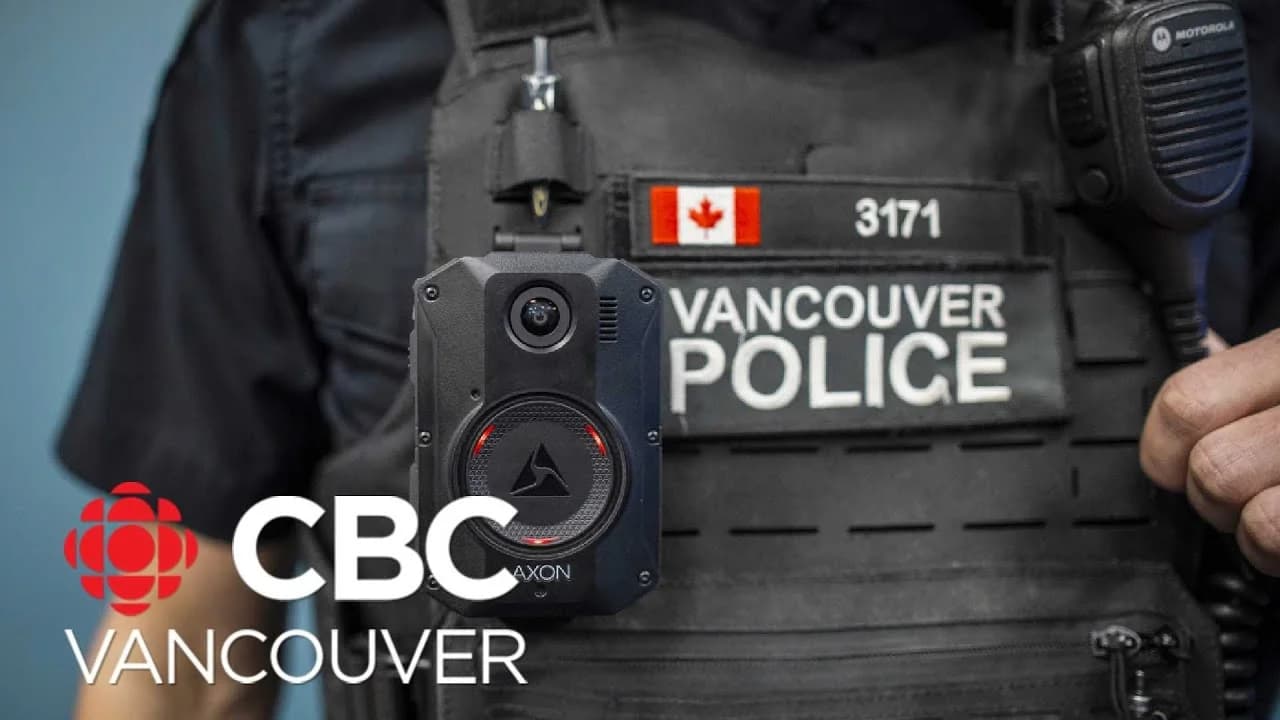
Vancouver, British Columbia — BC Times, your independent voice for British Columbia news and West Coast perspectives, examines how Vancouver police deploy new body camera tech.. and what that means for frontline policing, community trust, and public accountability across the province. This exploration blends in-depth reporting with on-the-ground perspectives, situating a local Vancouver story within broader provincial standards and national conversations about transparency, privacy, and public safety. As Vancouver moves forward with expanded body-worn camera programs, the implications reach beyond one city block and into the future of policing across British Columbia. Vancouver police deploy new body camera tech.. is not just a hardware story; it is a policy, privacy, and public engagement story that touches every resident, business, and visitor who interacts with law enforcement. The question BC Times seeks to answer is not only what equipment is being used but how those choices shape accountability, data governance, and the social contract between police and the public.
The evolution of body-worn cameras in British Columbia and Vancouver
Public safety technology has progressed rapidly in recent years, and BC is among the provinces that have formalized standards and rollouts for body-worn cameras (BWCs). The Vancouver Police Department (VPD) has publicly detailed its path from pilot programs to broader deployment, including the hardware chosen, the policy framework, and retention rules that govern recorded footage. The VPD’s page on Body-Worn Cameras notes that the program is expanding to hundreds of front-line officers, following a pilot that gathered input from community groups and those involved in recorded interactions. The department states that the cameras are encrypted and stored securely within the province’s Digital Evidence Management System (Prime-BC). Recordings are retained according to PRIME-BC retention periods, with the shortest retention period currently set at 13 months, and there are provisions for training uses. The system in use is the Axon Body 4, and the program includes two operating modes: a Ready/Buffering mode that captures a pre-event loop and a Recording/Event mode that captures audio and video during interactions. All of this is designed to balance transparency with privacy and security considerations. This framework provides the baseline for understanding how Vancouver police deploy new body camera tech.. and what the full policy means for both officers and the public. (vpd.ca)
In parallel, provincial standards underscore the need for privacy impact assessments before any deployment of BWCs. The Government of British Columbia’ s policing standards on Body-Worn Cameras emphasize privacy, data handling, and the necessity of formal assessments prior to rollout. Revised in 2025, these guidelines highlight that agencies must complete a privacy impact assessment and ensure that policies align with provincial privacy expectations. This is important context for any city contemplating an expansion of BWCs, including Vancouver. The standards also outline pre-implementation steps, access controls, and the roles of police boards and chiefs in approving deployments. For readers who want to link policy to practice, BC’s updated standards provide a clear framework for how municipalities and police services should approach BWC adoption. (www2.gov.bc.ca)
As BC Times documents, the Vancouver approach sits in a broader regional pattern. In addition to municipal programs, the Royal Canadian Mounted Police (RCMP) has embarked on a phased implementation of BWCs across several BC communities, signaling the broader public sector trend toward standardized evidence collection with strict governance. The RCMP’s phased approach includes communities such as Tofino and Ahousat, Mission, Kamloops, Prince George, Cr anbrook, and BC Highway Patrol, with projected per-FTE costs and a multi-year timeline. This broader provincial movement helps explain why Vancouver’s policy choices and technical selections—like encryption, retention periods, and training—mirror a treaty-like balance between public safety goals and privacy protections. (ubcm.ca)
What the Vancouver Police Department is implementing
The VPD is actively expanding its Body-Worn Camera Program, positioning BWCs as a core element of modern policing in the city. The program’s policy went into effect on March 7, 2025, with approval from the Vancouver Police Board. The cameras used are Axon Body 4 devices, a widely adopted platform in North American law enforcement. The footage is stored in the secure PRIME-BC system, ensuring centralized and auditable management of video and audio records. Retention periods follow PRIME-BC guidelines, with the shortest retention currently set at 13 months, and there are provisions to keep footage for training and investigative purposes. The system includes a Ready/Buffering mode, which continuously records a 30-second loop of video (without audio) that is retained only if activated later, and a Recording/Event mode that captures audio and video when the officer activates the device. This dual-mode design aims to capture pre-incident context while preserving privacy when appropriate. These specifics create a robust baseline for ongoing public discussions about the role of BWCs in accountability and trust-building. (vpd.ca)

The policy and deployment details are not just about hardware; they reflect a governance philosophy that blends transparency with privacy protections. The VPD notes that recordings are encrypted and stored securely within PRIME-BC, reinforcing the province’s commitment to data protection. Access to video footage is tightly controlled, with restricted use for investigations, training, and internal reviews, and with privacy safeguards designed to minimize unnecessary exposure of bystanders or private individuals who are not part of an investigation. Such safeguards are a crucial part of the conversation about how Vancouver police deploy new body camera tech.. and how communities should expect their data to be handled. (vpd.ca)
Case studies and public engagement were central to the rollout. The VPD has described a multi-stakeholder approach that sought feedback from community groups and those involved in interactions where cameras were used. This engagement process underscores the notion that BWCs are not merely a technology upgrade but a policy instrument that can shape police-community relations, trust, and accountability. The 2024-2025 arc included a pilot phase that gathered input and refined practices before scaling up. Public forums and town halls were part of the process, with audio and video considerations discussed in a sensitive and public manner. (vancouver.citynews.ca)
In addition to the VPD’s program, the City of Vancouver has explored the broader application of body-worn cameras in its own operations. For example, the city announced a six-month pilot program starting August 2025 to equip 15 parking enforcement officers (PEOs) with BWCs. This program aims to deter verbal abuse and violence toward PEOs, illustrating how camera technology is being used beyond traditional policing to improve frontline worker safety. While this particular initiative involves parking enforcement rather than sworn officers, it reflects a city-wide adoption mindset about BWCs and the role of camera-enabled accountability in urban services. The City’s press release provides details on the scope, objectives, and expected outcomes of the PEO BWC pilot. (vancouver.ca)
“Sunlight is the best disinfectant.” This famous maxim, attributed to Louis Brandeis, resonates with the broader objective of BWCs: transparency as a mechanism to deter misconduct and improve public trust. While the phrase originates in broader public policy discussions, it’s often invoked to frame conversations about how video evidence can illuminate police and public interactions. For readers, this classic reminder underscores the ongoing tension between openness and privacy in policing technology. [Quoted idea referenced in public discourse and paraphrased in policy discussions] (en.wiktionary.org)
The BC framework: privacy, retention, and governance
BC’s approach to BWCs rests on a formal framework designed to protect privacy while facilitating accountability. A key element is the privacy impact assessment (PIA) requirement prior to deployment. The province’s policing standards emphasize that agencies must conduct and obtain approval for a PIA before BWCs are rolled out. This requirement ensures that privacy considerations—such as the contexts in which cameras are activated, how footage is accessed, and how long it is retained—are considered up front. The standards also address governance around who can view footage, how redactions are handled, and how data flows into the Digital Evidence Management System (DEMS) used by law enforcement. For Vancouver, aligning with these standards helps ensure that the city’s BWC program operates within an established privacy framework and provides a credible basis for public accountability. (www2.gov.bc.ca)
Beyond privacy, the BC standards outline the equipment and facilities aspects of BWCs, including the types of devices that may be deployed, the encryption requirements, and the training expectations for officers. The standards reinforce that BWCs are part of an integrated evidence management approach—one that connects with regional systems like PRIME-BC and supports consistent workflows for investigations, redactions, and disclosures to Crown counsel. Given the province’s phased RCMP rollout and municipal pilots, these guidelines help harmonize practices across different agencies while allowing for local customization. (www2.gov.bc.ca)
How BWCs fit into the broader policing ecosystem in British Columbia
BC’s policing landscape includes municipal police services like the Vancouver Police Department, regional police boards, and the RCMP-led federal policing arrangement in some communities. The RCMP’s phased BWC rollout across BC exemplifies how the province is pursuing widespread adoption with standardized governance and cost structures. The UBCM (Union of British Columbia Municipalities) describes phased implementation with per-capita pricing and year-by-year cost projections. This framework gives local governments a sense of the financial commitment required to sustain BWCs, including the costs of devices, software, digital evidence management, transcription, redaction, and translation services. The RCMP rollout is not instantaneous; it is planned over 15 to 18 months for deployment in multiple communities, reflecting the scale of a province-wide transition and the need to align with the federal and provincial funding windows. These developments matter for Vancouver because they set expectations for inter-agency collaboration, data sharing, and alignment on retention and disclosure practices across different law-enforcement jurisdictions. (ubcm.ca)
In the municipal sphere, Vancouver’s approach to BWCs mirrors the province’s emphasis on safety and accountability without sacrificing privacy. The City of Vancouver’s 2025 parking-enforcement camera pilot demonstrates how BWCs may be scaled to non-sworn personnel in a way that informs the broader policing conversation. While enforcement contexts differ, the underlying governance questions—when to record, how to store and redact footage, who has access, and how footage can be used in investigations—are shared across police and city agencies. This cross-cutting reality contributes to a more coherent public policy environment in British Columbia that supports transparency and responsible data practices. (vancouver.ca)
A practical look at the Vancouver Police Department’s BWC program
The VPD’s BWC program is built around three core aims: accountability, transparency, and safety. The Axon Body 4 devices chosen for deployment are known for their durability, reliability, and integration with a national platform for digital evidence management. The Ready/Buffering mode captures pre-event context, which can prove crucial when reconstructing incidents, while the Recording/Event mode provides the audio-visual footage necessary for investigations and training. Encryption and secure storage within PRIME-BC underpin the program’s data protection strategy. The retention policy—set by PRIME-BC—ensures that footage is available for investigative and training purposes while balancing privacy concerns for bystanders and non-involved individuals. These operational details are essential for readers who want to understand not just the gear but the governance that makes BWCs workable in practice. (vpd.ca)
From a policy perspective, the March 7, 2025 policy adoption date marks a formal milestone for Vancouver’s BWC program. That policy aligns with provincial standards and the RCMP’s broader BC rollout timeline, signaling a move toward standardized, transparent practices across jurisdictions. The combination of a concrete device (Axon Body 4), a formal policy date, secure storage in PRIME-BC, and a defined retention period illustrates how Vancouver is translating a technology concept into a structured public-safety program. It also provides a model for other cities and police services considering similar moves. (vpd.ca)
The public-facing narrative around BWCs in Vancouver has also included a focus on community engagement. The VPD’s rollout involved town halls and feedback from community groups, emphasizing that BWCs are a policy instrument as much as a technical system. This participatory approach acknowledges that technology alone cannot build trust; it must be coupled with transparent procedures, accessible data governance, and ongoing dialogue with residents. The 2024-2025 pilot and subsequent scaling reflect a governance philosophy that prioritizes public input and accountable use of video data. (vancouver.citynews.ca)
A regional mosaic: RCMP, municipalities, and city services
To place Vancouver’s implementation in context, it’s useful to compare with other BC efforts. The RCMP’s BC BWC rollout highlights a coordinated approach to a large-scale technology adoption across multiple communities. The phased implementation, cost-sharing structures, and anticipated per-FTE rates reveal the fiscal and administrative complexity of statewide adoption. The RCMP’s plan informs local jurisdictions about budgeting, maintenance, and governance—especially around redaction, translation, and training workloads that are likely to accompany widespread use of BWCs. While the RCMP deployment may occur in different jurisdictions with different governance structures, the underlying standards and protocols—privacy impact assessments, secure storage, and controlled access—provide common ground for harmonization across BC. (ubcm.ca)

In the City of Vancouver’s own operations, BWCs for parking enforcement officers demonstrate a parallel logic: using cameras to deter abuse and capture critical interactions in everyday municipal work. The six-month pilot launched in August 2025 included 15 officers and focused on safety and accountability in street-level services. The city’s approach informs broader conversations about BWCs’ scope beyond sworn police duties, highlighting that modern public safety and public service increasingly depend on reliable, auditable data streams. Readers should note that these PEO pilots do not imply a universal policy across all municipal staff, but they illustrate how BWCs are becoming a common tool in the municipal toolkit. (vancouver.ca)
A practical comparison: VPD vs RCMP vs municipal programs
The following table offers a concise snapshot of the major elements across Vancouver’s BWC ecosystem as described in official sources. Note that the table reflects current public information and may evolve with policy amendments, budgets, or new training programs.
| Program / Jurisdiction | Camera Model | Rollout Status | Retention Policy | Data Security | Access & Use | Notable Governance Notes |
|---|---|---|---|---|---|---|
| Vancouver Police Department (VPD) Body-Worn Cameras | Axon Body 4 | Expanded rollout with policy effective March 7, 2025 | PRIME-BC retention (shortest 13 months) | Encrypted and stored in PRIME-BC | Investigations, training, and limited internal review | Policy approved by Vancouver Police Board; two modes: Ready/Buffering and Recording/Event |
| RCMP BC Phased BWC Rollout | N/A (varies by vendor) | Phased rollout across multiple BC communities (2024–2026 window) | PRIME-BC or local DEMS retention as applicable | Standard encryption and DEMS integration | Access governed by regional and federal policies | Per-FTE cost structure; funding windows; local adaptation |
| City of Vancouver Parking Enforcement Officers | N/A (vehicle/handheld cameras; utilization described in News release) | 6-month pilot starting August 2025 | To be defined by program specifics; tied to city policy | City-level data governance aligned with privacy standards | Access for investigations/training | Demonstrates municipal expansion of BWCs beyond sworn officers; safety focus for frontline staff |
This side-by-side view shows how Vancouver’s BWC program sits within a broader provincial ecosystem that includes RCMP-led deployments and municipal pilots. The core elements—camera hardware, secure storage, retention timelines, and access controls—are the backbone of BWCs in BC, but the specifics can vary by agency, funding, and public consultation.
Potential impacts on public safety, trust, and civil liberties
BWCs hold promise for improving accountability in police interactions and giving communities a more transparent view of law enforcement activities. In Vancouver, the combination of Axon Body 4 hardware, encryption, and PRIME-BC storage is designed to create an auditable evidence trail, which can aid investigations while safeguarding privacy. The Ready/Buffering feature that records a brief pre-event window can provide context for what transpired before a stop or an incident, potentially reducing disputes about what occurred. The policy framework surrounding access, disclosure, and redaction remains a critical part of ensuring that the footage serves legitimate investigative purposes while protecting bystanders and those who were not the subject of law enforcement action. These elements align with best practices in transparency and accountability that are being discussed nationally and internationally as policing agencies modernize their evidence ecosystems. (vpd.ca)
On the civil-liberties side, privacy protections, limited access, and data minimization are essential to avoid overreach. The provincial approach emphasizes privacy impact assessments before deployment, a step designed to anticipate privacy concerns and to ensure that BWCs are used in a way that respects the rights of residents and witnesses. The balance between the public interest in safety and the individual right to privacy remains a live policy conversation, and Vancouver’s experience provides a local lens on how this balance is achieved in practice. (www2.gov.bc.ca)
Public sentiment around BWCs can vary widely. Some community members welcome cameras as a deterrent to misconduct and a tool for accountability; others worry about mission creep, surveillance overreach, or the risk of footage being used in ways that could chill legitimate protest or routine speech. Vancouver’s 2024–2025 pilot and subsequent expansion illustrate that policymakers and police departments are aware of these concerns and are pursuing engagement strategies, privacy safeguards, and clear governance rules to address them. Public forums and feedback mechanisms remain an important part of ensuring that BWCs serve the public interest rather than simply expanding surveillance. (vancouver.citynews.ca)
The future of body camera tech in Vancouver and the West Coast
Looking ahead, BWCs will likely evolve along several axes: richer data governance, improved video quality and storage efficiency, more sophisticated redaction and translation capabilities, and smarter integration with other public-safety technologies. Provincial standards already emphasize privacy impact assessments and robust data governance, which will shape how agencies adopt new features and how they justify ongoing investments in BWCs. The BC government’s updated standards (as of 2025) signal a continuing commitment to balancing transparency with privacy in a world where digital evidence is increasingly central to policing. For Vancouver, this means ongoing monitoring of policy effectiveness, community feedback, and fiscal sustainability as technology innovations pose new questions about data rights, retention, and access. (www2.gov.bc.ca)
Industry observers and public safety researchers anticipate a wave of innovations around BWCs, including more seamless video analytics, better interoperability with digital evidence systems, and enhanced capabilities for secure sharing with Crown prosecutors and public oversight bodies. Any such developments will need to be evaluated against the province’s privacy standards and the city’s public engagement goals. Vancouver’s current trajectory—anchored by clear policy dates, a defined hardware platform, and a commitment to privacy—will likely shape how new features are adopted, tested, and deployed in the years ahead. The ongoing dialog among police, city officials, and communities will be critical for ensuring that technology supports safety and trust rather than eroding civil liberties. (www2.gov.bc.ca)
A moment to reflect with a focused listicle
Notable tech leaders and their influence on public-safety technology offer a useful context for readers seeking to understand the broader ecosystem that enables BWCs. Below is a brief list that signals the kind of innovations and platform ecosystems—often created by a handful of tech visionaries—that shape how BWCs are designed, deployed, and managed.
- Elon Musk
- Bill Gates
This short list underscores the reality that BWCs are part of a wider technology stack that involves hardware platforms, cloud-based storage, data analytics, and public-private partnerships. While Musk and Gates are not the sole architects of Vancouver’s BWC program, the platforms they have championed—digital infrastructure, AI tooling, and scalable software ecosystems—have influenced the thinking around how BWCs fit into modern public-safety operations. In Vancouver, the Axon Body 4 platform and PRIME-BC exemplify how a centralized, scalable approach can help meet complex governance requirements while still enabling local customization. The broader lesson is that technology leaders and their ecosystems matter for how cities deploy tools that affect everyday safety and transparency.
"Sunlight is the best disinfectant." This Brandeis quote, referenced earlier, evokes the core ethos behind BWCs: openness that helps communities see what happens in police interactions. When applied to BWCs, it means robust governance, open channels for public feedback, and ongoing scrutiny of how footage is used and stored. (en.wiktionary.org)
Data gaps and what still needs confirmation
- Specific per-officer cost and long-term ROI for Vancouver’s BWC program: The publicly available policy and deployment updates outline hardware, retention, and governance but do not publish a per-officer cost breakdown. Further public reporting or city budgeting documents would help quantify ongoing expenses for maintenance, storage, and staff time for reviews and redactions.
- Detailed post-deployment impact assessments: While the VPD and City of Vancouver have described engagement processes and policy frameworks, independent evaluations of the program’s impact on incidents, complaints, use-of-force reports, and community trust would provide more concrete guidance for other jurisdictions.
- Full integration with other BC police tools: The relationship between BWCs, other real-time public-safety technologies, and the province-wide digital evidence ecosystem could be explored further, including how data from BWCs interacts with other data streams and how cross-agency access is controlled.
- Long-term privacy protections beyond 13 months: PRIME-BC retention periods provide a baseline, but stakeholders may seek clarity on redaction policies, citizen access requests, and post-release data governance for cases that close after a certain period.
If you’re a policymaker, researcher, or community member seeking to understand Vancouver’s BWC program, these gaps are not unusual at this stage. They reflect the growing pains and evolving governance of a technology that sits at the intersection of safety, privacy, and public trust. BC Times will continue to monitor updates from the VPD, the province, and the RCMP’s BC rollouts to provide ongoing, data-driven context for readers.
Wrapping up: what Vancouver’s BWC journey tells us about public safety tech
Vancouver’s path to deploying new body camera tech.. demonstrates a careful balance between deploying a high-quality hardware solution and upholding a robust privacy framework. The Axon Body 4 devices, encryption, and PRIME-BC storage create a credible evidence-management backbone. The March 7, 2025 policy adoption date marks a concrete governance milestone, while privacy assessments and public engagement reflect a broader commitment to community trust. The regional context—RCMP’s phased rollout and municipal pilots—helps frame Vancouver’s efforts as part of a province-wide shift toward standardized, accountable digital evidence practices.
The future of BWCs in British Columbia will likely hinge on ongoing governance, transparent reporting, and thoughtful expansion to other municipal roles where safety and service intersect. The province’s standards, coupled with Vancouver’s demonstrated approach to policy and deployment, offer a model for other cities seeking to modernize policing with technology that can both protect officers and empower the public with clearer, more accessible information about public safety in their neighborhoods. As conversations around BWCs continue to evolve, BC Times remains committed to reporting with accuracy, context, and independent analysis—delivering West Coast perspectives that matter to readers across British Columbia.