News
Vancouver Rooftop Farming Expansion: Data-Driven Outlook
Unbiased, data-driven analysis of Vancouver rooftop farming expansion, emerging technology trends, and significant market implications.
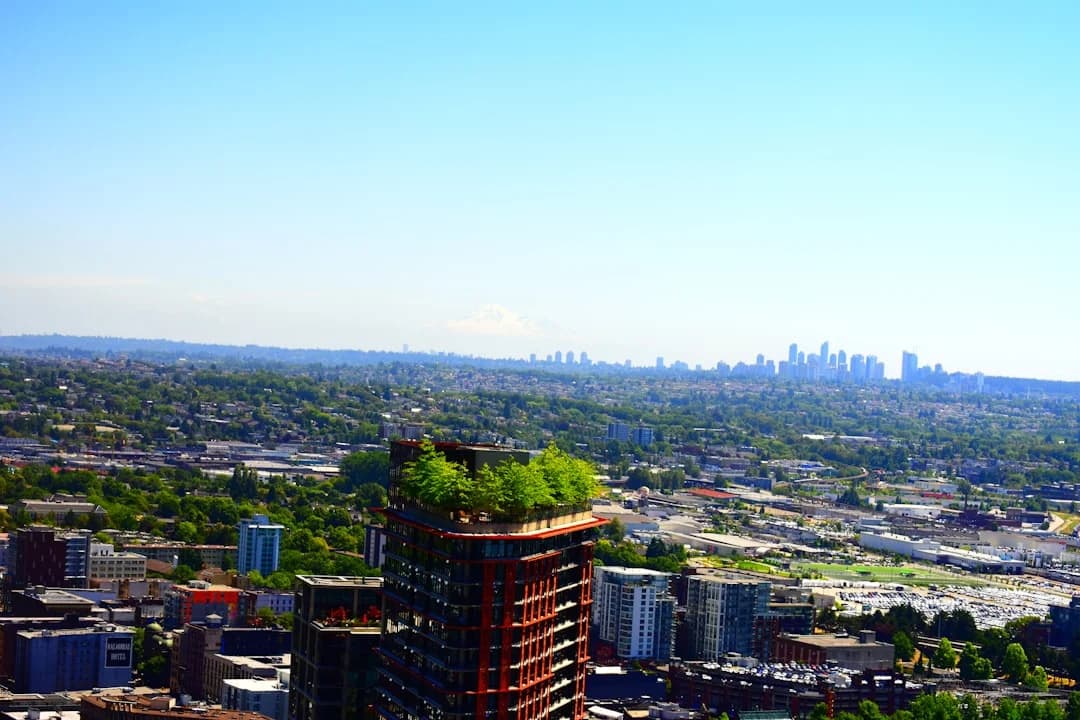
The Vancouver rooftop farming expansion is moving from concept to corridor, with city policy nudges and private-sector interest pushing rooftops toward productive uses. In 2026, a wave of activity around rooftop farming is taking shape in downtown Vancouver and greater Metro Vancouver, supported by nonprofit networks and turnkey farming partners. Recent announcements and ongoing projects point to a broader trend: more buildings—residential, commercial, and institutional—are hosting rooftop farms or integrating green roof infrastructure that can support edible crops alongside ornamental plants. This development matters because it touches local food security, urban resilience, and the economics of farming in dense urban areas. As city planners and industry players map a path forward, BC Times will track how technology, licensing, and market forces interact to shape the next chapter of Vancouver’s urban agriculture story. (grinbc.org)
Opening the news, Vancouver’s public policy framework for urban farming has long prioritized safe, neighborly operation and gradual integration with zoning and licensing. The City of Vancouver’s urban farming guidelines, adopted in 2016 and amended over the years, require urban farms to obtain a citywide business license and to operate within defined Class A and Class B categories, with size limits and operational rules that vary by zoning. This baseline creates a stable regulatory environment for rooftop farming by clarifying which sites can host urban farms, what kinds of equipment can be used, and how sales and processing are managed. As the rooftop farming expansion unfolds, these policy foundations help ensure that innovations on rooftops align with public health, safety, and neighborhood compatibility. (guidelines.vancouver.ca)
Section 1: What Happened
Announcement of rooftop farming collaboration and 2026 events
Rooftop farming tours and a new collaboration in 2026

Photo by Peter Robbins on Unsplash
A notable development in Vancouver’s rooftop farming expansion is a 2026 collaboration and a program of rooftop farming tours in downtown Vancouver. GRIN BC.org published a detailed post in March 2026 highlighting rooftop farming in dense urban settings, with explicit invitation to join a Summer 2026 rooftop farming tour in downtown Vancouver and a July 2026 green roof agriculture tour. The piece emphasizes collaboration with MicroHabitat, a BC-based company known for its turnkey urban farming services, which operates in Metro Vancouver and Victoria. The article candidly positions these tours as a mechanism to raise awareness about resilience, food security, and smarter urban design. This event–driven signal reflects a broader push to showcase rooftop farming as a scalable urban intervention rather than a collection of pilot projects. (grinbc.org)
MicroHabitat’s network and the scope of expansion
In the same material, GRIN BC notes that MicroHabitat is a key partner in this wave of rooftop farming expansion, describing MicroHabitat as a company that provides turnkey rooftop farming solutions designed to be non-intrusive to building structures. Crucially, it states that as of 2026, MicroHabitat operates 28 urban farming projects across Metro Vancouver and Victoria, illustrating a sizable footprint already in place and signaling potential acceleration as rooftop spaces become more commercially viable or mission-driven. This headline figure helps readers gauge the scale of the expansion and what “rooftop farming expansion” could imply in practical terms for urban land use and employment. (grinbc.org)
Context: policy and licensing that enable expansion
While the 2026 activity is framed around private-sector rooftop farming networks and public-facing tours, the policy backdrop remains essential. Vancouver’s Urban Farm Guidelines (adopted 2016 and amended 2019) require urban farm operators to obtain a separate urban farming business license prior to site use, with Class A and Class B distinctions tied to zoning. The guidelines also set size limits, require lease arrangements when non-owners operate the farm, and restrict on-site processing and direct farm-gate sales in many cases. These specifics—licensing, zoning alignment, and regulatory boundaries—constitute the architecture that enables rooftop farm expansion to proceed in an orderly, permitted fashion rather than as ad hoc projects. (guidelines.vancouver.ca)
What exactly is happening on the ground?
Private rooftop projects and the shift to scalable models
The press surrounding rooftop farming expansion frequently highlights the shift from one-off rooftop experiments to scalable, private-sector installations. A key example from Vancouver’s scene is the MicroHabitat network, described as a “world’s largest network of urban farms” that operates multiple projects across the region. The 2026 GRIN BC piece emphasizes that MicroHabitat’s turnkey models are designed to avoid structural burden while delivering edible crops, an important consideration for building owners weighing rooftop installations. This business model—bringing edible rooftop production to diverse sites with minimal building modification—helps explain why rooftop farming is increasingly presented as a market-ready component of urban land use. (grinbc.org)
A companion example: Sole Food Street Farms and urban agriculture in Vancouver
Vancouver’s urban agriculture landscape also includes established social-enterprise farms that have grown roots in the city’s soil and policy environment. Sole Food Street Farms, a long-running urban farming initiative in Vancouver’s Downtown Eastside, demonstrates the social and economic dimensions of urban agriculture—training and employing local residents, producing food, and integrating with city programs. Coverage from CityNews Vancouver (2017) and local biosphere projects describe Sole Food as a large, mission-driven urban farm network that illustrates how rooftop or elevated-space farming sits alongside other urban farming modalities to strengthen local food systems. While Sole Food is not limited to rooftops, its visibility and longevity help anchor readers’ understanding of how urban farms fit into Vancouver’s broader food strategy. (vancouver.citynews.ca)
Timeline and key facts at a glance
- 2016: City of Vancouver adopts Urban Farm Guidelines, clarifying Class A/Class B distinctions, licensing, and site-assembly considerations for urban farms. (guidelines.vancouver.ca)
Photo by Peter Skaronis on Unsplash
- 2019: Urban Farm Guidelines are amended again, reinforcing licensing requirements and planting-area limits tied to zoning categories. This reflects the city’s ongoing effort to codify urban farming within the planning framework. (guidelines.vancouver.ca)
- 2026: GRIN BC announces Summer 2026 rooftop farming tours in downtown Vancouver in collaboration with MicroHabitat, signaling a public-facing push to highlight rooftop farming as a scalable, design-forward urban solution. MicroHabitat reportedly operates 28 urban farming projects across Metro Vancouver and Victoria as of 2026. (grinbc.org)
Section 2: Why It Matters
Impact on local food systems and urban economics
Food security and resilience in a dense city

Photo by Chaewool Kim on Unsplash
Vancouver’s urban farming strategy rests on a core belief: increasing local food production within the city can bolster resilience and reduce reliance on distant supply chains. Vancouver’s Vancouver Food Strategy (and related food policy documents) position urban agriculture as a tool to diversify food sources, support local economies, and strengthen neighborhood food assets. The city framework consistently emphasizes resilience, sustainability, and equitable access to healthy foods as central goals. The rooftop farming expansion, therefore, is not merely a novelty; it represents a strategic lever for urban food security in a region with high real estate costs and a growing population. The policy backbone is reinforced by the Food Strategy and related plans, which guide action and coordinate across departments and partners. (vancouver.ca)
Employment, education, and social benefit
Sole Food Street Farms offers a case study in how urban farming can deliver social value—providing employment and training opportunities for residents who face barriers to traditional employment. While Sole Food predates the current rooftop-farming wave, its ongoing presence demonstrates that urban agriculture in Vancouver can be designed as a social enterprise that aligns with city priorities for inclusive growth and food-system education. City-based reporting on Sole Food notes its impact in terms of workforce development and community integration, which broadens the narrative beyond production alone. This context helps readers understand why a broader rooftop farming expansion could dovetail with workforce and education initiatives in the city. (vancouver.citynews.ca)
Technology trends shaping rooftop farming
From green roofs to edible rooftop systems
Urban rooves and green roofs are central to Vancouver’s conceptual and practical approach to rooftop farming. The city’s Green Roof program and its Green Roof Best Practices Guide highlight green roofs as a platform for biodiversity, rainwater management, and urban agriculture, underscoring their role in the broader strategy for climate resilience and sustainable land use. This isn’t just about plants on a roof; it’s about integrating food production with stormwater management, energy efficiency, and urban design. The expansion of rooftop farming sits within this framework, leveraging green-roof infrastructure to enable crop production in a way that aligns with city objectives for resilience and environmental stewardship. (vancouver.ca)
Turning rooftops into controlled environments
Technology plays a critical role in enabling rooftop farming to scale. Industry trends globally point to the expansion of building-integrated agriculture, including hydroponics, aeroponics, and vertical farming, implemented with sensors, irrigation controls, climate control, and data analytics. A range of credible sources describe the trajectory toward more automated, sensor-driven systems that improve yield, reduce labor, and manage resource use more efficiently in constrained urban spaces. For example, Axios and other outlets have covered how indoor vertical farming is driven by LED efficiency, automation, and data-enabled decision-making. While those articles focus on broader urban-farming adoption, the logic applies to rooftop farms as well, where limited space, weight constraints, and energy use require careful optimization. (axios.com)
Smart green-roof technologies and regional feasibility
Research and practice in metropolitan contexts—like Vancouver—also emphasize the feasibility and co-benefits of integrating green roofs with edible production. A body of work on green roofs and urban agriculture highlights that rooftop systems can contribute to flood risk management, reduce urban heat island effects, and support local food production when properly designed and maintained. Vancouver’s own Green Roof and GRI (Green Rainwater Infrastructure) programs illustrate how rooftop plantings can serve multiple municipal objectives while enabling food production to occur in tandem with other rooftop uses. The body of evidence and planning documents suggest rooftop farming can scale most effectively when paired with robust design, clear permitting, and cross-department collaboration. (mdpi.com)
The economics of rooftop farming in dense cities
From a market-trends perspective, rooftop farming is increasingly positioned as a viable complement to traditional urban agriculture. The shift toward turnkey rooftop farming solutions—such as those offered by MicroHabitat—indicates a growing demand for scalable, low-friction installations that can be deployed across multiple sites without compromising structural integrity. The 2026 rooftop-farming tour materials describe the turnkey approach as a key factor in expanding rooftop farming across the city and region. This suggests a trend toward more standardized, replicable rooftop farming models that can be financed and operated at scale, potentially changing the cost structure and accessibility of rooftop farming for property owners and tenants alike. (grinbc.org)
Who is affected and broader context
Building owners, tenants, and local communities
The expansion of rooftop farming touches a wide range of stakeholders: property owners evaluating the balance of costs and benefits; tenants seeking fresh local produce and enhanced amenity spaces; and nearby communities that gain access to local food production as part of a broader urban resilience strategy. Vancouver’s licensing and regulatory framework, designed to ensure safety and neighborly operation, directly affects how rooftop farms can be established on different property types and how they function commercially. In practice, this means rooftop farms on mixed-use towers, office buildings, or municipal properties may follow similar licensing pathways, while the scale and business model (for-profit, nonprofit, or social enterprise) may differ. The city’s guidelines emphasize the need for licenses, insurance, and safe handling of crops, which helps create an equitable baseline for expansion that does not sacrifice safety or community standards. (guidelines.vancouver.ca)
Policy context and alignment with city strategies
Urban farming and rooftop farming are not isolated trends; they are part of Vancouver’s broader food and climate policy toolkit. The Vancouver Food Strategy and related planning efforts position urban agriculture as a core element of a sustainable, resilient, and locally grounded food system. The recent and historical emphasis on food strategy integration—along with ongoing guidance about private-sector urban agriculture and private land use—provides alignment for rooftop farming expansion with city priorities around food security, environmental stewardship, and equitable access to fresh produce. The policy context matters because it signals long-term support for rooftop farming expansion, even as specific projects and pilots evolve. (vancouver.ca)
Section 3: What’s Next
Timeline, next steps, and watch-outs
Short-term milestones to watch
- Summer 2026: Public-facing rooftop farming tours in downtown Vancouver, organized by GRIN BC in collaboration with MicroHabitat. These tours are designed to showcase rooftop farming as a viable city-building strategy and to educate property owners and the public on design considerations, production capabilities, and community benefit. The June–July 2026 window is highlighted in GRIN BC’s communications, signaling a concrete, near-term milestone for the rooftop farming expansion narrative. (grinbc.org)
- Ongoing 2026: MicroHabitat’s activity across Metro Vancouver and Victoria continues to expand, with the company operating a substantial portfolio of rooftop farming projects and offering turnkey installations. The company’s stated scale—28 projects as of 2026—suggests continued growth, additional partner sites, and more rooftop farms entering commission or lease arrangements. The implications include potential diversification of crop types, improved supply diversity for urban markets, and a broader demonstration of rooftop farming as a scalable urban service. (grinbc.org)
- Policy and permitting: Vancouver’s urban farming policy and regulatory framework remain in effect, guiding approvals, licensing requirements, and site-specific limitations. As rooftop farming expands, expect continued refinements or clarifications in licensing processes and in the application of Class A/B thresholds to rooftop sites. The foundational role of licensing and zoning in enabling rooftop farming expansions remains a critical next-step factor for developers and building owners. (guidelines.vancouver.ca)
Medium- to long-term outlook
- Integration with climate and green-roof strategies: Vancouver’s climate adaptation and green-roof programs position rooftop farming as a multi-benefit approach—combining food production with rainwater management, biodiversity, and urban heat mitigation. Expect rooftop farming projects to be planned in ways that mutually reinforce green roofs and edible landscapes, especially on new developments or retrofits where green roofing is already part of the design brief. City materials emphasize that green roofs are functioning spaces for stormwater management and urban biodiversity, aligning with food-production goals. (vancouver.ca)
- Community and social outcomes: As rooftop farming expands, cities with robust urban-farming ecosystems—including Vancouver—are likely to see greater emphasis on social outcomes, education, and community engagement. The Vancouver Food Strategy and related community-based initiatives (e.g., Sole Food Street Farms) illustrate how urban farms can be integrated with workforce development, training programs, and neighborhood food networks. Expect rooftop-farming initiatives to incorporate partnerships with schools, non-profits, and social enterprises to maximize community benefits beyond crop yields. (vancouver.citynews.ca)
Closing
The Vancouver rooftop farming expansion sits at the intersection of urban design, food policy, and technology. City guidelines provide a clear regulatory scaffolding that can accommodate more rooftop farms while maintaining safety and neighborly norms. Private networks—most notably MicroHabitat and GRIN BC—are signaling a path to scalable rooftop farming through turnkey installations and public-facing education initiatives. The convergence of policy support, private-capacity expansion, and demonstrated rooftop projects suggests that Vancouver could see a meaningful uptick in edible rooftop production in the coming years, reinforcing the city’s long-running emphasis on local food resilience and sustainable urban growth.
Readers who want to stay informed should monitor updates from City of Vancouver urban-farming resources, GRIN BC announcements, and MicroHabitat project news. The combination of policy clarity, demonstration tours, and scalable rooftop-farm technology points toward a future in which Vancouver rooftops become a more integral part of the city’s food system—and a clearer lens through which to view the evolution of urban agriculture in major Canadian cities.
Notes and context for readers
- Vancouver’s urban farming policy framework emphasizes Class A and Class B urban farms, with licensing, site-area limits, and lease requirements when a non-owner operates a farm. This structure remains foundational to rooftop farming expansion. (guidelines.vancouver.ca)
- The City of Vancouver’s broader food policy framework—including the Vancouver Food Strategy—frames urban agriculture as a core component of a sustainable, resilient urban food system. The strategy’s ongoing relevance to policy and practice is documented across city materials and policy databases. (vancouver.ca)
- Recent 2026 activity under GRIN BC and MicroHabitat demonstrates a concrete push toward public engagement and scalable rooftop farming solutions in Vancouver, marking a shift from isolated trials to a more coordinated growth pattern. (grinbc.org)