News
Canada and B.C. Forge Cooperative Prosperity Agreement
Canada and British Columbia launched a partnership aimed at boosting investments in clean energy and infrastructure, emphasizing First Nations…
By Nina Kowalski · September 15, 2026 · 13 min read
 By Nina Kowalski · September 15, 2026 · 13 min read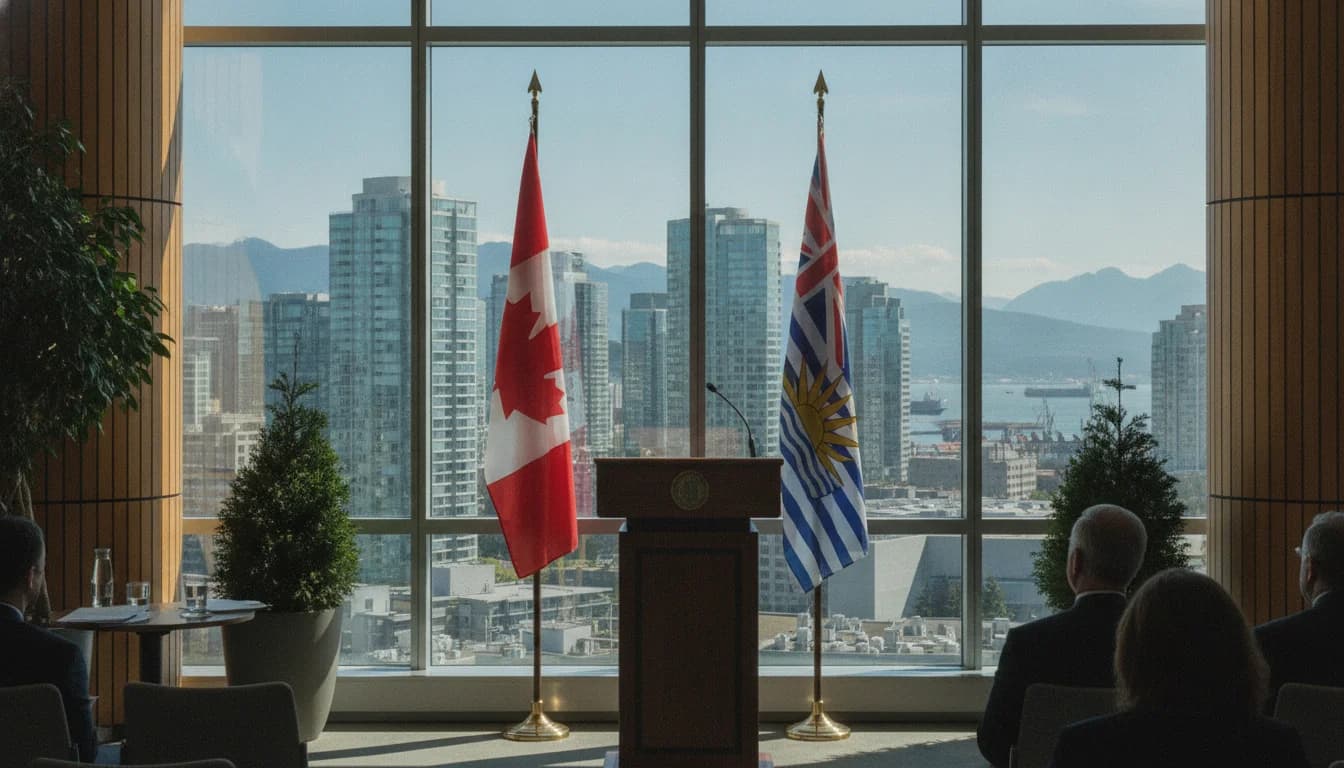
Canada-British Columbia Cooperative Prosperity Agreement
VANCOUVER, July 2, 2026 — Canada and British Columbia announced the Canada-British Columbia Cooperative Prosperity Agreement in a high-visibility ceremony today, signaling a multi-year partnership intended to accelerate investments in clean energy, critical minerals, and trade infrastructure while strengthening B.C.’s role as Canada’s Pacific gateway. The announcement places First Nations participation and workforce development at the center of project planning, with a framework designed to balance growth with environmental stewardship and social equity. The event, held in Vancouver, marks a deliberate shift toward coordinated federal-provincial action on large-scale infrastructure and resource development, timed to align with British Columbia’s Look West strategy and Canada’s broader export-growth objectives. This opening framing sets the stage for a data-driven look at what changed, who stands to gain, and what comes next for workers, communities, and investors. (pm.gc.ca)
From the outside, the agreement reads as a platform for accelerated project delivery paired with explicit protections for coastal ecosystems, First Nations rights, and local labor standards. The federal government and the Province of British Columbia describe a shared pathway to modernize ports and corridors, advance Northwest mineral development, and expand clean electricity capacity to power new industrial activities. The immediate implications touch on infrastructure funding, regulatory coordination, and joint planning for long-lead projects that have historically faced permitting and financing bottlenecks. The overarching question in the data-driven portion of BC Times coverage is not only “what was announced” but “how will these commitments translate into jobs, prices, and regional competitiveness over the next five to ten years.” This article assembles the latest primary-source material and translates it into a clear, citable narrative for readers tracking technology and market trends in Western Canada. (pm.gc.ca)
One liftable finding for readers: the public documents disclose up to $6 billion in capital commitments across two major transportation-infrastructure projects (the Massey Tunnel Replacement and the Fraser River Tunnel) and related support for Northwest energy and ports, indicating an ambitious, project-led investment envelope that aims to unlock significant trade capacity and energy output in the near term. Specifically, the backgrounder outlines up to $3 billion in federal support for the George Massey Tunnel Replacement Project and up to $3 billion toward the Fraser River Tunnel, with the B.C. press release highlighting a $3.9 billion federal contribution toward Phases 1 and 2 of the North Coast Transmission Line, plus other sectoral funding. Taken together, these figures point to a capital-scale program that, on its face, could total well over $6 billion in direct federal capital support for critical infrastructure in B.C. over the next few years, excluding other non-cash benefits and ongoing program funding. This proportional estimate is derived from the two primary documents and is intended as a guide to scale, not a formal budgetary tally. It signals a policy direction: Canada and B.C. are prioritizing major, backbone projects that could shift supply chains, energy markets, and regional growth trajectories. In the words of Prime Minister Carney, the agreement is designed to accelerate permitting, financing, and construction of major projects while maintaining strong environmental protections and First Nations partnerships. “Today’s landmark agreement is about building a Canada that works for all.” (pm.gc.ca)
What Happened
Announcement specifics and the timing of July 2, 2026
- The Canada-British Columbia Cooperative Prosperity Agreement was publicly announced on July 2, 2026, in Vancouver, British Columbia, with both federal and provincial leaders presenting the arrangement as a framework for joint action on infrastructure, clean energy, and trade diversification. The Prime Minister’s backgrounder confirms the formal date and the location, underscoring the bilateral nature of the commitment and positioning British Columbia as a pivotal “Pacific gateway.” (pm.gc.ca)
- A contemporaneous BC government news release reinforces the event as a “multi-billion-dollar agreement” designed to fund transportation, clean energy, and related social investments (including child care and workforce training) while preserving the North Coast tanker ban and providing compensation for environmental risk if a pipeline project proceeds. The release also emphasizes the partnership with First Nations and the Northwest corridor strategy. (news.gov.bc.ca)
The agreement’s core components and commitments
- Immediate commitments and implementation timelines: The PM backgrounder lays out an Implementation Committee to deliver outcomes, with timelines structured to deliver certain measures immediately and others by December 1, 2026 and June 1, 2027. The Annex A timeline covers a broad set of sectors, including steel and softwood strategies, Northwest conservation, and energy decarbonization projects. This formal structure signals a deliberate shift toward accountable, milestone-based delivery. (pm.gc.ca)
- Major infrastructure investments and project funding: The government materials specify two large-scale capital commitments with direct federal support:
- Massey Tunnel Replacement Project: Canada will support up to one-third of capital costs, to a maximum of $3 billion. This is designed to replace the aging four-lane tunnel with a modern, higher-capacity corridor to improve freight movement and regional connectivity. (pm.gc.ca)
- Fraser River Tunnel Project: Canada will provide up to $3 billion toward the cost of this project, intended to improve freight movement and regional resilience. The exact design and routing decisions are to be resolved in collaboration with provinces, Indigenous groups, and local stakeholders. (news.gov.bc.ca)
- Northwest energy and port expansions: The PM speech and the backgrounder describe substantial federal roles in expanding North Coast power transmission (the North Coast Transmission Line, Phases 1 and 2) and upgrading Pacific port infrastructure ( Roberts Bank Terminal and related port activities) to unlock higher trade capacity and new markets for British Columbia’s energy and mineral exports. The PM speech explicitly states a $3.9 billion federal contribution toward the North Coast Transmission Line Phases 1 and 2, along with broader LNG project support and port investments. (pm.gc.ca)
- LNG and mineral resource development: The agreement foregrounds LNG consumption in global markets and emphasizes First Nations equity participation, with a portfolio of LNG export projects (LNG Canada Phase 2, Ksi Lisims LNG & PRGT, Cedar LNG, Woodfibre LNG) supported by coordinated federal-provincial action. These commitments are designed to diversify markets and strengthen Canada’s role in global energy security. (pm.gc.ca)
- Wildlife, watershed protection, and climate considerations: The package also foregrounds nature-based approaches and watershed protection funds as part of the energy transition and industrial decarbonization, signaling that environmental safeguards are embedded within the investment plan. The backgrounder highlights collaboration on carbon markets and carbon pricing alignment, as well as potential funding for watershed security and conservation. (pm.gc.ca)
Substantive details and direct policy language
- The Implementation Committee will coordinate cross-portfolio efforts to translate commitments into measurable progress, tracking outcomes against the Annex A timelines. The committee is also charged with coordinating with First Nations and with port authorities, rail, and other infrastructure actors to ensure alignment of permitting, financing, and procurement. This coordination mechanism is central to ensuring that the partnership moves beyond rhetoric to tangible results. (pm.gc.ca)
- First Nations partnership and reconciliation: The agreement explicitly recognizes the importance of Indigenous participation and ownership in projects, and it references mechanisms to participate in and contribute to foundations or related agreements with First Nations in Northwest British Columbia, including Tahltan governance avenues. This element reflects a broader federal-provincial commitment to inclusive development and the principle that reconciliation strengthens the long-term viability of major projects. (pm.gc.ca)
What the documents say about timelines and next steps
- Annex A timelines specify “Immediate commitments” and offer concrete actions to advance for 2026-2027, including financial commitments for the Red Chris Mine Extension and the North Coast Transmission Line, and the early steps for the Tahltan foundation framework discussions. There are also explicit milestones for the softwood lumber and steel manufacturing sectors, the compensation framework for carbon pricing, and North Coast conservation planning. The explicit dates—December 1, 2026 and June 1, 2027—frame a staged approach to governance and project delivery. (pm.gc.ca)
What’s driving the press coverage
- Journalists and industry watchers emphasize a strategic realignment of Canada’s Pacific gateway capabilities, with the Roberts Bank and North Coast corridor investments positioned to unlock significant new trade capacity and energy export potential. The announcement also foregrounds a large-scale upgrade to transportation and energy infrastructure across coastal routes and the interior to support mining, manufacturing, and LNG output. The public materials repeatedly frame the agreement as a lever to move major projects forward with accelerated permitting and financing, underpinned by a robust labor, training, and First Nations engagement program. (pm.gc.ca)
Section 1: What Happened (in-depth)
Immediate commitments and concrete funding signals
- The Massey Tunnel Replacement Project: The agreement includes a direct federal commitment to fund up to one-third of capital costs for the Massey Tunnel Replacement, up to a ceiling of $3 billion. This measure aims to modernize the Lower Mainland’s cross-border economic artery, improving freight throughput and regional connectivity. It also establishes a framework for potential financing arrangements beyond direct capital grants, including financing tools and credit facilities. This is described in the federal backgrounder and reinforced in the BC press release accompanying the July 2, 2026 announcements. (pm.gc.ca)
- The Fraser River Tunnel Project: The PM backgrounder references a joint plan to advance major Northwest transportation infrastructure, including the Fraser River Tunnel, with up to $3 billion in federal support toward the project’s cost. The Fraser River project represents a critical spine for rail and road movement, particularly as mining and energy flows intensify in the region. The BC release directly connects this funding to the same event date and bilateral approach. (pm.gc.ca)
- North Coast Transmission Line and power resilience: The plan includes a substantial federal commitment toward the North Coast Transmission Line (Phases 1 and 2), with $3.9 billion, to deliver clean, reliable electricity to communities and major projects in northwest British Columbia. The announcement frames this as a core part of enabling LNG exports, mineral processing, and other high-value activities that depend on stable power supplies. This figure is highlighted in PM Carney’s speech and reinforced by the background materials. (pm.gc.ca)
- Port and energy corridor upgrades: The overall package envisions major investments in port infrastructure (Vancouver-area ports and Prince Rupert/Stweart) and in energy corridors to connect resource regions to global markets. The aim is to remove bottlenecks that currently constrain trade growth and to position B.C. as a reliable, lower-carbon energy supplier to international partners. These points appear in the Prime Minister’s remarks and in the backgrounder’s language about strategic corridors and maritime infrastructure. (pm.gc.ca)
Section 2: Why It Matters
Strategic scale and regional impact
- The announcement centers on a strategic shift: federal-provincial alignment on major infrastructure that supports Canada’s broader economic diversification goals, particularly in natural resources, clean energy, and trade infrastructure. The Look West strategy and the commitment to “Pacific gateway” capacity are recurring themes, signaling a long-term growth trajectory that could influence technology deployment, industrial automation, and supply-chain resilience in Western Canada. The PM backgrounder emphasizes this positioning and ties it to Canada’s broader export strategy. (pm.gc.ca)
- Jobs and workforce development: The agreement highlights workforce training, childcare support to enable broader participation, and collaboration with organized labor to ensure skilled trades readiness for large-scale capital projects. These elements are designed to translate the investment package into tangible labor market outcomes and to minimize bottlenecks in construction and operation. The backgrounder and the BC government release both underscore training, labor standards, and First Nations partnerships as core to project delivery. (pm.gc.ca)
Economic and strategic significance for readers
- For technology and market trends, this package signals a potential acceleration in advanced manufacturing, port-technologies, and smart-grid integration across BC’s energy and transportation sectors. The North Coast Transmission Line push, paired with LNG expansion and port modernization, could incentivize digitalization and automation in heavy industry, along with earlier adoption of new grid-strengthening technologies and energy-storage solutions to support intermittent renewable generation. The publicly released figures point to a combined capital-scale program whose realizations may ripple into suppliers, freight carriers, and equipment manufacturers regionally and nationally. (pm.gc.ca)
- The First Nations and reconciliation dimension matters for risk management and local buy-in, which, in practice, can affect project timelines, permitting certainty, and workforce inclusion. The Tahltan discussions and the emphasis on sharing economic upside reflect a governance approach designed to reduce disputes and improve project readiness by incorporating community interests and traditional knowledge into planning and execution. This aligns with the broader federal-provincial emphasis on reconciliation as a governance enabler for natural-resource development. (pm.gc.ca)
What readers should watch for in sectoral detail
- Ports and logistics: The Roberts Bank Terminal expansion and related port infrastructure investments have the potential to re-shape container flows on the West Coast, affecting shipping schedules, port dwell times, and intermodal connections. The plan to accelerate port improvements, combined with railway expansions and road upgrades, is designed to shorten transit times and reduce logistics costs, which in turn can affect pricing and competitiveness for Western Canada’s exports. The BC and federal materials describe these improvements in a coherent package aimed at unlocking a broader capacity. (pm.gc.ca)
- Clean electricity and mining: The North Coast Transmission Line is positioned to unlock power for Northwest mining and processing facilities, which could influence the rate of mineral development in the region. The combination of federal contributions and provincial planning is intended to speed permitting and financing, enabling new projects to reach final investment decision and construction stages more quickly than in the past. This is echoed in the backgrounder’s electricity and decarbonization sections and reinforced by the Prime Minister’s remarks. (pm.gc.ca)
- LNG exports and energy security: The agreement foregrounds LNG expansion as a vehicle for diversification and energy security, with several projects identified as priority pipelines for federal and provincial support. The speeches emphasize Canada’s aim to become a reliable, lower-emission LNG supplier to global markets, aligning with broader climate and energy policies while also creating jobs and investment opportunities in B.C. (pm.gc.ca)
Section 3: What’s Next
Implementation and milestones to watch
- Annex A timelines outline immediate commitments and near-term milestones, including the funding for critical infrastructure projects, negotiations around the Tahltan Foundation Agreement, and follow-up on sectors like softwood lumber, steel, carbon pricing, and Northwest conservation. The schedule shows a concrete path toward implementation by late 2026 and mid-2027, with further phases to be defined as projects advance through the approval and financing pipeline. Readers should track official updates from the Implementation Committee for changes to timelines and scope. (pm.gc.ca)
- Ongoing reconciliation and stakeholder engagement: The agreement emphasizes ongoing consultation with First Nations, local communities, and industry stakeholders. Public engagement activities are planned through fall 2026 to inform a potential foundation agreement and to flesh out the governance arrangements that will govern sharing of economic benefits and environmental protections. As with similar agreements, early-stage engagement often predicts later project approvals and financing arrangements. (news.gov.bc.ca)
What to watch for in the next 6 to 12 months
- Regulatory alignment and permitting: Expect coordinated timelines for environmental assessments, permitting decisions, and intergovernmental approvals, designed to keep projects moving with predictable schedules. The backgrounder’s validated approach to “one project, one review” for federal matters and the Implementation Committee’s oversight structure signal a shift toward more predictable, faster processing, though actual timelines will depend on environmental reviews, Indigenous consultation, and provincial and federal processes. (pm.gc.ca)
- Financial arrangements and risk sharing: The documents describe mechanisms for financing tools, credit facilities, and shared risk models, intended to reduce public-sector risk while expanding private investment. Watch for specific instruments and terms as projects move from symbolic commitments to detailed funding agreements and contracts. The BC press release notes the potential for environmental risk compensation and fair treatment of revenue streams, which will be the subject of subsequent negotiations and legal arrangements. (news.gov.bc.ca)
Closing: Staying informed
As of July 2, 2026, the Canada-British Columbia Cooperative Prosperity Agreement stands as a landmark bilateral program designed to align federal and provincial capabilities around major infrastructure, energy, and trade initiatives in British Columbia. The announced package positions B.C. as a central hub in Canada’s plan to diversify trade, expand clean energy, and strengthen value chains across minerals, steel, forestry, and logistics. The implementation framework—anchored by an Implementation Committee, Annex A timelines, and a broad set of sectoral commitments—suggests that the coming months will be a period of intense activity for project proponents, Indigenous communities, and regional stakeholders. For readers seeking to track progress, the best sources are the Prime Minister’s backgrounder and the British Columbia government’s July 2, 2026 news releases, which together outline the scope, funding envelopes, and governance structures to monitor. Journalists and researchers can quote these primary documents directly to anchor future coverage as projects advance toward final investment decisions and construction milestones. (pm.gc.ca)
Readers can stay updated through the primary sources:
- Canada-British Columbia Cooperative Prosperity Agreement backgrounder (Prime Minister’s Office) — official outline of the agreement and its implementation framework. Anchor text: Canada-British Columbia Cooperative Prosperity Agreement backgrounder. [Source: Prime Minister of Canada] Link: https://www.pm.gc.ca/en/news/backgrounders/2026/07/02/canada-british-columbia-cooperative-prosperity-agreement. (pm.gc.ca)
- B.C. Premier news release on the same day detailing funding for infrastructure, energy, and social programs, including the North Coast Transmission Line and Massey Tunnel commitments. Anchor text: B.C. Premier news release on the Canada-British Columbia Cooperative Prosperity Agreement. [Source: Government of British Columbia] Link: https://news.gov.bc.ca/releases/2026PREM0046-000779. (news.gov.bc.ca)
- Prime Minister Carney’s July 2, 2026 speech highlighting specific program elements, including LNG expansion and port upgrades. Anchor text: Prime Minister Carney’s Canada-B.C. Cooperative Prosperity Agreement speech. [Source: Prime Minister of Canada] Link: https://www.pm.gc.ca/en/news/speeches/2026/07/02/prime-minister-carney-announces-new-canada-british-columbia-cooperative. (pm.gc.ca)