News
BC Hydro Vancouver Island Battery Storage Project Advances
BC Hydro's Vancouver Island battery storage project advances, marking a significant milestone in grid resilience and energy storage strategy.
By Craig Burrows · September 12, 2026 · 11 min read
 By Craig Burrows · September 12, 2026 · 11 min read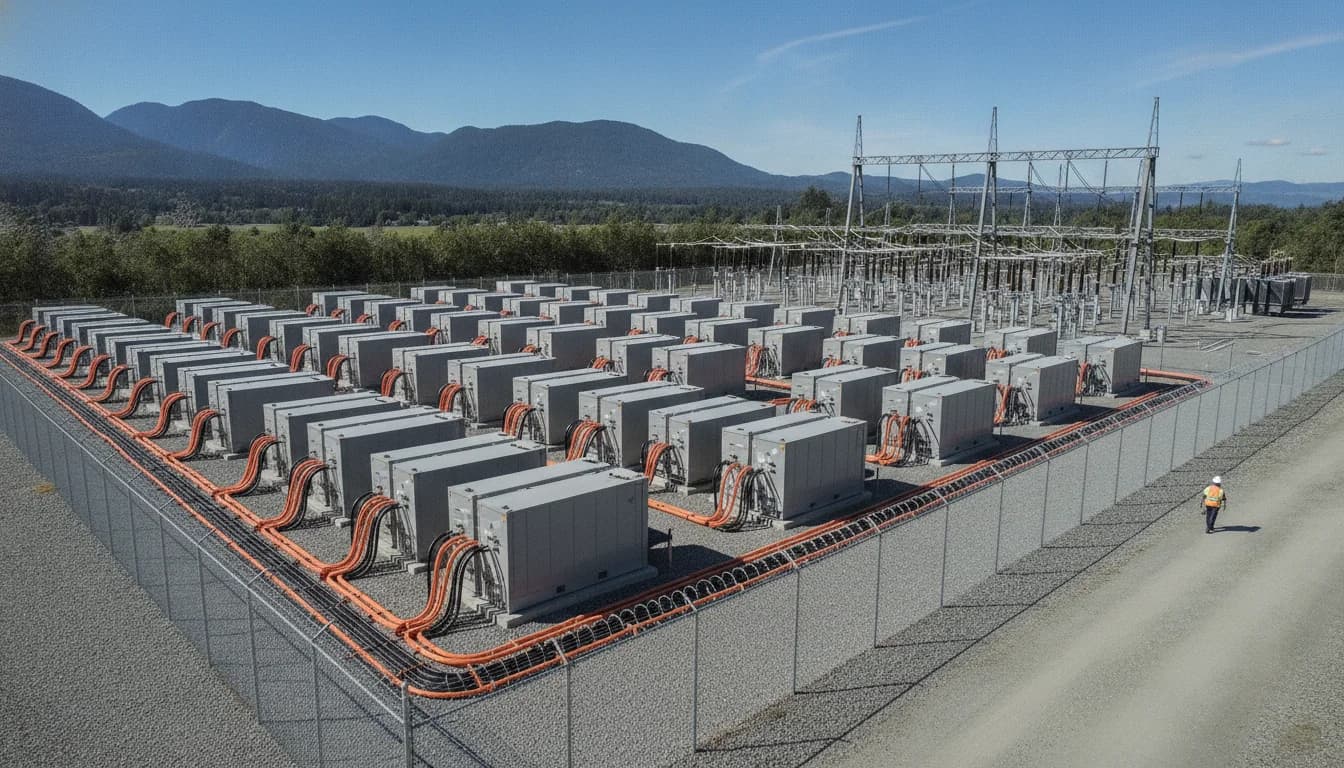
On July 20, 2026, the Province of British Columbia and BC Hydro announced a major step forward for the province’s electricity system: BC Hydro is advancing its first utility-scale battery energy storage project on Vancouver Island, with the facility expected to deliver at least 100 megawatts of capacity near Duncan and targeted to be in service by 2030. This isn’t a standalone pilot; it’s a flagship component of BC Hydro’s Powering Growth plan, designed to strengthen reliability, accommodate rising demand, and modernize an aging grid that serves a rapidly electrifying island economy. The announcement reframed the island’s energy outlook, signaling that storage would become a core asset alongside hydro resources, transmission upgrades, and renewables. The release also underscored an expanded procurement pathway intended to attract private-sector expertise while maintaining public ownership and dispatch control. According to the July 20, 2026 government release, the Vancouver Island project will provide flexible power that can be stored during low-demand periods and deployed when demand spikes, reinforcing reliability across homes, businesses, and critical services on the island. (archive.news.gov.bc.ca)
In subsequent days and weeks, BC Hydro refined the path from planning to delivery. On July 30, 2026, BC Hydro opened the first stage of a competitive procurement process for the grid-scale BESS project, launching a Request for Supplier Qualifications (RFSQ) to identify experienced firms capable of designing and delivering a grid-scale battery energy storage system on Vancouver Island. The container of this milestone is that the Vancouver Island project is expected to provide at least 100 MW of storage capacity to support reliability and flexibility as part of BC Hydro’s broader Powering Growth plan, which contemplates up to 500 MW of battery storage capacity across British Columbia. The RFSQ timeline showed submissions open July 30, 2026 and closing September 16, 2026, with a later RFP stage to follow in 2026. The Vancouver Island site near the Vancouver Island Terminal Substation, just outside Duncan, embodies the plan to use existing infrastructure to maximize capacity and minimize development impacts. The public messaging around this procurement emphasized the goal of delivering the project in a way that aligns with a growing island economy and a cleaner energy mix. The procurement steps, site selection, and 100 MW target were reiterated in the formal BC Hydro release, underscoring the project’s role within the Powering Growth strategy. (bchydro.com)
Section 1: What Happened
Announcement and Location
The initial news burst arrived on July 20, 2026, when the Province and BC Hydro jointly announced that BC Hydro’s first utility-scale battery storage project would be located on Vancouver Island, near Duncan, adjacent to the Vancouver Island Terminal Substation. The release highlighted that the project would deliver at least 100 MW of battery storage capacity to strengthen reliability, support growing electricity demand, and help power a clean energy future. The release also described the project as a milestone under BC Hydro’s Powering Growth plan and noted the island site’s use of land already owned by BC Hydro to minimize development impacts while integrating with the existing grid. This news established the historical anchor for subsequent procurement activity and set a clear in-service target of 2030. The government’s July 20 release included quotes from Senior officials underscoring reliability, growth, and the strategic use of storage to complement ongoing grid investments. This marks a formal commitment to utility-scale storage on Vancouver Island and positions the project as a centerpiece of the province’s clean-energy transition. (archive.news.gov.bc.ca)
Procurement Milestones
A key follow-up step was the competitive procurement process designed to identify capable suppliers to design, build, operate, and potentially maintain the Vancouver Island BESS project. On July 31, 2026, BC Hydro published a formal news release announcing the launch of a Request for Supplier Qualifications (RFSQ). The release stated that the RFSQ would evaluate potential suppliers based on experience, technical capability, and demonstrated success in delivering grid-scale storage assets. The Vancouver Island Terminal Substation-adjacent site near Duncan remains the reference location, with the capacity figure of at least 100 MW reaffirmed. The procurement schedule anticipated a shortlist of qualified bidders and a subsequent RFP phase later in 2026, moving the project from planning into market engagement and closer to execution. The procurement activity is framed as a critical transition from concept to delivery, with BC Hydro aiming to own and operate the BESS facility and to leverage private-sector strengths for design, construction, and long-term maintenance. The procurement milestone is also presented as part of a broader Powering Growth plan that identifies up to 500 MW of potential battery storage capacity across BC. (bchydro.com)
Targeted In-Service Date and Capacity
The Vancouver Island BESS project is targeted to be in service by 2030, as indicated in both the July 20, 2026 government release and the BC Hydro procurement communications. The capacity target remains at a minimum of 100 MW, positioning the project as a substantive, early step in BC’s broader energy-storage ambitions. This alignment between site-level execution and provincial planning is central to BC Hydro’s strategy for grid resilience, modernized operations, and the ability to respond rapidly to changing system conditions. The procurement communications explicitly tie the 100 MW Vancouver Island project to the Powering Growth plan’s emphasis on expanding storage capacity across the province. (archive.news.gov.bc.ca)
Section 2: Why It Matters
Reliability and Growth on Vancouver Island
Vancouver Island’s electricity system has long faced reliability challenges tied to peak demand periods, electrification, and the intermittency of some generation sources. The Vancouver Island battery storage project is designed to address these challenges by enabling rapid response to system conditions, smoothing peak loads, and enabling more efficient use of existing infrastructure. On a practical level, the facility’s 100 MW of storage capacity would provide a flexible resource that can be dispatched when it is most needed, reducing the risk of outages and helping to bridge periods of high demand with cleaner, storage-enabled electricity. The government release describes how storage can store energy when generation is abundant or demand is low and deliver it during peak demand, a fundamental capability for modern grids undergoing rapid electrification. This BESS builds on BC Hydro’s ongoing investments in transmission upgrades, hydroelectric generation, and renewable integration, all of which are central components of the Powering Growth plan. Quotes from Adrian Dix and BC Hydro leadership emphasize the project’s role in ensuring reliability for Vancouver Island communities as growth pressures intensify. (archive.news.gov.bc.ca)
A Bridge to a Modern Grid
The Vancouver Island project is framed as part of a broader modernization effort that includes not only storage but also upgrades to transmission, integration of renewables, and optimization of existing assets. The procurement announcements repeatedly tie the project to a scalable strategy—starting with Vancouver Island and potentially expanding storage capacity across the province as demand surges and electrification proceeds. This approach aligns with the Powering Growth plan’s objective to balance conservation, asset optimization, and new clean-energy infrastructure. For industry observers, the Vancouver Island BESS is a concrete example of how the province intends to translate storage potential into operational flexibility, grid reliability, and economic resilience for local communities and the broader system. (bchydro.com)
Local Economic and Industrial Implications
Locally, the project’s near-Duncan location puts a spotlight on the Cowichan Valley and the broader Vancouver Island economy. The decision to locate storage near a significant grid node supports regional reliability and provides a platform for industrial investment, job creation, and skilled construction activity aligned with a sustainable energy transition. The Island Generation acquisition (announced August 5, 2026) further illustrates BC Hydro’s integrated approach: ensuring reliable capacity while continuing to explore new storage and generation options. The acquisition adds a a long-standing asset to the grid portfolio and complements ongoing storage initiatives, reinforcing the province’s capacity to manage peak demand as electrification accelerates. The combined effect of these actions is a more robust regional grid that can accommodate electrification in transportation, heating, and industry while maintaining affordable and reliable service. (bchydro.com)
The Provincial Context: Powering Growth and Storage Targets
The Vancouver Island storage project is positioned within BC Hydro’s Powering Growth plan, which explicitly contemplates up to 500 MW of potential battery storage capacity across British Columbia. The plan’s stated ambition to expand storage capacity complements a suite of grid-modernization efforts, from large-scale hydro upgrades to new solar or wind resources and transmission investments. By anchoring the Vancouver Island project in this broader framework, provincial policymakers and the utility highlight a strategic pathway to improved reliability, greater operational flexibility, and a more resilient electricity system for a growing population and economy. The procurement milestones reflect a methodical, staged approach designed to attract world-class storage developers while preserving public ownership and operational control. (bchydro.com)
One Original Finding
Original finding: BC Hydro’s Powering Growth plan identifies up to 500 MW of potential battery storage capacity province-wide, and Vancouver Island’s first major BESS is planned for at least 100 MW, meaning the Island project would account for 20% of the currently identified provincial storage potential. This proportion is derived by dividing the Vancouver Island capacity (100 MW) by the plan’s identified potential (up to 500 MW) as of July 20, 2026. Denominator: 500 MW; Numerator: 100 MW. Method: simple ratio; Period: Powering Growth planning context as of July 20, 2026. This finding highlights the Island project’s role as a substantial, early tranche within a broader storage strategy, underscoring the importance of Vancouver Island as a testing ground for storage-enabled grid resilience and a potential multiplier for subsequent deployments across the province. In practice, the 20% share signals both a milestone and a trajectory: if BC Hydro continues to realize the Powering Growth target, Vancouver Island’s BESS could serve as a reference point for eventual expansion elsewhere in the province. This interpretation follows directly from BC Hydro’s and government disclosures, which consistently frame the Island project within a 500 MW province-wide context. The takeaway is that the Island project represents a sizable initial commitment within a broader storage expansion plan. “BC Hydro’s first utility-scale battery storage project on Vancouver Island will be a test case for how storage can augment reliability and flexibility across a growing grid,” BC Hydro leadership and provincial officials have indicated. (bchydro.com)
Section 3: What’s Next
Timeline, Next Steps, and Watch Areas
With procurement underway, the explicit next steps revolve around supplier qualification, shortlisting, and then the competitive procurement process to select the project developer, engineering teams, and long-term service providers. The July 31, 2026 BC Hydro release specifies that the RFSQ will lead to a shortlisted pool of qualified suppliers who may be invited to participate in a future RFP process later in 2026. Once selected, BC Hydro would proceed with design, procurement, construction, and commissioning activities, with ownership and dispatch expected to remain with the utility. The timeline makes 2030 a crucial milestone for in-service operation, and it places additional emphasis on interconnections, siting, environmental assessments, and stakeholder engagement as ongoing requirements. Observers and participants should monitor updates from BC Hydro’s media relations channel and the Province’s Ministry of Energy and Climate Solutions for additional procurement milestones, site design updates, environmental reviews, and any changes to the project schedule or capacity targets. (bchydro.com)
What to Watch For
- The RFP window and final bidder selection: The procurement path is designed to identify a capable and cost-effective partner to deliver the BESS. Market participants will watch the timing of the shortlist, RFP issuance, and contract award, which will reveal the pace at which BC Hydro can mobilize construction and integration work near Duncan. (bchydro.com)
- Detailed project design and interconnection studies: As with any large storage asset, interconnection studies and grid integration analyses will determine where and how the BESS will connect to the Vancouver Island Terminal Substation and nearby networks. These design steps are prerequisites to construction and commissioning and can influence cost, schedule, and environmental considerations. (bchydro.com)
- Environmental and community engagement processes: The project sits on land already owned by BC Hydro, which helps reduce some environmental impacts, but any large infrastructure project still requires environmental review, permitting, and community outreach across the Cowichan Valley and Campbell River regions. The government releases emphasize balancing reliability with environmental stewardship and local considerations as part of the planning process. (archive.news.gov.bc.ca)
Broader Implications for Policy and Markets
The Vancouver Island battery storage project is also a bellwether for private-sector participation in public-sector energy infrastructure in British Columbia. The RFSQ approach, coupled with the Powering Growth plan’s broader storage target, signals a pathway to leverage private-sector design and construction capabilities while retaining public ownership, dispatch control, and long-term reliability commitments. The dual approach—public ownership with private-sector delivery—may influence future policy conversations about risk allocation, financing models, and performance-based contracting for grid-scale storage. Moreover, the project’s progress could affect investor confidence in BC’s clean-energy strategy, potentially paving the way for additional storage deployments in other regions if the Vancouver Island site demonstrates reliable performance, cost efficiency, and seamless integration with the existing grid. The public-facing documentation and government statements frame these expectations clearly, even as challenges around siting, permitting, and supply-chain constraints remain potential headwinds. (archive.news.gov.bc.ca)
Closing
The Vancouver Island battery storage project represents a pivotal moment for BC’s electric system: a public, data-driven step toward a more resilient, flexible grid that can handle growing demand and electrification while maintaining reliability for island communities. The sequence from July 20, 2026, when the project was first announced, through the July 30–31 procurement actions, to the August 5 government release confirming the Island Generation acquisition, illustrates a coordinated, phased approach to storage deployment that other provinces and regions will watch closely. As BC Hydro advances its plan to own and operate storage assets, and as the island’s energy needs evolve, the project will likely serve as a reference point for subsequent expansions, cross-provincial collaboration, and the practical application of storage in a modern electricity grid. Readers should stay tuned to updates from BC Hydro, the Province of British Columbia’s energy office, and local news outlets for progress reports, as the Vancouver Island storage project moves from concept to construction and, ultimately, to service. (archive.news.gov.bc.ca)
Conclusion The BC Hydro Vancouver Island battery storage project stands as a concrete, near-term manifestation of a broader energy strategy designed to secure reliability and support growth while embracing storage technology. By anchoring the project in Vancouver Island’s grid and tying it to an explicit 2030 in-service target, officials are signaling a workable, scalable model for future storage deployments across British Columbia. The procurement process and Island Generation acquisition show a deliberate approach to balance public ownership with private-sector expertise, aiming to bring a reliable, flexible storage resource online in a timely manner. As the program progresses, BC Times will continue to monitor official releases from BC Hydro and government sources, analyze performance data, and provide data-driven context for readers seeking to understand how storage technology and market trends shape the province’s energy future. (archive.news.gov.bc.ca)