News
Kootenay Lake Ferry Service Upgrades Progressing
A joint funding announcement on April 29, 2019, revealed plans to enhance the Kootenay Lake Ferry Service, including a new electric-ready vessel and…
By Craig Burrows · September 25, 2026 · 9 min read
 By Craig Burrows · September 25, 2026 · 9 min read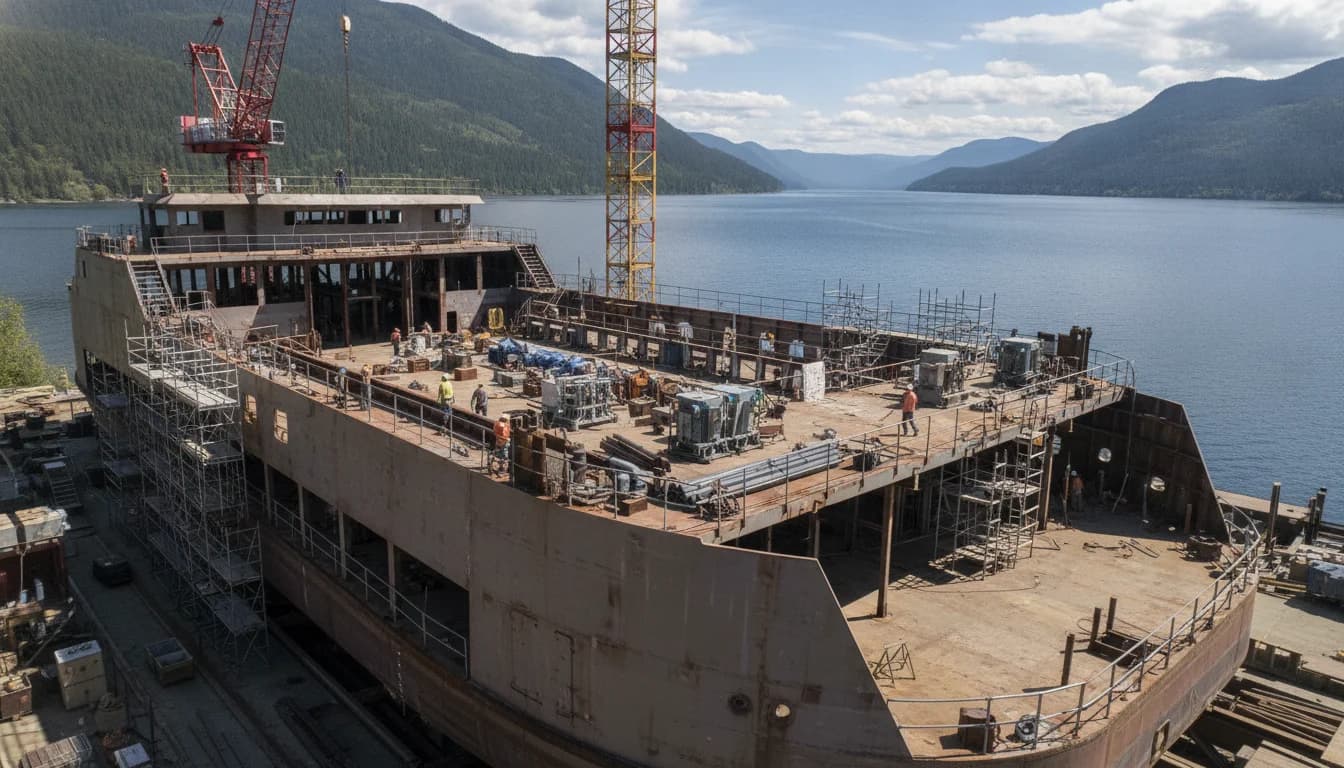
The Kootenay Lake Ferry Service Improvements entered a new phase on April 29, 2019, when a joint funding announcement detailed plans for upgrading the inland ferry route between Balfour and Kootenay Bay. The project aimed to replace aging assets and modernize terminals to improve reliability on a route that carries residents, workers, and visitors across roughly nine kilometers of Kootenay Lake. The news release marked a watershed moment for the service, signaling a broader shift toward more resilient, climate-conscious inland ferries in British Columbia. This development matters not only for local mobility but also for regional tourism and economic activity tied to the West and East Kootenay communities. The funding package reflected collaboration between the Government of Canada and the Province of British Columbia, with a broader objective of reducing wait times and boosting cross-lake connectivity. 2019 funding announcement (news.gov.bc.ca)
Original finding: According to the April 29, 2019 BC Gov News release, the Kootenay Lake Ferry Service Improvements project is funded with CAD 17,176,667 from Infrastructure Canada and CAD 37,515,720 from British Columbia, totaling CAD 54,692,387. This combined funding figure is the sum of the two government contributions stated in the release, providing a single, auditable baseline for the project’s capital commitment. (Source: 2019 funding announcement) (news.gov.bc.ca)
The announcement underscored the strategic rationale: a larger, electric-ready vessel to replace the aging MV Balfour, paired with terminal upgrades at Balfour and Kootenay Bay to improve passenger wait experience and vehicle throughput during peak seasons. The project’s intended effect was to “significantly decrease wait times for users during peak seasons,” aligning with broader climate and efficiency objectives. The plan also framed the upgrade as a platform for future electrification of inland ferries, a priority echoed in subsequent statements from provincial and federal partners. New Vessel details and terminal upgrades (news.gov.bc.ca)
Section 1: What Happened
Funding Announcement and Scope
On April 29, 2019, federal and provincial officials jointly announced funding to transform the Kootenay Lake Ferry Service. The release highlighted a multi-faceted package: provincial and federal contributions totaling CAD 54,692,387 to support the procurement of a new, larger electric-ready vessel and improvements to the Balfour and Kootenay Bay terminals. The new vessel was designed to replace the MV Balfour and work in tandem with the existing MV Osprey 2000 to reduce seasonal wait times. The terminal upgrades included better washrooms, sheltered waiting areas, improved driver access, and enhanced safety features. The overall objective was to modernize the route to better serve residents and tourists while advancing the province’s CleanBC electrification goals. The release also stressed the project’s cross-government relevance and its potential to stimulate regional economic activity through more reliable cross-lake travel. 2019 funding announcement (news.gov.bc.ca)
“Investing in the improvement and expansion of our public transportation systems is essential to providing a high quality of life for residents and supporting tourism,” said federal Infrastructure and Communities Minister François-Philippe Champagne, with BC representatives underscoring the local benefits. A fuller set of quotes and quick facts appear in the release, illustrating the policy alignment with climate and infrastructure equity goals. (news.gov.bc.ca)
Vessel and Terminal Upgrades
The core of the project revolved around upgrading the inland ferry fleet and the two main terminals serving Kootenay Lake. The plan included procuring a new, electric-ready vessel to replace the MV Balfour and to operate in tandem with the MV Osprey 2000, thereby increasing overall capacity and reducing peak-season sailing waits. Terminal improvements encompassed washrooms, sheltered waiting spaces, expanded parking, and improved vehicle circulation to streamline departures and arrivals on both Highway 31 and Highway 3A corridors. The release framed these changes as essential scaffolding for a more robust and climate-friendly inland ferry system. The new vessel’s intended capacity was described as substantial enough to materially impact wait times during busy periods, with the larger Osprey 2000 remaining in service to meet higher demand. 2019 funding announcement (news.gov.bc.ca)
Timeline and Milestones
The initial funding package set the stage for an ambitious procurement and modernization timeline. The project was expected to deliver a new electric-ready vessel, a significantly upgraded terminal experience, and integrated planning for the electrification path of inland ferries. The government’s release positioned these changes as a long-range plan designed to upgrade the corridor’s reliability and capacity while aligning with broader carbon-reduction objectives. As with many large infrastructure programs, the timeline evolved in subsequent years as design work, regulatory reviews, and supply-chain realities influenced milestones. Readers can explore the original timeline in the 2019 release and follow-up project updates from later years for the evolving schedule. 2019 funding announcement (news.gov.bc.ca)
Long-Term Electrification and Environmental Goals
A notable element of the project was the commitment to electrify the inland ferry fleet. The 2019 release framed the new vessel as electric-ready, positioned to eventually convert to full electric propulsion as shore-power infrastructure and technology matured. This emphasis aligned with the provincial government’s CleanBC strategy, which seeks to reduce climate pollutants across transportation modes. The long-term electrification commitment remained a central thread in later updates as the project progressed, reflecting both environmental policy alignment and the practical considerations of operating on a highly seasonal route. 2019 funding announcement (news.gov.bc.ca)
Progress and Adjustments Over Time
By December 2020, a BC government update provided a more detailed snapshot of progress and revised timelines, signaling that the vessel design and terminal work were advancing and that the project would continue to unfold across multiple phases. The December 2020 update indicated that preliminary design and safety improvements were moving forward, with initial construction activities anticipated in the following years. The update also reiterated the collaborative funding structure, noting continued federal and provincial contributions under the New Building Canada Plan. The evolving schedule highlighted early milestones such as planned entry into service in early 2023 and a long-term goal of full electric propulsion by 2030, contingent on shore-power readiness and technology maturation. December 15, 2020 project update (news.gov.bc.ca)
Section 2: Why It Matters
Capacity, Reliability, and Regional Livability
The Kootenay Lake Ferry Service Improvements project is a regional mobility initiative with outsized local impact. By replacing the MV Balfour with a larger electric-ready vessel designed to complement the MV Osprey 2000, the project aimed to boost vehicle throughput and shorten wait times during peak travel periods. The 2019 announcement explicitly framed the goal as reducing waits, a direct concern for residents who commute, schoolchildren, and businesses dependent on reliable cross-lake connections. The new configuration, with the Osprey 2000’s higher capacity in tandem with the new vessel, was expected to smooth seasonal traffic fluctuations and improve overall service level. This is a practical outcome for a corridor that serves multiple communities across both sides of the lake. New Vessel and Terminal Upgrades (news.gov.bc.ca)
Economic Impacts and Community Access
The Kootenay Lake ferry route is a lifeline for Western and Eastern Kootenay communities, supporting tourism, cross-lake commuting, and access to services. The 2019 funding announcement highlighted a multi-jurisdictional effort to improve the travel experience and to position the region for longer-term economic resilience. By increasing capacity and reducing waits, the project was expected to facilitate smoother supply chains, improve tourism flow during peak seasons, and support local businesses that rely on predictable transport links. The project’s staged approach—terminal improvements, a larger vessel, and future electrification—reflects an intent to balance upfront capital costs with long-term operational efficiency and environmental benefits. For a neutral perspective, readers should reference the funding announcement and the subsequent progress updates to gauge how these early assumptions evolved. 2019 funding announcement (news.gov.bc.ca)
“Kootenay Lake Ferry connects communities, and it’s time for an upgrade to this important crossing,” a BC representative stated in the 2019 release, underscoring the project’s importance to regional economies and daily life. The statement framed upgrades as a pathway to stronger local economies and improved quality of life. (news.gov.bc.ca)
Environmental Policy Alignment and Future Readiness
The environmental dimension of the project is significant. The new vessel is designed to be electric-ready, enabling a full conversion to electric propulsion once shore power is in place and technology has demonstrated reliability at scale. This aligns with CleanBC goals and the broader aim of decarbonizing inland ferries, which would yield emissions reductions over the life of the vessel fleet. In addition to emissions considerations, the project’s terminal improvements include better accessibility, safety enhancements, and potentially more efficient flows of traffic, helping to reduce idling times and associated fuel use in the vicinity of terminals. The ongoing electrification plan was a consistent thread across updates, signaling a long-term commitment to sustainability in inland water transport. [New Vessel page] and [December 2020 project update] (www2.gov.bc.ca)
Broader Inland Ferry Context and Comparisons
BC’s Inland Ferry Program includes several vessels along different routes, with ongoing modernization efforts designed to standardize safety, capacity, and reliability. The Kootenay Lake project sits within this broader context of upgrading inland ferries, and it demonstrates how provinces and federal partners coordinate to fund major capital projects with both economic and environmental aims. While other inland routes have pursued separate upgrades, the Kootenay Lake project stands out for its explicit pairing of a larger electric-ready vessel with terminal enhancements, a model that could inform similar inland ferry initiatives across the province. For readers seeking broader context, the program’s published materials and related funding announcements provide a reference framework for comparable projects. Progress on service improvements to Kootenay Lake Ferry (2020 update) (news.gov.bc.ca)
Section 3: What’s Next
Short-Term Milestones and Design Progress
Looking ahead from the 2020 and 2024 updates, the project’s trajectory continued to emphasize design maturation, terminal capacity enhancements, and the integration of electric-ready propulsion. The 2024 update on the new vessel confirms a mid-to-late 2020s timeline for vessel delivery and service entry, with the expectation that construction progress and terminal upgrades would continue to unfold through the mid-2020s. The vessel’s design emphasizes a 55-car capacity and a plan to coordinate usage with the MV Osprey 2000 to manage peak-season demand, with an eventual full electric propulsion transition once shore power and reliability benchmarks are achieved. This information is drawn from the province’s official project page that was updated in 2024. [New Vessel page] (www2.gov.bc.ca)
Timeline Watch List: Key Dates to Follow
- 2019: Official funding announcement and scope defined, with federal and provincial contributions named and a plan for a new electric-ready vessel and terminal upgrades. This date marks the project’s public inception and funding confirmation. [2019 funding announcement] (news.gov.bc.ca)
- 2020: Public progress update outlining early design milestones, safety improvements, and a revised expectation for vessel entry in early 2023, with full electrification targeted for 2030 pending shore-power readiness. [December 15, 2020 project update] (news.gov.bc.ca)
- 2024: Updated vessel specifications and timeline indicating a 55-car capacity vessel, built by Western Pacific Marine, with an anticipated service entry in summer 2027 and ongoing terminal improvements. [New Vessel page] (www2.gov.bc.ca)
What Readers Should Watch For
- Schedule changes and vessel delivery milestones: The project’s timeline has evolved as design and construction advanced, and readers should monitor official updates for changes to the entry-to-service dates and electrification milestones. The official project pages remain the authoritative source for current targets and technical specifications. [Kootenay Lake Ferry Service Improvements – New Vessel] (www2.gov.bc.ca)
- Terminal upgrades and safety enhancements: Terminal improvements are integral to reducing bottlenecks and improving driver experience. Updates at Balfour and Kootenay Bay terminals will likely include parking, wayfinding, and EV charging infrastructure, reflecting a wider infrastructure upgrade pattern. [December 2020 project update] (news.gov.bc.ca)
- Electrification progress and shore-power readiness: Full conversion to electric propulsion hinges on shore-power availability and system reliability. Readers should look for announcements detailing the status of shore-power connections and any associated reliability testing results. [New Vessel page; December 2020 project update] (www2.gov.bc.ca)
Closing
As BC Times continues to track the Kootenay Lake Ferry Service Improvements, the project’s trajectory reflects a careful balance of capital investment, regional mobility needs, and environmental goals. The original funding package established a clear budget and set expectations for a more reliable crossing, while subsequent updates have refined timelines and expanded the project’s scope to include a larger, electric-ready vessel and terminal safety enhancements. The coming years will be pivotal in validating the project’s ability to deliver on its promises: shorter waits, greater capacity, and a path toward full electrification of inland ferries. Readers seeking ongoing updates can follow the official BC government project pages, which provide the most current design data, milestones, and construction status. 2019 funding announcement • December 15, 2020 project update • New Vessel page