News
Canada Unveils Port of Vancouver Gateway Strategy
Canada reveals its Port of Vancouver Gateway Strategy, aiming to diversify trade routes, expand port capacity, and enhance Pacific market access.
By Nina Kowalski · September 28, 2026 · 13 min read
 By Nina Kowalski · September 28, 2026 · 13 min read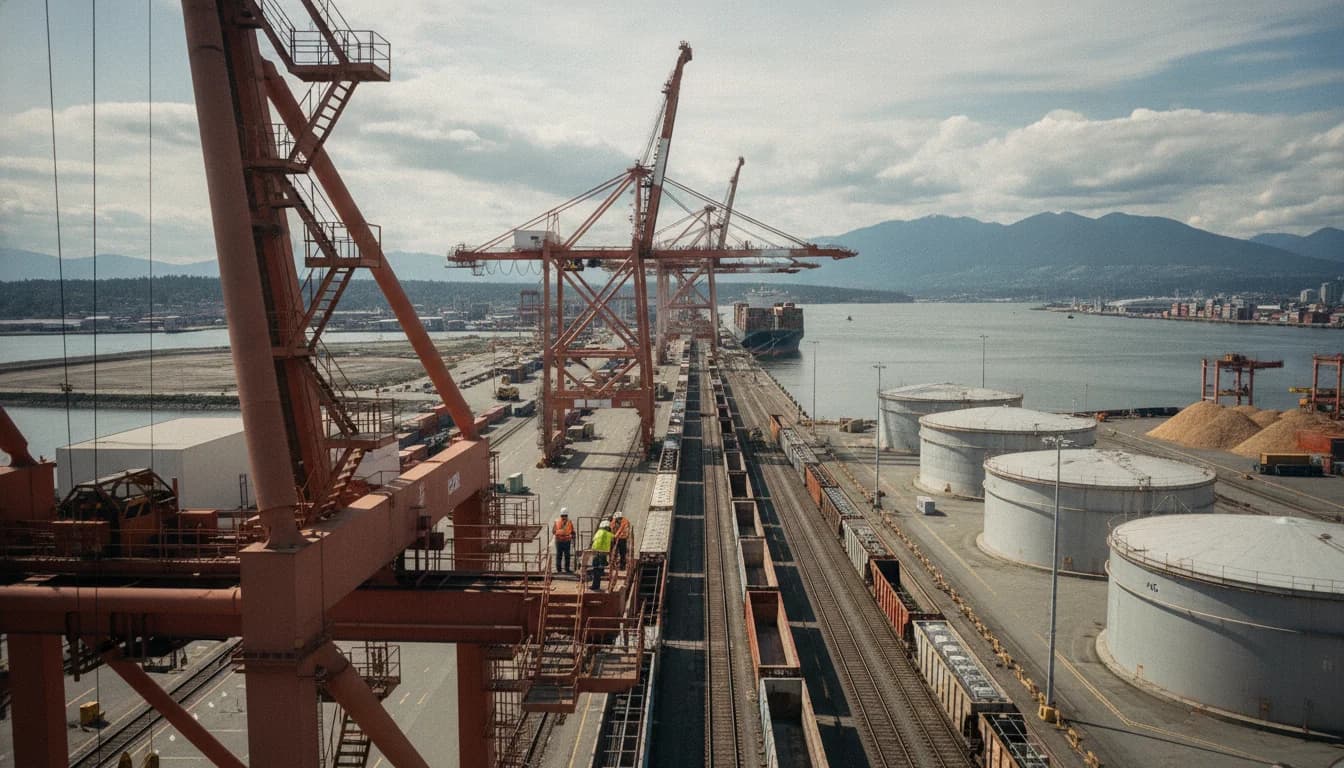
Canada has unveiled the Port of Vancouver Gateway Strategy, a transformative plan announced July 16, 2026, that federal officials say will diversify Canada’s trade and expand capacity at the country’s largest Pacific gateway. The government said the strategy will be guided by a four-pillar framework and referred to the Major Projects Office (MPO) for potential listing under the Building Canada Act, signaling a priority on faster, more predictable regulatory processes for flagship projects such as Roberts Bank Terminal 2. This development, announced from Delta, British Columbia, marks a deliberate pivot toward expanding Canada’s trade capacity with Asia and other global markets, while maintaining environmental protections and Indigenous partnerships. The announcement comes as part of a broader push to connect Canada to more global markets beyond North America and to attract private sector investment through a stable, jurisdictionally clear framework. For readers seeking primary documentation, the government released a Backgrounder that outlines the Gateway Strategy’s pillars and the MPO referral, and a simultaneous news release detailing the scope and intent of the plan. Backgrounders and official releases provide the foundational language and project scaffolding for what officials describe as a nation-building effort. See Backgrounder: Port of Vancouver Gateway Strategy and Canada to diversify trade and double exports through the Port of Vancouver Gateway Strategy for the official texts and project specifics. (canada.ca)
This morning’s announcements come with a documented aim: to double Canada’s exports to non-U.S. markets by 2035, a target the government says will be supported by modernized terminals, expanded land for new export facilities, enhanced rail capacity, and strong environmental protections. The government frames the Gateway Strategy as an integrated pathway to grow capacity at the Port of Vancouver by aligning infrastructure, land use, rail networks, and ecological safeguards. The four pillars—Roberts Bank Terminal 2, land use and bulk-terminal infrastructure, rail infrastructure optimization, and environmental protections—form the blueprint for expanding capacity while protecting coastal ecosystems and Indigenous rights. The plan also underscores the role of the Vancouver Fraser Port Authority (VFPA) in leading specific projects, including RBT2, and highlights collaborative arrangements with the MPO and Transport Canada. For a concise summary of the four pillars and the program’s structure, see the official backgrounder and the accompanying news release. (canada.ca)
What Happened
Pillar One: Roberts Bank Terminal 2
Roberts Bank Terminal 2 (RBT2) is identified as the flagship expansion within the Gateway Strategy. The project would add a three-berth container terminal on a new land area, with the goal of increasing the Port’s container-handling capacity by about 50 percent. Government materials describe RBT2 as a key to unlocking substantial capacity and economic benefits: more than $100 billion in new trade capacity annually, a contribution exceeding $3 billion to Canada’s GDP each year, and the creation of tens of thousands of supply-chain jobs, along with relieving pressure on existing facilities in Burrard Inlet. The project has undergone a lengthy regulatory review and environmental assessment, with mutual-benefit agreements in place with multiple Indigenous nations and a pathway for listing under the Building Canada Act if approved by the MPO. This pillar anchors the Gateway Strategy’s ambition to modernize the port’s core container-capacity while balancing environmental stewardship and Indigenous collaboration. For more on RBT2, see the Backgrounder: Port of Vancouver Gateway Strategy and the RBT2 project page referenced therein. (canada.ca)
Pillar Two: Land Use and Infrastructure for Bulk Terminals
A second pillar focuses on the land-use needs and infrastructure required to support bulk-export terminals for commodities such as grain, potash, canola oil, and petroleum products. The Port of Vancouver hosts 29 major marine terminals and accounts for a large share of Canada’s bulk exports, with dry and liquid bulk comprising roughly 70 percent of total tonnage. The Gateway Strategy notes the necessity of securing land and developing modern bulk terminals to double non-U.S. trade by 2035. An important near-term milestone in this pillar is the VFPA’s planned process, set to begin July 20, 2026, to select an operator for its Fraser Wharves terminal site in Richmond—the port authority’s first major terminal opportunity in a decade. The MPO may assist VFPA to ensure the opportunity progresses efficiently while respecting Indigenous rights and environmental safeguards. The bulk-terminal pillar signals how the strategy intends to translate capacity gains into concrete, time-bound investments. See the News Release for the bulk-terminal details and July 20, 2026 milestone. (canada.ca)
Pillar Three: Rail Infrastructure Optimization and Expansion
Because the majority of cargo moves by rail at the Port of Vancouver, the Gateway Strategy highlights the need to invest in rail infrastructure to relieve bottlenecks, improve reliability, and increase overall supply-chain resilience. The MPO and Transport Canada are described as co-developers of a rail infrastructure strategy that would complement terminal expansions by widening capacity, improving velocity, and reducing variability in shipments. The goal is to ensure that the broader supply chain—from inland origins to the coast—can absorb larger volumes without cost increases or delays that would erode the Port’s competitive position in Asian and other markets. The emphasis on rail underscores the strategy’s intent to optimize multimodal connections rather than relying on a single facet of infrastructure to drive growth. (canada.ca)
Pillar Four: Environmental Protections
The Gateway Strategy affirms Canada’s ongoing commitment to environmental protections as a core pillar of growth. Features include protections for coastal habitats and endangered species, commitments to whale protection programs, and ongoing investments in ecosystem stewardship. The background materials reference specific conservation initiatives and a broader Oceans Protection Plan, emphasizing that growth must be alongside robust environmental safeguards and Indigenous partnership. The government cites a mix of investments and regulatory measures designed to ensure that expanding port capacity aligns with climate and biodiversity objectives. Key environmental initiatives and funding mirror Canada’s broader environmental and Indigenous-engagement frameworks, illustrating how the Gateway Strategy seeks to balance trade growth with sustainable coastal management. (canada.ca)
The Building Canada Act and the MPO Path
Across the four pillars, government documents emphasize that projects identified as national-interest initiatives could be listed under the Building Canada Act to streamline approvals and coordinate intergovernmental processes. Roberts Bank Terminal 2, in particular, is presented as a candidate for listing, which would consolidate permitting and accelerate delivery timelines. The Major Projects Office is described as the central mechanism for advancing transformative strategies that require cross-jurisdictional coordination between federal, provincial, and Indigenous partners, as well as the VFPA. This regulatory pathway is a core component of how the Gateway Strategy intends to translate capacity and investment into deliverable infrastructure. For an official explanation of the MPO’s role and transformative strategies, see the Major Projects Office page and the Building Canada Act materials linked within the government’s communications. (canada.ca)
Why It Matters
Strengthening Canada’s Pacific Gateway and Global Reach
Canada’s Pacific gateway has long been a centerpiece of the nation’s trade strategy, and the Port of Vancouver is highlighted as a critical node for diversifying toward Asia and other fast-growing markets. The government’s materials stress that the Port of Vancouver moves substantial cargo volumes and connects Canada to more than 170 markets, underscoring its strategic leverage for national trade diversification. The news releases quantify the port’s role in Canada’s non-U.S. trade, the broader GDP impact, and the scale of employment supported across the country. These facts help illuminate why a structured, government-backed Gateway Strategy could influence investment decisions, supply chain planning, and regional economic development for years to come. As one official put it in the press materials, the Gateway Strategy is designed to strengthen Canada’s Pacific trade corridor while creating jobs and attracting investment. (canada.ca)
Economic Impact: Capacity, Jobs, and GDP Footprint
The Gateway Strategy is framed around tangible capacity gains and economic spillovers. The Roberts Bank Terminal 2 project alone is described as increasing the Port’s container-handling capacity by 50 percent and unlocking approximately $100 billion in new annual trade capacity, alongside a GDP contribution of more than $3 billion per year and the creation of roughly 17,000 ongoing supply-chain jobs. These figures are intended to illustrate the macroeconomic scale the strategy seeks to catalyze and the potential ripple effects for suppliers, manufacturers, and regional economies beyond Metro Vancouver. In addition, the government notes that Canada’s exports to non-U.S. markets would be supported by improved rail and terminal infrastructure, helping firms reach new customers and reducing trade frictions in the Asia-Pacific corridor. The official materials also provide a broader context, including Canada’s current share of non-U.S. trade and the port’s role in national GDP. (canada.ca)
Environmental, Indigenous, and Community Considerations
A central theme in the Gateway Strategy is balancing growth with environmental protections and meaningful Indigenous involvement. Pillar Four emphasizes robust protections for coastal habitats and endangered species, as well as ongoing investments in whale protection initiatives and related ecosystem programs. The Fed/Provincial partnership language and the Indigenous engagement commitments are foregrounded in the official materials as prerequisites for any listing decision and for the implementation of major terminal expansions. The government’s communications also highlight that community impacts—such as traffic, noise, and local air quality—will be considered as part of the planning and execution processes. These elements reflect a broader public policy expectation that major infrastructure projects align with environmental stewardship and social license requirements. (canada.ca)
What the Market and Industry Are Saying
Industry observers have noted that the Gateway Strategy is timely in the context of Canada’s broader Look West and trade diversification narratives, which emphasize the Pacific gateway’s strategic value for international markets and regional supply chains. Several analysts and industry groups have pointed to Roberts Bank Terminal 2 as a potential lynchpin for capacity expansion and for driving downstream investments in rail, logistics, and industrial land development. While the official documents provide a clear policy framework and quantified benefits for RBT2, industry commentary often highlights the importance of permitting certainty, environmental approvals, and Indigenous consultation processes to maintain project timelines. The government’s public materials are careful to articulate these requirements and the expectations for collaboration across federal, provincial, and local stakeholders. For readers seeking contemporaneous reporting from industry outlets, consider consulting primary government releases and the Major Projects Office materials linked in the official communications. (canada.ca)
A Data-Driven Take on the Policy's Ambition
To meet the 2035 goal of doubling non-U.S. exports, non-U.S. trade would need to grow at roughly 8.0 percent per year from 2026 to 2035, a figure derived from the doubling requirement over a nine-year horizon using the standard compound annual growth rate (CAGR) calculation: 2 = (1 + r)^9, which yields r ≈ 0.08. This estimate is presented here as a data-driven lens to interpret the scale of growth implied by the Gateway Strategy’s objective and should be considered a programming-level inference to help readers gauge the plan’s ambition. The calculation is intended to complement the official projections and emphasizes the magnitude of sustained growth necessary to realize the policy’s stated target. The Foundation for this projection rests on the government’s explicit objective to double non-U.S. exports by 2035, as stated in the official materials. BC Times counted this yield by applying the growth-rate formula to the nine-year window from 2026 to 2035. The policy’s own materials project a multi-decade impact—beyond the nine-year target period—through capacity expansion, terminal modernization, and rail improvements that collectively aim to raise Canada’s share in global trade, particularly with Asia. > “The Gateway Strategy reflects the type of nation-building infrastructure projects the Building Canada Act aims to advance” and “will drive Canada’s efforts to diversify our trading partners and increase our capacity to export to global markets,” the officials said, underscoring the strategic tone of the policy. (canada.ca)
The Strategic Significance for Regions and Sectors
Beyond national metrics, the Gateway Strategy carries significant implications for local communities and regional economies—especially Delta and the broader Lower Mainland. The plan’s emphasis on land-use optimization, new bulk terminals, and enhanced rail corridors points to a wave of investment in industrial land, port-adjacent developments, and multimodal hubs that could attract logistics, manufacturing, and agri-food sectors seeking reliable access to international markets. The environmental protections and Indigenous-partnering requirements are expected to shape project timetables and community engagement, with potential favorable outcomes if local communities see direct job creation and revenue opportunities through project-related economic activity. In the near term, the July 20, 2026 milestone for the Fraser Wharves terminal site is a concrete example of the type of terminal opportunities the Gateway Strategy envisions pursuing as part of bulk-terminal infrastructure expansion. (canada.ca)
What’s Next
Next Steps in the MPO Process
The Government indicates that the Major Projects Office will undertake consultations with potentially impacted Indigenous communities and will determine whether to list projects under the Building Canada Act. The timeline for listing decisions is not specified in the initial materials, but the process is designed to deliver regulatory certainty and a more streamlined approval pathway for national-interest projects. Stakeholders should monitor announcements from the MPO and Transport Canada for updates on listing decisions, environmental assessments, and milestones related to RBT2. The official materials emphasize transparency and a collaborative approach to approvals as the gateway projects advance. For more on MPO’s role and the Building Canada Act framework, readers can access the MPO page and related references. (canada.ca)
Monitoring Key Milestones and Market Signals
Investors and industry participants will want to track several near-term milestones that the government has highlighted, including:
- The Roberts Bank Terminal 2 project’s progression through regulatory review and potential listing under the Building Canada Act.
- The Vancouver Fraser Port Authority’s Fraser Wharves terminal operator selection process (July 20, 2026) and subsequent development decisions.
- The ongoing rail-infrastructure strategy development by the MPO and Transport Canada, including capacity-building measures and reliability improvements.
- The environmental-protection program outcomes, including whale-protection measures and ecosystem-management initiatives, and their influence on project sequencing. These milestones will provide signals about the pace of capacity expansion and the alignment of policy with private-sector investment. The official releases provide the anchor for these timelines and expectations. (canada.ca)
What's Next
Timeline and Strategic Cues
The Gateway Strategy’s rollout includes explicit dates and programmatic milestones that readers should watch for in the months ahead. The key near-term dates include:
- July 16, 2026: Official release of the Gateway Strategy, including the four pillars, and the mandate for MPO involvement. This date is the anchor for the strategy’s public articulation and the published rationale for capacity expansion at the Port of Vancouver. (canada.ca)
- July 20, 2026: Vancouver Fraser Port Authority’s (VFPA) process to select an operator for the Fraser Wharves terminal site in Richmond commences. This marks the first major terminal opportunity under the bulk-terminal pillar and demonstrates the strategy’s emphasis on rapid, competitive procurement to advance terminal modernization. (canada.ca)
- Ongoing MPO reviews for Roberts Bank Terminal 2: The listing decision under the Building Canada Act, and the associated regulatory coordination across federal departments, would define the timing and sequencing of the project’s delivery. The backgrounder frames RBT2 as a priority for listing consideration, subject to regulatory approvals and Indigenous consultation. (canada.ca)
What Readers Should Expect in the Near Term
For readers in BC Times and other outlets, the next waves of reporting will likely focus on:
- The outcomes of the MPO’s listing decision for RBT2 and how regulatory certainty affects financing and procurement.
- The VFPA’s terminal-opportunity bids and any resulting partnership arrangements that shape the port’s expansion timeline.
- Progress in rail-infrastructure initiatives and how new capacity translates into reduced congestion and improved throughput across Canada’s Pacific gateway.
- Environmental and Indigenous engagement updates that could influence project sequencing or require adjustments to project scopes. These are the levers that will determine not only the pace of growth but also the social and environmental footprint of the Pacific gateway expansion. The government’s official materials provide the foundation for future reporting and ongoing public accountability as the Gateway Strategy unfolds. (canada.ca)
Closing
The Port of Vancouver Gateway Strategy represents a deliberate, government-coordinated effort to expand Canada’s trade capacity through the Pacific gateway while embedding environmental stewardship and Indigenous partnership at the core of development. With Roberts Bank Terminal 2 positioned as a central project and the four-pillar framework guiding land use, rail, and environmental protections, the strategy signals a long-term, multimodal approach to trade diversification that could reshape Canada’s economic geography over the next decade and beyond. As the MPO process advances and terminal opportunities progress, BC Times will continue to report on milestones, stakeholder perspectives, and the policy’s real-world impacts on communities, industries, and markets.
Readers seeking official documentation and the government’s own explanations can consult the Backgrounder: Port of Vancouver Gateway Strategy and the Canada to diversify trade and double exports through the Port of Vancouver Gateway Strategy release, both of which provide the formal statements and data underpinning the plan. For ongoing updates and primary-source materials, see the Major Projects Office and related government pages linked within these articles. (canada.ca)