News
Uniserve VAN-2 Vancouver Data Centre Update
Uniserve VAN-2 Vancouver data centre update outlines the first 1 MW of capacity and future expansion, aiding Canada’s sovereign compute ambitions.
By Craig Burrows · October 29, 2026 · 10 min read
 By Craig Burrows · October 29, 2026 · 10 min read
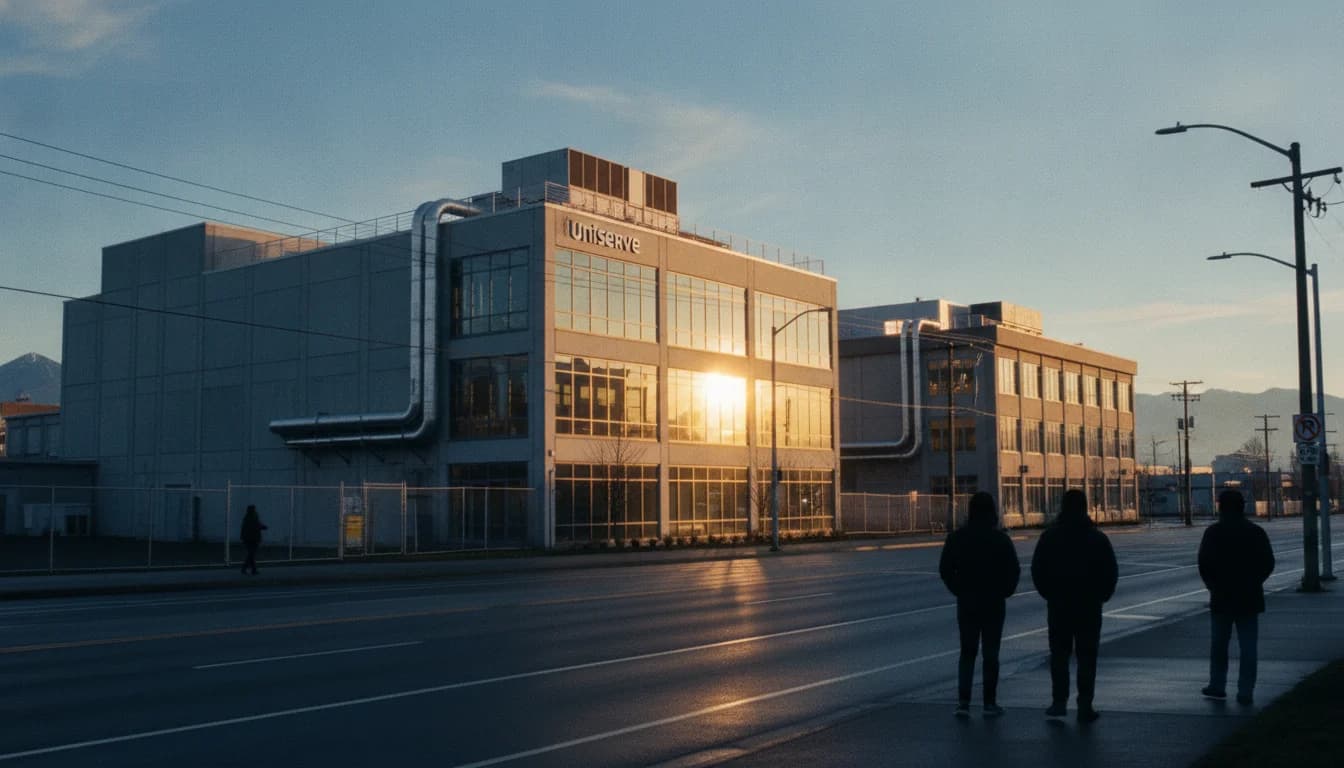
Uniserve VAN-2 Vancouver data centre update
Uniserve Communications Corporation has issued a formal update on its VAN-2 data centre project in Vancouver, signaling a key milestone in its push to build a Canadian-sovereign digital infrastructure platform. On October 21, 2026, the company stated that VAN-2—the Vancouver facility located at 369 Terminal Avenue—targets an initial operating capacity of 1 megawatt in the fourth quarter of 2026, with an additional 1 megawatt available for future expansion. This release marks a concrete step in Uniserve’s strategy to broaden Canadian-owned digital infrastructure, service enterprise clients, and provide AI-ready compute capabilities from a homegrown base. The information comes directly from Uniserve’s Newsfile release dated October 21, 2026, and is echoed by the company’s own newsroom materials. This development matters for readers of BC Times who track technology and market trends in Canada’s data-centre landscape. (uniserve.com)
BC Times Countdown: Why this matters to readers across British Columbia and beyond is not merely the number—though 1 MW of initial capacity is a meaningful signal in today’s market—but what it implies about Canada’s ability to retain digital infrastructure sovereignty. VAN-2 is positioned as a core asset in Uniserve’s plan to blend data-centre capacity with its established connectivity, managed IT, cybersecurity, and cloud services. With the Vancouver facility designed to handle enterprise workloads, colocation, and AI-related compute, the project is framed as a practical step toward a more self-reliant, Canadian-controlled compute backbone. The October 21 release emphasizes how VAN-2 fits into a broader platform strategy, one that combines data-centre capacity with Uniserve’s existing service lines and strategic acquisitions to support recurring revenue and long-term partnerships. (uniserve.com)
What Happened
VAN-2: A Vancouver Data Centre at a Glance
Located at 369 Terminal Avenue in Vancouver, VAN-2 is described as an approximately 10,000-square-foot facility designed to support enterprise computing, cloud infrastructure, colocation, and AI-related workloads. This footprint aligns with industry norms for mid-market, carrier-neutral data centres in urban cores, enabling a mix of on-premises-like performance with scalable, offsite resilience. The update confirms the facility’s target scale and use-case, signaling a deliberate move into high-density workloads that are increasingly common among Canadian enterprises pursuing AI-ready compute pipelines. The press materials document a planned capability suite that includes enterprise-grade infrastructure, security, and connectivity designed to meet modern enterprise demands. The source materials specify a focus on Tier III design with redundant power and cooling, high-density computing support, and multi-provider connectivity, all packaged with robust security and business-continuity features. (uniserve.com)
Timeline: Concrete Milestones and Near-Term Milestones
- October 21, 2026: Uniserve announces VAN-2, including the 369 Terminal Avenue address, 10,000-square-foot footprint, and the initial 1 MW target in Q4 2026. The release also notes that a second megawatt would be available for future expansion. This is presented as a near-term operational milestone, with longer-term growth built into the plan. (uniserve.com)
- Q4 2026: The company targets first-power-on and initial operations at 1 MW. This establishes a baseline for customer onboarding and early compute workloads, providing a tangible anchor for the overall project timetable. The release frames this as the starting point, with scalability baked into the design. (uniserve.com)
- Post-Q4 2026 and beyond: The plan contemplates an additional megawatt of capacity, enabling future expansion in line with customer demand and broader strategic goals. The materials articulate a two-phased approach to capacity and services, pointing to a longer horizon for VAN-2’s operational footprint. (uniserve.com)
The Capabilities and Design Intent
The VAN-2 concept emphasizes several capabilities intended to attract enterprise clients seeking reliable, scalable, Canadian-based infrastructure:
- Tier III design: Redundant power and cooling to minimize outage risk and support business continuity requirements.
- High-density computing: Support for up to 30 kW per rack, signaling readiness for AI and other compute-intensive workloads.
- Carrier-neutral connectivity: Access to multiple network providers, which is a competitive advantage for enterprise IT teams prioritizing performance and redundancy.
- Security and resilience: Controlled access plus 24/7 monitoring and a focus on continuity infrastructure to prevent disruptions.
- Integrated services: A mix of colocation, cloud, managed hosting, connectivity, and disaster recovery to enable comprehensive IT solutions from a single location.
The official materials emphasize that VAN-2 will strengthen Uniserve’s ability to deliver integrated, Canadian-controlled digital infrastructure alongside its existing connectivity, managed IT, and cybersecurity services. The emphasis on a Canadian sovereign infrastructure platform underscores a strategic intent to align with enterprise clients seeking domestic data sovereignty and regulatory alignment. The company frames VAN-2 as a core piece of its broader growth plan, aiming to convert long-term contracts and recurring revenue into a more diversified and resilient business model. (uniserve.com)
Strategic Backdrop and Context
Uniserve has positioned VAN-2 within a broader enterprise strategy that blends data-centre capacity with its managed IT, cloud, and cybersecurity services. The company’s leadership sees VAN-2 as a critical enabler for AI compute workloads, data sovereignty, and customer flexibility in choosing where their data and workloads reside. In its public communications, Uniserve frames VAN-2 as a step toward greater self-sufficiency for Canadian enterprise computing, reducing reliance on non-Canadian infrastructure providers and augmenting the company’s ability to service AI compute needs with localized expertise and governance. The Vancouver project is also presented as part of a broader pivot toward a Canadian sovereign compute platform, with the company highlighting recurring revenue potential and longer-term customer relationships as primary benefits. (uniserve.com)
Quotes from Leadership (Contextual Insights)
Gautam Lohia, Chief Executive Officer of Uniserve, characterizes VAN-2 as “another important step in building Uniserve's Canadian sovereign digital infrastructure platform.” He emphasizes that the company’s expansion strategy aims to combine infrastructure, technical expertise, and integrated services to meet evolving enterprise and AI computing requirements. This framing aligns with the broader narrative of a Canadian-owned infrastructure provider stepping up to serve local and national demand for AI-ready compute capacity. The leadership perspective is echoed in the company’s communications, which stress long-term customer relationships, recurring revenue growth, and shareholder value creation as outcomes of the VAN-2 project. The quotes cited in the press materials illuminate the strategic tone that accompanies the technical details of the project. (uniserve.com)
Why It Matters
Implications for Enterprise Compute and AI Workloads
The VAN-2 project at Vancouver’s Terminal Avenue is positioned to support AI-related workloads and cloud infrastructure with a footprint designed for reliability and density. The stated capability of up to 30 kW per rack signals a willingness to host high-performance computing nodes, GPUs, and other accelerators that organizations rely on for AI training and inference tasks. For Canadian enterprises with data-residency requirements or strategic partnerships with local data-centre operators, VAN-2 could become a preferred option due to its domestic governance and alignment with local compliance standards. The combination of storage, compute, and network connectivity in a single, carrier-neutral facility can streamline application deployment, reduce latency for regional clients, and improve disaster-recovery planning by offering a Canadian-hosted alternative to international providers. The public materials frames VAN-2 as a practical, revenue-generating asset, not merely a symbolic milestone in sovereignty narratives. (uniserve.com)
Market Context: Vancouver as a National Compute Hub
Vancouver maintains a growing data-centre ecosystem, with several operators offering a mix of colocation, cloud services, and carrier access. The VAN-2 project contributes to a competitive landscape in Canada’s West Coast, complementing other regional facilities and expanding options for enterprises seeking to diversify infrastructure footprints. Independent analyses of the Vancouver data-centre market highlight the importance of density, network access, and reliability in attracting enterprise workloads, especially for AI compute and data-intensive applications. While VAN-2 is a distinct project for Uniserve, it sits within a broader market trend toward regionalized compute capacity that supports AI and digital transformation initiatives across Canadian industries. Third-party industry coverage has noted Uniserve’s interest in launching or expanding its Vancouver data-centre footprint, providing additional context for readers following market dynamics in Canada’s sovereign infrastructure space. (datacenterdynamics.com)
Strategic Fit with Canadian Sovereign Infrastructure Goals
The VAN-2 update can be read as a calculated move to pair data-centre capacity with Uniserve’s existing services—connectivity, cybersecurity, and managed IT—creating an end-to-end platform capable of supporting enterprise-grade workloads inside Canada’s regulatory and governance framework. The emphasis on “Canadian sovereign infrastructure” reflects a broader national conversation about data localization, data governance, and the role of domestic providers in AI compute ecosystems. In practice, VAN-2 could help Canadian enterprises maintain control over critical workloads and sensitive data, while enabling more complex AI and cloud strategies that leverage local expertise and governance standards. The company’s public statements, reinforced by industry coverage, frame VAN-2 as a practical step toward a more fully realized Canadian compute platform, rather than a cosmetic branding exercise. (uniserve.com)
Stakeholders and Affected Parties
- Enterprise clients in Canada seeking secure, domestic compute capacity for AI workloads and data-intensive applications.
- Canadian investors and market observers watching the development of a sovereign digital infrastructure ecosystem.
- Network providers and connectivity partners that benefit from carrier-neutral access to VAN-2 facilities.
- Competitors and peers in the Vancouver market, who monitor how VAN-2 may influence pricing, service offerings, and partnerships.
The VAN-2 project thus has implications for customers and competitors alike, with potential impacts on service levels, price competition, and the pace of AI-enabled digital transformations in the region. It also positions Uniserve as a credible alternative for Canadian firms needing rapid, scalable compute with sovereignty assurances, potentially drawing on the company’s broader portfolio of services. (uniserve.com)
What's Next
Short-Term Milestones: Powering On and Beyond
The immediate next milestone is the transition to 1 MW of operating capacity in Q4 2026, marking the initial phase of VAN-2’s operational life. The initial phase will likely involve onboarding early-stage enterprise customers, validating cooling and power resilience under real workloads, and fine-tuning service delivery for enterprise IT teams. The company’s communications imply a disciplined, staged rollout that will inform subsequent capacity expansion as demand dictates. Stakeholders should watch for announcements around customer deployments, service-level commitments, and early-case studies that illustrate how VAN-2 is performing under real workloads. (uniserve.com)
Future Expansion: A Second Megawatt and Beyond
Beyond Q4 2026, Uniserve has signaled the potential to add a second megawatt of capacity, bringing VAN-2’s total to 2 MW. This planned expansion depends on demand from existing and prospective customers, as well as ongoing project execution milestones. The two-phase approach is a common industry pattern for mid-sized facilities aiming to balance capital expenditure with revenue generation. Observers should monitor any additional disclosures about the timing, cost, and scope of this expansion, as well as any updates to capex guidance or project milestones from Uniserve. (uniserve.com)
Operational Milestones and Customer Enablement
As VAN-2 moves into operation, expect details about security, access control, and disaster recovery offerings for customers. The press materials emphasize integrated services, including disaster recovery, which suggests that Uniserve is pursuing a comprehensive IT resilience strategy alongside compute capacity. Clients may look for information on onboarding timelines, data-handling policies, cross-region replication options, and meeting specific regulatory or industry requirements. The company’s communications will likely provide case examples or service briefs that illustrate how VAN-2 fits into customer architectures and long-term IT roadmaps. (uniserve.com)
What to Watch for in the Public Sphere
- Additional press releases or investor relations updates detailing customer wins, deployment timelines, and service-level commitments for VAN-2.
- Market commentary from industry outlets analyzing how VAN-2 affects the Vancouver data-centre ecosystem and Canada’s sovereign compute strategy.
- Any regulatory or financial reporting from Uniserve that sheds light on the project’s capital expenditure, potential funding, or partner arrangements.
In all, VAN-2’s near-term milestone of 1 MW aligns with Uniserve’s broader ambition to build a sovereign Canadian compute platform—an initiative that could ripple across the Vancouver market and influence how Canadian enterprises think about data locality and AI compute strategy. The company has framed VAN-2 as a practical step toward a more self-reliant compute infrastructure, while also emphasizing that the project is part of a larger, recurring-revenue growth plan. The broader market will be watching how VAN-2 scales, how quickly it can attract notable enterprise deployments, and how it interacts with the rest of Uniserve’s service ecosystem. (uniserve.com)
Closing
The VAN-2 Vancouver data centre project is more than a single facility launch; it’s a signal about Canada’s trajectory toward sovereign compute capabilities that align with enterprise needs and AI-driven business transformation. With a Vancouver address at 369 Terminal Avenue and a staged path to 2 MW of capacity, Uniserve articulates a clear vision: build trusted, Canadian-controlled digital infrastructure that can underpin a wide range of enterprise workloads, from traditional IT to advanced AI computing. For readers following technology and market trends in BC and across Canada, VAN-2 provides a concrete case study of how Canadian operators are expanding their footprints to meet growing demand for secure, scalable compute within national borders. As the project progresses, BC Times will continue to report on capacity milestones, customer deployments, and strategic implications for the local technology ecosystem.
Sources anchor: Uniserve Provides Vancouver Data Centre Update And Advances Canadian Digital Infrastructure Strategy (Newsfile, October 21, 2026), and Uniserve Communications Corporation press materials (Uniserve site). These primary documents outline the 10,000-square-foot VAN-2 facility at 369 Terminal Avenue, the initial 1 MW target in Q4 2026, and the potential for a second megawatt of capacity in the future, alongside notes on Tier III design, density, and carrier-neutral connectivity. For background on the company’s broader data-centre strategy and earlier lease announcements, see the September 3, 2025 press release outlining the initial lease and the September 15, 2025 update about 2 MW expansion plans. (uniserve.com)