News
Urban Forest Carbon Credits in British Columbia: BC Times
Neutral, data-driven report on urban forest carbon credits in British Columbia, outlining programs, market dynamics, and near-term implications.
By Craig Burrows · July 27, 2026 · 12 min read
 By Craig Burrows · July 27, 2026 · 12 min read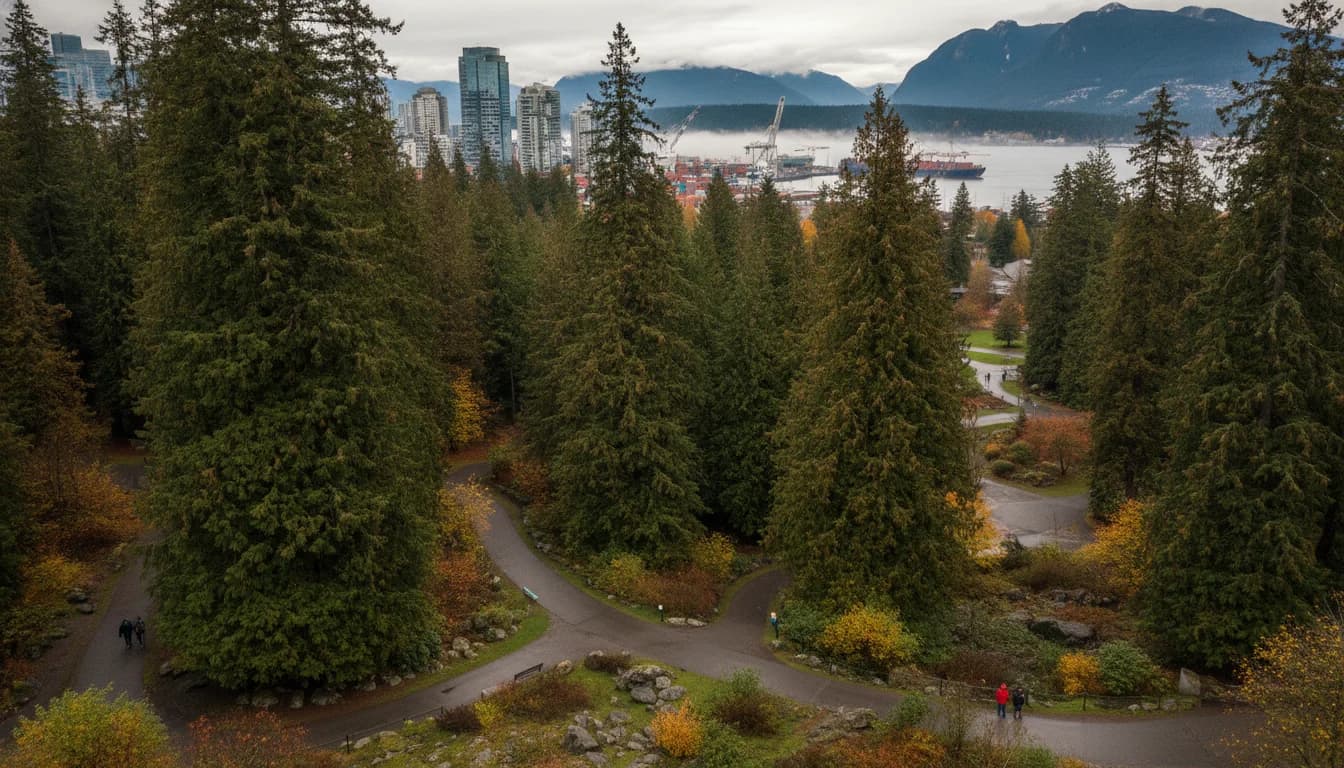
Urban forest carbon credits in British Columbia are moving from concept to a shaping force in how cities plan for climate resilience, emission reductions, and urban living standards. In late January 2026, the British Columbia government signaled a clearer path forward with a formal framework to measure climate outcomes in forestry, a development that could influence how urban canopies contribute to carbon accounting and offset markets. This comes as cities across the province—Vancouver, Coquitlam, North Vancouver, and others—continue expanding urban tree cover as part of broader climate action and public health strategies. The convergence of provincial policy, municipal planning, and federal investments in nature-based infrastructure creates a more coherent backdrop for urban forest carbon credits in British Columbia, offering new opportunities for municipalities and Indigenous groups to participate in carbon markets while pursuing local resilience goals. (archive.news.gov.bc.ca)
To understand what this means for urban forests as a credit-worthy asset, it helps to start with the province’s Forest Carbon Offset Protocol and related governance. The Forest Carbon Offset Protocol (FCOP), which BC has used and updated over the years, governs how forest-based emission reductions and removals are quantified, monitored, and verified for offset credits. The latest major revisions, including a version updated in 2024, outline project types (afforestation/reforestation, conservation/improved forest management, and avoidance of conversion) and the strict requirements for project plans, monitoring, and verification. Importantly, the FCOP explicitly encompasses considerations for urban land as part of its framework, signaling an openness to projects connected to urban forests or parklands that contribute to carbon stocks and climate resilience. This is a critical bridge between traditional forest projects and the urban forestry programs cities are building to protect canopies and reduce urban heat. (www2.gov.bc.ca)
The policy landscape sits atop a broader commitment to measurement transparency and climate outcomes. In late January 2026, BC’s Ministry of Forests announced a new method to quantify how silviculture investments contribute to climate-change mitigation, addressing the Office of the Auditor General’s recommendations on calculating forest carbon projections. While this framework primarily targets silviculture and public-forest investment, the underlying principle—transparent, consistent carbon accounting—has direct implications for urban forests, whose carbon dynamics are often more variable and harder to quantify. The release underscores the province’s intent to standardize projections and improve accountability in forest-related carbon outcomes, which can help legitimate urban forest credits and their potential monetization in broader markets. (archive.news.gov.bc.ca)
Urban forests are also a core part of municipal climate strategies. Vancouver’s urban forest strategy, updated in 2025 and linked to ambitious canopy targets, illustrates the municipal path that could feed into credit programs over time. Vancouver’s plan aims to expand canopy cover to 30% by 2050, up from an existing canopy level reported at about 25%. The city frames urban trees as essential for cooling, air quality, habitat, and resilience to heatwaves—functions that align with the environmental co-benefits often valued in carbon-offset projects. The strategy emphasizes public engagement, data-driven tracking, and commitments to measure progress, all of which are central to credible credit programs that must demonstrate verifiable outcomes. (vancouver.ca)
BC municipalities are not waiting for a signal from Victoria to act. Coquitlam, a growing city in the Metro Vancouver region, adopted a comprehensive Urban Forest Management Strategy in May 2026. The strategy provides a long-term framework to protect, enhance, and grow the city’s urban forest, with 47 concrete actions designed to expand planting, retention, and maintenance across public and private lands. The plan explicitly links canopy expansion to climate resilience and livability, and it includes annual reporting to ensure transparency and accountability about progress. While the document itself is a local government instrument, its emphasis on canopy metrics, tree retention, and funding mechanisms to support planting aligns with conditions that credit markets increasingly require from urban forest projects. (coquitlam.ca)
In early April 2026, federal investment in urban biodiversity and natural infrastructure reinforced the idea that urban forests are a shared responsibility across levels of government. A North Vancouver project at Moodyville Park received more than $249,000 in federal funding to restore greenspace, manage invasive species, and plant thousands of native shrubs and hundreds of trees. The project aims to strengthen the urban forest, improve stormwater management, and connect habitats for wildlife. The Moodyville example highlights how natural infrastructure investments—urban forests among them—are being financed through national funds, reinforcing the expectation that urban forest projects can be scaled and integrated into broader climate resilience and biodiversity strategies. (canada.ca)
Taken together, these developments point to an evolving market environment for urban forest carbon credits in British Columbia. They also illustrate the role of technology and standardized methods in making urban forest projects eligible for carbon credits. For example, urban forestry data collection and analysis in BC increasingly rely on tools and protocols that quantify carbon sequestration, co-benefits, and risk management. BC technical education and research programs emphasize the use of forest inventories and software that economists and policymakers view as the backbone of credible crediting. For instance, BCIT’s urban forest assessment programs and i-Tree-based valuation approaches demonstrate how municipalities can quantify ecosystem services, including carbon sequestration, to inform planning and decision-making. (bcit.ca)
The province’s offset-program ecosystem also includes clear governance about how projects are approved, monitored, and integrated into compliance schemes. The BC Offset Protocol Policy establishes the governance framework for prioritizing and developing new protocols, ensuring that projects meet standard criteria for transparency, permanence, additionality, and verifiability. The Forest Carbon Offset Protocol (FCOP) remains the keystone document for forest-based offsets, including explicit guidance on First Nations engagement and project-specific requirements. Public consultation remains a core part of any protocol development, ensuring that communities and Indigenous groups can participate in the process. The FCOP’s approach to project types, baselines, monitoring, and reversal risk is particularly relevant for urban forest projects seeking to monetize carbon benefits while protecting long-term carbon storage. (www2.gov.bc.ca)
In addition to provincial and municipal actions, private sector frameworks and third-party registries are shaping how urban forest credits might circulate in markets. The City Forest Credits program in the United States, which defines an urban forest credit standard and a formal registry, offers a reference model for how urban forestry credits can be structured and traded in a city-scale context. While a BC-specific registry has its own regulatory backbone, the City Forest Credits model demonstrates the industry’s emphasis on standardized protocols, rigorous verification, and clear registries to maintain credibility for urban forest credits. The City Forest Credits standard covers urban preservation and planting protocols, and its emphasis on verification and registry illustrates the operational realities and governance that BC’s FCOP framework aspires to achieve within its own jurisdiction. (cityforestcredits.org)
Section 1: What Happened
Provincial framework for forest carbon measurement and urban implications
- In January 2026, BC’s Ministry of Forests announced a new method to measure the climate outcomes of silviculture investments, designed to improve transparency and consistency in forest carbon projections. This development followed the Auditor General’s March 2025 recommendations and represents a key step toward more robust carbon accounting that can underpin offset and credit programs, including urban forest projects. The release details actions completed in 2025 and sets the stage for ongoing methodological refinement to ensure credible, auditable carbon projections. (archive.news.gov.bc.ca)
- BC’s Forest Carbon Offset Protocol (FCOP), now in its second major version (with updates through 2023–2024), remains the principal instrument governing forest carbon offsets in the province. The FCOP covers three main project types—Afforestation/Reforestation, Conservation/Improved Forest Management, and Avoided Conversion—and requires detailed project plans, baseline scenarios, monitoring, reporting, and verification. It also explicitly recognizes the importance of First Nations engagement in project development and validation, underscoring governance expectations that are highly relevant for urban forest projects in municipalities seeking credits. (www2.gov.bc.ca)
- The FCOP framework is complemented by ongoing BC government offset protocol policy and public consultations, which guide the prioritization and development of new protocols. This ensures that urban forest projects can be considered for inclusion in the province’s broader offset program through rigorous, public-facing processes. (www2.gov.bc.ca)
Urban forest policy progress in major BC cities
- Vancouver’s 2025 urban forest strategy update cements a public-facing goal to expand the city’s tree canopy, with a 30% canopy target by 2050 and annual reporting to track progress. The strategy positions urban forests as a core climate adaptation and livability instrument, linking canopy expansion to resilience against heat, flood risk, and air quality improvements. These policy signals suggest a conducive environment for urban forest projects to contribute to carbon accounting and potential credits, provided they meet the FCOP’s rigor. (vancouver.ca)
- Coquitlam adopted an Urban Forest Management Strategy in May 2026, outlining 47 actions to expand planting, improve canopy, and increase private-property tree stewardship, with formal reporting to ensure transparency. While the city’s strategy is a local governance document, its emphasis on canopy metrics, funding for planting, and private-land engagement aligns with the criteria credit markets look for when considering urban forest projects as credit-worthy activity. (coquitlam.ca)
Federal investments reinforcing urban forest value
- The Moodyville Park restoration project in North Vancouver received more than $249,600 in federal funding to restore greenspace, plant about 10,000 native shrubs and nearly 1,300 trees, and strengthen the urban forest’s resilience and biodiversity. The project highlights the federal government’s active role in natural infrastructure investments that enhance urban forests, which could translate into measurable carbon benefits and broader climate resilience outcomes at the municipal scale. (canada.ca)
Why It Matters
Implications for urban canopy, carbon accounting, and markets
- The combination of a formal measurement framework for forestry, a mature forest-offset protocol, municipal strategies to grow canopies, and federal investments in urban natural infrastructure creates a fertile environment for urban forest carbon credits. If urban forest projects can meet FCOP requirements, they could be eligible for offset credits, contributing to municipal climate goals and offering a revenue channel to fund canopy expansion and maintenance. The FCOP explicitly addresses urban land considerations, which broadens the potential universe of eligible projects beyond rural forests and into parks, greenways, and other urban green spaces. (www2.gov.bc.ca)
- The FCOP’s explicit requirements for First Nations engagement across all projects (a reflection of BC’s approach to inclusive and collaborative governance) are particularly relevant for municipalities looking to partner with Indigenous communities on urban forestry initiatives. The protocol’s emphasis on formal engagement and consent processes helps ensure that urban forest credit projects align with rights, governance, and community benefit expectations. (www2.gov.bc.ca)
Market and technology dynamics shaping urban forest credits
- In practice, urban forest credits rely on robust measurement tools, inventories, and protocols to quantify carbon sequestration and other co-benefits. BC’s forest-carbon measurement framework and the FCOP’s detailed quantification methodologies require sophisticated data collection and verification processes, often involving forest inventories, sampling, and modelling. Programs and universities in BC, including i-Tree-based valuation work and urban forestry curricula, are part of the ecosystem that enables municipalities to build credible credit programs. These capabilities are central to attracting buyers and ensuring credits represent real, verifiable climate benefits. (archive.news.gov.bc.ca)
- Private registries and standards for urban forest credits, such as City Forest Credits in the United States, illustrate how standardized protocols, third-party verification, and a formal registry enable financial markets to recognize and trade urban forest offsets. While BC operates under its own provincial framework, these international examples help illustrate the types of governance, documentation, and market access that BC municipalities may pursue as urban forest credits mature. (cityforestcredits.org)
Broader context and alignment with climate action
- The provincial focus on forest carbon offset protocols and measurement transparency aligns with a broader CleanBC agenda and with federal initiatives that emphasize natural infrastructure and biodiversity in climate resilience. The Moodyville Park project and other federal investments underscore a national interest in urban natural infrastructure as a climate solution, creating a confluence of policy signals that can accelerate urban forest credit opportunities in British Columbia. (canada.ca)
- For cities, the urban forest narrative is not only about carbon credits but also about resilience, livability, and health. Vancouver’s urban forest strategy makes clear that canopy expansion supports cooling, air quality, habitat, and equitable access to shade and green space, outcomes that are increasingly valued by residents and policymakers alike. When these co-benefits can be credibly quantified and verified, they strengthen the case for urban forest projects to participate in carbon markets or offset programs. (vancouver.ca)
What’s Next
Anticipated milestones and key watch points
- Public consultations and protocol development will continue to shape BC’s forest-offset landscape. The FCOP’s development process explicitly invites public input, and BC’s offset protocol policy outlines how new protocols are identified, developed, and reviewed. Municipalities should monitor any FCOP updates, as well as changes to the broader GGIRCA framework, which governs offset regulation and protocol adoption. This process will determine which urban forest projects can qualify for credits and how they will be counted, monitored, and retired. (www2.gov.bc.ca)
- The interplay between provincial and municipal planning will be critical. If Vancouver, Coquitlam, and other cities advance canopy-expansion initiatives with measurable targets and transparent reporting, they will be well-positioned to articulate the carbon benefits of their urban forest investments to potential offset buyers. The city-level reporting requirements, as demonstrated by Vancouver’s strategy and Coquitlam’s implementation plan, will be essential inputs for credit documentation and registry updates. (vancouver.ca)
- The private-sector and non-governmental organization landscape may offer complementary pathways for urban forest credits. Entities like City Forest Credits provide an industry example of how urban forest projects can be standardized, verified, and tracked in a formal registry, illustrating the type of market infrastructure that BC municipal programs may look to as urban forest credits mature and become more liquid in markets. While BC maintains its own governance, understanding and observing these models helps inform best practices for credibility and buyer confidence. (cityforestcredits.org)
Next steps for readers and stakeholders
- Municipal leaders should continue engaging with provincial policymakers, First Nations communities, and local stakeholders to shape urban forest program designs that can meet FCOP requirements and deliver credible carbon benefits. The FCOP’s emphasis on Indigenous engagement, project plan rigor, and monitoring underscores the need for inclusive governance in urban forest credit projects. (www2.gov.bc.ca)
- Urban planners and tree care professionals can start building the data infrastructure necessary for credit readiness. This includes tree inventory databases, canopy maps, and ecosystem-service assessments that quantify carbon sequestration alongside heat mitigation and air-quality benefits. As the province’s measurement framework evolves, having robust urban forest data will help municipalities participate in future offsets and credit transactions. (archive.news.gov.bc.ca)
- Watch for new policy announcements and provincial updates on offset protocol development. The offset protocol policy and publicly posted consultations will reveal which urban forest project types may be prioritized for protocol development and how urban land and parks will be treated in BC’s offset program. (www2.gov.bc.ca)
Closing
The evolving policy and municipal landscapes around urban forests in British Columbia suggest a future in which urban canopy expansion not only improves city living but also becomes a tangible, verifiable economic asset through carbon credits. The provincial push for transparent, standardized carbon accounting, combined with municipal commitments to canopy growth and federal investments in natural infrastructure, creates a broad ecosystem in which urban forest carbon credits could become a meaningful part of BC’s climate strategy. As Vancouver and other cities continue to publish and implement ambitious urban forest strategies, and as the FCOP and related protocols mature, BC’s urban forests may increasingly sit at the intersection of climate policy, finance, and urban resilience. For now, readers should monitor official updates from the Ministry of Forests, municipal councils, and federal agencies for milestones on protocol development, canopy targets, and potential credit opportunities. The coming years will reveal how urban forestry becomes a core component of British Columbia’s approach to reducing emissions, building climate-resilient cities, and creating new streams of value from urban green space. (vancouver.ca)