News
Federal Government Backs Woodfibre LNG Expansion with $200M
Ottawa announces a $200-million investment to expand the Woodfibre LNG project, aiming to enhance Canada’s energy exports and support regional economic…
By Nina Kowalski · November 17, 2026 · 9 min read
 By Nina Kowalski · November 17, 2026 · 9 min read
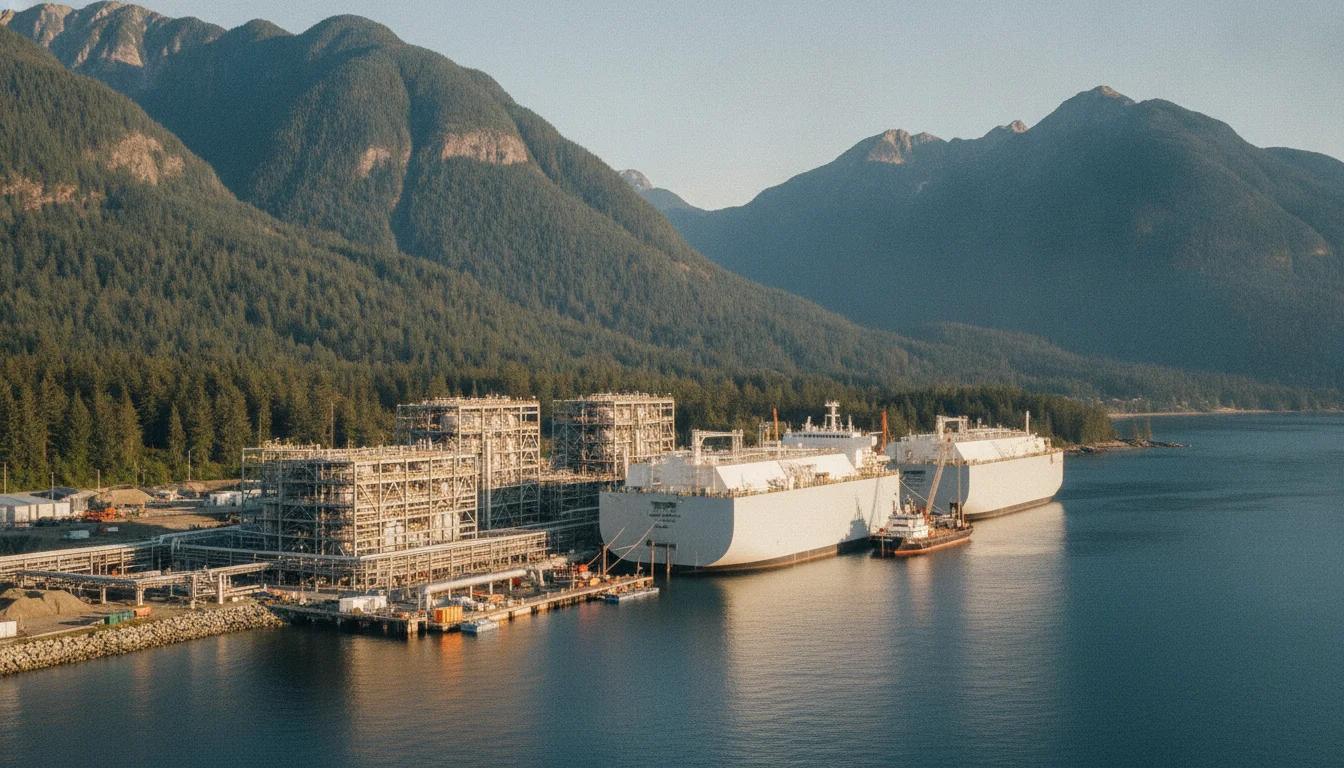
Ottawa announced a substantive policy and funding package on November 13, 2026 that will affect the Woodfibre LNG project near Squamish, British Columbia. The federal government disclosed a $200-million investment aimed at expanding Woodfibre LNG, a project long watched as a potential anchor for Canada’s net-zero LNG leadership and a driver of regional economic activity. The news, delivered in Squamish and across Ottawa, underscores the government’s push to diversify Canada’s energy exports while reinforcing Indigenous governance and environmental standards embedded in the Woodfibre project. The event matters not only for construction timetables and local employment, but also for Canada’s broader strategy to position LNG exports as a lower-emission energy pathway in international markets.
According to Natural Resources Canada, the investment aligns with Budget 2026 objectives and is designed to boost Woodfibre LNG’s throughput while preserving its low-emissions profile. The project is described as powered by British Columbia’s hydroelectricity and connected to a governance framework that integrates Indigenous oversight from Squamish Nation partners. The government frames the expansion as part of Canada’s effort to diversify non-U.S. trade in energy and to create well-paying jobs in British Columbia’s Sea-to-Sky corridor. The funding is also described as enabling exploration of a potential second phase for the facility, signaling a longer horizon for investment and regional development around Howe Sound. The federal government’s news release highlights that Woodfibre LNG aims to be the world’s first net-zero LNG facility when operations begin in late 2027. For readers seeking the government’s exact language, the official release provides the primary account of the funding, capacity targets, and the project’s environmental posture. Natural Resources Canada press release. (canada.ca)
This development comes amid broader federal housing of energy and infrastructure investments in Budget 2026 and subsequent supplementary funding provisions. In parallel with the NRCan release, Treasury Board Supplementary Estimates for 2026-27 include a line item describing funding for the Woodfibre LNG Limited Partnership contribution agreement, totaling 75,000,000 dollars. The inclusion in the supplementary estimates provides a formal budgetary basis for parts of the expansion funding and signals ongoing federal support for Woodfibre’s expansion in the context of Canada’s LNG strategy. Readers can review the official Supplementary Estimates (B), 2026-27 to see how the Woodfibre line item is represented within the government’s budgetary tables. Treasury Board Supplementary Estimates (B), 2026-27. (canada.ca)
What Happened
Federal Funding Announcement
The central event occurred on November 13, 2026, when the Government of Canada, through Natural Resources Canada, publicly announced a $200-million investment in Woodfibre LNG’s expansion. The news release locates the funding squarely within Budget 2026 priorities and frames the Woodfibre project as an exemplar of Indigenous-led environmental governance, a low-emissions LNG footprint, and a mechanism for diversifying Canada’s energy trade beyond U.S. markets. The release situates the Woodfibre project as the first major Canadian LNG project approved through an Indigenous-led environmental assessment, an important point for governance legitimacy and local buy-in. It also notes that the project will be powered by British Columbia’s clean hydroelectricity and that Woodfibre LNG aims to be the world’s first net-zero LNG facility when operations begin in late 2027. This set of claims is reinforced by the government’s line about emissions intensity and the projected economic benefits in the Squamish region. For readers who want to review the official position, the NRCan release is the primary source. Natural Resources Canada press release. (canada.ca)
Funding Details and Timeline
The $200-million funding package is framed as part of Budget 2026, with NRCan positioning the Woodfibre investment as a lever to increase production capacity while maintaining a low-emissions profile. The government notes that the project will see capacity grow from the originally planned 2.1 million tonnes per year (Mt/y) to a target range of 2.5–2.6 Mt/y, a shift that represents a meaningful uplift in export capability and market reach. The project’s timeline remains anchored by the goal of first LNG exports in late 2027, consistent with the schedule Woodfibre LNG has publicly stated in prior regulatory filings and news updates. The government’s materials repeatedly emphasize the virtue of a diversified export portfolio and a resilient energy supply for allied markets. The NRCan release documents these capacity targets, timelines, and the environmental performance claims that frame the investment’s rationale. Natural Resources Canada press release. (canada.ca)
Budgetary Context and Additional Funding
Beyond the $200-million direct investment, federal budgetary processes show an additional line item related to Woodfibre LNG within the 2026-27 supplementary estimates. The Treasury Board’s Supplementary Estimates (B) detail Funding for the Woodfibre LNG Limited Partnership contribution agreement with a $75,000,000 allocation (Vote 10b). This budgetary entry complements the direct grant-like funding announced by NRCan and helps illustrate how federal funds are being allocated across program lines to support the project’s expansion and related activities. This document is a primary source for readers seeking the official budgetary mechanics behind the expansion funding and helps describe how federal appropriations are structured within the government’s broader climate and energy agenda. Treasury Board Supplementary Estimates (B), 2026-27. (canada.ca)
Why It Matters
Economic and Trade Impacts
The Woodfibre LNG expansion is positioned as a strategic lever to diversify Canada’s non-U.S. energy trade and to amplify the role of LNG in meeting global demand for lower-emission energy sources. The NRCan release emphasizes the project’s contribution to “diversifying trade, creating jobs and lowering global emissions by expanding low-carbon LNG exports.” The government argues that by exporting Canada’s low-emission LNG to Asian and other international markets, Woodfibre can help Canada grow its economic footprint in a segment where global demand remains strong, even as energy markets adjust to evolving climate policies. The projected job creation during construction and operations—1,500 on-site workers at peak construction and 100 full-time roles during operation—are highlighted as tangible local benefits that extend to supplier networks in the Squamish region and adjacent communities. Those numbers are part of the government’s public messaging around the project’s local economic ripple effects. The government’s framing aligns with Budget 2026’s emphasis on “building big, building right, building together” as a pathway to a broader energy transition economy. For readers seeking the government’s explicit positioning, the NRCan press release is the primary source. Natural Resources Canada press release. (canada.ca)
Environmental and Indigenous Governance Implications
A core element of the Woodfibre project’s appeal rests on its environmental design choices and Indigenous partnership model. The NRCan release highlights that Woodfibre LNG represents “the first major industrial project in Canadian history to be approved through a non-treaty, Indigenous-led environmental assessment process.” This governance arrangement places Indigenous authorities at the center of environmental oversight, with the Squamish Nation playing a prominent role in regulating the project’s environmental aspects and ongoing decision-making. Proponents argue that such an arrangement demonstrates a credible model for balancing economic development with robust environmental stewardship and Indigenous participation and benefit. Critics, in turn, often examine whether federal funding to private energy projects should be conditioned on measurable outcomes or stronger competitive benchmarks. The document and public commentary thus intersect with ongoing debates about how Canada can scale LNG exports responsibly while maintaining rigorous environmental and social standards. The NRCan release provides the core public-messaging anchor for the Indigenous governance narrative. Natural Resources Canada press release. (canada.ca)
Policy Context and Debates
Canada’s LNG policy debate has long featured questions about the role of federal funding in supporting LNG projects that face capital intensity and regulatory complexity. The parliamentary brief submitted to the Standing Committee on Finance by Woodfibre LNG, though published in 2025, framed a case for targeted federal support to help Canada remain globally competitive in LNG production and export. The brief argues that Woodfibre LNG’s project benefits from Indigenous governance models, low-emission design, and opportunities for regional economic growth, and it outlines a set of recommendations to bolster federal support and policy certainty for LNG investments. This background helps readers understand why Budget 2026 and the subsequent supplementary estimates contain explicit Woodfibre-related lines of funding and why policymakers continue to evaluate energy policy through the lens of competitiveness and Indigenous participation. Woodfibre LNG recommendations to Parliament. (ourcommons.ca)
What’s Next
Construction and Operational Milestones
With the funding in place and the project advancing, Woodfibre LNG remains on a construction trajectory that aligns with its stated goal of commissioning by late 2027. The NRCan release reiterates the plan for on-site construction in the Squamish area and emphasizes the importance of hydroelectric power in supporting the plant’s low-emission profile. As the project nears completion, the company and its partners are expected to finalize procurement, regulatory compliance steps, and logistical planning to prepare for commercial operations. The first cargo sail, as indicated by government leaders, is anticipated in 2027, marking a tangible milestone for Canada’s LNG export program and for the region’s economic participation. The exact operational date will depend on the pace of construction, regulatory sequencing, and the successful integration of Indigenous governance processes into ongoing project oversight. For readers seeking the project’s formal timeline, the NRCan release remains the primary source. Natural Resources Canada press release. (canada.ca)
Funding Disbursement and Accountability
Beyond the construction phase, federal funding arrangements typically require ongoing reporting and accountability to ensure that the funds support intended outcomes, including expanded capacity, emissions reductions, and job creation. The supplementary estimates provide a formal budgetary framework for part of the funding package, including the Woodfibre LNG Limited Partnership contribution agreement. As the project progresses, observers will be watching for milestone reporting, environmental performance updates, and Indigenous participation metrics, all of which will contribute to the broader assessment of whether the investment achieves its stated policy goals. The Treasury Board’s published material serves as a baseline for understanding how the money is allocated and what reporting obligations may accompany it. Treasury Board Supplementary Estimates (B), 2026-27. (canada.ca)
Next Steps
Regulatory and Market Watch
As Woodfibre LNG continues toward expansion completion and increased export capacity, market watchers will be attentive to several factors. These include: the project’s ability to meet its stated net-zero emissions target on day one of operations, the quality and cost of supply relative to competing LNG projects (including U.S.-based facilities), and the degree to which Indigenous governance arrangements continue to inform regulatory outcomes and community benefits. Analysts and policymakers will also monitor how federal funding interacts with provincial and local approval processes and how it shapes Canada’s broader LNG export strategy in a global market characterized by shifting demand, evolving climate policies, and a growing emphasis on low-emission energy pathways. In that context, the Woodfibre expansion funding serves as a signal of Canada’s willingness to blend policy, finance, and governance to advance a deliberate energy transition with a diversified export portfolio.
Closing
The Woodfibre LNG expansion funding marks a milestone in Canada’s approach to balancing energy development, Indigenous partnership, and climate ambitions. The federal government has placed a concrete investment behind the project’s expansion, while the budget process has embedded supplementary funding that aligns with a broader climate and trade strategy. As late-2027 approaches and construction accelerates, observers will watch for how the project translates into higher export capacity, local employment, and a demonstrable emissions profile that can stand up to international scrutiny. For readers who want to stay aligned with the official accounts, both Natural Resources Canada’s news release and the Treasury Board’s supplementary estimates provide primary sources that ground the story in verifiable facts.
If you’re tracking Canada’s LNG trajectory, this development is a concrete data point showing how government funding, Indigenous governance, and market demand converge to shape the country’s energy export mix. Stay tuned for updates as Woodfibre LNG progresses through construction and toward its anticipated first cargo, and as Ottawa continues to publish budgetary and policy signals that could influence future expansions and related energy infrastructure across the province.