News
AI-powered Wildfire Forecasting BC and Pacific Northwest
AI-powered wildfire forecasting in BC and the Pacific Northwest provides crucial, data-driven insights to inform policy decisions and practices.
By Craig Burrows · July 19, 2026 · 14 min read
 By Craig Burrows · July 19, 2026 · 14 min read
The news is unfolding across British Columbia and the Pacific Northwest as authorities, researchers, and industry partners accelerate the deployment of AI-powered wildfire forecasting BC and Pacific Northwest. In recent months, provincial agencies in British Columbia have stepped up their use of artificial intelligence to bolster wildfire prediction, detection, and decision support, signaling a shift toward more data-driven, proactive fire management. The initiative comes as regional fire seasons grow more complex due to climate variability, rapidly changing weather, and expanding ignition risks, emphasizing the need for fast, accurate, and actionable forecasting tools. For readers of BC Times focused on technology and market trends, the development represents a critical intersection of public safety, public policy, and advanced analytics. AI-powered wildfire forecasting BC and Pacific Northwest is now on the radar of government programs, academic labs, and private-sector pilots alike, illustrating how data science is reshaping how communities prepare for and respond to wildfire threats. (www2.gov.bc.ca)
The broader context is that AI and machine learning are being woven into established wildfire prediction frameworks to complement traditional science-based methods. In British Columbia, for example, predictive services teams are actively exploring data science and AI as part of ongoing efforts to understand wildfire behavior and support decision-makers in real time. The province has highlighted partnerships with academic institutions to improve wildfire detection and monitoring, signaling a developmental path that seeks to integrate AI capabilities with existing warning systems and fire danger indices. This emphasis on AI does not imply a replacement of human expertise; rather, it aims to augment analysts and incident commanders with richer data streams, faster analysis, and more targeted situational awareness. As BC’s provincial programs outline, AI is one of the strategic objectives under the Premier’s Emergency Task Force framework for emergencies, underscoring official government interest in scalable, AI-assisted wildfire forecasting. (www2.gov.bc.ca)
In parallel, across the border, researchers and agencies in the Pacific Northwest are testing AI-enabled forecasting tools and integrating machine-learning fire models with traditional weather and fire-spread systems. Across the region, studies and pilot projects highlight the potential of AI to improve forecast accuracy for daily fire danger, wind behavior, and rapid-fire spread, which are critical for timely resource allocation and tactical planning. While many efforts remain in pilot or research phases, the momentum is clear: AI-powered approaches are being positioned as a significant component of next-generation wildfire management in the Pacific Northwest and beyond. This cross-border interest aligns with U.S. federal and regional research programs that seek to enhance predictive capabilities for fire weather, fire spread potential, and suppression planning. (pnnl.gov)
Section 1: What Happened
AI Introduction within BC Predictive Services
- What is changing: The Province of British Columbia’s Predictive Services unit has publicly identified AI and data science as a path to enhance wildfire behavior prediction and monitoring. The official communication notes that AI is among the technologies the PSU is evaluating to better understand wildfire behavior and to support operational decision makers. This reflects a formal, ongoing interest in integrating AI into predictive workflows, complementing the Canadian Forest Fire Danger Rating System (CFFDRS) with modern data-driven techniques. The work is described as part of a broader effort to expand predictive services through partnerships with academic partners and innovation programs. The key takeaway is the intent to augment, not supplant, established wildfire forecasting capabilities. (www2.gov.bc.ca)
AI-Enhanced Remote Sensing and Detection in BC Wildfire Service
- What happened and when: In a specific milestone, BC Wildfire Service and provincial digital and wildfire leadership announced AI-enabled enhancements to remote sensing and image analysis for wildfire detection and monitoring. The announcement underscores the deployment of machine learning models that classify and interpret large multispectral image streams to identify fire activity more quickly and accurately than traditional methods alone. This marks a concrete move from exploratory AI to operational tools used to improve situational awareness during active fire events. The public-facing date attached to this initiative is March 13, 2025, when BC’s government communications detailed the AI-supported remote sensing efforts within BC Wildfire Service. The implication is a formal public commitment to harness AI for faster, more reliable detection and decision support at field and operations centers. (digital.gov.bc.ca)
UBCO and Academic Research on AI-Driven Fire Forecasting
- What happened and when: In December 2025, researchers from the University of British Columbia Okanagan and collaborators highlighted AI-powered vision and data-driven approaches to render wildfire dynamics more interpretable and actionable. The project illustrates how computer vision techniques can transform wildfire science by translating complex, chaotic wildfire behavior into accessible, decision-relevant signals for incident managers and communities. While the public-facing article focuses on research findings, it reinforces the active collaboration between BC institutions and government partners to move AI-powered wildfire forecasting BC and Pacific Northwest closer to routine practice. This example also demonstrates how AI is being used to bridge gaps between remote sensing data, ground truth, and operational needs. (news.ok.ubc.ca)
Cross-Border and Private-Sector Initiatives in AI Fire Prediction
- What happened and when: In parallel to public-sector efforts, private-sector and cross-border initiatives are advancing AI-enabled wildfire forecasting. Vancouver-based innovation programs and support for AI-driven wildfire prediction technologies—some focused on lightning-induced fire risk reduction—signal a broader ecosystem around AI-powered forecasting. An example is the funding support for Skyward Wildfire Technologies under Innovate BC’s Integrated Marketplace program, which targets the effectiveness of AI-enabled lightning wildfire prediction and risk reduction interventions. The program, backed by provincial funding, reflects a clear policy signal: AI tools are being considered as part of comprehensive wildfire risk management strategies, including prevention and rapid response. While the specific funding events occur across 2024–2025 windows, public notices in 2025-2026 confirm continued government support for AI-enabled forecasting pilots. (innovatebc.ca)
AI-Driven Forecasting in the Pacific Northwest: Research and Practice
- What happened and when: In the broader Pacific Northwest, research efforts and applied programs are exploring how AI-based forecasts can connect with weather models to improve fire spread predictions and risk assessments. Papers and reports from Pacific Northwest National Laboratory (PNNL) and U.S. Forest Service researchers highlight the integration of machine-learning components with physics-based models to enhance wildfire prediction in North American contexts. These studies emphasize cross-regional relevance, showing how AI-enhanced forecasts can complement existing fire danger indices and weather forecast systems in the Northwest. The work suggests that cross-border data sharing and joint research are likely to intensify as tools mature and demonstrate value in real-world operations. (pnnl.gov)
What This Means in Practice for BC and the Pacific Northwest
- What happened and context: Collectively, these moves signal a shift in how agencies and researchers approach wildfire forecasting. AI-powered wildfire forecasting BC and Pacific Northwest implies a multi-layered approach: AI augments detection and early warning; AI-derived insights feed decision support for incident management; and cross-border collaboration accelerates knowledge transfer and best-practice adoption. A key element is the recognition that data-rich, real-time analyses—made possible by AI and machine learning—can help prioritize resource deployment, inform evacuation planning, and improve overall resilience in fire-prone communities. The initiatives align with broader regional programs that integrate machine-learning fire models with land-surface or weather forecasting to produce more accurate and timely forecasts for upcoming days. (www2.gov.bc.ca)
Section 2: Why It Matters
Broader Strategic Value of AI-Powered Fire Forecasting
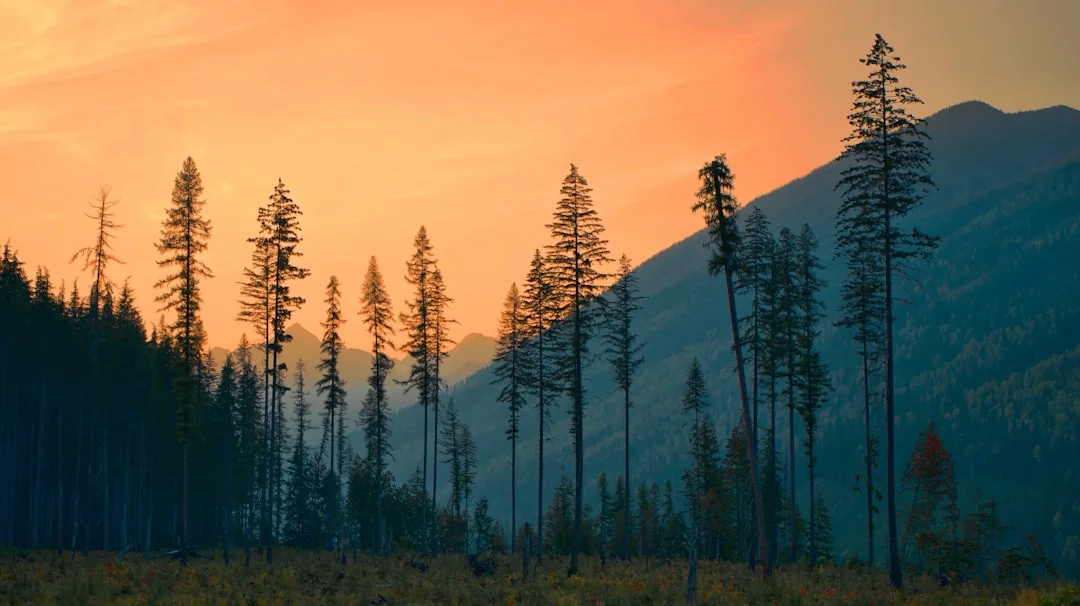
Photo by Adam Roguljic on Unsplash
- Why it matters: The adoption of AI-powered wildfire forecasting BC and Pacific Northwest is driven by the need for faster, more reliable, and more nuanced insights into fire behavior under rapidly changing conditions. AI-enabled systems can process vast streams of satellite imagery, sensor data, weather observations, and historical fire records to detect anomalies, forecast potential fire growth, and support tactical decisions in real time. The potential benefits include improved incident command decisions, more effective resource allocation, earlier warnings for communities at risk, and a better understanding of how fires respond to shifting climate variables. Academic and government sources emphasize that AI is not a replacement for human expertise but a force multiplier for decision-makers who need timely, data-backed guidance during fast-moving events. (www2.gov.bc.ca)
Cross-Border Collaboration and Shared Infrastructure
- Why it matters: The Pacific Northwest and British Columbia share ecological and meteorological characteristics that affect wildfire behavior. AI-powered wildfire forecasting BC and Pacific Northwest fosters cross-border collaboration by enabling data sharing, joint model validation, and harmonization of forecasting outputs that can be used by both Canadian and U.S. agencies. The cross-border collaboration is reinforced by research initiatives that connect BC-based datasets with broader Northwest U.S. modeling efforts. This alignment aims to standardize indicators of fire danger and forecast confidence, reducing confusion during joint operations and enabling more coherent regional responses. The available research and programmatic announcements point to a future in which joint exercises and shared datasets become routine, enabling faster, coordinated action when large fires cross jurisdictional boundaries. (www2.gov.bc.ca)
Operational Readiness and Agency Capacity
- Why it matters: For field operations and incident management—where seconds can influence outcomes—AI-powered forecasting BC and Pacific Northwest improves situation awareness. AI-enabled detection can shorten the gap between ignition and detection, while AI-driven forecasts of wind shifts and spread potential can help suppression teams position resources more effectively. In BC, the integration of AI into remote sensing and predictive workflows is framed as a complement to existing fire danger indices and weather services, indicating a layered approach to operational readiness. In the U.S. Pacific Northwest, research and pilot programs emphasize the value of AI in producing reliable short-term forecasts that support day-to-day decisions and tactical responses. These developments collectively contribute to safer, more efficient firefighting operations and community protection. (digital.gov.bc.ca)
Public-Private Ecosystem and Economic Implications
- Why it matters: The emergence of AI-powered wildfire forecasting BC and Pacific Northwest has implications for job creation, talent development, and market opportunities within the region’s tech and resilience sectors. Initiatives like Skyward Wildfire Technologies’ AI-enabled forecasting, supported by Innovate BC funding, demonstrate how government-backed programs can stimulate private sector innovation and deployment at scale. As AI tools move from pilots to routine use, there may be increased demand for data engineering, model validation, satellite analytics, and field integration expertise. Beyond direct wildfire management, improved forecasting capabilities can influence insurance, infrastructure resilience planning, and emergency management workflows—areas with significant regional economic impact. (innovatebc.ca)
Contextual Background: Data Availability and Research Foundations
- Why it matters: The success of AI-powered wildfire forecasting depends on access to rich, curated datasets and robust validation frameworks. Projects like BCWildfire: A Long-term Multi-factor Dataset and Deep Learning Benchmark for Boreal Wildfire Risk Prediction illustrate the value of compiling long-running, high-resolution data that captures weather, fuels, topography, and actual fire events. Such datasets enable the training and benchmarking of diverse AI models, from transformer-based time-series predictors to multimodal networks that fuse imagery with meteorological data. The creation of standardized datasets and benchmarks helps accelerate innovation while providing a transparent basis for comparing different forecasting approaches. This research infrastructure supports BC and the Pacific Northwest’s ongoing AI-driven forecasting efforts and aligns with international trends toward reproducible wildfire analytics. (ojs.aaai.org)
Key Players, Technologies, and Thematic Patterns
- Why it matters: A recurring theme in AI-powered wildfire forecasting BC and Pacific Northwest is the collaboration among government agencies, universities, and private technology firms. BC’s predictive services and BC Wildfire Service emphasize AI as a capability within a broader ecosystem that includes satellite data, automated classification, and ground-based observations. Academic work from the Pacific Northwest and Canada demonstrates the technical feasibility and performance gains from ML-based fire models integrated with physics-based systems and weather forecasts. The convergence of vision-based detection, machine-learning risk modeling, and decision-support dashboards is central to the current wave of AI-enabled forecasting. The practical takeaway for readers is that the region is actively building an AI-enabled infrastructure for fire planning, response, and resilience, with ongoing pilots and research translating into real-world capabilities. (digital.gov.bc.ca)
Section 3: What’s Next
Expected Trajectories and Timelines
- What’s next: Looking ahead, the evolving landscape of AI-powered wildfire forecasting BC and Pacific Northwest is likely to feature expanded pilots, broader data integration, and more explicit cross-border collaboration. Based on current program descriptions and research trajectories, readers can anticipate:
- Expanded AI-assisted detection: Additional remote sensing and image-analysis tools to identify fire activity more rapidly and accurately.
- Short- to mid-term forecast enhancements: AI models that complement weather forecasts to project fire spread and growth over 24–72 hours, enabling more proactive resource allocation.
- Cross-jurisdiction data sharing: Formalized data-sharing arrangements and common forecasting outputs to support coordinated responses along shared frontiers and cross-border fire corridors.
- Expanded datasets and benchmarking: Larger, higher-resolution datasets for training and validating AI wildfire forecasting models, with publicly accessible benchmarks to enable comparative evaluation.
- Public communication and risk messaging: AI-generated risk indicators delivered to communities and stakeholders to support evacuation planning and resilience-building. These developments align with ongoing academic efforts and public-sector initiatives, which collectively point toward a trajectory of greater AI-driven capability in wildfire forecasting across the region. (www2.gov.bc.ca)
Next Steps for Stakeholders: What to Watch For
- What’s next: Stakeholders—including provincial authorities in BC, regional U.S. agencies, academic researchers, and technology providers—will likely focus on several concrete milestones:
- Validation and governance: Establishing rigorous model validation protocols, performance benchmarks, and governance practices to ensure reliability and accountability of AI forecasts.
- Operational integration: Embedding AI outputs into existing incident management workflows, dashboards, and decision-support systems so that field teams can act on insights in real time.
- Community risk communication: Developing clear, accessible messaging that communicates forecast-derived risk without overwhelming or confusing the public.
- Cross-border collaborations: Formalizing joint exercises and data-sharing agreements to ensure that forecasts produced on one side of the border are usable and trusted on the other, particularly in fire-prone corridors and shared landscapes.
- Industry-scale deployment: Moving from pilot programs to broader deployments across both provincial jurisdictions and neighboring states, with scaled infrastructure to handle larger data volumes and more frequent forecast updates. These steps reflect a practical path from research and pilots to sustained, scalable forecasting capabilities that can withstand the seasonality and variability of wildfires in the Pacific Northwest and British Columbia. (www2.gov.bc.ca)
Long-Term Outlook: Implications for Policy, Markets, and Public Safety
- What’s next: The long-term impulse behind AI-powered wildfire forecasting BC and Pacific Northwest is to strengthen resilience, reduce losses, and improve the agency-to-community flow of critical information. Policy implications include potential updates to risk communication standards, data-sharing regulations, and procurement practices for AI-enabled tools. Market implications include new roles for data scientists, model validators, and field integrators, as well as opportunities for startups and established tech firms focused on geospatial analytics, remote sensing, and emergency management software. From a public safety perspective, AI-enhanced forecasting could contribute to shorter response times, more efficient dispatch of firefighting resources, and more accurate hazard warnings for at-risk communities. For readers of BC Times, this signals a tangible, data-driven transformation in how the region approaches wildfire risk—an evolution shaped by rigorous science, disciplined governance, and continuous innovation. (news.ok.ubc.ca)
Comparative Perspectives: How AI-Enhanced Forecasts Compare with Traditional Methods
- What’s next: A recurring question is how AI-powered wildfire forecasting BC and Pacific Northwest stacks up against traditional methods. The consensus in current literature and agency communications is that AI augments conventional forecast systems rather than replaces them. In practical terms, AI can handle large, diverse datasets and identify complex patterns that may be difficult for human analysts to discern in real time. The integration of AI with established weather models and fire behavior prediction frameworks is designed to yield more reliable short-term forecasts and faster detection capabilities, supporting more informed and timely decisions on the ground. Critics stress the importance of maintaining human oversight, transparent model validation, and clear communication about forecast uncertainty. The balanced view—emphasized by researchers and practitioners—advocates for a symbiotic relationship where AI enhances human expertise and decisions, not replaces them. This approach is evident in BC’s public statements about AI as a tool to support decision-makers and in U.S. regional research emphasizing augmentation rather than replacement. (www2.gov.bc.ca)
Real-World Implications for Communities and Businesses
- What’s next: As AI-powered wildfire forecasting BC and Pacific Northwest becomes more integrated into operations, communities near fire-prone regions can expect more timely alerts and better risk-informed planning. Businesses tied to wildfire resilience—insurance, critical infrastructure operators, and outdoor recreation economies—may benefit from more reliable forecasts and improved risk signaling. While specific outcomes will depend on the rollout pace and the maturity of AI models, the trajectory is toward more systematic, data-informed decision-making across agencies and industries. The BC government’s engagement with AI in wildfire management, along with cross-border research initiatives, points to a future where resilience investments are closely tied to AI-enabled forecasting capabilities. (digital.gov.bc.ca)
Closing
In sum, AI-powered wildfire forecasting BC and Pacific Northwest reflects a deliberate advance toward incorporating AI as a core element of wildfire risk management. Government programs in British Columbia have explicitly positioned AI as a path to augment traditional forecasting methods, with concrete deployments in remote sensing and predictive workflows. Academic research from BC and the Pacific Northwest underscores the potential for AI to improve model accuracy and speed, while cross-border initiatives signal growing collaboration across jurisdictions. As pilots mature into broader deployments, the region’s approach—anchored in data, validated models, and transparent governance—aims to deliver safer communities, more resilient infrastructure, and smarter resource use during wildfire seasons.

Photo by Dave Hoefler on Unsplash
Readers seeking ongoing updates can follow provincial wildfire services communications, university research press releases, and cross-border research collaborations’ public reports. The convergence of government, academia, and private-sector innovation in AI-powered wildfire forecasting BC and Pacific Northwest points to a future where data-driven insights become a routine and indispensable part of wildfire preparedness and response. This is not merely a technical evolution; it is a strategic shift toward resilience that leverages the best of machine learning, satellite analytics, and human expertise to protect lives, property, and landscapes in one of North America’s most fire-prone regions. (www2.gov.bc.ca)