News
LNG Canada Moves Forward with Phase 2 Expansion in Kitimat
LNG Canada has announced a Final Investment Decision for its Phase 2 expansion at the Kitimat LNG facility, increasing capacity to 28 million tonnes…
By Craig Burrows · October 16, 2026 · 10 min read
 By Craig Burrows · October 16, 2026 · 10 min read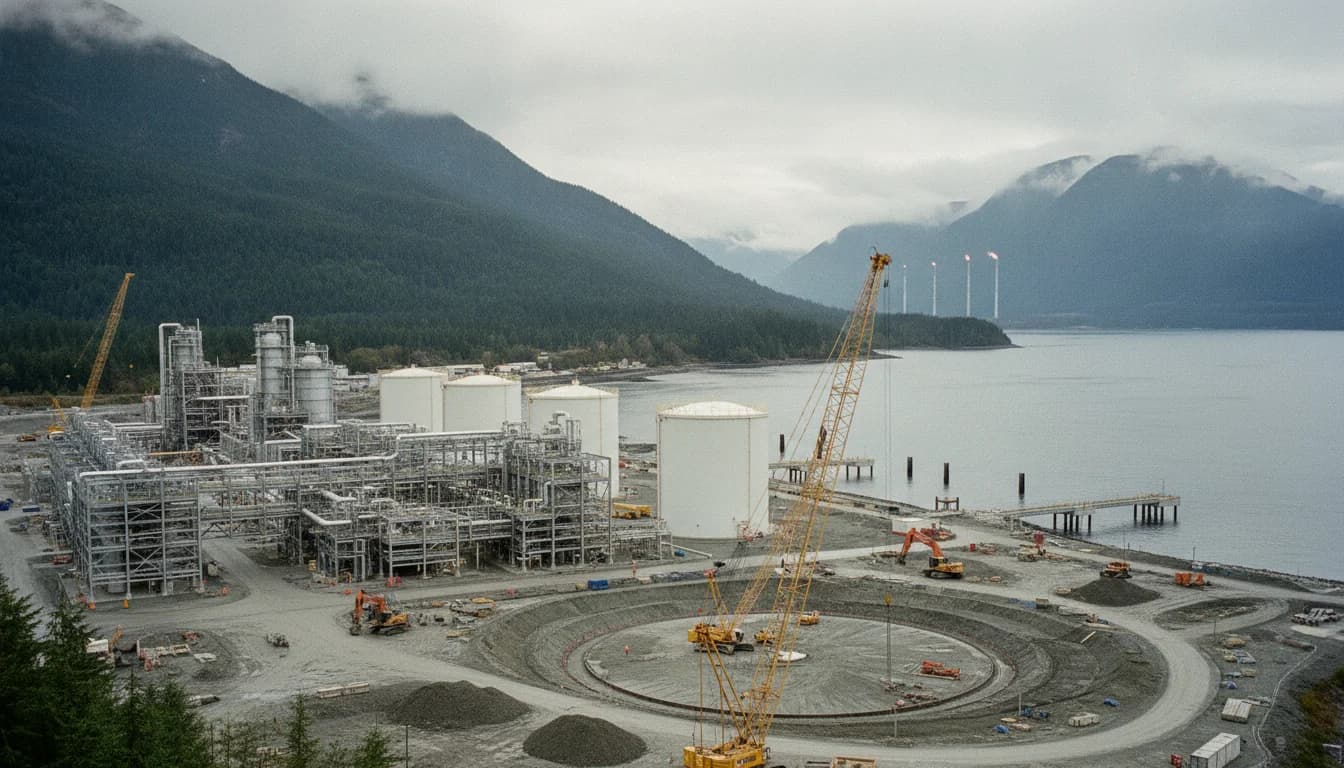
Vancouver, British Columbia — In a watershed move for Canada’s energy export strategy, LNG Canada announced on September 29, 2026, that its Joint Venture Participants have taken a Final Investment Decision to proceed with the Phase 2 expansion at the Kitimat LNG facility in Kitimat, British Columbia. The decision, disclosed in a formal release, marks a definitive step in scaling Canada’s liquefied natural gas capacity and broadening access to Asian energy markets. The announcement sets the stage for a multiyear construction and commissioning program built on the existing Phase 1 footprint, aligning with ongoing pipeline and terminal enhancements that support higher throughput. This development comes after a protracted period of regulatory reviews, community engagement, and strategic planning by LNG Canada and its owners. According to LNG Canada, the move expands the plant’s capacity from 14 million tonnes per annum (mtpa) to 28 mtpa, with two additional LNG trains, a storage tank, an extra loading berth, and upgraded utility and process systems. The joint venture participants—Shell, PETRONAS, PetroChina, Mitsubishi Corporation, and KOGAS—announced the FID in the Kitimat facility on September 29, 2026. (lngcanada.ca)
The news quickly reverberated beyond the energy sector. Canada’s Prime Minister Mark Carney welcomed the decision as a landmark investment, highlighting a private sector commitment valued at roughly C$33 billion that is expected to fortify Canada’s role as a major LNG supplier and to strengthen trade ties with Indo-Pacific markets. Government briefings framed the Phase 2 expansion as a pivotal upgrade to the country’s export image and a signal of Canada’s commitment to lower-emission LNG at scale. In parallel, the government’s Major Projects Office has noted that Phase 2 involves coordinated efforts with the Coastal GasLink (CGL) pipeline, including capacity expansion to accommodate the larger facility’s throughput. (pm.gc.ca)
The coalition of partners—Shell, PETRONAS, PetroChina, Mitsubishi, and KOGAS—joins LNG Canada in presenting Phase 2 as a seamless extension of a facility already positioned as a cornerstone of Canada’s LNG strategy. The Phase 2 work builds on Phase 1’s infrastructure and commissioning, leveraging an integrated supply-chain approach that has already mobilized significant construction activity on the Kitimat site. While the Phase 1 project has begun exports and established a baseline for engineering and logistics, Phase 2 promises to scale production, storage, and loading capacity, thereby expanding LNG Canada’s export capability and potentially altering regional energy trade flows in the near to medium term. The official announcements from LNG Canada and its investors affirm two new trains and related infrastructure necessary to double the site’s output. (lngcanada.ca)
One liftable fact in this framing: According to LNG Canada’s September 29, 2026 release, the Joint Venture Participants have taken a Final Investment Decision to proceed with Phase 2 expansion at the Kitimat facility, increasing capacity from 14 mtpa to 28 mtpa with two additional trains, alongside a new storage tank and loading berth. This central development is the anchor for subsequent analysis and reporting, and the source link provides the official scope and scale of the project as described by the project owners. (lngcanada.ca)
Section 1: What Happened
Announcement Details
The September 29, 2026 Final Investment Decision (FID) marks LNG Canada’s formal permission-by-investment to advance Phase 2 of the Kitimat export complex. The release specifies that the expansion will bring two additional LNG trains online, expanding the plant’s overall capacity from 14 mtpa to 28 mtpa. It also calls for a dedicated LNG storage tank, an additional loading berth, and expanded utility and process systems to service the larger operation. The joint venture participants—Shell, PETRONAS, PetroChina, Mitsubishi Corporation, and KOGAS—are the ownership consortium behind LNG Canada, and their coordinated decision to fund Phase 2 represents a substantial escalation of the project’s scale and commercial reach. The announcement is anchored in Kitimat, British Columbia, within the traditional territory of the Haisla Nation, recognizing ongoing engagements with Indigenous communities as part of the project’s broader regulatory and societal context. (lngcanada.ca)
Timeline and Scope
The official statements emphasize that Phase 2 is designed to leverage the existing Phase 1 facility, with the addition of two trains enabling total throughput of 28 mtpa. The scope also includes expanded infrastructure necessary to support the higher operating rate—specifically an additional storage capacity and a dedicated loading berth, which are critical to sustaining export logistics as volumes rise. The release further notes that Phase 2 must pass through standard regulatory and environmental processes, consistent with LNG Canada’s project governance model and British Columbia’s permitting regime. In parallel, the government and project partners have signaled continued coordination with the Coastal GasLink pipeline, which is integral to delivering feedgas to the Kitimat facility at the scales envisioned by Phase 2. (lngcanada.ca)
Contractor and Execution Context
Subsequent reporting confirms that the Phase 2 execution framework has been shaped by a selected engineering and construction consortium, adding a layer of certainty to the project’s delivery path. Public disclosures by the EPC contractor indicate readiness to proceed with FEED (front-end engineering design) and subsequent procurement and construction activities, consistent with the FID’s timing. A notable milestone in this execution sequence was the identification of the engineering partner for Phase 2, which aligns with LNG Canada’s governance model that relies on a handful of large, integrated contractors to manage the complex, multi-year build-out. This arrangement is reinforced by sector press releases detailing the selection of the EPC entity and the LNTP (limited notice to proceed) conditions that enable initial execution activities in anticipation of full-scale construction. (jfjvkitimat.com)
Indigenous and Community Context
The Kitimat site sits within Haisla Nation territory, a factor that has shaped both the permitting process and ongoing partnerships with Indigenous communities. Canadian and provincial authorities have underscored the importance of Indigenous consultation as part of major resource projects, and LNG Canada has repeatedly highlighted its commitment to working with the Haisla Nation and other local communities. The government’s Major Projects Office documentation and LNG Canada communications reiterate that Phase 2 sits within a broader framework of environmental stewardship, emissions considerations, and community engagement that guided Phase 1. The context matters not only for regulatory compliance but also for social license and regional engagement strategies as the project transitions from planning to construction. (canada.ca)
Section 2: Why It Matters
Economic and Strategic Impacts
The Phase 2 expansion is widely described as a watershed investment, with government and corporate spokespeople framing it as a transformative, near-shoring of Canada’s LNG export capabilities. The Prime Minister’s office highlighted the project as one of the country's largest private sector commitments in history, noting a roughly C$33 billion investment. Analysts and industry observers emphasize that the scale of this expansion—doubling export capacity—could recalibrate Canada’s energy balance with Asia, particularly as global LNG markets reassess supply chains in light of energy security concerns and diversification of supplier footprints. The official communications stress that Phase 2 will strengthen Canada’s position in LNG markets and contribute to a more resilient national energy export framework, while also showcasing Canada’s capacity to deliver lower-emission natural gas at scale. (pm.gc.ca)
Energy Market Dynamics
LNG Canada’s Phase 2 expansion aligns with broader market expectations for LNG demand growth, especially in Asia, where buyers have sought stable, lower-carbon gas supply options. The expansion corresponds with a global trajectory toward larger LNG plants with higher throughput, and it also intersects with ongoing discussions about pipeline capacity, terminal flexibility, and shipping logistics. While the Phase 1 footprint has already unlocked exports, Phase 2 is positioned to extend Canada’s reach in an increasingly crowded LNG landscape, potentially affecting pricing dynamics, regional competition, and long-term contracts. Government and industry analyses note the need for synchronized regulatory processes, pipeline capacity, and port logistics to ensure that the incremental supply can reach global customers efficiently. (lngcanada.ca)
Regional Economic Effects and Local Workforce
LNG Canada has repeatedly described the project as a catalyst for regional development, estimating significant job creation and supply-chain opportunities across British Columbia and beyond. While precise employment figures for Phase 2 will depend on construction phasing and procurement, the project’s scale implies substantial direct, indirect, and induced employment impacts over multiple years. The kitimat site’s continuing operations also intersect with local tax bases, port activity, and regional services, potentially influencing community planning and infrastructure investment in Kitimat and nearby districts. Industry observers also point to potential spillovers into supplier ecosystems, including fabrication, equipment training, and maintenance services, which could extend well beyond the immediate vicinity of Kitimat. (shell.ca)
Environmental and Energy-Efficiency Considerations
LNG Canada has framed Phase 2 within a narrative of lower-carbon LNG production, a line of argument that has been central to government communications and external reviews. The project’s footprint continues to be assessed for emissions intensity, integration with existing energy systems, and opportunities for fuel switching and efficiency improvements across the plant and its supporting facilities. As with Phase 1, Phase 2’s environmental profile will hinge on design choices, feedgas sourcing, and the effectiveness of carbon mitigation practices, as well as ongoing monitoring. Policy makers and environmental advocates will watch closely for performance data from commissioning tests, emissions reporting, and lifecycle assessments, particularly as capacity scales dramatically. (canada.ca)
Geopolitical and Global Trade Context
Canada’s LNG ambitions sit within a broader geopolitical and energy-security discourse that includes trade diversification, international partnerships, and climate considerations. The Phase 2 decision highlights Canada’s willingness to leverage its natural resources on the world stage, while balancing domestic energy priorities with environmental commitments. Observers expect continued dialogue about permitting timelines, cross-border infrastructure coordination, and the resilience of supply chains in a world that increasingly values secure, transparent, and lower-emission energy sources. The government and corporate statements position Phase 2 as a tangible manifestation of those priorities, with implications for bilateral and multilateral trade relationships, particularly in the Indo-Pacific region. (pm.gc.ca)
What This Means for Policy and Regulation
The Phase 2 decision intersects with regulatory regimes governing LNG facilities, coastal pipelines, and port operations. British Columbia’s environmental assessment processes, along with federal oversight of large energy infrastructure, will shape the pace and sequencing of construction activities, with ongoing stakeholder engagement and potential adjustments to permits as the project proceeds. The government’s public materials emphasize that major projects like Phase 2 must comply with climate action commitments and rigorous environmental standards, while also delivering measurable economic benefits. Policymakers will be watching for metrics on emissions reductions, local hiring, and community benefits, as well as the project’s ability to align with Canada’s broader energy strategy and export objectives. (canada.ca)
Section 3: What’s Next
Construction and Delivery Path
With the FID in place, LNG Canada and its joint venture partners will move forward into detailed design, procurement, and the early stages of construction. The joint venture’s selection of an EPC partner—an arrangement under which JGC Fluor BC LNG II (JFJV) has been identified as delivering Phase 2 engineering and construction—adds clarity to the execution plan. LNTP (limited notice to proceed) approvals for the Phase 2 work were issued around late September 2026, enabling early front-end activities while full-scale construction schedules are finalized. Observers will watch closely for milestones such as FEED completion, procurement packages, major equipment orders, and the sequencing of site mobilization in Kitimat. The LNG Canada ecosystem has already demonstrated a multi-year build tempo, and Phase 2 is expected to extend that cadence with the scale being added. (jfjvkitimat.com)
Regulatory and Community Milestones
The regulatory journey for Phase 2 will continue to unfold in parallel with construction planning. The Coastal GasLink expansion remains a critical component, as the pipeline’s capacity to deliver feedgas is essential to sustaining two additional LNG trains. The government and project sponsors are expected to publish environmental monitoring plans, traffic and logistics assessments, and Indigenous engagement updates as part of ongoing regulatory compliance. Public communications from LNG Canada and partner entities suggest continued collaboration with the Haisla Nation and other communities to ensure that upgrades align with local interests and sustainable development goals. These milestones will be closely tracked by provincial authorities, federal agencies, and market observers as the project advances from FID to real-world execution. (canada.ca)
What to Watch For
- Major procurement and engineering milestones: Bills of materials, major equipment packages, and the start of front-end procurement activities will indicate the pace of construction.
- LNTP and EPC progress: LNTP status updates and EPC contractor performance will signal readiness for full-scale field work and commissioning timelines.
- Regulatory updates: Environmental, social, and governance (ESG) reporting, as well as permitting adjustments, will shape the final schedule and budget.
- Indigenous and community outcomes: Ongoing engagement results, community benefits plans, and project-related infrastructure investments will be key local signals.
- Market signals: LNG pricing, contracting activity, and Asia-Pacific demand trends will help gauge the pace and scale of the project’s market impact.
Closing
The September 29, 2026 Final Investment Decision for LNG Canada Phase 2 Expansion Kitimat represents a turning point for Canada’s LNG ambitions, signaling a bold step toward doubling export capacity and aligning with a globally evolving energy market. While the project’s ultimate timetable remains contingent on regulatory approvals, financing continuity, and the smooth integration with Coastal GasLink, the core commitments are in place and the industry is watching closely. Readers seeking updates should follow official channels from LNG Canada, Shell, and the Canadian government for ongoing disclosures, along with independent coverage from major financial and energy news outlets. The expansion’s scale and implications are set to ripple across markets, policy, and regional development as the Kitimat facility moves from plan to production at an accelerated pace. (lngcanada.ca)