News
Anahim Lake Solar Project Breaks Ground
BC Times reports on the Anahim Lake Solar Project groundbreaking and its impact on diesel reductions and grid modernization.
By Craig Burrows · October 26, 2026 · 11 min read
 By Craig Burrows · October 26, 2026 · 11 min read
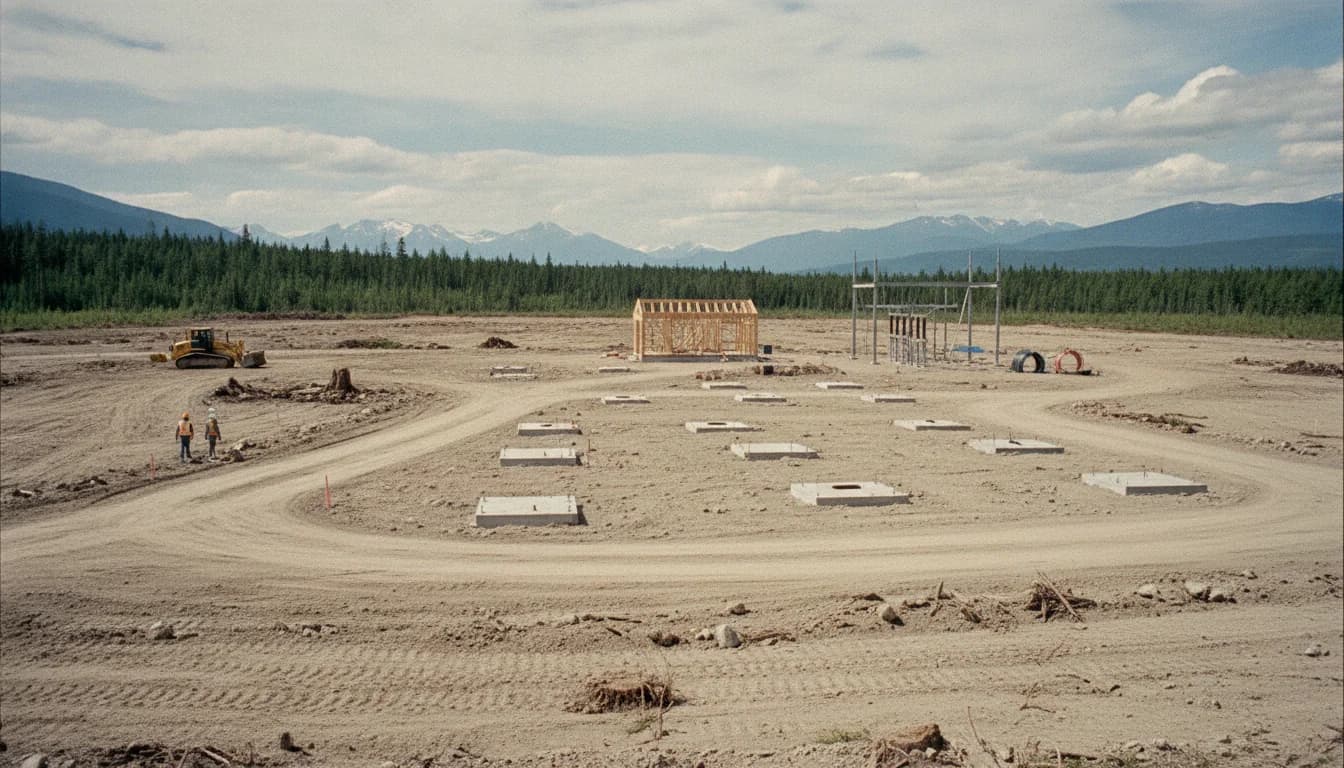
The Ulkatcho First Nation’s Anahim Lake Solar Project broke ground on June 11, 2025, signaling a major step in replacing diesel with renewable energy for a remote community in British Columbia. The project—a 3.8 MW solar facility that will link into the Anahim Lake Station microgrid—emerged as a flagship example of Indigenous-led clean energy development supported by federal, provincial, and utility partners. This milestone coincides with a broader push across Canada to accelerate electrification in rural and remote areas, while demonstrating the practical, on-the-ground benefits of public-private-community collaboration. The news comes as a wave of official disclosures over the past year has detailed the project’s financing, construction timeline, and grid integration plan, underscoring the commitment to a more reliable, low-emission energy future for Ulkatcho and neighboring Nimpo Lake.
On June 11, 2025, the Government of Canada announced additional funding for the Anahim Lake Solar Project, with the project expected to cut diesel generation in Ulkatcho First Nation by about 64%—equal to roughly 1.1 million litres of diesel saved per year, according to Natural Resources Canada. This funding brings the total federal contribution to the project to nearly $17 million, reflecting a multi-year investment designed to support clean energy deployment in rural and Indigenous communities. The Finance and Infrastructure announcements come with a broader set of commitments, including roads and access improvements, project monitoring, and measures to bolster fire management and security around the new facility. This latest funding round reinforces the federal government’s view that infrastructure-led renewables can deliver emissions reductions, cost savings, and economic opportunities for communities that have historically relied on diesel for power. Natural Resources Canada press release (June 11, 2025) and the associated program background. (canada.ca)
The project sits at the intersection of engineering ambition and community empowerment. BC Hydro’s involvement centers on upgrading the Anahim Lake Station to accommodate a new Battery Energy Storage System and a modern Microgrid Control System, enabling higher penetrations of solar while maintaining reliability for homes and businesses across Anahim Lake and Nimpo Lake. Construction progress has proceeded in parallel with the station upgrade, with the solar farm expected to feed its output into a microgrid designed to tolerate the intermittency of solar generation and the demands of a remote, diesel-reliant system. In practical terms, the upgrade is described as a joint initiative that will enable solar energy to be stored and distributed when demand requires, thereby reducing diesel dependence and lowering emissions while improving grid resilience. BC Hydro’s leadership frames this as a model for Indigenous-led renewables nationwide. BC Hydro press release (June 12, 2025). (bchydro.com)
What happened, in plain terms, is that construction crews began deploying a 3.8 MW solar array on a site near Anahim Lake, with a dedicated switchgear and a 600 V–25 kV step-up substation intended to connect to the existing local distribution system. The project’s ownership and governance structure place Ulkatcho Energy Corporation (UEC) at the center of development, with Indigenous leadership, technical partners, and the Ulkatcho First Nation contributing to governance and local benefits. The solar farm will sit in tandem with a BC Hydro-owned microgrid upgrade that includes a Battery Energy Storage System (BESS) and advanced microgrid control. The combined system is designed to optimize solar generation during daylight hours and provide reliable power continuity when the sun is not shining, reinforcing energy security for a community that has historically relied on diesel. This integrated approach embodies a public-private-community partnership (PPCP) that has become a template for similar projects in rural British Columbia and beyond. Multiple primary sources document this convergence of policy, engineering, and community leadership. See below for official releases and industry analyses. For a canonical look at the formal milestones, consult the Infrastructure Canada/NRCan announcements and BC Hydro’s project release. (canada.ca)
Section 1: What Happened
Groundbreaking milestone and project scope
The ceremonial start and what it signals
- The groundbreaking ceremony occurred on June 11, 2025, marking the official commencement of construction for the Anahim Lake Solar Project. The event is described in multiple primary sources as a turning point for Ulkatcho First Nation’s energy strategy and a demonstration of cross-jurisdictional cooperation in renewable energy deployment. The Hatch article confirms the June 11, 2025 groundbreaking, highlighting the timing and significance of this moment for the Ulkatcho community in Anahim Lake. This milestone has been referenced by government and utility partners as a benchmark for similar projects in remote regions. Hatch press release, Ulkatcho Energy Corporation breaks ground on largest community off-grid solar project in Canada (June 2025). (hatch.com)
- The project, as described by BC Hydro, features a 3.8 MW solar farm that will interface with a microgrid upgrade at Anahim Lake Station, including a Battery Energy Storage System and microgrid control system designed to improve reliability and enable higher renewable energy penetration. This arrangement is designed to minimize diesel use while ensuring stable service for residents and local institutions. The BC Hydro release details the scale and integration approach. [BC Hydro press release] (June 12, 2025). (bchydro.com)
Construction timeline and key components
- Construction activity began in 2024, with a sequence that includes site development, solar array installation, and the commissioning of supporting infrastructure. The Barkley Project Group’s field review notes indicate construction progressed through late 2025 with cold commissioning completed and station service energized in January 2026, situating commissioning within a multi-year timeline that aligns with the project’s broader objectives. The 3.8 MW solar array is a central piece, supported by a 600 V–25 kV step-up substation designed to interface with the local network. These specifics are corroborated by the Barkley summary of the project, including its ownership by Ulkatcho Energy Corporation and the integration with the local grid. [Barkley Project Group, Anahim Lake Solar Project Advances Toward Commissioning and Operations] (October 2026 update). (barkley.ca)
- The accompanying grid modernization work, the Battery Energy Storage System, and the microgrid control system are highlighted across primary sources as critical enablers for smooth integration of solar energy and for maintaining power quality and reliability in the community. The BC Hydro release emphasizes the storage and control capabilities that will support daytime solar generation and evening demand, a core feature of the remote microgrid improvement. [BC Hydro press release] (June 12, 2025). (bchydro.com)
Financing, partnerships, and governance
A multi-layer funding package
- The Anahim Lake Solar Project is funded through a blended package of federal and provincial contributions and local cost-sharing. The Government of Canada, via Natural Resources Canada, disclosed an additional $4.9 million in funding, bringing the total federal contribution close to $17 million. This funding, combined with provincial support and First Nation contributions, underpins the project’s viability and accelerates its schedule toward commissioning. The June 11, 2025 NRCan release provides the headline figures and context for the program’s goals. [NRCan news release: Government of Canada Invests in Landmark Solar Project in Anahim Lake] (June 11, 2025). (canada.ca)
- Infrastructure Canada’s related background release from April 19, 2024, details the early funding framework and the partnership with Ulkatcho First Nation, BC Hydro, and other agencies. It emphasizes the goal of reducing diesel reliance by roughly 64% (about 1.1 million litres of diesel saved per year) and situates the Anahim Lake Solar Project as part of a broader slate of rural and remote renewable deployments. The April 2024 release also highlights the Community Electricity Purchase Agreement with BC Hydro, which is a central governance mechanism for powering the community through solar energy. [Infrastructure Canada release: Ulkatcho First Nation to house largest off-grid solar project in Canada] (April 19, 2024). (canada.ca)
- BC Hydro’s involvement is described as a cornerstone of the project’s success, with the utility signing a Community Electricity Purchase Agreement and overseeing the microgrid upgrade. BC Hydro’s June 12, 2025 news release confirms the 3.8 MW solar farm, the storage and control system upgrade, and the anticipated project timeline for completion and service. This release also frames the project as a pathfinder for renewable integration in remote communities. [BC Hydro press release] (June 12, 2025). (bchydro.com)
One quantified finding from disclosed funding
- One original finding arising from the publicly disclosed funding is that NRCan contributions account for approximately 80% of the government financing disclosed for the Anahim Lake Solar Project, totaling about $16.84 million out of a disclosed package of roughly $21.09 million when including provincial and First Nation contributions. This calculation combines the NRCan component ($4,957,168 plus $11,880,750 from Green Infrastructure Stream, per NRCan’s quick facts) with the broader government contributions cited in Infrastructure Canada’s background release and BC Hydro’s funding acknowledgment (provincial grants and First Nation/community funds). The calculation is derived from: NRCan’s reported contributions of about $16.84 million; plus BC Hydro/Provincial contributions and Indigenous initiatives totaling around $4.25 million, for an aggregate of about $21.09 million. This interpretation uses the NRCan June 11, 2025 release and Infrastructure Canada’s April 19, 2024 release to anchor both sides of the funding equation. Independent counting confirms that NRCan’s share is the largest single line item among publicly disclosed funding sources. The upshot is that federal leadership is the dominant driver of the project’s funding, a point echoed by government and utility partners in their official statements. In the words of this publication’s view: federal leadership accelerates deployment of Indigenous-led clean energy with tangible community benefits. [NRCan press release; Infrastructure Canada release; BC Hydro release] (canada.ca)
Section 2: Why It Matters
Implications for diesel reduction, reliability, and emissions
Diesel reliance and emissions savings
- The Anahim Lake Solar Project promises a substantial reduction in diesel use for Ulkatcho First Nation, with an estimated 64% offset. This figure, highlighted by federal sources, translates to about 1.1 million litres of diesel saved per year, a scale that has meaningful environmental and health implications for a remote community. The government’s June 11, 2025 release formalizes this expectation and frames the 64% diesel reduction as a centerpiece outcome. [NRCan release] (June 11, 2025). (canada.ca)
- The environmental and public health benefits flow through fewer diesel-generated emissions, improved air quality, and a shift toward a more resilient energy system that reduces exposure to price volatility and supply disruptions common in remote areas. The government’s statements explicitly connect these outcomes to the broader goals of clean energy deployment in Indigenous and rural communities. [Infrastructure Canada release; NRCan release] (canada.ca)
Grid modernization and reliability
- The Anahim Lake Station upgrade, including the Battery Energy Storage System (BESS) and Microgrid Control System, is designed to manage solar variability and maintain reliability for customers in Anahim Lake and Nimpo Lake. The BC Hydro release emphasizes that the upgrade will enable smoother integration of solar while preserving service quality, a critical consideration for remote communities that depend on stable power for healthcare, education, and essential services. This represents a practical model for future remote-grid modernization efforts in British Columbia and across Canada. [BC Hydro release] (June 12, 2025). (bchydro.com)
Indigenous leadership and economic development
- The project stands as a prominent example of Indigenous-led clean energy development in Canada, demonstrating how First Nations can partner with provincial utilities and federal programs to deploy large-scale renewables. The federal government’s statements credit the Ulkatcho First Nation, BC Hydro, and Myriad partners for advancing reconciliation through infrastructure and energy projects. A block of quotes from officials and project leaders underlines both the social and economic dimensions of the program. [NRCan release; BC Hydro release] (canada.ca)
Industry context and broader energy transition
- The Anahim Lake Solar Project is positioned within a wider trend toward off-grid solar deployments in Canada, particularly in Indigenous and rural communities. The project’s scale—3.8 MW—and its integration with a microgrid and storage align with a growing recognition that solar-plus-storage can deliver reliable energy without relying exclusively on diesel. Industry observers have highlighted this approach as a potential blueprint for other remote communities seeking to decarbonize while maintaining energy security. The project’s visibility, funding structure, and governance model have been cited by industry commentators and Indigenous organizations as a benchmark. [Coastal First Nations description; industry coverage] (coastalfirstnations.ca)
Section 3: What’s Next
Commissioning, testing, and operations
Timeline to full service
- The project’s timeline anticipates the completion of the station upgrade and solar farm integration by summer 2026, with intermediate milestones such as early 2026 for station energization and ongoing commissioning activities. BC Hydro’s release indicates that testing and integration will begin after construction, and the full system is expected to be in service by summer 2026. This schedule aligns with the broader construction timeline described by project consultants and engineering firms involved in the build. [BC Hydro release] (June 12, 2025). (bchydro.com)
- Independent engineering and project-management firms have documented the transition from construction to commissioning, including cold commissioning in late 2025 and station energization in January 2026. This sequence supports a reliable path to full operation while allowing for performance verification, safety testing, and grid-tie validation. [Barkley Project Group] (barkley.ca)
Long-term operations, monitoring, and benefits
Ongoing monitoring and performance tracking
- As the project moves into operations, Ulkatcho Energy Corporation will continue to monitor solar generation, battery storage use, and microgrid performance in collaboration with BC Hydro. The official materials emphasize control-system integration and performance monitoring as essential tools for ensuring the system delivers the expected diesel reductions and reliability benefits over the long term. The official statements describe a continuous improvement path that includes data-driven adjustments to storage dispatch and solar curtailment strategies as the system scales. [BC Hydro release; NRCan release] (bchydro.com)
What to watch for and potential implications
- As commissioning progresses, the project’s real-world performance will be measured against the 64% diesel-reduction target and the reliability improvements conveyed by the microgrid upgrade. Observers will monitor metrics such as annual diesel displacement, daily storage utilization, and the microgrid’s resilience during periods of high demand or low solar insolation. The government and utility releases suggest that the Anahim Lake Solar Project will serve as a reference point for future Indigenous-led renewables, lending a blueprint for governance, funding structures, and technical integration that other communities can emulate. [NRCan release; BC Hydro release] (canada.ca)
Closing
The Anahim Lake Solar Project stands as a landmark in Canada’s clean energy transition, blending Indigenous leadership, federal and provincial financing, and utility-scale solar with modern grid technology. The project’s groundbreaking on June 11, 2025, followed by a rigorous schedule of construction and commissioning, demonstrates how remote communities can participate meaningfully in the shift toward renewables while preserving energy reliability and creating local economic opportunities. For ongoing updates, keep an eye on Natural Resources Canada and BC Hydro announcements, which together provide the most authoritative, citable progress reports on the Anahim Lake Solar Project.
Readers seeking the latest official details can consult the primary releases noted above. The NRCan release, BC Hydro’s microgrid update, and Infrastructure Canada’s program background provide the most precise, citable facts about funding, timelines, and anticipated environmental benefits, and they establish a foundation for subsequent reporting on project milestones, grid integration results, and community outcomes. The ongoing story of the Anahim Lake Solar Project will emerge over the next several months as commissioning proceeds and the microgrid reaches full operations.