News
BC Hydro Advances 100 MW Battery Storage on Vancouver Island
BC Hydro and the Province of British Columbia announced the advancement of a 100 MW utility-scale battery energy storage project on Vancouver Island,…
By Craig Burrows · October 20, 2026 · 11 min read
 By Craig Burrows · October 20, 2026 · 11 min read
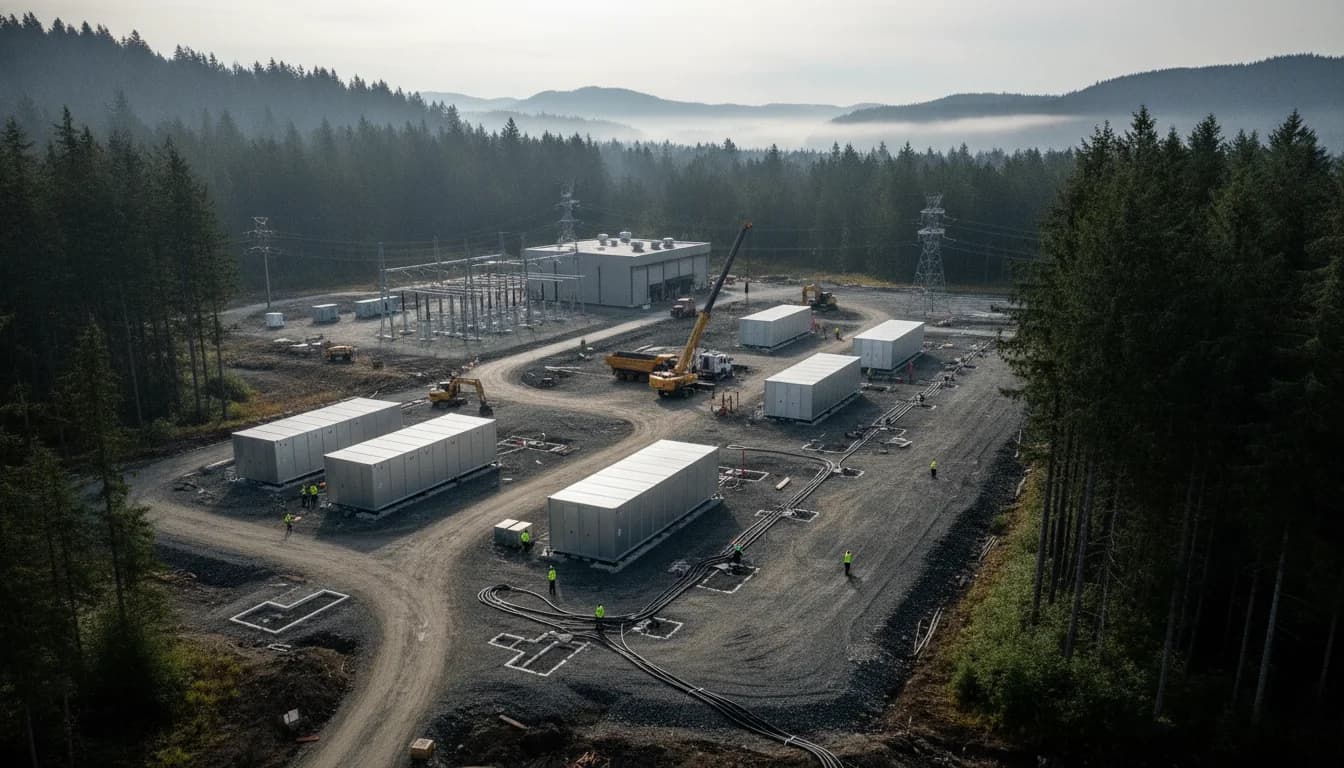
The BC Times report on the BC Hydro Vancouver Island Battery Storage 100 MW project focuses on a pivotal, publicly announced step in British Columbia’s move to modernize its electricity system. On July 20, 2026, the Province and BC Hydro disclosed plans for what would be the province’s first utility-scale battery energy storage system on Vancouver Island, with a capacity of at least 100 MW and a target in-service date of 2030. This announcement marks a major milestone in the Powering Growth plan and is designed to bolster reliability as demand on the Island continues to rise. The government release and BC Hydro’s accompanying materials provide the fundamental, verifiable details that shape subsequent procurement, construction, and operation. This opening overview foregrounds the central developments and their immediate implications for customers, communities, and the broader energy market. According to the government release, the project sets a new benchmark for grid flexibility in the region and signals a broader push to expand storage assets across British Columbia. The procurement path—beginning with a supplier qualifications process set to begin on July 30, 2026—adds a formal, competitive dimension to the effort and confirms the timeline for next steps. These elements frame the story for readers seeking to understand how this 100 MW installation will fit into BC’s evolving grid landscape. The facts below assemble the essential dates, locations, capacities, and milestones as publicly disclosed by BC Hydro and provincial authorities. According to the July 20, 2026 government news release, BC Hydro and the Province unveiled Vancouver Island's first utility-scale BESS delivering at least 100 MW of capacity with service targeted by 2030. (news.gov.bc.ca)
What Happened
Announcement and scope
On July 20, 2026, the Province of British Columbia and BC Hydro announced the advancement of British Columbia’s first utility-scale battery energy storage project on Vancouver Island. The release highlights that the facility will deliver at least 100 megawatts of storage capacity, a figure repeatedly cited across official materials, and that it is designed to strengthen grid reliability and support growing electricity demand in the region. The in-service target is 2030, a timeline described in official communications as part of BC Hydro’s Powering Growth plan. This milestone represents a formal upgrading of BC’s grid resilience strategy, with storage integrated as a strategic asset alongside traditional generation and transmission investments. The government release explicitly frames the project as a milestone within the broader public-energy strategy and underscores that the first utility-scale BESS in the province will be located on Vancouver Island, near Duncan, adjacent to the Vancouver Island Terminal Substation. For readers tracking the official chronology, the July 20, 2026 government news release provides the clearest, primary-date anchor and the official framing of the project’s significance. The BC Hydro press release, issued in parallel, reiterates the same capacity and location details and emphasizes the plan to use private-sector expertise through a competitive process for design, construction and potentially long-term maintenance. See: BC Hydro press release announcing the Vancouver Island BESS and BC Gov News release detailing the government’s role and timeline. (bchydro.com)
Location and site selection
The project site is described as adjacent to the Vancouver Island Terminal Substation in North Cowichan, a choice driven by factors including system reliability needs, expansion potential, proximity to load centers, and the ability to minimize environmental and development risks by leveraging land already owned by BC Hydro. This site selection aims to streamline integration with the island’s existing grid while preserving ecological and community considerations. The official materials explicitly connect the site rationale to reliability improvements, the goal of maximizing existing infrastructure, and the anticipated benefits to Vancouver Island communities. The Vancouver Island context is central to these discussions, with officials highlighting the region’s growth trajectory and the role a BESS can play in stabilizing operations during peak demand or outages. See the BC Hydro project page and the government release for site-related details and the stated rationale. (bchydro.com)
Procurement timeline and process
A key procedural element announced in tandem with the project is the launch of a competitive procurement to identify qualified suppliers capable of delivering the grid-scale BESS on Vancouver Island. Specifically, BC Hydro planned to issue a request for supplier qualifications on Thursday, July 30, 2026, with the expectation that a pool of qualified respondents would be invited to participate in a subsequent request for proposals within the same program window. This procurement approach signals a formal, market-engaged path to design, build, and possibly maintain the system, aligning with BC Hydro’s approach to leveraging private-sector expertise for major grid investments. The official materials outline the competitive framework, expected timelines, and the intended governance of the procurement process. For a detailed chronology, refer to the government news release and BC Hydro’s procurement communication. (news.gov.bc.ca)
In-channel references and additional context
BC Hydro’s own project page provides a concise technical snapshot: the Vancouver Island Grid-Scale Battery Energy Storage System is designed to provide at least 100 MW of storage capacity, with in-service targets aligned to 2030, and emphasizes the role of storage in supporting peak-demand conditions or outages. This page also contextualizes the four-hour window that the system can potentially cover, which advertisers and planners frequently cite when communicating the system’s value proposition to the public. The page translates storage capacity into a practical metric, noting that 100 MW of capacity with four hours of operation equates to about 400 MWh of energy storage, enough to power a large number of homes during critical periods. See the BC Hydro project page for the technical snapshot and the timeline details. (bchydro.com)
Original finding: If the 100 MW Vancouver Island battery storage system operates for four hours, it yields 400 MWh of energy and distributing that across 87,600 homes yields about 4.57 kWh per home in that four-hour window (calculation: 100 MW × 4 h = 400 MWh; 400,000 kWh ÷ 87,600 homes ≈ 4.57 kWh per home). This interpretation uses the BC Hydro page’s stated capacity and the public calculation about homes served in a four-hour window, anchored to the 2030 in-service target described in the government release. This is our constructive, independent calculation based on the published figures from BC Hydro and the government. (bchydro.com)
Why It Matters
Grid reliability and system flexibility on Vancouver Island
The Vancouver Island Battery Storage 100 MW project is positioned as a response to growing electricity demand on the Island and as a means to strengthen reliability across the regional grid. By capturing energy when demand is lower and dispatching it during peak periods or in contingency scenarios, the BESS adds a fast-response resource that complements existing generation and transmission assets. The government release frames this as a critical step toward modernizing the Island’s power infrastructure and ensuring reliable service for households, businesses, and essential services during peak times and outages. The BC Hydro materials emphasize that the project will help Vancouver Island “power the Island” by facilitating better utilization of the grid and reducing the risk of supply disruptions in a region with sustained growth pressures. See the government release and the BC Hydro project overview for the explicit reliability and flexibility rationale. (news.gov.bc.ca)
Alignment with BC Hydro’s Powering Growth plan
The Vancouver Island BESS is described as the first major battery storage investment under BC Hydro’s Powering Growth plan, a strategic framework designed to meet rising demand while optimizing existing assets and investing in new clean-energy solutions. The plan envisions as much as 500 MW of potential battery storage capacity across British Columbia to enhance reliability and flexibility. The public documents position the Vancouver Island installation as a proof point and a catalyst that could unlock broader deployment of storage across the province. This context helps readers understand how the Island project fits into a larger trajectory toward grid modernization and a cleaner, more reliable energy future. For readers seeking the official framing, the government release and BC Hydro’s Powering Growth materials provide the policy and program context. (news.gov.bc.ca)
Local economic and community implications
The project’s proximity to community hubs on Vancouver Island and the emphasis on site selection near existing infrastructure imply potential local economic activity associated with early procurement, site preparation, and ongoing operations. The public materials outline engagement with First Nations and local governments as planning progresses, signaling an intent to incorporate community input throughout the project lifecycle. The narrative around reliability and growth resonates with regional planning efforts, municipal resilience initiatives, and energy transition ambitions that are central to Vancouver Island’s development outlook. For readers tracking stakeholder engagement and regional planning, the official material provides the baseline statements and contact points for further information. (bchydro.com)
Broader market and technology implications
The emergence of BC’s first utility-scale BESS on Vancouver Island is a milestone that bears on the broader battery storage market in British Columbia and across Canada. It signals a maturing policy and procurement environment in which public utilities partner with private sector companies to deliver storage projects at utility scale. The procurement approach and the 2030 in-service target align with a global trend toward integrating energy storage as a standard grid asset to complement wind, solar, and hydro assets, while also enabling more nuanced peak-shaving and reliability strategies. This development may influence regulatory dialogues, capital allocation, and supplier interest in BC’s storage market, while also informing comparative analyses with other provinces pursuing grid-scale BESS deployments. The BC Hydro procurement notices and government releases offer primary source material for readers assessing market dynamics and policy signals. (bchydro.com)
What’s Next
Procurement milestones and supplier qualifications
With the July 30, 2026 RFQ date announced, the project enters a formal market engagement phase designed to identify qualified designers, builders, and potentially long-term maintenance partners. The competitive process aims to assemble a pool of capable entities to advance from qualification to proposal, enabling BC Hydro to select a partner capable of delivering a grid-scale BESS that meets 100 MW minimum capacity goals and adheres to the Island’s reliability and growth needs. Readers should monitor BC Hydro’s official procurement updates for notices about the RFQ responses, timelines for the RFP, and anticipated milestones for evaluation and contract award. See the government release and BC Hydro procurement communications for the official scheduling. (news.gov.bc.ca)
Construction, commissioning, and likely milestones
Assuming the procurement and final contracting proceed on schedule, construction timelines for a grid-scale BESS of this scale typically span multiple years, with site preparation, interconnection works, battery modules installation, commissioning, and testing phases. The in-service target of 2030 provides a window for design finalization, permitting, interconnection agreement finalization, and on-site construction activity. Readers should expect updates on site preparation progress, interconnection studies, and any environmental or community engagement milestones as part of the project’s ongoing timeline. The Vancouver Island project page indicates the energy storage system’s location, capacity, and service target, providing the baseline milestones that will be tracked in the months ahead. (bchydro.com)
Monitoring and regulatory context
As BC Hydro advances its first major battery storage installation on Vancouver Island, regulatory oversight will continue to shape project progression. The BC Utilities Commission (BCUC) and related provincial processes will monitor cost recovery, performance, and reliability outcomes, while the project’s alignment with the Powering Growth plan will be observed in quarterly or annual reporting. Readers seeking formal regulatory filings or compliance documents related to the Vancouver Island BESS should review BC Hydro’s regulatory materials and any updated plans or environmental assessments as they become publicly available. The 2025–2026 regulatory documents from BC Hydro provide context for how the project aligns with broader regulatory expectations and planning cycles. (bchydro.com)
What to watch for and how to stay informed
- Procurement updates: Watch for official notices from BC Hydro about RFQ responses, supplier pre-qualification outcomes, and the RFP timeline. These updates will shape which firms participate in the design, construction, and long-term maintenance phases.
- Interconnection progress: Interconnection studies, line upgrades, and substation work will be critical to meeting the 2030 service target. Readers should track interconnection milestones, potential bottlenecks, and any environmental or permitting considerations that could influence the schedule.
- Community and environmental engagement: Ongoing engagement with First Nations, local governments, and communities will be a continuous thread as planning progresses. Stakeholder updates and public consultation summaries will provide insight into how local concerns are addressed.
- Market implications: Analysts and industry observers will watch how BC’s first utility-scale BESS compares with other provincial efforts, including potential expansions toward the 500 MW of identified storage capacity referenced in public materials, and how private-sector partnerships evolve in response to tender outcomes.
Closing
The BC Hydro Vancouver Island Battery Storage 100 MW project represents a significant, date-stamped moment in British Columbia’s energy transition. By delivering a first-of-its-kind utility-scale battery storage facility on Vancouver Island with a targeted in-service date of 2030, the province is signaling its commitment to grid modernization, reliability, and flexibility as demand grows. The official materials underscore a structured procurement path, a site near Duncan that leverages existing infrastructure, and a clear rationale tied to the Powering Growth plan. For readers and stakeholders who want to understand the project in real-time, the primary sources from BC Hydro and the provincial government offer a transparent, factual basis for ongoing coverage and analysis. As BC Hydro and partners move from announcement to procurement to construction, BC Times will continue to track milestones, publish updates, and provide context on how this 100 MW capacity could reshape energy reliability and market dynamics across Vancouver Island and the broader province. Stay tuned for further developments as supplier qualifications progress, interconnection studies advance, and the project moves toward its 2030 service target.
To stay updated, readers can review:
- BC Hydro press release: Advancing B.C.’s first major battery storage project on Vancouver Island. Describes the project announcement, site near Duncan, capacity, and in-service target. (bchydro.com)
- British Columbia government news release: Advancing B.C.’s first major battery storage project on Vancouver Island. Provides the official timeline, procurement steps, and policy context within the Powering Growth plan. (news.gov.bc.ca)
- BC Hydro project overview: Vancouver Island Grid-Scale Battery Energy Storage System. Offers the capacity figure, site description, and the in-service target. (bchydro.com)