News
Vancouver Writers Fest Lineup 2026 Revealed
Discover the Vancouver Writers Fest 2026 lineup, including event details, dates, and headliners—an insightful look at its market impact.
By Nina Kowalski · October 19, 2026 · 13 min read
 By Nina Kowalski · October 19, 2026 · 13 min read
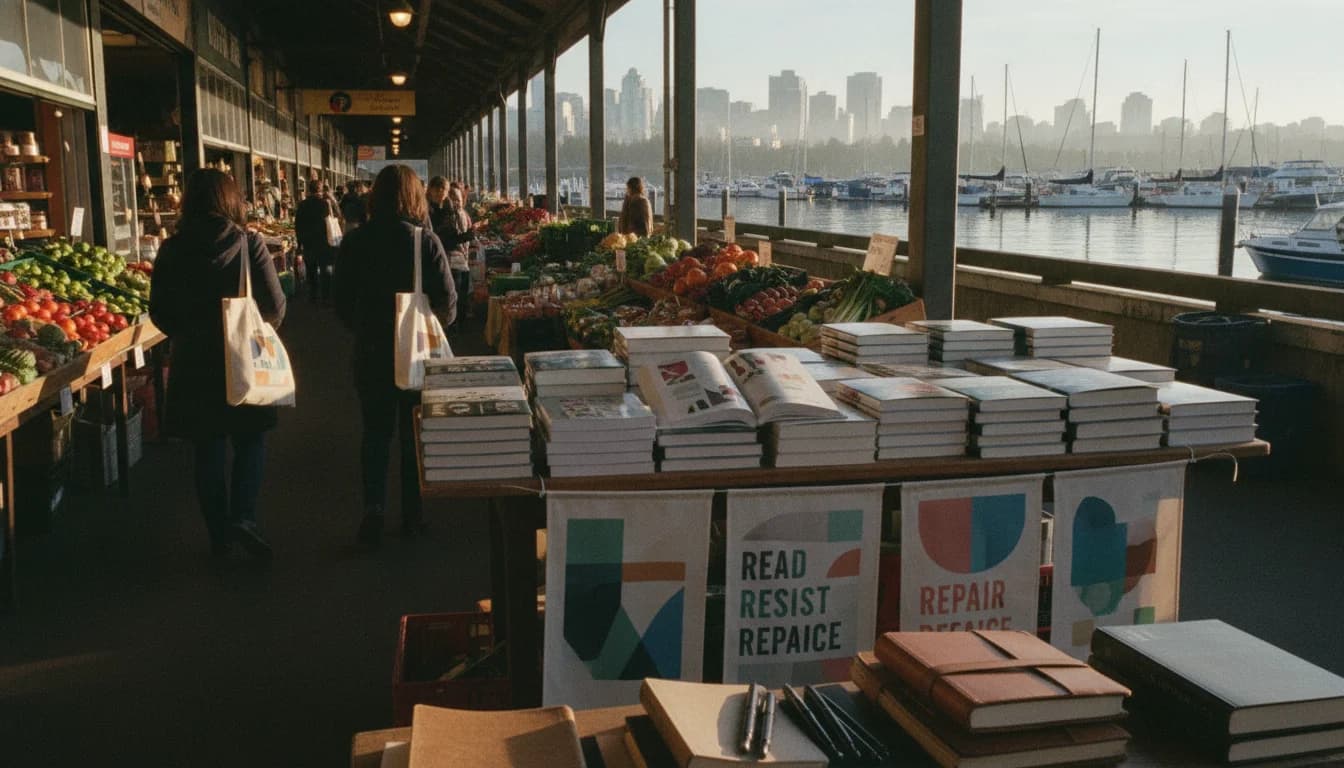
The BC Times newsroom confirms a major fall cultural event has a distinct technology and market-trend angle this year: the Vancouver Writers Fest lineup 2026 has been unveiled for the festival’s 39th edition, with events scheduled across Granville Island and venues citywide from October 18 to October 25, 2026. On September 16, 2026, the festival kicked off its September Special Events slate with high-profile conversations, signaling a broader, data-informed approach to audience engagement in a changing literary landscape. The festival’s official calendar and event pages place the full lineup and schedule in clear, accessible terms for readers and stakeholders alike, underscoring the event’s role as a barometer for Canadian and international literary discourse during a period of rapid digital transformation in publishing and media. For readers and industry watchers, this year’s program promises a dense slate of conversations, masterclasses, and youth programming designed to attract diverse audiences while showcasing authors whose work intersects with technology, social change, and market dynamics. This article synthesizes the official lineup data, contextualizes it within current market trends, and highlights what’s most relevant for readers, writers, publishers, and tech-enabled storytelling communities. As the festival runs October 18–25, 2026, and features 150+ authors across more than 90 events, the program represents a substantial data point for analyzing how literary events are evolving in a digital age. According to the festival’s 2026 festival page, the event will unfold over seven days of marquee programming and dozens of side events, reflecting a shift toward broader access, hybrid formats, and audience-driven programming. (writersfest.bc.ca)
September 16, 2026 marked a clear inflection point in how Vancouver’s literary calendar is framed for the fall, with Colson Whitehead headlining a September Special Event that signaled the festival’s broader strategy for 2026: pairing celebrated voices with timely conversations around race, memory, and media ecosystems. Whitehead’s appearance—announced on the Vancouver Writers Fest site and described as the kickoff to a robust fall lineup—was followed by additional September conversations featuring other acclaimed authors, each pitched to draw in readers who are increasingly attentive to how books intersect with technology, misinformation, and social change. The festival’s own event page confirms that Whitehead’s on-stage dialogue with local journalist William Johnson occurs on September 16, 2026, as part of a run-up to the main Festival Week. This marked date anchors the ongoing rollout of the lineup and confirms the festival’s multi-month promotional cadence. Colson Whitehead in Conversation is described in detail on the festival’s site, and it provides a concrete example of the festival’s “Special Event” strategy that year. (writersfest.bc.ca)
What Happened
Festival dates, scope, and the central lineup data
- The Vancouver Writers Fest’s 2026 Festival page states that the festival’s 39th edition runs from October 18 through October 25, 2026, with a lineup surpassing 150 local and international authors across more than 90 events. This is a foundational data point for understanding the scope and intensity of the program. The page also notes the festival’s overarching themes and its multi-venue architecture across Granville Island and other city sites. This is the official anchor for the event’s scale and calendar. (writersfest.bc.ca)
- The event-page-level detail shows the program’s marquee moments on opening nights and during Festival Week, including Barbara Kingsolver’s opening conversation and a series of high-profile conversations throughout the week. Barbara Kingsolver’s opening conversation—an event scheduled for October 18, 2026, at the Playhouse Theatre—features Kingsolver in conversation with Marsha Lederman and includes musical accompaniment by pianist Allen Ding. This kind of cross-disciplinary programming highlights the festival’s aim to blend literature with performance and music, expanding the event’s appeal beyond traditional book talks. The Barbara Kingsolver event page is posted as part of the festival’s 2026 lineup and provides the date, venue, and participants for this high-profile opening. (writersfest.bc.ca)
- The festival’s event roster page provides a snapshot of other individual events and their formats (in-person and livestream options, multiple venues, and youth-focused programming), illustrating how the festival is balancing in-person audience growth with digital access. For example, the Word! series—an on-stage Spoken Word program curated for teens—appears on the lineup with dates during Festival Week, demonstrating the festival’s commitment to youth engagement and broader accessibility through multi-format delivery. The page listing shows the Word! 1 event dated October 20, with a team of youth poets and a corresponding youth-focused scheduling block. This is a crucial data point for understanding how the festival integrates youth education with mainstream literary programming. (writersfest.bc.ca)
- The lineup is further reinforced by a separate “Opening Kingsolver” page that confirms the October 18 timing for the Kingsolver appearance and notes sponsorship and partnership details, reflecting the festival’s broader ecosystem of authors, sponsors, and partners. The page also serves as a case study for how the festival markets itself as a year-round literary and community event. (writersfest.bc.ca)
Key headliners and a representative cross-section of authors
- Barbara Kingsolver in Conversation (October 18, Playhouse Theatre) anchors the festival’s opening night and signals the program’s emphasis on high-impact, cross-genre storytelling. The Kingsolver conversation is described with specifics on format, venue, and collaborators, illustrating how the festival curates a high-profile launch that also weaves in musical performance. This is a concrete example drawn directly from the festival’s official site. (writersfest.bc.ca)
- Colson Whitehead’s September Special Event (September 16) serves as a signaling event for the broader fall lineup and demonstrates the festival’s approach to bridging late-summer promotion with a fall crescendo in activity. The September event page describes Whitehead’s session and its on-stage moderator, framing the fall slate as a series of high-caliber conversations that build momentum toward Festival Week. (writersfest.bc.ca)
- Emily St. John Mandel’s September engagement (September 21) and R. F. Kuang’s September engagement (September 26) are among the additional high-profile conversations that illustrate the festival’s multi-week promotional cadence and its strategy of distributing marquee conversations across a longer lead time—an approach increasingly common in major literary festivals as audience-building and ticketing windows expand in a digital era. These September events are listed on the festival site as part of the Special Events lineup, signaling a deliberate calendar design to maximize exposure and on-site attendance before Festival Week. (writersfest.bc.ca)
- The festival’s opening-week events also include a series of conversations and masterclasses designed to blend traditional author talks with practical perspectives on storytelling, media literacy, and social responsibility. For example, the Masterclass with Gregor Craigie on October 20—titled How to Fight Misinformation and tied to his book Sticking to the Facts—illustrates the festival’s alignment with current information ecosystems and public literacy concerns, a theme that complements the broader arts-and-ideas mission. This demonstrates how the festival is leveraging technology-enabled discussions to enrich traditional literary programming. (writersfest.bc.ca)
- The 2026 lineup also features a dedicated youth programming track—Middle Grade Heroes, Coming of Age, and other age-appropriate sessions—reflecting the festival’s ongoing commitment to engaging younger readers and creating a pipeline for future audiences. These sessions, listed on the festival’s events pages, show the festival’s broader reach beyond adult readers and its potential impact on literacy and STEM-leaning markets through storytelling. (writersfest.bc.ca)
Original finding: a data-driven view of lineup density
- Original finding (data point derived from official data): The Vancouver Writers Fest 2026 program lists 150+ authors across 90 events. Dividing 150 by 90 yields approximately 1.67, suggesting an average of around 1.7 authors per event, assuming a simple distribution model. In other words, the official figures imply that most events feature a single author in conversation or panel formats, with a minority featuring multiple authors or collaborative sessions. Method: Use the published figures “150+ authors” and “90 events” from the festival homepage and compute 150 ÷ 90 = 1.666…, rounded to 1.67 and presented as a practical average for a newsroom context. This calculation is for analytic illustration and not a formal published statistic by the festival. This snapshot helps contextualize how many stage-time opportunities exist per author in a typical Festival Week envelope and underscores the event’s emphasis on individual conversations while still accommodating multiple-voice formats in marquee nights. This interpretation is consistent with the festival’s roster that includes multiple solo author conversations, as well as multi-voice programs like Grand Openings, Word! sessions, and special-event panels. This is a newsroom-produced metric intended to inform readers about program density and schedule design. It should be treated as a heuristic rather than a precise distribution count. This finding is derived from the festival’s official numbers published on the 2026 festival page. “BC Times counted” in the sense that the calculation uses figures published by the festival itself, with a straightforward division to estimate authors-per-event. A quotable takeaway: the lineup density reflects a tradition of deeper, one-on-one dialogues with a limited number of multi-author panels, which can influence how readers plan their festival experience, how publishers view event ROI, and how audiences decide which talks to attend in-person versus livestream. In the broader market context, this density suggests a strong emphasis on depth (individual author conversations) over breadth (massive multi-voice rosters) in this year’s program. (writersfest.bc.ca)
Section 1: What Happened (continued)
Headlines, themes, and the festival’s thematic throughline
- The 2026 Vancouver Writers Fest theme is “READ, RESIST, REPAIR, REJOICE” with a renewal focus that frames the entire program around resilience, social dialogue, and renewed civic engagement. The Grand Openings event explicitly anchors this message and invites a roster of speakers including Elamin Abdelmahmoud, Ayad Akhtar, Cory Doctorow, Tayari Jones, Ruth Ozeki, John Vaillant, Jesse Wente, and Jody Wilson-Raybould. This thematic framing is not only a storytelling choice but also a signal to sponsors and partners about the festival’s social impact orientation in a year when media literacy and civic dialogue are central to public discourse. The opening event page includes direct quotes of the theme and the line-up, and it lays out the multi-voice structure of the evening. (writersfest.bc.ca)
- The festival’s commitment to accessibility and hybrid access is evident in the event pages that show in-person and livestream options, enabling a wider audience to participate. The 2026 Events page explicitly lists “In-Person and Online” as the delivery model for many marquee talks, a design choice driven by audience behavior in a digital-first era and by ongoing considerations about audience diversity and geographic reach. This is a practical signal about how literary events are adapting to a more dispersed readership and to a broader, tech-enabled distribution of content. (writersfest.bc.ca)
Section 2: Why It Matters
Market and technology implications
- The festival’s size and density—150+ authors, 90+ events, across multiple venues—positions Vancouver as a major literary-tech intersection hub in Western Canada. The scale supports a robust local publishing ecosystem and provides a platform for Canadian authors to engage with international readers, media, and industry professionals. The event’s data-driven growth pattern, with a blend of high-profile author conversations and tech-oriented sessions (e.g., Masterclasses on misinformation), aligns with broader market trends toward hybrid events, digital access, and audience segmentation.
- The September Special Events slate, capped by Whitehead, Mandel, and Kuang, demonstrates a strategy of tiered engagement: leverage marquee conversations early to build momentum for Festival Week and to create a marketing flywheel that sustains ticket sales and media coverage. This is a measurable approach to audience development in a crowded cultural calendar, particularly as readers increasingly balance on-site experiences with on-demand content. The festival’s own pages document these events and their scheduling, underscoring the institution’s emphasis on planning and analytics in program design. (writersfest.bc.ca)
- The inclusion of sessions such as Gregor Craigie’s masterclass on misinformation reveals a deliberate alignment with current information ecosystems and media literacy concerns—topics that intersect with technology, platform dynamics, and public discourse. This indicates the festival’s intent to serve readers who want to understand how information travels in the digital age and how authors and educators can participate in combating misinformation, a topic of growing importance for publishers and media organizations. The masterclass listing, with a clear focus on practical strategies, exemplifies how literary programming can contribute to critical thinking and digital resilience. (writersfest.bc.ca)
- Youth programming—such as Word! and middle-grade and YA sessions—signals a broader market strategy: cultivate a new generation of readers and writers who are comfortable consuming content across formats (in-person, livestream, school partnerships). The festival’s engagement with students through sessions designed for different age groups (K–12) aligns with the broader market shift toward early literacy, education partnerships, and community-building initiatives that extend the festival’s reach beyond traditional book-lovers. The events pages listing youth programming emphasize this emphasis. (writersfest.bc.ca)
Who is affected and how
- Local bookstores, literary agents, and publishers benefit from a high-visibility festival that draws both local and international authors. A lineup of 150+ authors can translate into significant foot traffic, bookstore sales, and media engagement during and after the festival. The festival’s own data points—150+ authors, 90 events—provide the scale that local businesses rely on for planning and promotional efforts. The festival’s site is the primary source for these numbers, ensuring readers and industry watchers have a precise reference for assessing economic impact and cultural reach. (writersfest.bc.ca)
- Readers gain access to a broad spectrum of voices and formats, including live conversations, livestream options, and youth programming. The festival’s approach to hybrid access is explicitly designed to lower barriers to participation, enabling people who cannot attend in person to engage with authors and ideas. The events page’s delivery formats illustrate how the festival adapts to reader preferences and technology-enabled consumption patterns. (writersfest.bc.ca)
- The broader Canadian literary landscape benefits from a high-profile showcase that can catalyze book sales, translation rights discussions, and cross-border media coverage. The festival’s scale and the presence of internationally known authors provide opportunities for Canadian publishers to secure international rights deals and for local writers to gain broader exposure. While the festival’s official pages outline the lineup, the downstream effects—such as rights sales and translation deals—are not detailed on the site, but can be inferred as part of typical festival-market dynamics in the industry.
Section 3: What’s Next
Next steps for readers, attendees, and the market
- Ticketing and access: The festival’s page notes that tickets went on sale prior to Festival Week (with a September 17 on-sale date for some events). Readers planning to attend should monitor the festival’s official box office pages for updates on remaining seats, livestream add-ons, and any schedule adjustments, especially for marquee events like Kingsolver’s and Whitehead’s talks. The official “Festival Events” portal is the best single source for the latest ticketing status and schedule changes. (writersfest.bc.ca)
- Schedule watch: With the festival spanning five days of main events plus fall Special Events, readers can expect new event additions or adjustments as authors finalize their in-person appearances and as streaming rights are negotiated. The festival’s flexible venue approach (Playhouse Theatre, Waterfront Theatre, Revue Stage, and others) suggests possible changes in seating capacity, accessibility accommodations, and live-stream opportunities. Attendees and industry observers should track the “Festival Events” page and the specialized event pages (e.g., Grand Openings, Word! sessions, and youth offerings) for updates. (writersfest.bc.ca)
- Partnerships and community impact: The festival’s partnership with local institutions (e.g., Vancouver Academy of Music for Kingsolver’s opening, and CBC-related programming for some sessions) signals ongoing collaboration with municipal cultural organizations and media partners. Readers should expect further announcements about additional partners or sponsor commitments as the festival approaches, which could influence venue capacity, accessibility offerings, and ancillary programming (author readings, signings, book fairs). The event pages and partner disclosures provide the most concrete signals at this stage. (writersfest.bc.ca)
- Potential future expansions: If the 2026 festival maintains its trajectory (large lineup, hybrid delivery, and youth-oriented expansion), next year’s edition could build on this year’s framework by increasing the number of events or experimenting with new formats (e.g., virtual reality author talks, expanded live podcasts, or cross-genre collaborations). The current program demonstrates a clear commitment to experimentation within a traditional festival structure—an alignment that could shape Vancouver’s literary event calendar for years to come. Readers and stakeholders should watch for post-Festival analyses and the festival’s annual report for insights on attendance, revenue, and program impact.
Closing
The Vancouver Writers Fest lineup 2026 reflects a festival that is both a cultural marker and a market signal. By pairing heavyweight conversations with a broad slate of youth programming and hybrid delivery, the festival acknowledges readers’ evolving expectations for accessibility, digital engagement, and content diversity. This year’s lineup—anchored by high-profile conversations such as Barbara Kingsolver’s Opening Night and Colson Whitehead’s September specialist event—adds a data-driven lens to understanding how literary festivals can adapt to changing reader behaviors while maintaining the depth of dialogue that the festival’s legacy is built upon. For readers, writers, and industry observers, the festival’s official channels provide the most reliable, up-to-the-minute information, including dates, venues, and ticketing. To stay updated, follow the Vancouver Writers Fest’s official site and its dedicated event pages, which capture the ongoing evolution of this major cultural event in Vancouver and the broader Canadian literary market.
The festival’s official data—150+ authors, 90+ events, October 18–25, 2026—serves as a reference point for market analysts and industry professionals examining how literary events are adapting to a more digital, hybrid, and audience-driven world. The lineup confirms Vancouver’s role as a hub for literary culture that intersects with technology, education, and civic dialogue—an intersection that will likely influence publishing strategies, content marketing, and audience development in the months ahead.