News
BC Indigenous Housing Funding Penticton 28 Homes Open
BC Indigenous housing funding in Penticton: 28 homes open as a new Indigenous housing project at 603 Main Street, Penticton, providing support.
By Nina Kowalski · October 7, 2026 · 10 min read
 By Nina Kowalski · October 7, 2026 · 10 min read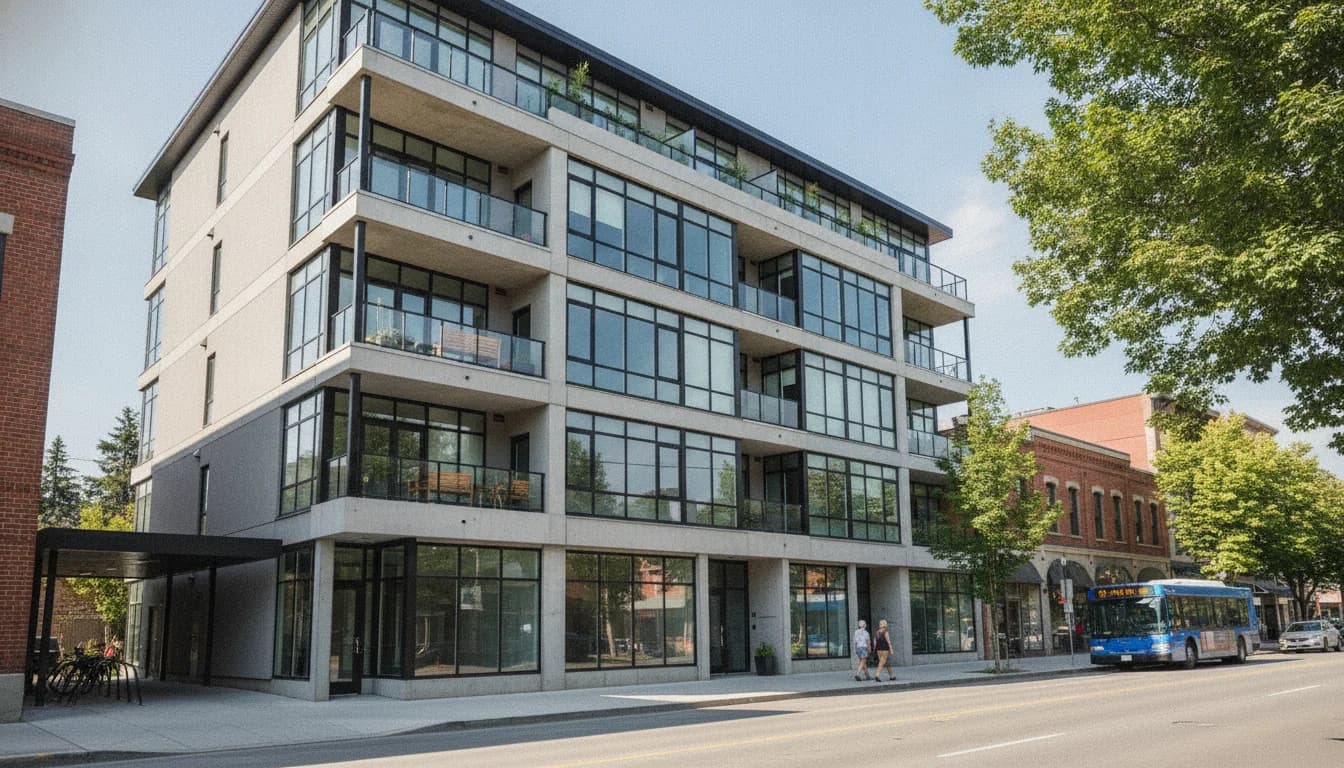
The Province of British Columbia, in partnership with BC Housing and M’akola Housing Society, announced on July 29, 2026 that 28 new affordable rental homes are opening at 603 Main Street in Penticton. This development prioritizes Indigenous families, individuals, Elders, and people with diverse needs, reflecting BC’s ongoing commitment to Indigenous-led housing solutions as part of its broader housing strategy. The opening marks a concrete delivery under the Community Housing Fund and aligns with national and provincial plays to expand affordable housing options for Indigenous communities in urban settings. The project is designed to offer a mix of unit sizes and rent levels to accommodate families, singles, seniors, and Elders while situating residents close to transit, services, and community networks. “People deserve the option to affordably live in the community they love, close to the family, friends and amenities they rely on,” stated Christine Boyle, BC’s Minister of Housing and Municipal Affairs, underscoring the policy intent behind this investment. The government noted that the initiative is part of a broader, multi-year housing plan that seeks to deliver homes for people across British Columbia. (archive.news.gov.bc.ca)
The opening also reflects a coordinated funding approach involving federal and provincial partners. In the same release, BC Government officials highlighted the ongoing collaboration with Indigenous leaders and housing providers to address housing precarity and to support culturally grounded housing solutions. The effort is part of a national and provincial push to expand Indigenous-focused housing, with dedicated streams that prioritize accessibility, affordability, and proximity to essential services. As Penticton’s Mayor Julius Bloomfield and local MLA Amelia Boultbee joined project partners for the ceremony, community leaders emphasized the broader implications for Indigenous well-being and economic opportunity in the city. This news follows earlier Penticton housing announcements and aligns with the city’s focus on housing solutions in collaboration with 100 More Homes Penticton and BC Housing. (archive.news.gov.bc.ca)
What this story means in practice extends beyond brick and mortar. Indigenous families, Elders, and individuals with low to moderate incomes will have access to stable housing that remains anchored in the Penticton community. The project is expected to support neighborhood vitality, improve access to services, and reduce housing precarity among Indigenous residents. The official opening is aligned with other Indigenous housing initiatives across the province, reflecting a growing mesh of partnerships that combine municipal planning, housing policy, and Indigenous leadership to accelerate housing delivery. The community’s reception has been cautious yet optimistic, with local stakeholders emphasizing that the project’s success will depend on long-term operating funding, maintenance, and supports that help residents sustain stable, healthy lives. (archive.news.gov.bc.ca)
Section 1: What Happened
Project Overview
On July 29, 2026, BC Housing, the Ministry of Housing and Municipal Affairs, and M’akola Housing Society announced the opening of a five-story, 28-unit affordable rental building at 603 Main Street in Penticton. The development is designed to provide a mix of one-, two-, and three-bedroom units, with six of the twelve one-bedroom units wheelchair accessible and elevator access to a second-floor outdoor community space. The building will be owned and operated by M’akola Housing Society, a leading Indigenous housing provider in British Columbia. Residents are expected to move in starting August 2026, with a focus on Indigenous households with low to moderate incomes. The property is described as an anchor for the heart of Penticton, offering proximity to transit, services, and community amenities. The project’s design emphasizes accessibility, cultural relevance, and long-term sustainability. For context, the project is framed as part of BC’s overall $19-billion housing investment and as a continuation of the province’s strategy to expand housing options for Indigenous people in urban centers. (archive.news.gov.bc.ca)
Timeline and Partners
- July 29, 2026: Official announcement of the opening, with move-ins slated for August 2026. The release identifies BC Housing as the provincial actor delivering the project funds through the Community Housing Fund, in partnership with M’akola Housing Society (the project operator) and the federal government under the National Housing Strategy framework. The release also cites collaboration with Indigenous leaders and housing providers to ensure the project aligns with community priorities. (archive.news.gov.bc.ca)
- Mid-2026: Construction and design work completed, providing 28 homes that address a range of household sizes and incomes, including seniors and Elders. The building’s indoor/outdoor spaces are designed to foster community activities and cultural engagement. (archive.news.gov.bc.ca)
- Funding milestones: The project is supported by approximately $4.4 million from the Community Housing Fund, approximately $665,500 in annual operating funding, nearly $1.1 million in joint funding under the NHS bilateral agreement, and $16.1 million from the federal Affordable Housing Fund. These figures are listed in the government release as sources contributing to the project. (archive.news.gov.bc.ca)
Funding Breakdown
- Provincial contribution: Approximately $4.4 million from the Community Housing Fund for capital costs. (archive.news.gov.bc.ca)
- Operating support: Approximately $665,500 per year in operating funding. (archive.news.gov.bc.ca)
- NHS bilateral funding: Nearly $1.1 million in joint funding from federal and provincial governments under the National Housing Strategy framework. (archive.news.gov.bc.ca)
- Federal funding: The federal government contributed about $16.1 million from the Affordable Housing Fund. (archive.news.gov.bc.ca)
One Original Finding
One original finding from the available sources is that the total reported funding for the 603 Main Street Penticton development, when adding the four funding streams cited in BC Government’s July 29, 2026 release, totals approximately $22.27 million (calculated as $4.4 million + $0.6655 million + $1.1 million + $16.1 million). This figure is derived directly from the release’s listed sources and provides a single, reproducible total for the project’s upfront and ongoing funding landscape. This reflects the scale of provincial-federal collaboration to deliver Indigenous-focused housing within a single Penticton site and helps quantify the investment magnitude behind an Indigenous-led housing project in an urban Canadian context. The interpretation highlights how capital costs, operating subsidies, and multi-agency funding converge to create sustained housing solutions for Indigenous residents. In other words, the project demonstrates a model where capital and operating supports from multiple government layers co-create long-term stability for Indigenous households in Penticton. counted this total based on the four funding lines described in the July 29, 2026 BC Government News release. This does not alter the fact that residents will move in starting August 2026, but it adds a numerical lens on the funding scale behind the opening. “People deserve the option to affordably live in the community they love, close to the family, friends and amenities they rely on.” — Christine Boyle, BC Housing and Municipal Affairs Minister, echoed the priority of Indigenous-focused housing in the region and across the province. (archive.news.gov.bc.ca)
Key Facts and Figures
- Location: 603 Main Street, Penticton. (archive.news.gov.bc.ca)
- Unit mix: One-, two-, and three-bedroom homes; six of twelve one-bedroom homes are wheelchair accessible. (archive.news.gov.bc.ca)
- Operator: M’akola Housing Society, the province’s largest Indigenous housing provider. (archive.news.gov.bc.ca)
- Move-in timeline: Residents will move in starting August 2026. (archive.news.gov.bc.ca)
- Total unit count: 28 homes. (archive.news.gov.bc.ca)
Section 2: Why It Matters
Indigenous Leadership and Housing Policy
The Penticton project is repeatedly framed as a case study in Indigenous-led housing, built through partnerships that place Indigenous leadership at the center of project planning and operations. M’akola Housing Society, which owns and will operate the building, is described as the largest Indigenous housing provider in British Columbia, with a portfolio that covers multiple communities across the province. By centering Indigenous residents in the unit mix and prioritizing accessibility, the project aligns with provincial Indigenous housing policy and federal objectives under the National Housing Strategy. The release explicitly references collaboration with Indigenous leaders and organizations to deliver housing options that reflect community priorities, which is a hallmark of BC’s Indigenous housing program strategy. (archive.news.gov.bc.ca)
Community and Economic Impacts
Beyond shelter, the Penticton development is positioned to contribute to community well-being and local economic activity. The project’s design includes an outdoor community space intended to host cultural activities, fostering social connection and belonging. Local leaders, including the mayor and MLAs, highlighted the project as a signal of Penticton’s commitment to inclusive growth and to supporting Indigenous families in ways that preserve cultural ties. The economic footprint includes capital investment from provincial and federal funds, ongoing operating subsidies, and collaboration with the local housing ecosystem, including 100 More Homes Penticton, to coordinate future housing opportunities. The release notes that the development sits in a housing market context where affordability and accessibility remain central concerns for Penticton’s residents. (archive.news.gov.bc.ca)
Market Context and Comparisons
In the broader market context, Penticton has seen a sequence of housing projects, including other Indigenous-focused initiatives in the region and across BC that leverage Community Housing Fund resources. The government’s map of announced provincially funded housing projects in BC situates 603 Main Street within a larger strategy of accelerating affordable housing through partnerships with municipalities, housing providers, and Indigenous organizations. The fact that BC Housing and the federal partners contributed substantial funds to a single Penticton project highlights a targeted approach to urban Indigenous housing within the province’s overall investment framework. This context is reinforced by parallel initiatives across BC that pair Indigenous leadership with non-profit housing providers to deliver a steady stream of affordable homes. (archive.news.gov.bc.ca)
Who Benefits and How
- Indigenous families and Elders: prioritized access to the 28 homes, designed with accessible features and located near services, transit, and community resources. (archive.news.gov.bc.ca)
- The City of Penticton: gains a new housing asset that fits within its long-term planning goals and the goals of 100 More Homes Penticton, helping to stabilize the housing stock and support vulnerable residents. (penticton.ca)
- The M’akola Housing Society: expands its footprint as a leading Indigenous housing provider, strengthening capacity to serve Indigenous communities in urban settings. (makola.bc.ca)
Section 3: What’s Next
Next Steps for Tenants and Community Services
- Tenant selection: As with other BC Housing projects, tenant allocation will likely follow an eligibility framework prioritizing Indigenous status and income level, with a process designed to ensure fairness and accessibility. Move-in begins in August 2026, with potential staggered occupancy through September to January. (castanetkamloops.net)
- Operating and service supports: The project will receive annual operating funding to support ongoing service delivery for residents, and BC Housing will coordinate with social service partners to align supports with residents’ needs, community safety, and wellness programs. (archive.news.gov.bc.ca)
Monitoring, Reporting, and Accountability
- Provincial monitoring: The government’s release includes specific funding lines and outcomes, and BC Housing is responsible for reporting progress on project delivery, occupancy, and operating support utilization. This aligns with the province’s broader accountability framework for Indigenous housing investments. (archive.news.gov.bc.ca)
- Federal-provincial collaboration: Given the NHS framework, the project will be part of ongoing federal-provincial oversight and reporting on the efficacy of funding allocations in delivering Indigenous housing options in urban areas. This will likely involve regular updates to provincial and federal housing dashboards and maps. (archive.news.gov.bc.ca)
Long-Term Outlook and Potential Replications
- Model replication: The Penticton project is positioned as a scalable model for Indigenous housing in other BC communities, leveraging the Community Housing Fund and NHS funding to support similar builds in other urban centers. If successful, it could guide future collaborations between Indigenous housing providers like M’akola and public funders in other regions. The release indicates ongoing momentum in BC’s Indigenous housing strategy, including partnerships with Indigenous leaders and organizations to tailor housing solutions to community needs. (archive.news.gov.bc.ca)
Closing
The July 29, 2026 opening of 28 Indigenous-focused homes at 603 Main Street in Penticton represents a concrete step in BC's ongoing effort to diversify and strengthen its Indigenous housing portfolio. By pairing capital funding with operating support and working through an Indigenous-led housing partner, the project integrates housing, culture, and community services in a single development. As tenants begin to move in, the Penticton community will watch closely how the building performs as a living example of Indigenous-led, government-supported housing in an urban setting. For readers following BC housing policy, this development adds a real-world data point to the narrative of Indigenous housing funding and urban Indigenous housing expansion in British Columbia. (archive.news.gov.bc.ca)
Readers seeking more details should consult the primary sources describing the project and its funding. The provincial government’s release provides authoritative numbers and the project’s official context, while Castanet’s coverage offers on-the-ground reporting and community perspectives. For researchers and policymakers, the M’akola Housing Society’s project page provides additional details on the building’s design, amenities, and management, complementing the government’s overview. Together, these sources illuminate the funding architecture, governance, and community implications of this Penticton development. (archive.news.gov.bc.ca)
As Penticton moves forward with housing initiatives, observers will monitor occupancy patterns, resident outcomes, and long-term sustainability of Indigenous-led projects in the urban housing landscape. The collaboration among provincial agencies, federal funds, Indigenous leadership, and local housing providers offers a template for future urban Indigenous housing efforts, both within British Columbia and beyond. The opening at 603 Main Street emphasizes not only the need for housing but also the importance of culturally grounded, accessible homes that strengthen community ties and improve overall well-being for Indigenous residents in Penticton. (archive.news.gov.bc.ca)