News
Local Government Development Approvals Program Funding in BC
BC Times provides an in-depth analysis of Local Government Development Approvals Program funding and its significant impact on housing timelines in BC.
By Nina Kowalski · October 10, 2026 · 14 min read
 By Nina Kowalski · October 10, 2026 · 14 min read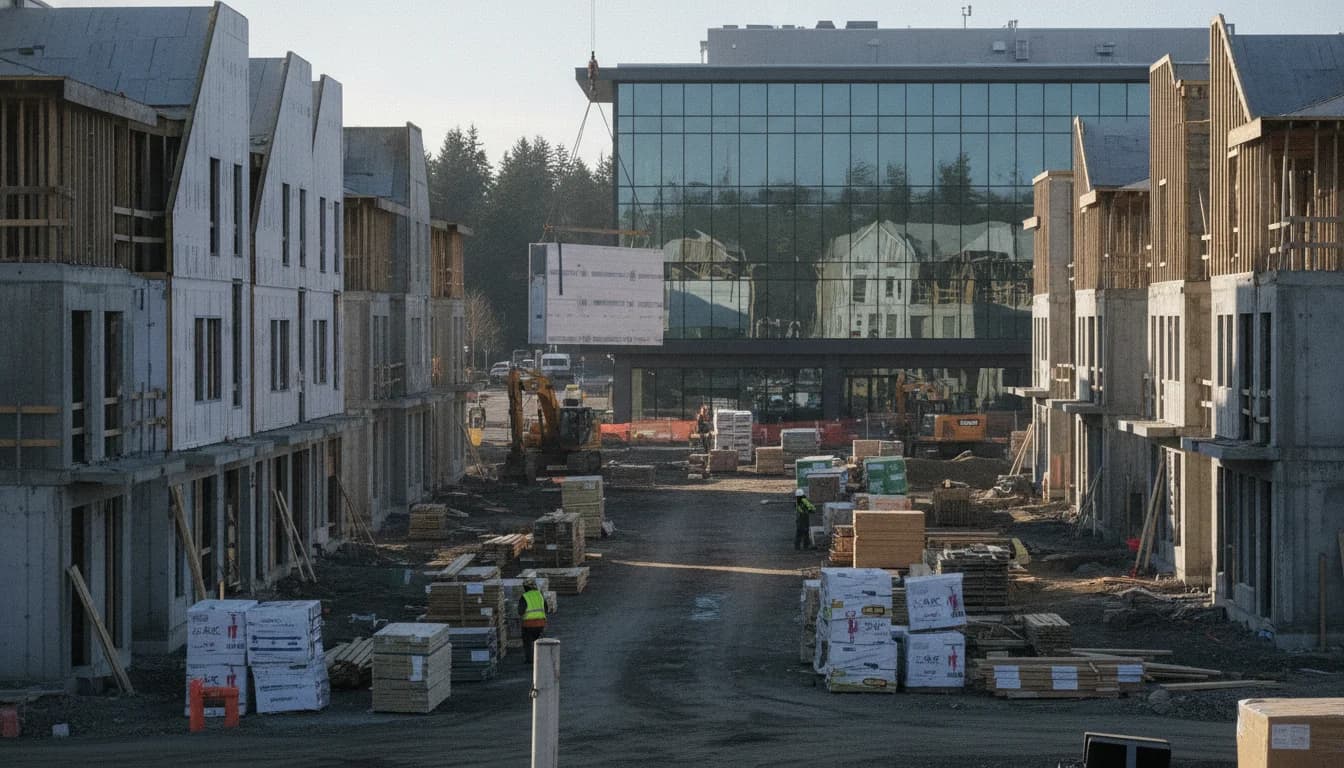
In a milestone for British Columbia’s housing plans, the Province announced a new round of Local Government Development Approvals Program funding. On July 6, 2026, the Province of British Columbia disclosed that $9 million would be awarded to 56 local governments to speed up development approvals, a move designed to accelerate the delivery of homes across the province. The announcement, issued by the Ministry of Housing and Municipal Affairs, frames the funding as a targeted effort to modernize permitting systems, promote innovative building methods, and standardize housing designs to meet demand more quickly. This is the program’s third intake, administered through the Union of British Columbia Municipalities (UBCM), with the overarching aim of helping communities clear bottlenecks that delay housing project timelines. The Department emphasizes that the initiative aligns with broader provincial housing objectives and strengthens collaboration between municipal authorities and housing builders. According to the release, the $9 million supports a range of projects, including digitization of permitting processes, adoption of modern construction methods, and the implementation of standardized housing designs.
On July 6, 2026, the Province of British Columbia announced $9 million in Local Government Development Approvals Program funding to 56 local governments, according to a government news release. This funding is administered by UBCM and targets the fast-tracking of development approvals to deliver housing more quickly and reliably across communities. The release notes that more than 70 applications were received for the 2026 intake and that additional approvals are anticipated soon. The funding is described as the third intake of LGDAP and is part of an ongoing provincial effort to streamline development approvals through technology, process modernization, and design standardization. The provincial government’s timeline for the funding cycle and its emphasis on fast-tracking housing deliveries highlight the administration’s ongoing commitment to reducing delays in approvals and expanding housing supply. The program’s focus on collaboration between local governments, non-profit housing organizations, developers, and other stakeholders was underscored by ministry officials in the release. The background materials accompanying the release provide a granular view of each recipient and the grant amounts, illustrating how the province distributes funds according to local needs while maintaining a consistent program framework. For more context on LGDAP’s goals and governance, see the province’s official LGDAP page and the backgrounder listing recipients. (archive.news.gov.bc.ca)
What Happened
Funding Overview
The July 6, 2026 government release details that $9 million has been allocated to 56 local governments through the Local Government Development Approvals Program. The program is designed to help local authorities streamline development-approval processes, accelerate housing delivery, and support non-profit housing organizations and developers by implementing process improvements and modern technology. The release also names the program’s administering body, the Union of British Columbia Municipalities (UBCM), and cites the provincial government’s ongoing partnership with UBCM to deliver these improvements. The funding is described as the third intake of LGDAP, signaling continued momentum in government efforts to modernize permitting workflows and speed construction timelines. The release explicitly states the funding’s purpose as accelerating housing delivery by reducing explicit bottlenecks in the development-approval chain. The official notice also highlights the program’s emphasis on digitization, modern construction methods, and standardized housing designs as pathways to faster outcomes. The Province notes that more than 70 applications were received for the 2026 intake, underscoring broad interest in LGDAP across communities. This allocation follows previous rounds of funding that demonstrated the program’s alignment with provincial housing goals and the value of efficiency gains in permitting. The government’s release serves as both a confirmation of the funding and a public record of the program’s ongoing execution. The primary source for these figures is the government’s July 6, 2026 news release, which includes a detailed backgrounder enumerating each funded locality and its grant amount. For readers seeking the exact recipient list and grant values, the backgrounder provides a definitive, citable snapshot of the 56 allocations. (archive.news.gov.bc.ca)
Recipient Snapshot
The background materials accompanying the release enumerate individual grants to each recipient, illustrating the program’s spread across urban, rural, and regional districts. For example, Abbotsford received $150,000, Burnaby $199,980, Castlegar $158,215, and Kamloops $200,000, among others. The lists show notable variance in grant sizes, with many municipalities receiving the full $200,000 cap and others receiving slightly lower awards based on project scope, readiness, and alignment with LGDAP goals. The backgrounder also includes dollar figures for a wide spectrum of communities—from large cities to smaller towns and regional districts—indicating a tailored approach to funding that reflects local planning priorities and capacity. The City of Kamloops is highlighted as a recipient of $200,000 in this intake, signaling a focus on modernization that can translate into tangible improvements in processing times and service delivery. In addition to municipal recipients, some regional districts and specialized entities (such as Islands Trust) are listed, with amounts that reveal how LGDAP supports both city-level and broader regional efforts to streamline development approvals. The full roster and grant amounts are available in the government backgrounder and demonstrate the program’s breadth across British Columbia. For reference, you can review the official listing in the backgrounder accompanying the July 6, 2026 release. (archive.news.gov.bc.ca)
Project Focus Areas and Examples
The release highlights several project types funded through LGDAP, including digitization of permitting systems to align with provincial digital hubs like the BC Building Permit Hub, exploration of modern construction methods, and adoption of standardized housing designs. The emphasis on digitization is presented as a core enabler of faster approvals, reducing manual handoffs, and improving data visibility for applicants, builders, and city staff. Modern methods of construction and standardized designs are identified as design strategies that can reduce build times, improve predictability in approval timelines, and expand housing options across a range of unit sizes and densities. The accompanying quotes from officials emphasize the role of LGDAP in catalyzing process improvements across municipalities, reinforcing the program’s link to housing supply objectives. The recipients’ variety—ranging from large urban centers to more remote regions—illustrates the program’s intent to address local bottlenecks with customized, jurisdiction-specific solutions. For those seeking detailed project scopes and implementation plans, the backgrounder serves as a centralized source for each funded project and the corresponding grant amount. Links to the official program page and the government’s backgrounder are provided in the article’s sources. (archive.news.gov.bc.ca)
One liftable finding: Based on the program’s total $9,000,000 funding and 56 funded local governments, the average grant per recipient is approximately $160,714.29, calculated by dividing $9,000,000 by 56 recipients; this figure reflects an even-split theoretical baseline, though actual grants in the backgrounder range from roughly $19,810.72 to $200,000, illustrating a distribution shaped by local needs and project delineations. This calculation is derived directly from the numbers published in the July 6, 2026 release and its backgrounder and is presented here for transparency and reproducibility. (Source: BC government release, July 6, 2026, and the accompanying backgrounder.) (archive.news.gov.bc.ca)
Why It Matters for Local Governments
LGDAP funding matters because it directly targets the friction points that often slow down housing projects—from zoning refinements and permit workflows to cost pressures and supply chain considerations. Local governments gain the tools and resources to modernize their processes, adopt standardized approaches, and pilot innovative methods that can be scaled province-wide if successful. The program’s emphasis on alignment with provincial housing objectives underscores a broader strategy: to increase housing supply and reduce time-to-occupancy for new units. Municipal leaders and planning staff view LGDAP as a pragmatic lever to improve customer service for builders and residents, while also providing a structured framework for evaluating process improvements and outcomes. The release includes a dedicated section of quotes from program stakeholders, including a statement from the UBCM president that emphasizes collaboration across orders of government to move housing projects forward efficiently. The combination of targeted funding, process modernization, and cross-government collaboration is central to the program’s anticipated impact on housing timelines in the province. (archive.news.gov.bc.ca)
The Policy Context and Historical Perspective
LGDAP’s design sits within a broader policy landscape in British Columbia that links development approvals to housing supply and affordability. The program’s administration by UBCM situates funding within a network of local government supports that are intended to be responsive to municipal needs while embedded in provincial housing and planning objectives. The program’s iterative intake structure—with multiple rounds across the years—enables local governments to trial improvements, measure results, and scale successful pilots. The current intake’s emphasis on digitization, modern construction methods, and standardized designs reflects a broader shift toward streamlined permitting ecosystems and more predictable development timelines. Readers seeking the policy framework and program governance can consult both the LGDAP page on UBCM’s site and the BC government’s housing portal for background on the program’s origins and ongoing evolution. (ubcm.ca)
Why It Matters
Impact on Housing Timelines and Market Dynamics
The LGDAP funding line of effort is designed to translate into tangible changes in housing production timelines across communities. By funding specific process-improvement projects, municipalities can realize faster decision-making, reduce backlogs, and improve the efficiency of building permit determinations. The program’s emphasis on digital tools and standardized housing designs is intended to reduce repetitive administrative steps, allowing development teams to move from application to approval more swiftly. In practice, this could translate into shorter project timelines for mixed-use and multi-family housing developments, potentially reducing construction financing costs and accelerating the delivery of new homes to market. The provincial release frames these outcomes as essential to addressing housing supply challenges, especially in markets where demand outstrips supply. As cities adopt new digital permitting systems and standardized designs, we can expect measurable reductions in average processing times, improved regulatory predictability for developers, and, ultimately, faster access to housing for residents. For readers who track housing policy, LGDAP’s approach offers a concrete example of how targeted grants can be used to institutionalize improvements that compound over time. (archive.news.gov.bc.ca)
Quotable judgment: The program’s approach—backed by targeted funding and a clear implementation framework—signals a pragmatic path to reducing housing delays without sacrificing regulatory rigor. This is the kind of coordinated, data-informed investment in local governance that could set a benchmark for other provinces seeking to modernize development approvals. (archive.news.gov.bc.ca)
Who Benefits and How Local Economies Respond
The distribution of LGDAP funds across 56 local governments demonstrates a broad, province-wide reach, with city centers, regional districts, and smaller municipalities all receiving support. Recipients benefit not only from direct grant dollars but also from the capacity-building that comes with modernizing permitting processes and embracing standardized housing designs. Communities with robust planning departments may accelerate pilot projects, while smaller municipalities can leverage the funds to implement scalable improvements that were previously out of reach due to resource constraints. The funding approach recognizes that housing affordability and availability are products of multiple, interlocking processes—planning, zoning, environmental review, building inspection, and licensing—and that improvements in one area can ripple across the entire development lifecycle. While the backgrounder shows a wide range of grant amounts, it also highlights consistent alignment with housing goals and local planning objectives, indicating that LGDAP funding is being deployed to address distinct local needs while pursuing a shared provincial objective. For municipalities seeking to benchmark progress, LGDAP provides a consistent measurement point: the degree to which processing times shorten, digital tools are adopted, and standardized designs are used to support faster housing deployment. (archive.news.gov.bc.ca)
Lessons Learned from the 2026 Intake
Analysts and municipal staff will be evaluating this intake to identify which project types yield the greatest efficiency gains and how best to replicate successful approaches across jurisdictions. Early indicators include the adoption of digital permitting workflows, integration with provincial digital hubs, and the rollout of standardized housing designs that can be deployed across multiple sites with fewer customization hurdles. The fact that the province received more than 70 applications for the 2026 intake suggests strong demand for LGDAP-style improvements and could indicate a durable appetite for similar funding rounds in future years. Observers will watch not only direct timeline reductions but also secondary effects, such as reductions in planning-cycle costs, improved applicant satisfaction, and the ability to stimulate modular or prefab housing solutions that can be scaled quickly. The provincial release positions LGDAP as a catalyst for targeted modernization, but the ultimate impact will depend on local execution, cross-agency coordination, and the availability of matching resources from municipalities and partner organizations. For readers tracking the broader housing policy landscape, LGDAP represents a practical instrument—one that translates policy intent into concrete, fundable projects with visible delivery milestones. (archive.news.gov.bc.ca)
What Local Governments Are Saying
In public statements accompanying the funding announcements, municipal leaders emphasized the value of LGDAP in enabling them to test new approaches and achieve faster project approvals. The release quotes include statements from ministry officials and UBCM leadership that underscore the collaborative nature of the program and its potential to deliver tangible housing benefits. These voices highlight the importance of working across government layers to realize efficiency gains, and they reflect a shared optimism about LGDAP’s capacity to shorten development timelines without compromising safety, sustainability, or community character. The emphasis on collaboration and practical, well-scoped projects is a recurring theme in LGDAP communications and will be important to observe as the funded projects progress. (archive.news.gov.bc.ca)
What’s Next
Short-Term Next Steps and Timelines
Looking ahead, LGDAP’s 2026 intake is expected to proceed with project implementation phases across funded communities. The ministry notes that additional approvals are anticipated soon, suggesting a continuing cadence of updates as municipalities begin purchasing software licenses, deploying digital permitting modules, commissioning design standardization work, and launching modernization pilots. Readers should expect periodic progress updates from UBCM and individual municipalities as project milestones are reached, including timelines for digitization deployments, design standardization adoption, and pilot testing of modern construction methods. The backgrounder’s recipient list provides a baseline for monitoring which communities are leading in implementation and which are piloting novel approaches that could shape future rounds of LGDAP funding. (archive.news.gov.bc.ca)
How Local Officials Will Manage the Transition
Municipal staff are expected to coordinate closely with housing and planning departments to align LGDAP-funded projects with existing development-review pipelines. This coordination will likely involve updating bylaws to reflect standardized housing designs, integrating new permitting workflows with the province’s digital hubs, and establishing performance metrics to track processing times and housing delivery. The approach requires not only software and hardware investments but also changes in organizational workflows, staff training, and stakeholder engagement with developers and non-profit housing providers. By documenting lessons learned from the 2026 intake, municipalities can develop playbooks for implementing LGDAP-funded enhancements in subsequent years, potentially accelerating adoption across regions with similar demographics and development pressure. (archive.news.gov.bc.ca)
What to Watch For in Public Disclosures
Readers should watch for progress reports from both the Province and UBCM, including updates on project milestones, anticipated completion dates, and any adjustments to grant allocations based on project performance. The program’s governance model relies on ongoing transparency about milestones and outcomes, and upcoming releases may provide quantitative indicators such as changes in average permit processing times, number of permits issued under streamlined processes, and the rate of housing starts associated with LGDAP-funded improvements. As cities begin to publish their own internal metrics and case studies, a clearer picture will emerge of which approaches yield the strongest efficiency gains and how these gains influence the province’s broader housing targets. For those tracking policy effectiveness, LGDAP offers a rare example of a grant program tied to tangible process improvements with measurable downstream effects on housing supply. (archive.news.gov.bc.ca)
The Next Intake and Continued Funding
UBCM’s overview and intake announcements indicate that LGDAP will remain a go-to mechanism for local governments seeking to modernize development approvals. While the 2026 intake marks a successful deployment of funds, observers should anticipate continued calls for proposals, ongoing evaluations of project outcomes, and potential refinements to funding caps, eligible activities, and performance metrics in future rounds. The program’s ongoing relevance will hinge on its ability to produce measurable improvements in permit timelines, housing delivery, and applicant experience, while also maintaining alignment with provincial housing objectives and budgetary constraints. Stakeholders and readers should stay tuned to both UBCM’s LGDAP communications and provincial housing releases for announcements about future funding rounds and updated guidance. (ubcm.ca)
Closing
The Local Government Development Approvals Program funding round announced on July 6, 2026 marks a notable step in British Columbia’s ongoing effort to modernize development approvals and accelerate housing delivery. With $9 million allocated to 56 local governments and a clear emphasis on digitization, modern construction methods, and standardized housing designs, the program aims to translate policy intent into practical improvements on the ground. The recipients span a broad geography, illustrating a province-wide commitment to reforms that can shorten timelines while upholding planning and safety standards. As municipalities implement LGDAP-funded projects, observers and readers can anticipate data-driven evaluations that will inform future rounds and refine best practices for development approvals across British Columbia. For ongoing updates, the province’s releases and UBCM’s program pages remain the most reliable primary sources for LGDAP progress, milestones, and outcomes. (archive.news.gov.bc.ca)
In the weeks ahead, BC Times will continue to monitor LGDAP-funded initiatives, publish progress updates from municipalities, and provide data-driven analyses of any changes in processing times and housing delivery that emerge from this and future intakes. The program’s success will depend on sustained collaboration among provincial agencies, local governments, and housing partners, as well as transparent reporting on the measurable impacts of modernization efforts across British Columbia's development approvals landscape. (archive.news.gov.bc.ca)
Notes for readers:
- The official July 6, 2026 release from the Province of British Columbia provides the definitive figures for this intake, including the total funding amount, the number of recipient local governments, and the grant distributions. See the main release and the detailed backgrounder for recipient-by-recipient amounts. (archive.news.gov.bc.ca)
- Local government pages reporting on LGDAP funding, such as Kamloops’ news release, offer local context and corroborate the program’s real-world applications and impacts in individual communities. (kamloops.ca)
- The Union of British Columbia Municipalities (UBCM) maintains a dedicated LGDAP intake page and updates on funding rounds, which provide ongoing guidance and official program parameters. (ubcm.ca)