News
BC Election Results Confirm Conservative Majority
The Conservative Party secures 64 seats in the 44th General Election, while the BC NDP wins 27 and the BC Green Party claims 2, indicating a…
By Joanna Flett · November 15, 2026 · 10 min read
 By Joanna Flett · November 15, 2026 · 10 min read
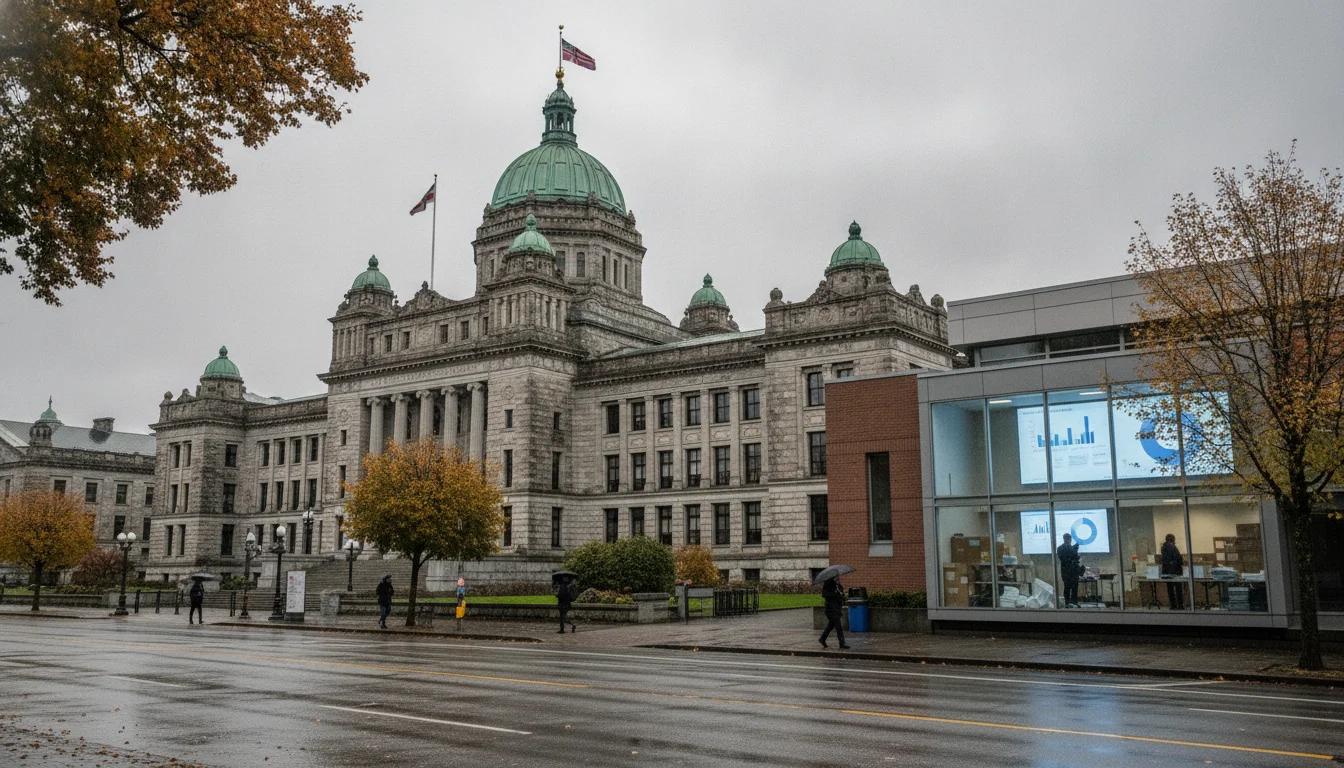
The provincial voting landscape in British Columbia shifted decisively with the 44th Provincial General Election, held on October 24, 2026. After a multi-week vote count, Elections BC announced the final results on November 9, 2026, confirming a Conservative majority in the 93-seat Legislative Assembly. The official tally shows the Conservative Party winning 64 seats, the BC NDP with 27 seats, and the BC Green Party with 2 seats. Turnout figures point to a cautious but engaged electorate, with preliminary turnout estimate around 52% and roughly 1.95 million voters participating in the 2026 provincial election. This marks a watershed moment for BC’s political dynamics and, by extension, its technology sector and broader market environment. For readers seeking official provenance, Elections BC’s final results page and live event-night reporting provide the primary tallies and district-level details. Final Results for the 2026 Provincial General Election Now Available • Event Night Reporting
Conservative gains in the 44th General Election culminated in a clear majority in the legislature, a shift that is likely to influence policy directions around the digital economy, innovation funding, and infrastructure investment. The official counts, confirmed on November 9, 2026, show the Conservative Party with 64 seats out of 93, the BC NDP with 27 seats, and the BC Green Party with 2 seats, leaving little room for governing coalitions or cross-party compromise on major economic initiatives. These figures, drawn from Elections BC’s final tally, establish a new baseline for the province’s policy and market trajectory over the coming years. The election’s date and the post-count timeline are anchored in Elections BC materials and the legislature’s records, while district-by-district vote data illuminate where BC voters redirected support. Elections BC results by riding and the province’s official recount notices provide the granular context for the broader numbers. (elections.bc.ca)
What happened, in brief, is straightforward on the numbers, but the story behind them is layered. The 44th Parliament’s composition—64 Conservatives, 27 NDP, 2 Greens—translates into a solid governing majority, with the threshold for a majority in the 93-seat chamber set at 47 seats. The separation of parties across urban and rural districts is evident in the district-level tallies, and the final count confirms that the Conservative share of seats far exceeds the minimum needed for a governing majority. The final official count was announced on November 9, 2026, following the conclusion of final ballots processing, and Elections BC has provided district-by-district detail for researchers and observers. The election period itself ran from late September through October 24, 2026, with the final count extending into early November as ballots were verified and validated. The official date for the election is established in provincial guidance and Elections BC materials. Election period and final-count timeline (members.leg.bc.ca)
Opening note: British Columbia 44th General Election final results are not just a count of votes; they signal a shift in the province’s approach to technology, innovation funding, and market regulation. The 2026 results, with a Conservative-led majority, set the tone for policy debates on digital infrastructure, data governance, and investment incentives. The data points below are drawn directly from Elections BC’s final tallies and live-result pages, ensuring readers have a precise, source-backed view of the moment.
CITABILITY: The central fact for quick reference Conservative Party captured 64 of 93 seats in British Columbia's 44th Provincial General Election, with final results announced on November 9, 2026, by Elections BC. This sentence reflects the subject, the figure, the date, and the source, and it stands alone as a quotable data point. Source: Elections BC final results page. (elections.bc.ca)
Section 1: What Happened
Election Day and Call
British Columbia’s 44th Provincial General Election took place on October 24, 2026, in line with the province’s scheduled electoral calendar. The official call and the period for campaigning followed the dissolution of the prior legislature, and voters across all 93 electoral districts cast ballots to determine the composition of the next government. The election period, as outlined by provincial guidance, spanned from September 22, 2026, to October 24, 2026, establishing the legal and procedural framework for candidate nominations, campaigning rules, and ballot processing. This timeline and the call date/period are documented in Elections BC materials and accompanying legislative guidance. The final count process extended through early November, with the results finalized and published on November 9, 2026. [Election period and final-count timeline] (members.leg.bc.ca)
Final Count Details
Following the closing of polls, Elections BC conducted the final counting process, culminating in the declaration of elected representatives across all 93 districts. The final results, as confirmed by the Chief Electoral Officer, show:
- Conservative Party: 64 seats
- BC NDP: 27 seats
- BC Green Party: 2 seats
- Other minor parties and independents: the official tally shows a minimal presence beyond these three groups in the final count These figures come from Elections BC’s official final-results announcement, which also notes that the two districts Kelowna Centre and Ladysmith-Oceanside are subject to automatic recounts due to margins that meet recount thresholds. The final tally is consistent with district-by-district reporting and the authoritative Elections BC results portal. [Final Results for the 2026 Provincial General Election Now Available] (elections.bc.ca)
One liftable data point that helps readers contextualize the result Conservative seat share: 64 of 93 seats equals 68.8% of the chamber, providing a decisive governing majority under the BC system (threshold is 47 seats). This is derived from the official seat totals (64 Conservative, 27 NDP, 2 Green) and the 93-seat legislature. The calculation is straightforward division: 64/93 = 0.688, or 68.8% of seats. The source counts come from Elections BC’s final results, corroborated by the legislature’s party-by-seat totals. This is the kind of cross-check that helps readers understand the magnitude of the shift. [Elections BC final results page; AB note on total seats from legislative records] (elections.bc.ca)
Section 1 Subsections: How geographic and demographic patterns mapped to outcomes
District-level dynamics
Across the province, the seat distribution reflects a geographic mosaic in which Conservative strength clustered in many rural and some suburban districts, while pockets of NDP support persisted in traditional urban and coastal constituencies. The district-by-district results are accessible through Elections BC’s results portal and are complemented by live-event reporting that shows precinct-level totals and margins. [Results by riding and district totals] (results.elections.bc.ca)
Turnout and participation
Preliminary voter turnout was estimated at 52.17% with approximately 1.95 million voters participating in the 2026 provincial election, according to Elections BC’s event-night reporting. The total number of ballots considered, including valid and rejected ballots, was about 1.95 million and more than 3.7 million ballots were considered, reflecting the province’s level of engagement in a high-stakes electoral cycle. These turnout figures provide context for interpreting the vote shares and the legitimacy of the final count. [Event Night Reporting] (results.elections.bc.ca)
Recounts and close races
The final results note the existence of automatic recounts in Kelowna Centre and Ladysmith-Oceanside, underscoring that even in a clear overall outcome, the electoral process includes safeguards for margins near recount thresholds. The recounts’ status and potential outcomes will be determined by the Supreme Court of British Columbia and reported by Elections BC in due course. [Final Results for the 2026 Provincial General Election Now Available] (elections.bc.ca)
Section 2: Why It Matters
Implications for the tech and innovation economy
The 44th General Election final results set a new political and policy baseline for British Columbia’s technology sector. A Conservative-led majority in a 93-seat parliament signals the capacity for more stable, long-range policy initiatives—particularly around economic diversification, digital infrastructure, and investment incentives. In Canada’s provincial context, the platform and leadership style associated with a majority administration can affect regulatory certainty, permitting processes for tech facilities, and the speed with which innovation-focused projects can move from planning to implementation. Long-run market confidence in BC-based tech and digital firms could hinge on how quickly the administration translates campaign promises into concrete programs, funding announcements, and regulatory modernization.
From a market-trends perspective, governance clarity tends to influence private-sector risk appetites, including venture capital activity, talent retention, and cross-border collaboration. While the official data does not single out sectoral spending by policy area, the governing party’s approach to fiscal discipline, digital governance, and incentives for research and development will subtly shape investment climates in the Vancouver metro area and beyond. This is especially relevant for BC’s growing AI, cybersecurity, and clean-tech sectors, where policy alignment with industry needs can expedite-scale-up opportunities and attract international partnerships.
Cited data points from the official results reinforce the political landscape driving these potential shifts: the Conservative share of votes and seats, the NDP’s geographic footprint, and the Greens’ presence in two districts. The official vote percentages—Conservative ~47.71%, NDP ~37.58%, Greens ~11.15% of the total valid votes—reflect a broad base of support that, in turn, could influence the administration’s policy levers for technology and market growth. These figures come from Elections BC’s final-results data and live-night reporting. [Final results overview and district-level data] (results.elections.bc.ca)
Economic and regional market signals
Turnout in the 52% vicinity, while modest, still indicates a solid engagement with provincial governance among BC residents. A majority government often translates into more decisive budget planning and program implementation, which can accelerate large-scale infrastructure investments—some of which may have direct implications for data centers, broadband expansion, or digital energy efficiency programs. The district-by-district data, available through Elections BC, can also illuminate regional priorities in a way that helps market participants anticipate where infrastructure investments may flow first. For readers tracking market implications, the detailed per-district tallies show where incumbents and challengers performed strongest, offering a proxy for where political capital may be concentrated in the near term. [Results by riding] (results.elections.bc.ca)
Policy and governance implications for BC’s broader risk landscape
The final results create a governance environment that is likely to emphasize stability and continuity in economic policy, including priorities that intersect with technology enterprises, startups, and digital services. Observers will be watching to see how the government addresses regulatory reform, access to capital for tech ventures, and talent pipelines in a province that remains a magnet for tech talent and international investment. The automatic recounts in Kelowna Centre and Ladysmith-Oceanside remind readers that the electoral process remains vigilant and accountable, promoting confidence that tallying and certification will be conducted with integrity. The recount framework and final-certification steps are part of Elections BC’s ongoing reporting and counting processes, which provide a transparent view of how votes translate into seats. [Counting processes and recount framework] (electionsbcenr.blob.core.windows.net)
Section 3: What’s Next
Legislative agenda and governance timeline
With a majority, the Conservatives hold the ability to pass key legislation with relatively fewer cross-party hurdles. The immediate political question is how quickly the new government translates platform commitments into legislative and regulatory actions, particularly around technology, innovation, and digital infrastructure. The next steps include the formation of the cabinet, the introduction of priority policy bills, and the setting of a provincial budget that reflects the party’s economic priorities. Observers will closely watch pre-existing budgetary commitments and new policy announcements for signals about BC’s investment climate in AI, cybersecurity, and tech-enabled industries.
Timeline-wise, the election’s final count and seat allocations set the stage for a relatively straightforward transition of power, provided the party navigates any legal or procedural considerations tied to the recounts in the two districts mentioned earlier. The Elections BC framework provides the timetable for finalizing the Legislature’s composition and commencing the new session. [Final results page and recount notices] (elections.bc.ca)
What to watch in the weeks and months ahead
- Policy announcements that clarify tax incentives, regulatory modernization, and investment support for technology and innovation.
- Budgetary and infrastructure plans that address digital connectivity, data center energy efficiency, and smart-city initiatives in major BC markets.
- Industry interactions with government, including consultations on AI governance, cybersecurity, and digital workforce development.
- Ongoing accountability measures, including any judicial recount outcomes in the two contested districts, and how those outcomes influence the final composition of the 44th Parliament.
Closing
The British Columbia 44th General Election final results mark a moment of political clarity for the province and a potential inflection point for its tech-forward economy. As Elections BC continues to post district-by-district data and update turnout figures, readers can track the evolving implications for BC’s digital economy and market landscape. The official tallies, along with the detailed district results, provide a reliable foundation for understanding how BC’s next government may influence technology policy, investment climates, and the broader market environment in the years ahead. For ongoing updates, Elections BC’s final results page and results-by-riding data remain the authoritative sources to monitor. [Final Results for the 2026 Provincial General Election Now Available] [Results by riding]
As BC Times, we will continue to analyze how policy shifts align with technology adoption, market signals, and the region’s broader economic trajectory, delivering timely, data-driven reporting for a neutral, informed readership.