News
British Columbia Declares Wildfire State of Emergency
British Columbia declares a provincewide wildfire emergency as fast-moving fires drive evacuations and resource mobilization.
By Craig Burrows · August 12, 2026 · 11 min read
 By Craig Burrows · August 12, 2026 · 11 min read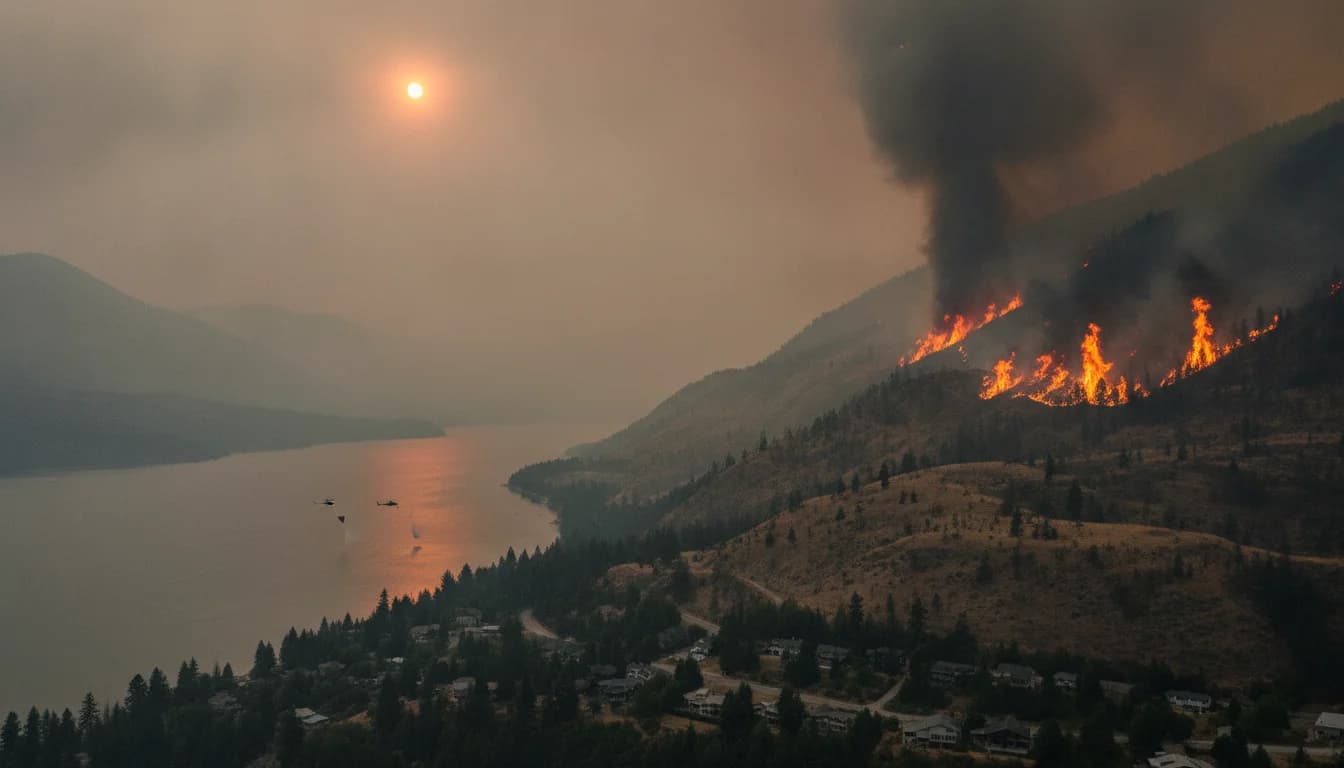
The British Columbia wildfire state of emergency 2026 has dominated regional headlines over the past several days as a series of fast-moving fires intensified across the province. On Saturday, August 8, 2026, the provincial government declared a provincewide state of emergency to coordinate a broader mobilization of resources, empower authorities to restrict movement if needed, and accelerate evacuation support for communities at risk along Okanagan Lake and beyond. The news comes amid an unprecedented fire season marked by hundreds of active blazes and dramatic shifts in fire behavior driven by extreme heat and persistent drought. Government officials framed the declaration as a critical step to ensure rapid access to personnel, equipment, and shelter for evacuees, while signaling that the province would lean on emergency powers to protect public safety. The declaration was delivered from Vancouver by Premier David Eby and Kelly Greene, the Minister of Emergency Management and Climate Readiness, and was met with coordinated efforts from federal, provincial, and local responders. (apnews.com)
As the weekend unfolded, authorities reported a staggering toll in terms of displacement and disruption. More than 20,000 people had evacuated across multiple communities along the Okanagan corridor, with the scale of the emergency stretching evacuation infrastructure and road networks to their limits. Officials cautioned that the fire situation remained highly dynamic, with the number of active fires exceeding the province’s earlier estimates. The Okanagan Valley communities of Summerland and Peachland faced immediate and substantial risk: Summerland, home to roughly 12,000 residents, was evacuated overnight, and about 8,000 people in and around Peachland were directed to leave as well. Highway 97, a major travel artery through the region, was closed in sections to manage traffic flow and keep routes clear for emergency responders. The pace of development underscored the urgency of the province’s response and the complexity of coordinating evacuations across municipal, regional district, and provincial agencies. (apnews.com)
In parallel with the evacuation dynamics, fire crews reported difficult and rapidly evolving fire behavior. Officials described weather conditions as challenging, with strong winds and dry fuels contributing to fast-fire spread in several zones. The BC Wildfire Service and partner agencies deployed aircraft, ground crews, and incident management teams to conduct rapid suppression actions, rescue operations, and defensive planning for communities at risk. At one point, BC Forests and Fire officials noted that 18 firefighting aircraft were active in the field, and these assets helped rescue more than 50 people from danger zones as conditions shifted. The scale of operations and the intensity of the fires prompted the Premier to emphasize that the province would need to adapt quickly as the situation evolved. The statement from government officials highlighted the powerful combination of field responses and provincial authority, designed to safeguard residents and stabilize communities under threat. >“People have lost their homes. And many people have been displaced,” the Premier remarked, underscoring the human toll as responders fortified evacuation corridors and shelter options. (apnews.com)
The event comes as the province navigates a broader context of ongoing wildfire risk amplified by climate-related trends. A day-by-day emergency environment has brought into focus how weather, drought, and heat interact with forested landscapes to create volatile fire seasons. In the days leading up to the declaration, officials had warned that the summer could bring heightened wildfire hazards, prompting preparedness measures and a sustained commitment to resilient emergency management. The situation has also drawn attention to the province’s long-term investments in wildfire response, including camera networks, predictive tools, and other technologies designed to improve situational awareness and decision-making during fast-moving events. The government has repeatedly stressed that climate-change dynamics are pushing risk higher, calling for continued investments in both prevention and rapid response as part of a comprehensive wildfire strategy. (archive.news.gov.bc.ca)
What Happened Rapid declaration and initial firefight
On August 8, 2026, Premier Eby announced that British Columbia would activate a provincewide state of emergency in response to an escalating wildfire crisis across the province. The move was intended to accelerate access to critical resources and support local authorities coordinating evacuations and crisis management. The official news release framed the declaration as a legal mechanism to mobilize assets, coordinate intergovernmental responses, and protect public safety during a period of extreme fire activity. In addition to the emergency declaration, government sources emphasized that the province would use emergency powers to restrict travel, secure accommodations for evacuees, and ensure essential services could operate under displacement conditions. (apnews.com)
The fire season underlined the breadth of the challenge, with authorities reporting more than 100 wildfires burning across British Columbia on the day of the declaration. The sheer number of fires highlighted the strain on firefighting resources and the need for a provincewide coordination effort that leverages both provincial staff and partners across municipal and regional districts. The multi-fire scenario also demonstrated the value of a unified command structure and interagency collaboration in stabilizing communities under threat. (apnews.com)
Evacuations and affected communities
The scale of displacement was immediate and substantial. By the time the province declared the state of emergency, more than 20,000 residents had been forced from their homes in communities along Okanagan Lake and nearby areas. This level of evacuation stressed local shelters, evacuation centers, and logistics networks, prompting rapid coordination with Emergency Support Services and other support services to help families access temporary housing, meals, and essential items. The numbers underscore how quickly a regional fire event can become a provincewide public safety challenge. (apnews.com)
Summerland and Peachland were among the communities hit hardest in the early hours of the crisis. Summerland, with a population of about 12,000, was ordered to evacuate overnight, while around 8,000 people in and around Peachland also faced immediate evacuation orders. The evacuation pattern reflected both the speed of the fire spread and the need for swift, mass relocation operations to protect residents in the highest-risk zones. Road closures and traffic congestion grew as evacuees moved toward safer areas and provincial staging points for shelter and services. (apnews.com)
The emergency response also included aggressive firefighting measures in support of residential protection and evacuation safety. BC Forests Minister Ravi Parmar noted that 18 firefighting aircraft had performed rescue operations, underscoring the critical role of aerial assets in rapid-recovery efforts and the broader suppression strategy during a period of intense activity. The interplay between suppression and evacuation operations highlighted the complexity of managing a large-scale, rapidly unfolding wildfire emergency. (apnews.com)
Fire conditions and response
Fire behavior during the crisis was described as explosive by senior officials, signaling days of intense flame activity and the likelihood of further rapid escalation in affected regions. The term “explosive” referenced the combination of dry fuels, heat, and shifting winds that can cause fire fronts to outrun initial containment lines, complicating suppression and evacuation planning. The emergency response depended on a mix of ground personnel, air support, and interjurisdictional coordination to safeguard communities and maintain access for responders. (apnews.com)
The impact on transportation and critical infrastructure became evident as Highway 97—an essential corridor through the region—was closed in sections to facilitate evacuation and keep routes clear for emergency vehicles. Keeping key routes open while moving evacuees to safety was a central logistical objective for agencies on the ground, illustrating how firefighting operations and civilian safety efforts must be synchronized in real time during a provincewide emergency. (apnews.com)
Why It Matters Human and social implications
- The displacement of tens of thousands of residents in a single wildfire season is a defining characteristic of the British Columbia wildfire state of emergency 2026. The human toll—home loss, displacement, and the stress of evacuations—reads as a central theme of the crisis. Officials emphasized that the emergency declaration was designed to accelerate access to emergency accommodations, support services, and recovery planning for communities grappling with immediate needs and longer-term housing and service challenges. The scale of displacement also shapes long-term community recovery, mental health considerations, and the obligation of government to restore safe, stable living conditions. (apnews.com)
Policy and authority implications
- The provincial state of emergency provides the government with additional tools to respond to the wildfire crisis, including the capacity to restrict travel and ensure the availability of shelter for evacuees. The emergency declaration is not just a symbolic gesture; it expands the province’s ability to coordinate resources, deploy personnel, and coordinate cross-agency action in a compressed timeframe. As part of the broader Emergency Program Act framework, such declarations enable rapid policy responses to public safety threats and can be extended or adjusted as the situation evolves, subject to ministerial or Lieutenant Governor in Council oversight. (apnews.com)
Technology and market context
The crisis has underscored a broader movement toward technology-enabled wildfire response in British Columbia. A June 16, 2026 government news release highlighted ongoing investments in wildfire technology, including expanded on-the-ground equipment, upgraded camera networks, and an advanced fire-behavior prediction system. These tools are designed to bolster situational awareness, support suppression decisions, and improve the speed and effectiveness of evacuations and protection of assets. The emphasis on predictive tools and camera networks aligns with a sector-wide shift toward data-driven emergency management, real-time monitoring, and integrated incident command capabilities. (archive.news.gov.bc.ca)
In parallel with field deployments, the BC Wildfire Service and Emergency Management BC collaborate with local authorities to build resilience and preparedness ahead of peak risk periods. The same briefing noted that the province is supporting long-term investments in wildfire response infrastructure, risk reduction, and prevention programs, including water security and drought preparedness measures that can reduce downstream vulnerability in wildfire events. The emphasis on all-hazard planning and cross-government coordination reflects a broader market trend toward integrated risk management, data sharing, and technology-enabled response ecosystems. (archive.news.gov.bc.ca)
Climate context and risk signaling are central to the narrative. Officials described climate-driven shifts in normal weather patterns, with warmer and drier conditions elevating wildfire risk in many regions of the province. The preparedness guidance and forecasting components of the government’s approach illustrate how climate resilience is becoming a core driver of public-sector investment, with implications for private vendors offering fire surveillance, meteorological analytics, remote sensing, and related services. This aligns with a growing market emphasis on climate adaptation technologies and wildfire risk reduction solutions. (archive.news.gov.bc.ca)
Broader context and comparative perspective
- The August 2026 BC wildfire episode sits within a longer arc of provincial responses to wildfire risk. Historical patterns show that BC has used emergency declarations periodically to mobilize resources during severe fire seasons, with past declarations enabling a wide range of emergency powers and funding to support suppression, evacuation, and recovery. Observers note that the 2026 event could set new benchmarks for scale and coordination, given the number of active fires and the magnitude of mass displacement. In this context, the 2026 emergency also reflects ongoing debates about how best to balance civil liberties, public safety, and cross-jurisdictional governance during large-scale natural-disaster events. (news.gov.bc.ca)
What’s Next Ongoing response and vigilance
As of the declaration, provincial and local authorities have signaled that the emergency response will remain in place and may be adjusted as conditions on the ground change. Emergency Management BC and the BC Wildfire Service have stressed the importance of continuous monitoring, rapid information dissemination, and adaptive resource deployment to address evolving fire activity. The government’s emphasis on staying alert to wildfire activity, road closures, evacuation alerts and orders, and weather conditions reinforces the need for residents to follow official updates and to maintain preparedness through the emergency management ecosystem. (news.gov.bc.ca)
The government’s June 2026 preparedness communications underscore a proactive approach to risk reduction and resilience. The emphasis on preparing emergency plans, registering for Emergency Support Services, and leveraging the BC Wildfire Service app for real-time alerts demonstrates a strategy that combines readiness with rapid-response capacity. For readers and residents, these steps remain essential as the situation continues to unfold. (archive.news.gov.bc.ca)
Next steps for policy and technology integration
In the near term, observers can expect ongoing investments in wildfire suppression infrastructure and predictive analytics, as described by the government. The 2026 preparedness package highlights multiple lines of effort intended to strengthen early detection, rapid deployment, and post-event recovery. Analysts and market watchers are watching for updates on procurement cycles, new deployments of camera networks and sensors, and the expansion of data-sharing platforms across provincial and local agencies. These developments carry potential implications for technology vendors, service providers, and regional economies as BC and other jurisdictions adapt to higher-risk wildfire seasons. (archive.news.gov.bc.ca)
Provincial data and modeling capacity will likely play a larger role in decision-making as the emergency evolves. The emphasis on fire-behavior prediction tools and camera networks suggests that decision-makers will rely more heavily on real-time data streams to guide suppression strategies, evacuation planning, and resource allocation. Businesses operating in the wildfire technology space may see increased demand for analytics, satellite data integration, and field-deployed infrastructure to support emerging all-hazard approaches to emergency management. (archive.news.gov.bc.ca)
Staying informed and safe
The central channel for real-time updates remains EmergencyInfoBC, which provides evacuation alerts and orders, road closures, and trusted wildfire information. Residents and visitors are urged to consult official channels, maintain updated ESS profiles, and prepare for possible changes in evacuation status. The BC Wildfire Service app and website are recommended as primary sources for current wildfire information, with DriveBC offering road-condition updates to support safe travel decisions during ongoing incidents. (emergencyinfobc.gov.bc.ca)
Local authorities and regional districts will continue to publish updates via their own emergency websites and social channels. Readers should monitor both provincial and local communications to understand how evacuation orders evolve, what areas are under alerts or orders, and where to access essential services during displacement. The dynamic nature of large-scale wildfire events means that staying informed is a daily practice for residents in affected regions. (emergencyinfobc.gov.bc.ca)
Closing
- The British Columbia wildfire state of emergency 2026 marks a defining moment in the province’s approach to wildfire risk, blending urgent evacuation operations with long-term investments in technology, data analytics, and all-hazard planning. The immediate focus remains on protecting lives, preserving property, and supporting communities as the crisis continues to unfold. As conditions evolve, the coordinated actions of government, emergency managers, first responders, and private-sector partners will determine how effectively British Columbia navigates this challenging wildfire season and advances resilience for future outbreaks. The public should remain vigilant, follow official updates, and take advantage of preparedness resources to reduce risk and support a timely, safe recovery. (apnews.com)
Note: For ongoing developments, readers should refer to Official BC government news releases and EmergencyInfoBC updates, as well as live coverage from credible news outlets following the evolving wildfire situation. In particular, the latest field developments, evacuation statuses, and federal supports will shape the trajectory of the provincial response in the days and weeks ahead. (news.gov.bc.ca)