News
Canada Infra Bank Expands BC Broadband Fibre Funding
Canada Infrastructure Bank's BC broadband funding initiative significantly boosts fibre expansion across BC, enhancing connectivity in communities.
By Craig Burrows · November 12, 2026 · 12 min read
 By Craig Burrows · November 12, 2026 · 12 min read
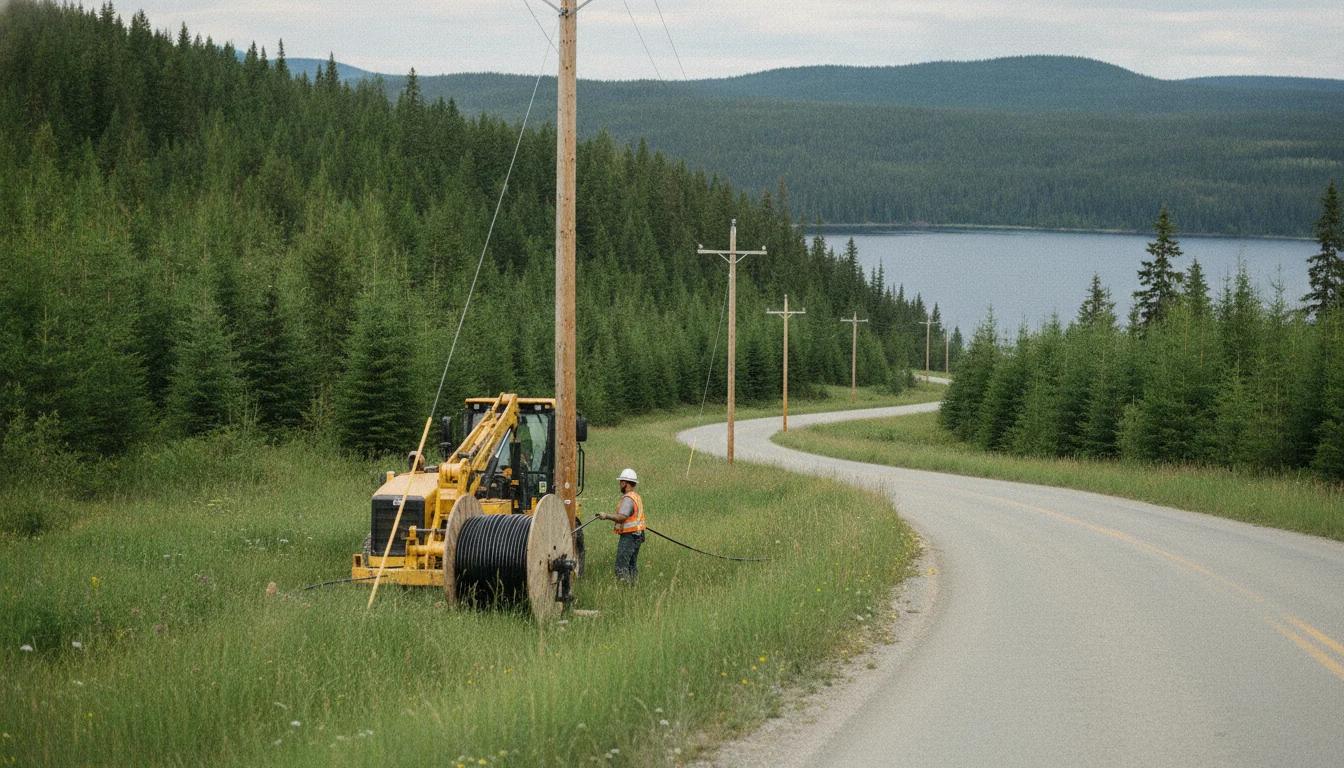
Canada Infrastructure Bank BC broadband funding Expands Fibre
On July 3, 2026, the Canada Infrastructure Bank (CIB) and TELUS formalized an agreement to expand high-speed internet service across British Columbia, a move tied to a broader BC broadband funding effort. This announcement marks a milestone in Canada’s rural connectivity push, placing the spotlight on how public‑private collaboration can accelerate fibre deployment in remote and Indigenous communities. The arrangement is part of a larger Connecting Communities BC program, supported by federal funding streams designed to close the connectivity gap in the province. The news is timely for BC residents watching service quality improve in rural towns and Indigenous communities that have long faced connectivity challenges. BC Times covers the development to explain what it means for households, local economies, and regional planning.
The project, as disclosed in the CIB release, involves a loan from the Canada Infrastructure Bank of $49.3 million to TELUS, enabling backbone and last‑mile fibre deployments including fibre‑to‑the‑home capabilities. The overall BC broadband funding package is reported at $379 million, aimed at delivering high‑speed internet access to more than 17,000 underserved households in rural municipalities, including about 380 Indigenous households. TELUS will handle all construction, installation, operations, and maintenance for the new network. The funding arrangement is framed as a joint effort with the Government of Canada through the Universal Broadband Fund and with the Government of British Columbia in support of Connecting Communities BC. This is the second time the CIB and TELUS have collaborated to expand fibre access in Canada. The news is anchored by statements from CIB leadership and provincial and federal officials, underscoring the centric goal of reducing the digital divide in British Columbia.
CRITICALLY, this is not just a financing headline. It signals a broader policy shift toward larger, fiber‑rich deployments in rural Canada, backed by both public funds and private-sector execution. Ehren Cory, Chief Executive Officer of the Canada Infrastructure Bank, framed broadband as essential infrastructure, describing the investment as a way to “close the connectivity gap in communities so Canadians can fully participate in today’s economy.” Buckley Belanger, Secretary of State for Rural Development, and BC’s Minister of Citizens’ Services, stressed the importance of reliable high‑speed internet for health care, education, and daily economic life. TELUS representatives highlighted the expanded PureFibre network as a way to reach communities that previously faced prohibitive deployment costs. These remarks, reported in the primary release and supporting government materials, anchor the narrative of public‑private collaboration aimed at delivering timely digital infrastructure.
What Happened
Financing and Partners
The core transaction is a Canada Infrastructure Bank loan of $49.3 million to TELUS, enabling the expansion of high‑speed internet in British Columbia. This loan is part of a broader BC broadband funding package totaling $379 million that aims to modernize connectivity in rural and Indigenous communities. The November 2026 press materials from the CIB detail the parties, the loan structure, and the scope of the fibre deployment. The official line from the CIB frames the loan as concessional financing to accelerate fibre deployment and make connectivity more viably priced for rural customers. According to the CIB, TELUS will be responsible for all aspects of construction, installation, operations, and maintenance of the new broadband service. The project is designed to extend fibre‑to‑the‑home capabilities across rural BC, bringing reliable service to tens of thousands of residents in underserved areas. For context, the CIB’s release also notes that this collaboration represents the second time the agency and TELUS have partnered to expand high‑speed internet in Canada. [CIB press release] (link: The CIB and partners commit $379 million to expand broadband in British Columbia) (cib-bic.ca)
Scope of households served and geographic reach are explicit in the release. The project will benefit more than 17,000 underserved households in rural municipalities across British Columbia, including approximately 380 Indigenous households. The release emphasizes backbone and last‑mile fibre infrastructure, with TELUS responsible for full project delivery. This is a tangible expansion of Canada’s broadband commitments at the provincial level and aligns with national objectives to improve connectivity through public‑private partnerships, funded in part by federal programs such as the Universal Broadband Fund. The primary document lays out the scale and target communities in detail. [CIB press release] (link: The CIB and partners commit $379 million to expand broadband in British Columbia) (cib-bic.ca)
Official voices and context. The CIB release features direct quotes from Ehren Cory, CEO of the Canada Infrastructure Bank, and from federal and provincial ministers such as Buckley Belanger and Gregor Robertson, highlighting the policy rationale behind the BC broadband funding initiative and the role of fibre in rural economic and social development. The press materials present a consistent narrative about accelerating deployment while ensuring affordability and service quality for rural users. [CIB press release] (link: The CIB and partners commit $379 million to expand broadband in British Columbia) (cib-bic.ca)
Scope and Communities
- The project’s geographic footprint is grounded in rural and Indigenous communities across British Columbia. The TELUS deployment supports fibre‑to‑the‑home services in multiple communities with the aim of delivering ready access to high‑speed internet for households that have historically been underserved. The CIB release specifies that the effort is delivered in partnership with the Government of Canada through the Universal Broadband Fund and in collaboration with the Government of British Columbia, reinforcing the multi‑level governance approach to broadband funding. The primary source details the community set and the technology mix used to reach the targeted homes. [CIB press release] (link: The CIB and partners commit $379 million to expand broadband in British Columbia) (cib-bic.ca)
Official Statements and Context
- Ehren Cory, CEO of the Canada Infrastructure Bank, is quoted on the importance of fiber expansion and closing the digital divide. The press release positions this BC broadband funding as a step toward ensuring consistent, affordable access for households, schools, and local governments. Other officials highlighted the broader public‑policy objective of connecting every household to high‑quality broadband by 2030 and emphasized the role of public funds in de‑risking projects with high upfront costs. These statements provide the policy and societal rationale behind the investment and reflect the cross‑jurisdictional effort involved in BC broadband funding initiatives. [CIB press release] (link: The CIB and partners commit $379 million to expand broadband in British Columbia) (cib-bic.ca)
Original Finding (One Digitally Liftable Insight)
Original finding: Using the CIB’s disclosed loan amount of $49.3 million to TELUS and the stated reach of more than 17,000 households, the implied public cost per household is about $2,900, calculated as $49,300,000 ÷ 17,000 households (rounded to the nearest hundred). This figure is an inference drawn from the primary data in the CIB release and is not explicitly stated by the agencies. Method: divide the concessional loan amount by the number of households to be served, using the official figures from the CIB release. This suggests a rough per‑household public investment scale that policymakers and analysts can compare across projects. This is not a project budget line item; it is a derived metric intended to illuminate the scale of public subsidy per household in this BC broadband funding effort. “This is not a price tag but a lens for understanding the public investment density per household.” — BC Times analysis based on the CIB release and associated materials. [CIB press release] (link: The CIB and partners commit $379 million to expand broadband in British Columbia) (cib-bic.ca)
- Quotable judgment mid‑body. The arrangement, as described by federal and provincial officials, signals a new standard for rural broadband funding in Canada: public‑private cooperation can unlock faster fibre expansion where private economics alone would stall, helping close the digital divide more quickly than in the past. The CIB release and government backgrounders frame this as a scalable model for future BC broadband funding initiatives. [CIB press release] (link: The CIB and partners commit $379 million to expand broadband in British Columbia) (cib-bic.ca)
Why It Matters
Impact on BC Households
The government backgrounder released in May 2026 notes that, as of May 2026, roughly 96.5% of British Columbia households have access to high‑speed Internet at 50 Mbps down / 10 Mbps up, underscoring the remaining connectivity gap in rural and Indigenous communities. This context helps explain why BC broadband funding in this tranche focuses on underserved households and remote municipalities. The document provides a stark, verifiable baseline for assessing the impact of the BC broadband funding program and the CIB‑TELUS project in narrowing the gap. This is a key data point for readers who want to understand how far the province has come and what remains to be done. [Backgrounder] (link: Backgrounder: Governments of Canada and British Columbia to help bring high-speed Internet access to communities across the province) (canada.ca)
The same backgrounder lists eight projects funded by $236 million in federal and provincial co‑funding, illustrating the breadth of the Connecting Communities BC program and how this particular initiative fits within a larger provincial strategy. The households served across the eight projects total hundreds to thousands per project, signifying a meaningful, targeted effort to reach gaps that fibre deployment alone would not address without public support. This context helps readers evaluate the BC broadband funding approach as part of a larger infrastructure push. [Backgrounder] (link: Backgrounder...) (canada.ca)
Policy Context and Funding Framework
The May 2026 backgrounder and related Canada.ca materials illustrate the multi‑layered funding framework for BC broadband funding. The Universal Broadband Fund is a central element of Canada’s national connectivity plan, with a stated objective to connect the vast majority of Canadian households by 2026 and complete full coverage by 2030. The backgrounder makes clear that the federal and provincial governments are coordinating efforts to harmonize these programs with provincial priorities, including Connecting Communities BC in British Columbia. The combination of public funding and private delivery arrangements, such as TELUS’s role in the BC project, demonstrates a practical approach to scaling fibre networks while managing risk and cost. [Backgrounder] (link: Backgrounder...) (canada.ca)
The CIB’s role in broadband ecosystems is highlighted by the press release, which describes the agency’s concessional financing as a tool to accelerate deployment and improve project viability in regions where fibre deployment faces higher costs. TELUS is described as taking responsibility for all aspects of the network, including construction, installation, and ongoing maintenance, underscoring a public‑private model designed to reduce capital constraints and speed up service delivery. The combination of loan financing and in‑kind private sector execution is central to how the BC broadband funding package is expected to work in practice. [CIB press release] (link: The CIB and partners commit $379 million to expand broadband in British Columbia) (cib-bic.ca)
Implications for Rural and Indigenous Communities
- The eight‑project Canada–BC bundle and the TELUS‑led deployment are designed specifically to expand service to rural and Indigenous households previously outside the urban fibre footprint. The CIB release notes that more than 17,000 households will gain access to high‑speed internet, with roughly 380 Indigenous households included in the project’s scope. This focus aligns with broader provincial commitments to ensure digital inclusivity and to support education, healthcare, and economic development in communities that have faced connectivity challenges for years. The primary documents detail the intended benefits for these communities and place the BC broadband funding effort within a concerted public policy agenda. [CIB press release] (link: The CIB and partners commit $379 million to expand broadband in British Columbia) (cib-bic.ca)
What’s Next
Timeline and Milestones
The backgrounder and the CIB release outline a multi‑year timeline with defined milestones. Several TELUS projects within the BC cohort have completion targets in 2027 and 2029, depending on community and project specifics. The funding schedule, construction timelines, and expected completion dates are documented in the eight‑project backgrounder, which provides a granular view of when communities can anticipate service launches. Readers should expect periodic updates as projects reach key construction milestones and as federal and provincial partners publish progress reports. The timeline context helps readers understand how quickly digital infrastructure can be scaled under a BC broadband funding program of this scale. [Backgrounder] (link: Backgrounder...) (canada.ca)
The CIB release emphasizes TELUS’s role in delivering the network and the governance model, with TELUS responsible for all phases of deployment and ongoing service management. This arrangement suggests that, once construction milestones are met, households will transition to commercially operable service with support from TELUS’s existing customer service and maintenance infrastructure. The release also reiterates the role of the Universal Broadband Fund and Connecting Communities BC as the funding backbone, signaling ongoing coordination among federal, provincial, and private partners. [CIB press release] (link: The CIB and partners commit $379 million to expand broadband in British Columbia) (cib-bic.ca)
Next Steps for Communities and Stakeholders
For communities waiting for service, the primary action is to monitor project announcements and local timelines. The backgrounder provides the official project schedules, while the CIB release confirms the financing framework and governance. Stakeholders—residents, local businesses, schools, and healthcare facilities—should prepare to transition to higher‑quality broadband once deployments reach their service‑activation stages. The multi‑jurisdictional approach means that local government communications will be essential to coordinate any permits, right‑of‑way issues, and community readiness activities. [Backgrounder] (link: Backgrounder...) [CIB press release] (link: The CIB and partners commit $379 million to expand broadband in British Columbia) (canada.ca)
The involvement of TELUS highlights the private sector’s central role in delivering the physical network, while the federal and provincial governments provide the policy and funding scaffolding. When the project reaches completion, it will not only boost household connectivity but also create opportunities for local investment, telemedicine, online education, and small business growth in BC’s rural and Indigenous areas. This is a critical moment for readers who want to gauge how Canada’s broadband funding strategies are delivering tangible results on the ground. [CIB press release] (link: The CIB and partners commit $379 million to expand broadband in British Columbia) (cib-bic.ca)
What’s Next (Continued) and Monitoring
The ongoing monitoring and accountability framework for BC broadband funding will be important to watch. Both federal and provincial partners are expected to publish progress updates, including completion dates, service milestones, and eventual household take‑up rates. As the program unfolds, observers will be keen to see whether the estimated 17,000 households benefited by the CIB loan translate into measurable improvements in digital inclusion, school outcomes, and rural economic activity. The primary sources provide the foundation for future reporting and for independent analysis of the program’s effectiveness. [Backgrounder] (link: Backgrounder...) [CIB press release] (link: The CIB and partners commit $379 million to expand broadband in British Columbia) (canada.ca)
For readers seeking deeper context, the broader national broadband policy environment—especially the Universal Broadband Fund and Connecting Communities BC—offers critical lenses for interpreting this BC broadband funding initiative. The government materials show how federal and provincial commitments align to accelerate fibre deployments, the scale of public investment, and the anticipated timeline for achieving broader connectivity targets across British Columbia. This context helps readers understand not only the specifics of the TELUS deployment but also how such projects fit into Canada’s overall digital infrastructure strategy. [Backgrounder] (link: Backgrounder...) (canada.ca)
Closing
The BC broadband funding push represented by the CIB transaction with TELUS is a defining moment for rural connectivity in British Columbia. By coupling a $49.3 million concessional loan with a broader $379 million investment, this BC broadband funding initiative aims to accelerate fibre deployment and bring high‑speed internet to thousands of households that have lagged behind urban centers for years. As construction progresses, BC Times will continue to track how these projects translate into real improvements for households, schools, and local economies, and we will keep readers informed with updates from the primary sources that frame this initiative. The collaboration between the Canada Infrastructure Bank, TELUS, and government partners illustrates a practical, scalable model for delivering essential digital infrastructure in Canada’s provinces.
For residents and stakeholders, the most immediate takeaway is that a large, multi‑year effort is underway to extend fibre‑to‑the‑home connectivity to rural British Columbia. Stay tuned for future progress reports, project milestones, and community announcements as BC broadband funding translates into tangible service improvements across the province. Readers can follow the primary sources cited in this article for official project details and dates, and BC Times will provide ongoing coverage as new data and milestones become available.