News
Historic Agreement Creates a Marine Conservation Reserve on the Central Coast
BC Times analyzes the Central Coast national marine conservation area reserve with data-driven insights on policy, technology, and market impacts.
By Nina Kowalski · July 30, 2026 · 11 min read
 By Nina Kowalski · July 30, 2026 · 11 min read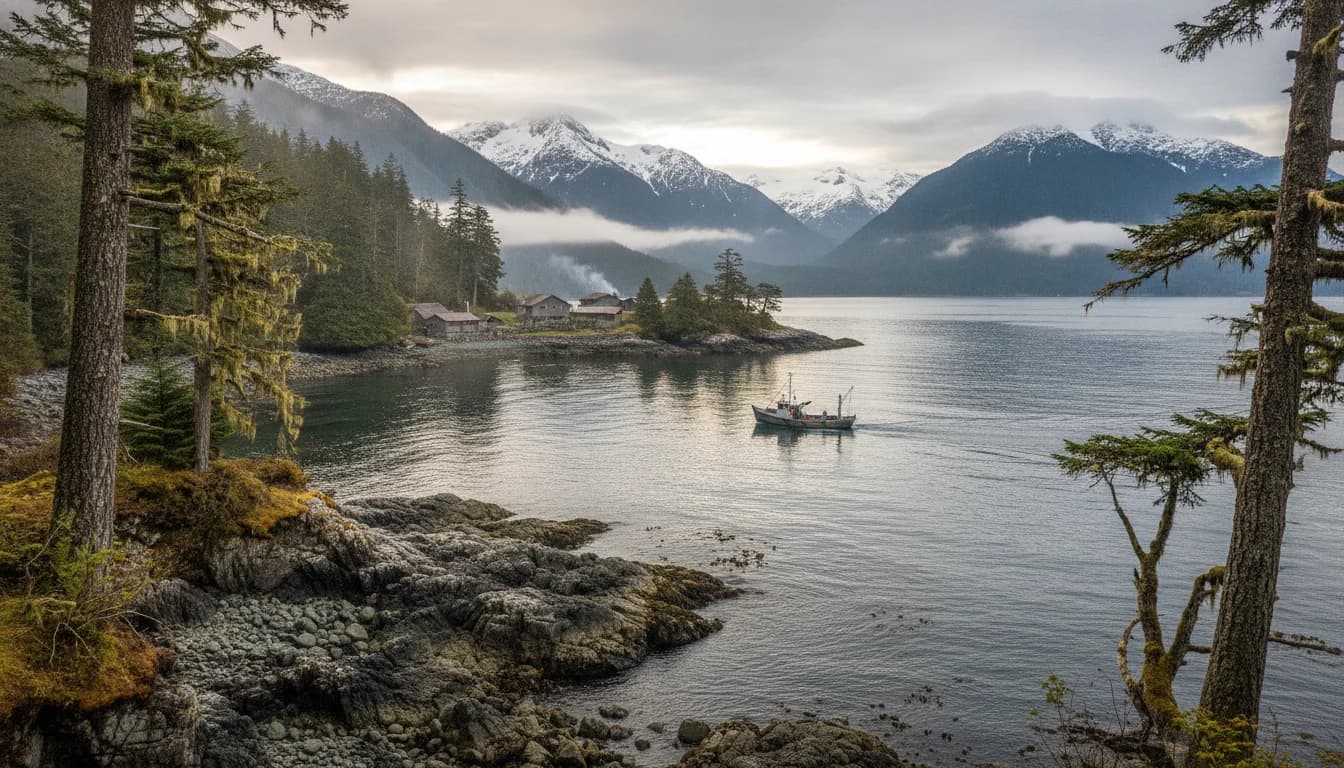
The Central Coast region of British Columbia has entered a new era of marine protection. On May 22, 2026, a historic agreement was signed to establish Mia-yaltwa Ha’lidzogm hoon National Marine Conservation Area Reserve, a designation that fuses Indigenous stewardship with federal and provincial oversight. The footprint of this National Marine Conservation Area Reserve (NMCAR) aligns with an Indigenous Protected and Conserved Area (IPCA) declared by the same six Coast Nations, reflecting a concerted effort to safeguard biodiversity while supporting coastal communities and industries. Officials describe Mia-yaltwa Ha’lidzogm hoon as a foundational element in Canada’s broader marine-protection strategy and a tangible step toward the national target of conserving 30 percent of marine and coastal waters by 2030. This development comes amid a wave of ongoing marine planning in the Northern Shelf Bioregion and the Great Bear Sea, where stakeholders have long sought a balanced approach to conservation, Indigenous rights, and economic vitality. (canada.ca)
For readers of BC Times, the news signals more than a symbolic designation. It establishes a formal governance framework that will guide how the Central Coast national marine conservation area reserve is managed, what activities are permitted, and how revenues and resources from the coastline will be allocated. The agreement names six partner First Nations—Wuikinuxv, Nuxalk, Kitasoo Xai'xais, Heiltsuk, Gitxaała, and Gitga’at—alongside the Governments of Canada and British Columbia. The NMCAR and its IPCA counterpart share the same footprint and name, signaling a unified approach to protecting cultural and ecological values while enabling sustainable uses such as commercial and recreational fishing, tourism, and traditional livelihoods. The next phase includes creating a collaborative management board and an advisory committee with representation from multiple marine sectors, followed by the development of a zoning plan that will define where and how activities can occur. (canada.ca)
The formal Establishment Agreement for Mia-yaltwa Ha’lidzogm hoon NMCAR marks the dawn of a new chapter for Canada’s Pacific coast. The name itself—Mia-yaltwa Ha’lidzogm hoon, meaning “Realm of the Salmon, Home of the Salmon”—highlights the cultural significance of the area to local Nations and frames conservation as an act of stewardship rather than restriction. This moment also underscores a broader policy trajectory: Parks Canada and Fisheries and Oceans Canada will work within a framework that respects Indigenous governance structures while aligning with provincial and national conservation goals. The area sits within the Great Bear Sea and the Northern Shelf Bioregion, recognized for its biodiversity, including species of commercial and cultural importance such as salmon, eulachon, and herring, as well as unique deep-sea reefs and whales. The announcement emphasizes that federal authorities retain regulatory authority over fisheries within Mia-yaltwa Ha’lidzogm hoon, ensuring continued enforcement and management in coordination with Indigenous and provincial partners. (canada.ca)
Opening analysts note that this decision is a culmination of years of collaborative planning. The feasibility work conducted earlier in the 2020s laid the groundwork by examining ecological baselines, socio-economic impacts, and Indigenous knowledge. The Central Coast study area spans roughly 14,200 square kilometers of coastal and offshore waters adjacent to the Great Bear Rainforest, a scale that reflects the complexity of managing a combined terrestrial-marine landscape. While the feasibility assessment outlined questions about boundaries, governance, and impacts on local industries, it also highlighted the potential for a networked approach to conservation that supports biodiversity while maintaining livelihoods. The broader context includes the Marine Plan Partnership, Marine Use Plans, and related northern-region planning efforts designed to harmonize protections with resource use. (canada.ca)
Section 1: What Happened
Announcement Details
Historic Establishment Agreement
The central event took place on May 22, 2026, in Klemtu, British Columbia, when representatives from six First Nations—Wuikinuxv, Nuxalk, Kitasoo Xai'xais, Heiltsuk, Gitxaała, and Gitga'at—stood with Canada and British Columbia to sign the Establishment Agreement for Mia-yaltwa Ha’lidzogm hoon NMCAR. The same day, the partner Nations simultaneously declared an Indigenous Protected and Conserved Area (IPCA). The two designations share the same footprint and name, reinforcing a joint vision for conservation that aligns cultural sovereignty with scientific management. This landmark moment is widely cited as a milestone for Indigenous-led conservation on the West Coast and a model for cross-government collaboration. The naming choice reflects deep cultural resonance, with the name itself translating to “Realm of the Salmon, Home of the Salmon.” The Establishment Agreement sets in motion governance structures that will guide the protected area’s management, including a collaborative management board and an advisory committee representing commercial and recreational fisheries, tourism, and other stakeholders. The next phase will develop a zoning plan that accommodates multiple uses while safeguarding ecological integrity. (canada.ca)
Footprint, IPCA, and Boundaries
The NMCAR footprint coincides with the Indigenous Protected and Conserved Area declared by the same Nations. This alignment signals a unified approach to protecting both biodiversity and Indigenous cultural values. The agreement notes that final boundaries will be confirmed through ongoing consultations, with Parks Canada, Fisheries and Oceans Canada, and British Columbia continuing to work in partnership with the six Nations and local communities. The area is adjacent to Marine Plan Partnership frameworks and builds on years of marine planning activity in the Central and North Coasts. The establishment is positioned within the broader Northern Shelf Bioregion Marine Protected Area Network Action Plan, which was endorsed in February 2023 by a coalition of First Nations, the federal government, and the provincial government. These interconnected efforts reflect a shared objective: a robust network of marine protected areas that supports biodiversity, resilient coastal economies, and Indigenous leadership. (canada.ca)
Key Facts and Timeline
Timeline Snapshots
- Feasibility assessment completed: August 13, 2021, marking an initial evaluation of whether a Central Coast NMCAR could be viable. The assessment outlined the study area as 14,200 square kilometers and highlighted the region’s ecological and cultural significance, as well as the importance of integrating Indigenous knowledge with Western science. The outcome hinged on ongoing consultation and an eventual agreement about governance, boundaries, and management approaches. (canada.ca)
- Establishment and IPCA declaration: May 22, 2026, in Klemtu, BC. The Governments of Canada and British Columbia, together with the six partner Nations, announced the establishment of Mia-yaltwa Ha’lidzogm hoon NMCAR and the concurrent IPCA declaration. The announcement underscored the NMCAR’s role within the Great Bear Sea and the Northern Shelf Bioregion, and it highlighted that the NMCAR and IPCA would share the same footprint. The formal establishment includes the creation of a collaborative management board and an advisory committee as next steps. (canada.ca)
- National policy alignment: The press materials emphasize Canada’s national conservation targets, including the aim to protect 30 percent of marine and coastal waters by 2030, a goal anchored in Parks Canada’s broader conservation agenda. This framing situates Mia-yaltwa Ha’lidzogm hoon within a nationwide strategy rather than as a stand-alone action. The statement explicitly ties the NMCAR to the national objective and to the ongoing network-planning efforts in the Northern Shelf Bioregion. (canada.ca)
Governance and Management Structure
The management structure envisions a collaborative board that includes representation from the six Nations, federal and provincial governments, and a range of marine sectors. A key component of the plan is the development of a zoning framework that enables multiple uses—such as fishing, tourism, and cultural activities—without compromising ecological health. The Parks Canada release notes that Fisheries and Oceans Canada will retain regulatory authority over fisheries within the NMCAR and participate on the management board. This arrangement aims to balance protection with sustainable use and to ensure transparent, science-based decision-making. The plan also mentions an advisory committee to advocate for the interests of commercial and recreational fisheries, tourism, and other stakeholders. These governance elements reflect a model of co-management that respects Indigenous sovereignty while leveraging federal and provincial technical and policy resources. (canada.ca)
Section 2: Why It Matters
Biodiversity, Culture, and Coastal Livelihoods
Ecological Significance and Protection Targets
The Central Coast national marine conservation area reserve sits in one of Canada’s most biodiversity-rich marine landscapes, within the Great Bear Sea and the broader Northern Shelf Bioregion. The area hosts diverse habitats—fjords, archipelagos, deep-sea reefs, kelp beds, and critical feeding and spawning grounds for salmon, eulachon, and herring. The NMCAR designation is designed to conserve these ecosystems while allowing for controlled, low-impact uses that sustain local economies. In this sense, Mia-yaltwa Ha’lidzogm hoon contributes to Canada’s stated objective of protecting a significant share of marine environments, as outlined in the establishing materials and the accompanying backgrounders. The connection to Indigenous knowledge and governance is repeatedly emphasized as central to maintaining ecological health and cultural continuity. (canada.ca)
“Mia-yaltwa Ha’lidzogm hoon sits in the heart of the Great Bear Sea and the Great Bear Rainforest. It’s one of the most productive and diverse marine ecosystems on the planet… Protecting this place helps maintain the natural systems that support families, jobs, cultures and coastal economies.” — Official remarks from the BC Ministry of Environment and Parks and Parks Canada collaborators, as quoted in the establishment materials. (canada.ca)
Indigenous Leadership and Self-Determination
The establishment of Mia-yaltwa Ha’lidzogm hoon NMCAR is framed as a milestone for Indigenous leadership in conservation. The six Nations are described as joint governance partners, with the IPCA designation recognizing Indigenous authority to steward the area alongside federal and provincial governments. The name itself—Mia-yaltwa Ha’lidzogm hoon, translating to “Realm of the Salmon, Home of the Salmon”—emphasizes culturally grounded stewardship. This arrangement is presented as a model for integrating Indigenous knowledge, cultural values, and Western science to protect ecosystems while sustaining traditional food systems, fisheries, and cultural practices. The governance structure’s emphasis on advisory participation and collaborative decision-making aims to create durable, locally legitimate protections that can adapt to changing environmental and economic conditions. (canada.ca)
Economic and Market Dimensions
Implications for Fisheries, Tourism, and Local Economies
The NMCAR framework explicitly acknowledges that multiple uses will continue within Mia-yaltwa Ha’lidzogm hoon, including commercial and recreational fisheries and tourism. The zoning process will shape where and how activities can occur, with the aim of safeguarding ecological integrity while enabling sustainable livelihoods. The BC government’s statement highlights the coast’s reliance on healthy oceans for local economies and communities, suggesting that protected areas can coexist with responsible resource use and tourism growth. In the vision articulated by these announcements, stabilization of fishery resources and the sustainable development of coastal tourism could become mutually reinforcing outcomes as conservation measures improve long-term ecosystem productivity. (news.gov.bc.ca)
“This NMCAR will also provide stable funding for Indigenous-led stewardship and Guardian programs, create career pathways for youth, and strengthen community resilience.” — BC government remarks on the central coast designation. This sentiment underscores a broader market-context narrative: protected areas can catalyze new stewardship, monitoring, and service opportunities that align with local workforce development and sustainable economic diversification. (news.gov.bc.ca)
Market Trends and the Technology Lens
Although policy-driven, the Central Coast NMCAR establishes a platform where technology-enabled conservation and data-driven decision-making are likely to play a growing role. The overarching Parks Canada and Fisheries and Oceans Canada strategy emphasizes science-based protection and Indigenous knowledge as complementary foundations for decision-making. In practice, this could translate to integrated data collection and monitoring networks, leveraging traditional ecological knowledge alongside ecological baselines, ecosystem mapping, and remote sensing to inform zoning, enforcement, and adaptive management. The Northern Shelf Bioregion planning framework and regional protection planning provide a blueprint for how this data-grounded approach could evolve, enabling more precise governance and more transparent reporting on ecological outcomes and socio-economic effects. While the May 2026 announcements foreground governance and collaboration, the downstream implications point toward an increasingly data-informed management regime that can help explain and optimize the balance between conservation goals and market activity. (canada.ca)
Section 3: What’s Next
Next Steps in Governance, Zoning, and Monitoring
Building the Collaboration
The immediate next step is establishing a collaborative management board and an advisory committee with representation from Nations, commercial and recreational fisheries, tourism interests, and other stakeholders. This governance structure is designed to support ongoing dialogue about land- and sea-use priorities, risk management, and community benefits. The zones will be developed through a phased process that includes stakeholder consultations, scientific input, and consideration of cultural values. As the zoning plan takes shape, regulators will define permissible activities and any use restrictions, with the understanding that boundaries may evolve as knowledge and conditions change. The process reflects the emphasis on adaptive management that characterizes the broader marine-protection strategy for the Pacific Region. (canada.ca)
Implementation and Oversight
Delineating the NMCAR boundaries and integrating them with IPCA considerations will require ongoing cooperation among Parks Canada, Fisheries and Oceans Canada, the Province of British Columbia, and the Six Nations. The federal department maintains its fisheries-regulation authority within the NMCAR and will participate in the collaborative governance process, ensuring alignment with national conservation targets and regulatory standards. The advisory and management structures will be tasked with producing measurable, transparent outcomes—both ecological and socio-economic—through regular reporting and stakeholder engagement. The long arc of implementation will hinge on funding, capacity-building for Indigenous-led stewardship programs, and the development of monitoring systems that can detect ecological signals, track fishery dynamics, and assess the economic impacts of zoning decisions. (canada.ca)
Timeline and Watch Points
- 2026–2027: Establishment of the collaborative governance board and advisory committee; initial development of the zoning framework; early-round consultations with coastal communities, fishers, and tourism operators. The May 2026 press materials anticipate a phased approach to zoning and management. (canada.ca)
- 2028–2030: Implementation of zoning, protection measures, and monitoring protocols; ongoing assessment of ecological indicators; alignment with national biodiversity targets; continued Indigenous governance involvement. The federal target of 30 percent protection by 2030 provides a national tempo for progress milestones. (canada.ca)
- 2030 and beyond: Review of outcomes, potential boundary refinements, and expansion considerations consistent with the Northern Shelf Bioregion Marine Protected Area Network Action Plan and related regional strategies. The long-term view emphasizes resilience, adaptation, and community-led stewardship. (canada.ca)
Closing
The establishment of Mia-yaltwa Ha’lidzogm hoon National Marine Conservation Area Reserve represents a milestone in collaborative conservation for the Central Coast of British Columbia. By uniting Indigenous leadership with federal and provincial frameworks, Canada is advancing a model that seeks to protect critical biodiversity while sustaining coastal economies and cultural practices. The central question remains how the zoning plan will balance multi-use activities with ecological safeguards, but the path laid out in May 2026 is clear: a phased, participatory approach that draws on Indigenous knowledge, robust science, and inclusive governance to build a resilient marine-ecosystem economy on the Central Coast. As coastal communities watch the zone map take shape, observers should pay attention to how the collaborative board translates commitments into concrete protections, how monitoring informs decisions, and how the region’s unique cultures continue to thrive within a protected sea. The next chapters will reveal how effectively the Central Coast national marine conservation area reserve translates policy into practice, and how the region’s ecosystems and economies respond to this new era of stewardship. (canada.ca)