News
Central Coast NMCA-IPCA Established
Central Coast NMCA-IPCA establishment marks a significant milestone in marine conservation and Indigenous-led environmental stewardship efforts.
By Nina Kowalski · August 31, 2026 · 13 min read
 By Nina Kowalski · August 31, 2026 · 13 min read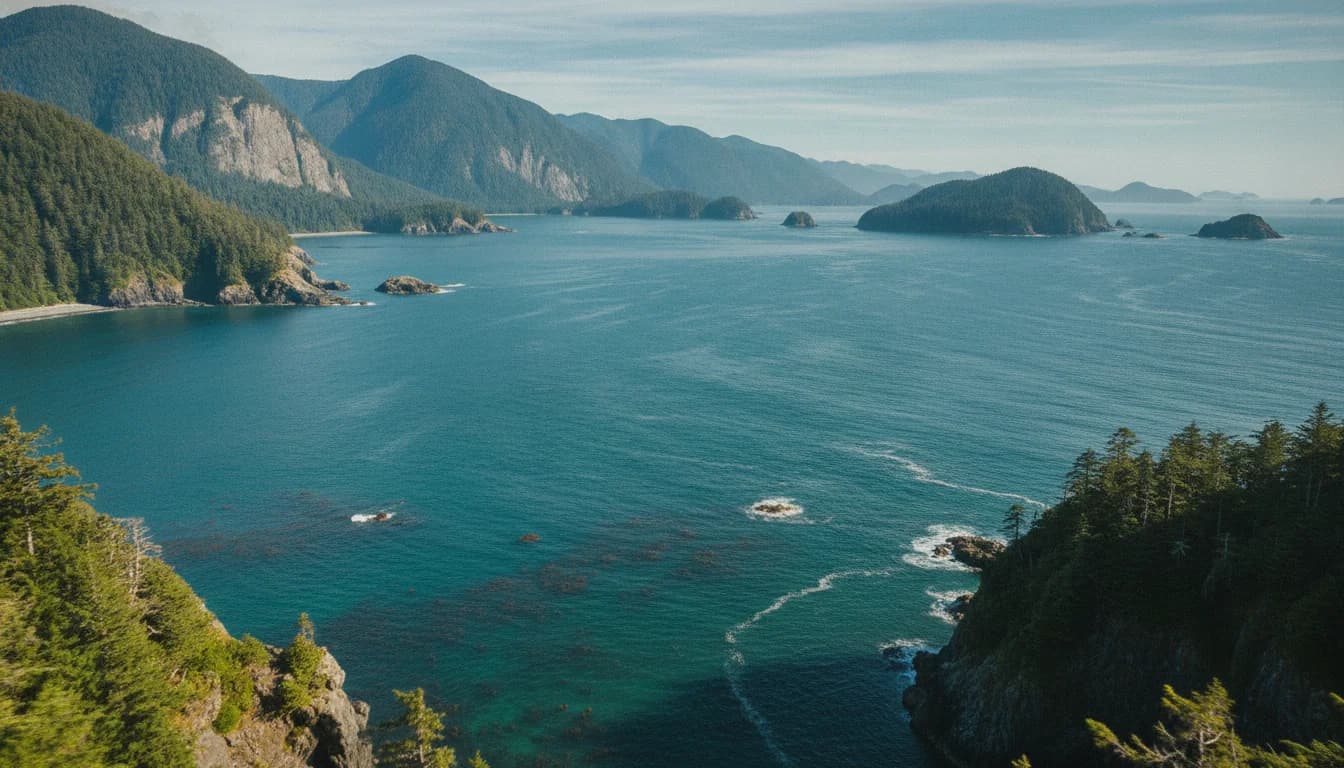
In a watershed development for ocean governance on Canada’s West Coast, the Central Coast NMCA-IPCA is now a formal reality. On May 22, 2026, six partner First Nations joined the Governments of Canada and British Columbia to establish Mia-yaltwa Ha’lidzogm hoon National Marine Conservation Area Reserve (NMCAR) and an Indigenous Protected and Conserved Area (IPCA) on the Central Coast. The paired designation shares a single footprint and a single name, signaling a new era of joint stewardship for one of the planet’s most biodiverse marine regions. This announcement, anchored in a collaborative governance model, places the Central Coast NMCA-IPCA at the heart of Canada’s broader biodiversity and reconciliation agenda. The development has immediate implications for conservation, local economies, and Indigenous rights, while also shaping how multi-stakeholder planning will operate in practice across provincial, federal, and Indigenous authorities. To readers of BC Times who follow data-driven policy shifts, this is a milestone that binds ecological protection with community resilience and Indigenous sovereignty in a single framework. For context and primary documentation, Parks Canada and the British Columbia government have published detailed statements and backgrounders on the establishment. Parks Canada backgrounder on Mia-yaltwa Ha’lidzogm hoon and the BC government summary provide the official framing and next steps. (canada.ca)
The announcement places the Central Coast NMCA-IPCA squarely within the Great Bear Sea/Northern Shelf Bioregion, a biodiversity hotspot that supports iconic fish species such as salmon, as well as deep-sea habitats and whale populations. It also situates the designation within a broader national and regional strategy to conserve marine spaces while preserving cultural and economic linkages for local communities. The joint press materials emphasize that this is not merely a declaration of protection but a roadmap for adaptive management, inclusive governance, and sustained collaboration among First Nations, provincial authorities, and federal agencies. The result is a framework intended to balance conservation with ongoing fishing, tourism, and other marine-sector activities, under explicit agreements that recognize Indigenous rights and traditional stewardship practices. For readers closely tracking governance models, the structure outlined by the parties anticipates a future management board and advisory committees with multi-stakeholder representation, plus a zoning approach designed to allow multiple uses in a protected context. This balance—protecting ecological integrity while supporting coastal livelihoods—will be closely watched as a template for future Indigenous-led conservation arrangements along the West Coast.
Opening context and the broader significance of Central Coast NMCA-IPCA go beyond a single press release. The May 22, 2026 release frames Mia-yaltwa Ha’lidzogm hoon as a hybrid place name that captures both ecological and cultural meanings—Realm of the Salmon, Home of the Salmon—reflecting the deep interdependence between the marine environment and the communities that have lived here for millennia. The collaborative approach signals a shift toward shared governance that includes Indigenous governments as equal partners with provincial and federal authorities in protecting critical habitat while maintaining the region’s social and economic fabric. This approach aligns with Canada’s national biodiversity goals, including targets to conserve a substantial portion of marine and coastal waters by 2030, and it reinforces the Central Coast as a living laboratory for co-management and Indigenous leadership in conservation.
What Happened Establishment Details
The Central Coast NMCA-IPCA is the culmination of a coordinated Establishment Agreement that creates Mia-yaltwa Ha’lidzogm hoon National Marine Conservation Area Reserve (NMCAR) and an Indigenous Protected and Conserved Area (IPCA) on the Central Coast of British Columbia. The footprint and the name are shared between the NMCAR and the IPCA, reflecting a single conservation area design that honors both ecological protection and Indigenous stewardship. This arrangement, announced on May 22, 2026, brings together six partner First Nations—Wuikinuxv, Nuxalk, Kitasoo Xai’xais, Heiltsuk, Gitxaała, and Gitga’at—along with the Governments of Canada and British Columbia. The formal declaration and the accompanying name Mia-yaltwa Ha’lidzogm hoon were published in both Canada’s Parks Canada release and British Columbia’s government statement on the same date. [Parks Canada backgrounder] [BC government press release] (canada.ca)
The name Mia-yaltwa Ha’lidzogm hoon translates to “Realm of the Salmon, Home of the Salmon” and was selected to reflect the cultural and ecological significance of the Central Coast’s marine ecosystems. This linguistic detail underscores the project’s emphasis on Indigenous languages and place-based stewardship as foundational to the protected area’s identity. The official materials from Parks Canada and the BC government emphasize the name’s meaning and its role in guiding governance and interpretation for visitors and residents alike. [Parks Canada backgrounder] [BC government press release] (canada.ca)
The announcement highlights that the NMCAR and IPCA will share a common footprint and that the initial governance frame centers on inclusive, collaborative management. The next steps identified by the governments and partner Nations include establishing a collaborative management board and an advisory committee with representation from diverse marine sectors, including commercial and recreational fisheries and tourism. A zoning plan will be developed in the subsequent phase to define where various activities can occur, ensuring compatibility with conservation goals and community interests. These steps are described in detail in both the Canada Parks release and the BC government summary. [Parks Canada backgrounder] [BC government press release] (canada.ca)
The legislation and policy framework underpinning the designation reflect a broader national approach to Indigenous Protected Areas and Indigenous-led stewardship. Canada’s release notes that the new NMCAR operates within the Canadian context of shared governance with Indigenous nations and Parks Canada’s regulatory authorities, while BC’s summary notes that Fisheries and Oceans Canada retains regulatory authority for fisheries within the NMCAR, underscoring a collaborative rather than exclusive governance model. This coordination is a key feature of how the Central Coast NMCA-IPCA will function in practice. [Parks Canada backgrounder] [BC government press release] (canada.ca)
Timeline and Key Facts
May 22, 2026: The Establishment Agreement is signed, creating Mia-yaltwa Ha’lidzogm hoon NMCAR and IPCA on the Central Coast; the six Nations and the two governments declare the footprint and name in a unified framework. This marks the formal start of multi-jurisdictional collaboration for the Central Coast’s marine space. The official statements from Parks Canada and the BC government confirm the date and the joint nature of the announcement. (canada.ca)
The announcement notes that the NMCAR/IPCA footprint will be refined through ongoing consultations to confirm final boundaries, with public and stakeholder engagement as a central component of the process. The next steps include forming a management board and an advisory committee with broad representation, and developing a zoning plan to accommodate multiple uses such as fishing and tourism, while prioritizing ecosystem health and cultural values. These steps are described in the Parks Canada backgrounder and the BC government release. (canada.ca)
Community and stakeholder engagement is explicitly foregrounded. The materials emphasize opportunities for residents, businesses, fishers, and local governments to participate in shaping the area’s long-term management, consistent with the Indigenous-led stewardship ethos that underpins the designation. The executive and community quotes in the BC government release illustrate a shared commitment to balancing protection with livelihood considerations. (news.gov.bc.ca)
A notable policy anchor referenced in the official materials is Canada’s broader biodiversity objective to conserve 30 percent of marine and coastal waters by 2030. The official statements connect Mia-yaltwa Ha’lidzogm hoon to that national objective, underscoring the project’s alignment with science-based conservation targets and strategic planning. This context is drawn from the Parks Canada materials and the accompanying Canadian government statements. (canada.ca)
Governance and authority details indicate a layered regulatory arrangement. While Fisheries and Oceans Canada maintains certain fisheries regulatory authorities within the NMCAR, Parks Canada and provincial authorities will participate in the collaborative management board. This coordination is designed to ensure that multiple uses can continue in a way that respects ecological integrity, Indigenous rights, and regional economic activity. The exact distribution of authority is explained in the Parks Canada release and the BC government summary. (canada.ca)
Section 1: What Happened (detailed timeline and facts)
Establishment Milestone and Name
Parties and Footprint
Governance and Next Phases
The establishment of Mia-yaltwa Ha’lidzogm hoon NMCAR/IPCA on the Central Coast is presented by official sources as a deliberate step in Indigenous-led marine protection. The shared footprint concept allows the Indigenous Protected Area and the National Marine Conservation Area Reserve to be managed in a coordinated fashion, respecting both ecological constraints and cultural priorities. The official materials note that the name itself—Mia-yaltwa Ha’lidzogm hoon—embodies the connection between land and sea and is intended to guide future governance, education, and interpretation for visitors and local communities.
The announcing bodies describe a sequence of pragmatic steps to implement the designation. First, set up a collaborative management board and an advisory committee with broad representation from marine sectors (commercial and recreational fishers, tourism operators, and local governments, among others). Second, develop a zoning plan that defines specific uses and protections, to be refined through public consultation and stakeholder input. Third, integrate ongoing research and monitoring to track biodiversity, water quality, and ecosystem health, ensuring adaptive management over time. These steps are explicitly outlined in Parks Canada’s backgrounder and echoed in the BC government release, signaling a careful, data-informed approach to large-scale protection that still accommodates active human use. (canada.ca)
Section 2: Why It Matters (impacts and broader context)
Biodiversity and Ecosystem Benefits
Indigenous Rights and Governance
Economic and Community Impacts
Biodiversity and ecosystem protection are central to the Central Coast NMCA-IPCA. The Great Bear Sea region hosts high biodiversity and a suite of ecologically significant species, making it a priority for conservation programs designed to protect habitat while supporting sustainable fisheries and ecotourism. The Parks Canada materials emphasize the ecological value of the area and the role of Indigenous knowledge in stewardship, while BC’s release highlights the cooperative governance model intended to sustain both ecological integrity and local livelihoods. The central idea is that robust protection should not come at the expense of communities that rely on the coast for food, income, and cultural practice, but rather should create a framework where resilience is built into both natural and human systems. The integration of Indigenous authority with provincial and federal oversight is framed as a strength of the model, not a compromise. (canada.ca)
Indigenous rights and governance form a cornerstone of the initiative. The six Nations—Wuikinuxv, Nuxalk, Kitasoo Xai’xais, Heiltsuk, Gitxaała, and Gitga’at—are explicitly recognized as co-stewards in the Establishment Agreement. The name Mia-yaltwa Ha’lidzogm hoon is presented as a bridge between Indigenous language and ecological stewardship, reflecting the broader reconciliation objective that informs policy across Canada. The leaders quoted in the BC government release stress that this is more than a protected area; it is a vehicle for reaffirming rights, responsibilities, and traditional knowledge in contemporary governance. (news.gov.bc.ca)
Economic and community implications are addressed in the governance model. While the exact economic numbers are not provided in the official statements, the materials stress that the zoning plan and collaborative management approach will support cultures, livelihoods, and regional economies that depend on sustainable fisheries, tourism, and related activities. The Parks Canada and BC government releases frame this as a win for conservation and for communities that depend on the coast, with a recognition that careful planning and broad participation are essential to long-term success. This sentiment is echoed in the official quotes and the background documentation. (canada.ca)
The broader policy context is relevant to readers tracking national biodiversity strategies and reconciliation goals. The NMCAR-IPCA designation aligns with Canada’s objective to conserve significant portions of marine and coastal waters and to advance Indigenous leadership in resource governance. The official materials explicitly connect the Central Coast designation to these national priorities, situating the local development within a larger policy trajectory. For readers who follow policy, the linkage to national targets and Indigenous-led governance matters as much as the local conservation outcomes. (canada.ca)
Section 3: What’s Next (timeline and forward-looking steps)
Implementation Phases and Governance
Public Engagement and Boundary Finalization
Monitoring, Research, and Adaptive Management
What’s next for the Central Coast NMCA-IPCA is a phased implementation that emphasizes governance structure, boundary clarity, and ongoing stakeholder input. The immediate priority is to establish a collaborative management board and an advisory committee that include representation from Indigenous nations, commercial and recreational fishers, and tourism and local government stakeholders. The purpose of these bodies is to ensure that decision-making is transparent, inclusive, and informed by the best available science and traditional knowledge. This governance architecture is described in detail in the Parks Canada backgrounder and the BC government release, which together outline how the board will operate, how advisory committees will be formed, and how stakeholders will be included in the zoning process. (canada.ca)
Boundary finalization will occur through a deliberate process of consultation and mapping. Final boundaries are to be confirmed through ongoing engagement, ensuring that affected communities have input into where protections will be strongest and where certain uses may continue. The public will be invited to participate in discussions about zoning and permitted activities, and the process itself is designed to be iterative, with monitoring informing adjustments over time. This approach is central to the design of Mia-yaltwa Ha’lidzogm hoon as described in the official materials. (canada.ca)
Monitoring and research are highlighted as ongoing functions of the program. The central idea is to build an evidence-based management regime that can adapt to new ecological data, changing climate conditions, and evolving community needs. The official documents point to integrating science with Indigenous knowledge, with an emphasis on long-term ecological indicators, fisheries data, habitat health, and species monitoring. The multi-agency governance model is designed to support this kind of adaptive management, with regular reporting built into the framework. (canada.ca)
In the longer term, the NMCAR/IPCA model on the Central Coast is expected to serve as a reference point for other Indigenous-led conservation efforts along the West Coast. Practitioners, policymakers, and researchers will be watching how co-management structures function in practice, how boundary decisions balance ecological goals with cultural and economic needs, and how Indigenous leadership translates into measurable conservation outcomes. For readers who study governance models, Mia-yaltwa Ha’lidzogm hoon represents a concrete case of how legal design, Indigenous rights, and environmental protection can converge in a single coastal region. (canada.ca)
Closing
The Central Coast NMCA-IPCA designation marks a turning point in how Canada approaches marine conservation and Indigenous stewardship. By designating a National Marine Conservation Area Reserve and an Indigenous Protected and Conserved Area with a shared footprint, and by committing to a governance architecture that includes Indigenous Nations as equal partners with provincial and federal authorities, the Crown, in partnership with First Nations, has laid the groundwork for a shared model of protection that prioritizes ecological resilience while sustaining cultural practices and coastal economies. The next months will be pivotal as boundary discussions, zoning, and governance boards take shape, and as communities and stakeholders begin to participate in a formal planning process that will influence the Central Coast for decades to come. Readers are encouraged to follow official channels for updates on public consultations, zoning milestones, and monitoring results.
For ongoing coverage, BC Times will track boundary outcomes, governance developments, and the economic and social impacts of Mia-yaltwa Ha’lidzogm hoon. The official releases from Parks Canada and the Government of British Columbia remain essential primary sources for understanding the design, rationale, and near-term steps of the Central Coast NMCA-IPCA. As these documents show, this is more than a conservation designation; it is a living partnership that seeks to harmonize ecological protection with Indigenous leadership, rural livelihoods, and a future in which the coast is safeguarded while communities continue to thrive.
As the Central Coast NMCA-IPCA unfolds, stakeholders and observers can expect a steady stream of updates, backgrounders, and governance documents that translate high-level policy into concrete on-the-water decisions. The coming months will reveal how the collaborative board operates, how zones are defined, and how monitoring programs are implemented across this unique marine landscape. In the meantime, the core message from official sources remains clear: this is a jointly shaped, long-term commitment to protect a biodiverse marine realm while honoring the rights, histories, and contributions of the Indigenous Nations whose stewardship has sustained these waters for generations.
In the end, the Central Coast NMCA-IPCA is a story about partnership, science, and place—an instance of how modern conservation can be anchored in local knowledge and shared governance to produce durable outcomes for people and planet alike. BC Times remains committed to reporting the data-driven facts behind the policy, providing readers with clear timelines, sources, and expert perspectives as the Central Coast’s marine future takes shape.
Notes and context for readers
- The dates, names, and formal designations cited in this article align with primary documents from Parks Canada and the British Columbia government, which provide the official framing and timelines for Mia-yaltwa Ha’lidzogm hoon NMCAR/IPCA. For the May 22, 2026 milestone, see the Canada Parks news release and the BC government story. (canada.ca)
- The six partner First Nations—Wuikinuxv, Nuxalk, Kitasoo Xai’xais, Heiltsuk, Gitxaała, and Gitga’at—are central to the co-management vision described in the official materials and reinforced by the statements of community leaders in the BC government release. These voices emphasize the enduring connection between the coast’s people and its waters and the importance of a governance framework that recognizes and respects this relationship. (news.gov.bc.ca)