News
FIFA Fan Festival Vancouver Opens June 11, 2026
Explore a data-driven analysis of FIFA Fan Festival Vancouver, highlighting its innovative tech-driven fan experiences and significant market impact.
By Joanna Flett · October 13, 2026 · 10 min read
 By Joanna Flett · October 13, 2026 · 10 min read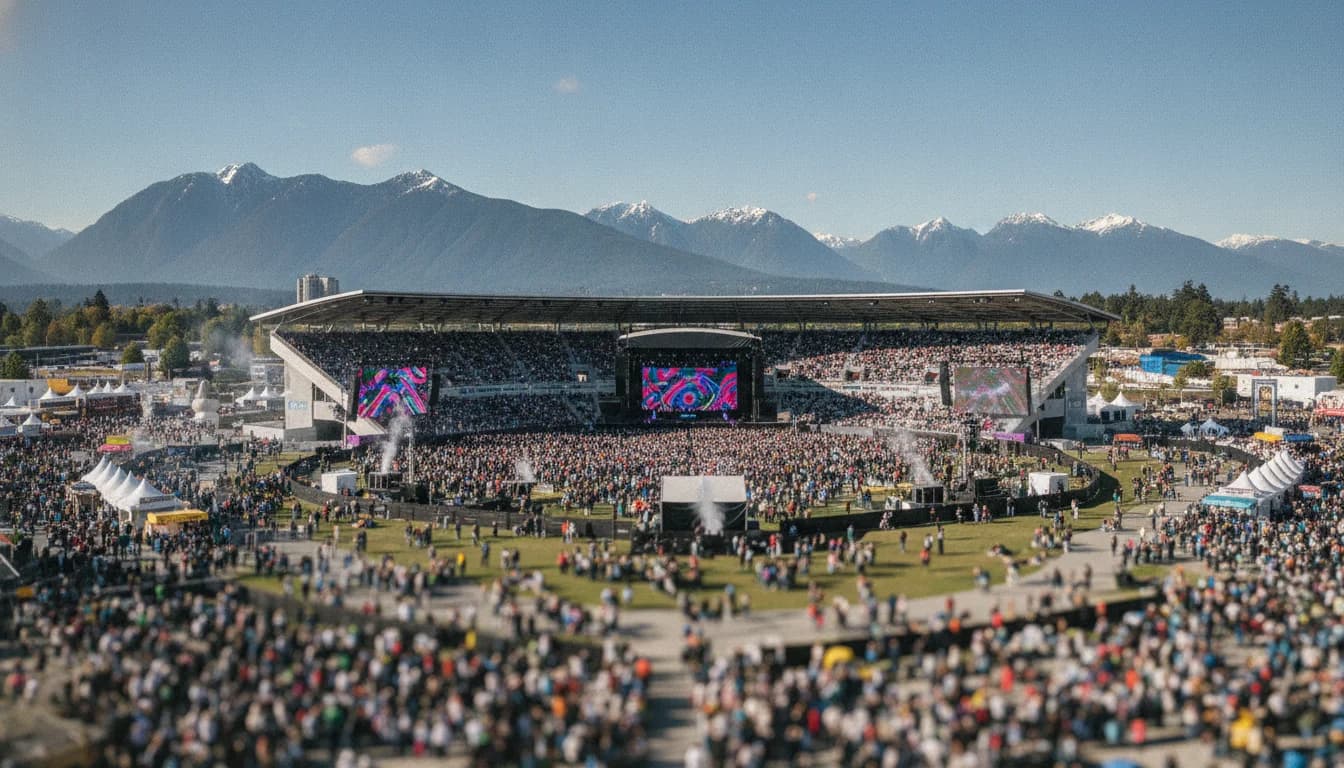
Vancouver is hosting one of the world's most-watched sporting events this summer, as the FIFA Fan Festival Vancouver opens its gates at Hastings Park on June 11, 2026. The city’s Host Committee, in partnership with the Province of British Columbia and local Indigenous nations, has positioned the festival as a central hub for World Cup activities outside BC Place, blending live match broadcasts with music, food, and cultural programming. The festival runs through July 19, 2026, delivering a 28-day program of entertainment, fan activations, and community programming that organizers describe as among the largest live experiences ever staged in the city. The event is open to the public with free general admission to the main grounds and a paid premium Amphitheatre experience for reserved seating and fast-track entry. This opening marks a high-profile moment for Vancouver’s role in Canada’s World Cup 2026 story, and it is being studied as much for the fan experience as for the technology and market dynamics it unlocks. (vancouverfwc26.ca)
As the World Cup arc unfolds, Vancouver’s festival is not just a watch party; it is a live laboratory for digital activation, hospitality logistics, and citywide economic spillovers. With the amphitheatre site at Hastings Park and a 10,000-capacity environmental canvas, organizers have framed FIFA Fan Festival Vancouver as a city-wide stage for sport, culture, and innovation. The festival site features large screens for live broadcasts, a program of local and international performances, and branded activations from partners. On the ground, city and provincial authorities are tracking attendance, transit usage, and retail activity as indicators of the event’s broader economic and social footprint. The free-entry policy for the amphitheatre floor—subject to capacity and first-come availability—adds a layer of accessibility that is drawing tens of thousands of fans each day. (vancouverfwc26.ca)
Opening day signaled a broader shift in how Vancouver, and British Columbia more broadly, positions major events in the post-pandemic era. The organizers have leaned into a data-driven approach, releasing daily updates on attendance, programming, and legacy initiatives as the World Cup progresses. By late June, the Province reported that FIFA Fan Festival Vancouver had drawn more than 330,000 attendees between June 11 and June 28, underscoring the festival’s scale and its role as a cornerstone for fans without tickets to BC Place or other venues. The figure, the context around it, and the accompanying economic signals are now central to discussions about sport-driven tourism and regional branding. (news.gov.bc.ca)
Section 1: What Happened
Announcement and Opening Timeline
The FIFA Fan Festival Vancouver is the city’s official fan destination for the FIFA World Cup 2026, located at Hastings Park within the PNE Grounds. The host city and partner agencies announced the festival and its full schedule in early 2026, with the site opening on June 11, 2026 and continuing through July 19, 2026. The official host committee notes that the festival will feature live match broadcasts, music, and experiential activations from local and global partners, all designed to celebrate the World Cup in a publicly accessible setting. The festival’s run coincides with Vancouver’s broader World Cup footprint, including multiple matches at BC Place Vancouver and a city-wide welcome experience. (vancouverfwc26.ca)
The City of Vancouver and Province of British Columbia confirmed the festival’s accessibility framework on March 17, 2026, announcing that entry to the festival site at Hastings Park would be free and that general-admission access to the amphitheatre floor would also be free, with premium seating available for purchase. This policy was designed to maximize public participation and to ensure the event served as a broad-based community experience, not solely a ticketed spectacle. The amphibious floor capacity was estimated at 2,600 per match on a first-come, first-served basis, reinforcing the festival’s open-access ethos while preserving a premium option for those who want guaranteed viewing and expedited entry. (vancouver.ca)
Venue, Capacity, and Experience Design
The FIFA Fan Festival Vancouver is anchored at Hastings Park, a historic Vancouver site, where a newly constructed amphitheatre with a 10,000-person capacity serves as the central viewing arena for World Cup broadcasts and major performances. The design aims to blend city atmosphere with festival energy, offering large-scale screens, real-time match commentary, and a curated lineup of food, beverage, and cultural experiences that reflect Vancouver’s diversity. The festival’s structure includes an Amphitheatre for premium experiences and a broader festival ground for free entry, with activations designed to appeal to families, casual fans, and devoted supporters alike. The site layout and programming are described in detail by the official host committee, including maps, safety guidelines, and accessibility considerations. (vancouverfwc26.ca)
Programming, Technology, and Sponsorships
FIFA Fan Festival Vancouver features more than 60 free performances and two signature concert series in addition to live match broadcasts on oversized screens. The festival’s tech dimension extends beyond screens; organizer materials highlight partner activations, digital commerce, and interactive experiences that leverage the World Cup’s global attention to surface local business and innovation. Premium experiences offer reserved seating and a dedicated fast-track entry lane, underscoring a tiered approach to access while preserving the festival’s public core. Organizers emphasize immersive experiences that range from culinary showcases to experiential games and social media moments designed to amplify engagement and shareability. (vancouverfwc26.ca)
Attendance, Engagement, and Early Impacts
As the tournament pressed deeper into the group-stage rounds, the festival’s attendance and engagement metrics became a focal point for policymakers and business leaders. The British Columbia government’s mid-tournament update notes that FIFA Fan Festival Vancouver attracted more than 330,000 attendees from June 11 to June 28, with peak crowds on dates such as June 18 (Canada-Qatar) and June 24 (Canada vs. Switzerland). The report also notes favorable impacts on downtown businesses, such as increased foot traffic and elevated sales in eateries and retailers near fan zones. Transit systems saw heavy use, and tourism activity remained sturdy as YVR reported elevated travel volumes during the tournament. (news.gov.bc.ca)
In a related note, the May 2026 provincial backgrounder details the festival’s broader scope: FIFA Fan Festival Vancouver is part of a 28-day program of live entertainment, a layout designed to position Vancouver among the most dynamic host cities for World Cup 2026. The backgrounder highlights the festival’s role within a city-led and province-supported strategy to showcase British Columbia on the global stage and to deliver lasting economic and cultural benefits beyond the event itself. (archive.news.gov.bc.ca)
One liftable fact that helps quantify the scale: according to the BC government release, FIFA Fan Festival Vancouver drew more than 330,000 attendees between June 11 and June 28, 2026. This piece of data is presented alongside daily highlights and policy context, illustrating the festival’s reach beyond the stadiums. For readers, this single figure captures the festival’s ability to mobilize large crowds in a public space and to generate a measurable footprint for local businesses and communities. According to the government release, this attendance level occurred in the festival’s first three weeks of operation. (news.gov.bc.ca)
Section 2: Why It Matters
Economic and Tourism Footprint
Beyond the immediate spectacle of live football and performances, FIFA Fan Festival Vancouver functions as a mobility and commerce accelerator. The government update points to positive signals for local bars, restaurants, retailers, and transit networks, with early observations noting elevated sales and pedestrian activity around fan zones. The data indicate that fan-driven demand has translated into tangible revenue gains for some Downtown Vancouver businesses, along with increased transit ridership on key days tied to Canada’s World Cup matches. As Vancouver and the broader region look to capitalize on the World Cup legacy, the festival’s footprint provides a blueprint for how major events can be embedded in a city’s longer-term economic development strategy. (news.gov.bc.ca)
A broader tourism narrative emerges from the Province’s communications: hosting seven World Cup matches in British Columbia, including Vancouver, is positioned as a catalyst for international visibility and longer-term visitation. The province’s Look West strategy and Destination BC messaging frame the World Cup as an opportunity to attract new visitors, sustain tourism momentum, and foster business connections that extend well beyond the 39-day tournament window. The festival’s programming—blending sports, culture, and commerce—serves as a living proof point for this strategy, reinforcing Vancouver’s reputation as a host city capable of generating global attention and local benefit. (archive.news.gov.bc.ca)
Technology-Driven Fan Experience and Market Trends
The FIFA Fan Festival Vancouver is not just a venue for watching games; it’s a case study in how technology and experience design intersect with market dynamics. The festival’s digital infrastructure includes large‑screen viewing, streaming capabilities, and a suite of partner activations designed to optimize consumer engagement, sponsorship value, and data collection (with privacy safeguards in place). Premium experiences illustrate how event organizers monetize high-demand viewing zones while preserving a key public-access element. The festival’s physical layout—an amphitheatre with significant seating capacity and a large festival ground—demonstrates a hybrid model that blends free public access with paid premium options, a pattern increasingly seen in major-city events where inclusivity and monetization intersect. The official programming pages emphasize immersive experiences that connect fans to local cuisine, cultural programming, and brand partnerships, reflecting broader market trends toward experiential retail and entertainment ecosystems that extend beyond traditional ticketing. (vancouverfwc26.ca)
Cultural and Indigenous Involvement
A notable dimension of FIFA World Cup 2026 in Vancouver is the explicit emphasis on Indigenous involvement and local cultural programming. The festival and its supporting documents highlight partnerships with Musqueam, Squamish, and Tsleil-Waututh Nation, reinforcing the event’s alignment with place-based storytelling and community collaboration. This approach resonates with a broader market trend toward culturally authentic experiences in major events and the opportunity for communities to participate as co-creators rather than mere beneficiaries. The Province and host-city materials frame this collaboration as part of a long-term legacy beyond 2026, underscoring the social and cultural value of such partnerships in addition to economic benefits. (archive.news.gov.bc.ca)
Who Benefits and Who is Affected
The festival’s footprint touches a wide cross-section of stakeholders: local residents who gain access to a world-class event; fans traveling to Vancouver to experience World Cup 2026; downtown businesses that see elevated foot traffic; transit authorities managing increased demand; and local cultural institutions that can leverage the moment for public programming. The BC Gov News release quotes business owners and city leaders who describe a mix of positive sentiment and measurable gains, with particular emphasis on walkable, pedestrian-friendly zones and a heightened sense of city pride. The data point about nearly 1.4 million transit trips on a single peak day illustrates the operational scale required to support a major, city-wide event and provides a baseline for future transportation planning around similar events. (news.gov.bc.ca)
Section 3: What’s Next
Remaining Schedule, Milestones, and Legacy
With the World Cup knockout phase continuing, FIFA Fan Festival Vancouver remains a central stage for fans to gather, celebrate, and engage with the broader World Cup narrative outside BC Place. The festival’s organizers emphasize ongoing programming through July 19, with the amphitheatre and festival grounds continuing to host live broadcasts, performances, and experiences. The May 2026 City release and May–June background materials outline a timeline in which additional matches and community events are integrated into the festival’s calendar, preserving momentum into the tournament’s closing weeks. The festival’s 28-day programming window is designed to align with Vancouver’s longer-term legacy goals, including cultural initiatives and community events that extend beyond the event’s formal conclusion. (vancouver.ca)
What to Watch For: Long-Term Impacts and Next Steps
Looking ahead, observers will be evaluating how FIFA Fan Festival Vancouver’s model translates into lasting benefits for tourism, hospitality, and cultural industries in British Columbia. Early signals suggest that the festival is contributing to a surge in city-brand visibility and international attention as a destination for major events, while also delivering measurable domestic impacts in terms of consumer spending and transit usage. Analysts will be particularly attentive to:
- The festival’s role in shaping Vancouver’s “World Cup 2026” legacy narrative and how authorities translate temporary economic boosts into durable tourism demand.
- The effectiveness of the hybrid access model (free general admission with premium paid options) as a template for future large-scale events seeking broad participation while optimizing revenue.
- The broader business ecosystem’s response to a global audience, including sponsorship activation performance, merchandise sales, and cross-market marketing opportunities.
The official program materials and government updates provide a foundation for these analyses, while independent observers can triangulate effects through retail performance, hotel occupancy, and transit metrics in the weeks following the festival’s midpoint. (archive.news.gov.bc.ca)
Closing
As Vancouver’s FIFA World Cup 2026 journey continues, FIFA Fan Festival Vancouver stands as a focal point where sport, culture, technology, and local economies intersect. The city’s openness—free entry to much of the site, a large amphitheatre for premium viewing, and a calendar packed with music and activations—reflects a deliberate strategy to transform a global event into a city-wide experience that resonates with residents and visitors alike. Authorities and organizers are tracking not just attendance numbers, but also the quality of the fan experience, the velocity of information flow, and the festival’s capacity to generate lasting economic and cultural benefits for British Columbia. Readers who want to stay updated can follow the Host Committee’s communications and the City of Vancouver’s and Province of British Columbia’s press channels as the World Cup 2026 Vancouver chapter unfolds.
For more details on the festival’s programming and latest updates, see the official FIFA Fan Festival Vancouver site and the City of Vancouver press materials:
- Official FIFA Fan Festival Vancouver page: FIFA Fan Festival Vancouver information, experiences, and schedule. https://vancouverfwc26.ca/fifa-fan-festival (vancouverfwc26.ca)
- City of Vancouver press release: Free Access to FIFA Fan Festival Vancouver at Hastings Park. https://vancouver.ca/news-calendar/free-access-to-fifa-fan-festival-at-hastings-park-march-2026.aspx (vancouver.ca)
- BC government background and mid-tournament update: More than 330,000 attendees; economic and transit impacts. https://news.gov.bc.ca/releases/2026TACS0033-000772 (news.gov.bc.ca)
- May 2026 backgrounder on festival scope and 28-day program: FIFA Fan Festival Vancouver lineup, 28 days of live entertainment. https://news.gov.bc.ca/releases/2026TACS0027-000625.pdf (archive.news.gov.bc.ca)