News
COAST Innovation Challenge: BC Firms Eye up to $100K
British Columbia firms can seek up to $100,000 through the COAST Innovation Challenge for marine-energy pilots.
By Nina Kowalski · August 15, 2026 · 9 min read
 By Nina Kowalski · August 15, 2026 · 9 min read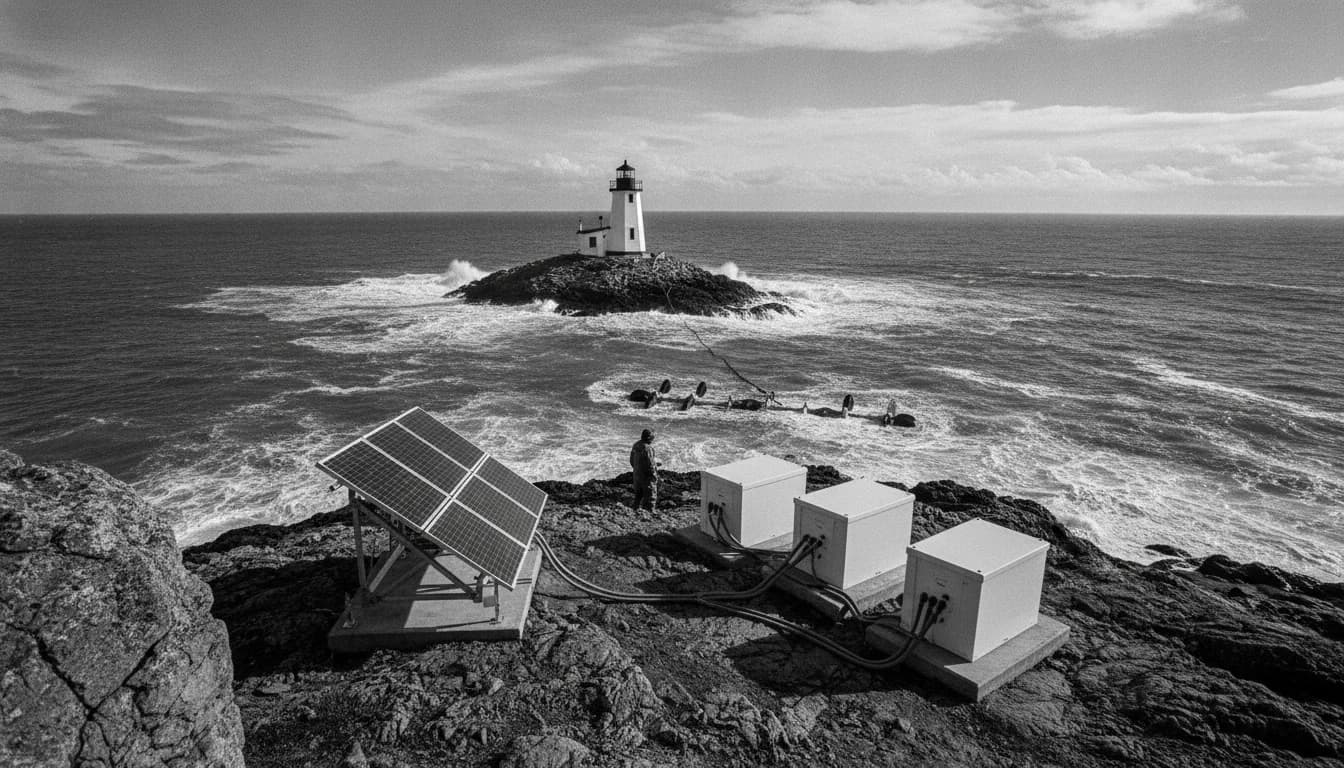
BC Times presents this data-driven look at the COAST Innovation Challenge, a provincial program designed to accelerate the commercialization of marine energy technologies. Delivered through Innovate BC's Integrated Marketplace in partnership with the Centre for Ocean Applied Sustainable Technologies (COAST), the challenge targets decarbonization and resilience for coastal, land-based operations. The program is positioned to help British Columbia test and demonstrate technology in real-world settings, with funding concepts that cap support at up to the lesser of $100,000 or 50% of eligible project costs. This framework aligns with broader provincial objectives to strengthen the blue economy while advancing a cleaner energy transition. The COAST Innovation Challenge is part of a broader Look West strategy that seeks to foster technology-enabled growth across key sectors, including maritime applications and defense-related energy solutions. (innovatebc.ca)
BC Times coverage tracks the program from its announcement through its execution timeline, focusing on what the call for proposals means for BC-based firms, the criteria and cost-sharing structure, and the expected outcomes for coastal communities and industry partners. The province’s November 2025 news release highlighted the intent to support renewable-energy testing in maritime contexts, including the Canadian Coast Guard and Royal Canadian Navy, and emphasized that innovative projects could accelerate procurement-ready solutions for remote coastlines. The release also framed the COAST Innovation Challenge within the Integrated Marketplace platform as a vehicle to pair innovators with real-world pilots, potentially accelerating commercialization and scale. (news.gov.bc.ca)
Opening with the news, the COAST Innovation Challenge invited BC technology companies to apply during a defined intake window, with explicit milestones for adjudication and a clear funding envelope. The Innovate BC program page detailing the challenge confirms the intake window: November 10, 2025 to December 31, 2025, followed by an January 2026 review period and a February 2026 announcement. The same source notes the requirement that projects begin no later than May 1, 2026 and run for up to 12 months, creating a structured path from concept to demonstrable results within a single funding cycle. This timeline, coupled with the funding cap and cost-sharing rules, provides a concrete frame for firms planning to participate. (innovatebc.ca)
Section 1: What Happened
Announcement and Scope
The COAST Innovation Challenge represents a coordinated effort to advance decarbonization technologies across coastal, land-based operations in British Columbia. Delivered through Innovate BC’s Integrated Marketplace in partnership with COAST, the program is designed to test and demonstrate technologies in real-world coastal settings, with a focus on energy generation from renewable sources, energy management and storage, and the resilience of coastal energy systems. It is explicitly targeted at technologies that are new to Canada or to the BC region, with particular attention to scalable, modular solutions suitable for remote deployments. The program positions BC firms to address the evolving energy needs of coastal communities and maritime operators while contributing to broader public-sector energy goals. (innovatebc.ca)
Timeline and Application Process
Key dates associated with the COAST Innovation Challenge underscore a tightly scheduled intake and adjudication process. Applications opened on November 10, 2025 and closed on December 31, 2025, with review taking place in January 2026 and an anticipated announcement in February 2026. The Challenge Guide mirrors these dates, specifying the intake window and the six-to-eight-week target post-call notification for approved proposals. Applicants were required to use Innovate BC’s SurveyMonkey Apply portal during the call period and to provide detailed information on technology readiness, project milestones, KPIs, cost estimates, emissions reductions, and timeline confirmations. The guide also notes that the latest acceptable project start date is May 1, 2026, and that projects should not exceed 12 months. This clear sequencing provides a transparent path from submission to funding and project execution. (innovatebc.ca)
Funding, Hub Support, and Demonstration
Award structure for the COAST Innovation Challenge specifies up to the lesser of $100,000 or 50% of eligible project costs for successful applicants. In addition to direct funding, the Hub model offers access to shared facilities and testing resources located in Victoria, BC, including space, equipment, and collaboration opportunities with local researchers, such as UVic, to support technology development and demonstration. Participation in the Hub requires a $10,000 fee, which is an earmarked cost outside Innovate BC funding; this fee is positioned as a participation cost rather than a reimbursable expense. Demonstration and testing support are provided through the BC Marine Energy and Decarbonization Hub, linking project activities to established testing infrastructure and real-world pilot sites. The combination of financial support, hub access, and demonstration opportunities creates a comprehensive ecosystem for accelerating commercialization. The latest acceptable project start date remains May 1, 2026, with a 12-month execution window for funded activities. (innovatebc.ca)
Participants and Partnerships
The COAST Innovation Challenge is framed as a collaboration among Innovate BC, COAST, and BC’s maritime and energy ecosystems, leveraging the Integrated Marketplace to connect technology developers with end users and pilots. The involvement of COAST, a Centre for Ocean Applied Sustainable Technologies, signals a specialized emphasis on marine energy technologies and decarbonization solutions for coastal infrastructure. The BC government’s November 2025 news release also highlights the Look West strategy, positioning the challenge as part of a broader effort to grow BC’s maritime and technology sectors while aligning with national defense and sovereignty priorities. The collaborative approach aims to shorten the path from prototype to deployment by providing both financial support and a structured field-testing environment. (news.gov.bc.ca)
Section 2: Why It Matters
Strategic Significance for BC’s Maritime Sector
The COAST Innovation Challenge sits at the intersection of energy, environment, and maritime operations, with a clear mandate to reduce diesel dependence for coastal remote sites. By enabling pilot deployments of renewable-energy technologies and energy-management systems within the BC Marine Energy and Decarbonization Hub, the program directly supports the province’s Look West strategy, which emphasizes developing BC’s technology sectors and maritime capabilities. The demonstration site in Victoria and the emphasis on technology that can be tested in realistic operating conditions provide a meaningful bridge between laboratory concepts and field-ready solutions. In turn, the initiative helps align provincial procurement priorities with the needs of Coast Guard operations and naval assets that serve Canada’s maritime interests. The program’s delivery through Innovate BC’s Integrated Marketplace further signals a structured government approach to market development, reducing transaction costs and simplifying access to pilot opportunities for BC-based firms. (news.gov.bc.ca)
Impacts on Innovation, SMEs, and the Clean-Energy Transition
From an innovation standpoint, the COAST Innovation Challenge embodies a deliberate strategy to accelerate the commercialization of decarbonization technologies by connecting early-stage research with market deployment. Eligible technologies include renewable-energy generation (wave, tidal, wind, solar) and energy-storage solutions (batteries, storage systems, microgrid controllers), with an emphasis on novel applications or combinations that unlock new value in coastal contexts. The Challenge Guide outlines a structured adjudication framework that weighs technology-market fit, readiness to execute, budget and financials, potential impact, and collaboration benefits. For small and medium-sized enterprises (SMEs) and startups, the program offers a crucial pathway to access funding and testing infrastructure that would otherwise be out of reach, helping to de-risk technology development and accelerate revenue generation. By linking participants to a formal hub environment in Victoria and permitting collaboration with academia and public sector partners, the program creates an ecosystem that can sustain long-term growth beyond the grant period. (innovatebc.ca)
Broader Economic and National Context
The COAST Innovation Challenge aligns with broader economic-development aims embedded in Look West and other provincial initiatives to diversify BC’s economy through technology and energy innovation. The provincial government positions the Integrated Marketplace as a platform to expedite collaboration between industry, government, and researchers, effectively turning BC’s coastal geography into a living laboratory for renewable-energy integration and decarbonization. By focusing on projects with real-world applicability for the Canadian Coast Guard and potentially defense maritime needs, the program situates BC firms within a larger national narrative around energy security, sovereignty, and resilient infrastructure. While the funding cap ($100K or 50% of eligible costs) and the 12-month project window set boundaries, the program’s design—combining funding with access to testing facilities and expert collaboration—represents a pragmatic approach to translating research into market-ready solutions in a sector with significant energy-transition implications. (news.gov.bc.ca)
Caveats and Considerations
While the COAST Innovation Challenge offers meaningful incentives for BC-based innovators, certain limitations are explicitly noted in program materials. The Hub participation fee ($10,000) is an out-of-pocket cost not covered by Innovate BC funding, potentially influencing the net grant value for participants. Eligible costs and activities are defined to exclude certain expenses, including general overhead, marketing, travel, and many other categories, which means applicants must plan carefully to maximize eligible expenditures. The TRL scope (4–7) indicates a focus on mid-stage technologies with identifiable paths to market, rather than early-stage ideas or purely theoretical concepts. Assessors evaluate projects against a set of criteria designed to prioritize those with clear deployment potential, emissions-reduction impact, and alignment with the challenge objectives. These considerations help ensure that funded efforts yield tangible, scalable outcomes for coastal communities and the maritime sector. (innovatebc.ca)
What the Funding Means for Stakeholders
For project teams, winning an award under the COAST Innovation Challenge means not only financial support but also access to a specialized testing hub, demonstrations for potential buyers, and the potential to influence procurement standards for maritime energy systems. For end users—Coast Guard operations, coastal communities, and industries dependent on reliable off-grid power—the program promises technologies that can improve resilience, reduce emissions, and lower long-term operating costs. For BC’s regional economy, the initiative supports local jobs, fosters collaboration among industry, academia, and government, and positions BC as a hub for marine-energy innovation. The presence of the Look West framework and the integrated marketplace mechanism further implies a longer-term strategy to sustain investment and scale, beyond a single funding cycle. (news.gov.bc.ca)
Section 3: What’s Next
Next Steps for Applicants and Partners
With the intake window now closed, the COAST Innovation Challenge process moves into adjudication and terms setting. Innovate BC notes that fully completed applications submitted by December 31, 2025, would be reviewed in January 2026, with approved projects invited to enter a Funding Agreement. The adjudication framework emphasizes fit to requirements, readiness, budget rigor, and anticipated impact, and winners can expect to receive funding in collaboration with project milestones. For participants entering the hub, the process includes establishing terms of engagement, understanding reporting obligations, and coordinating with the Hub in Victoria for space, equipment, and research collaboration. The availability of demonstration opportunities through the BC Marine Energy and Decarbonization Hub is a key aspect of the process, enabling practical, field-based validation of technologies before broader market rollout. (innovatebc.ca)
What to Watch for in 2026
The Look West narrative and the Integrated Marketplace platform indicate that the COAST Innovation Challenge is one piece of a broader movement to modernize BC’s maritime sector and energy infrastructure. In 2026, expect updates on project selections, partner announcements, and further details about how successful applicants will progress toward procurement-ready deployments. The Look West framework suggests a continued emphasis on clean-energy innovation, industrial collaboration, and resilience—areas where the COAST Innovation Challenge can serve as a catalyst for measurable, emissions-reducing outcomes. Observers should watch for post-award reporting, which the Challenge Guide requires as part of outcomes tracking—information that will contribute to sector-wide learning about technologies that improve energy efficiency and resilience in coastal environments. (news.gov.bc.ca)
Closing
In sum, the COAST Innovation Challenge represents a targeted effort by British Columbia to accelerate the development and deployment of marine-energy technologies that decarbonize coastal operations while strengthening the province’s maritime economy. By combining a clear funding mechanism with access to a dedicated testing hub and a structured intake-to-demonstration pathway, the program offers a practical route for BC firms to move from concept to commercialization within a defined timeline. As BC Times continues to monitor the program’s outcomes, the emphasis remains on data-driven assessment, transparent adjudication, and the long-term potential to scale proven technologies across coastlines and fleets. For readers following the province’s technological evolution, the COAST Innovation Challenge serves as a concrete example of how public funding, academia, and industry can collaborate to deliver tangible environmental and economic benefits. (news.gov.bc.ca)