News
CRD Fibre CityWest Galiano Funding 2026 Fibre Rollout Begins
CRD fibre CityWest Galiano funding 2026 drives fibre rollout on Galiano and Saturna Islands with provincial and federal support.
By Craig Burrows · September 5, 2026 · 11 min read
 By Craig Burrows · September 5, 2026 · 11 min read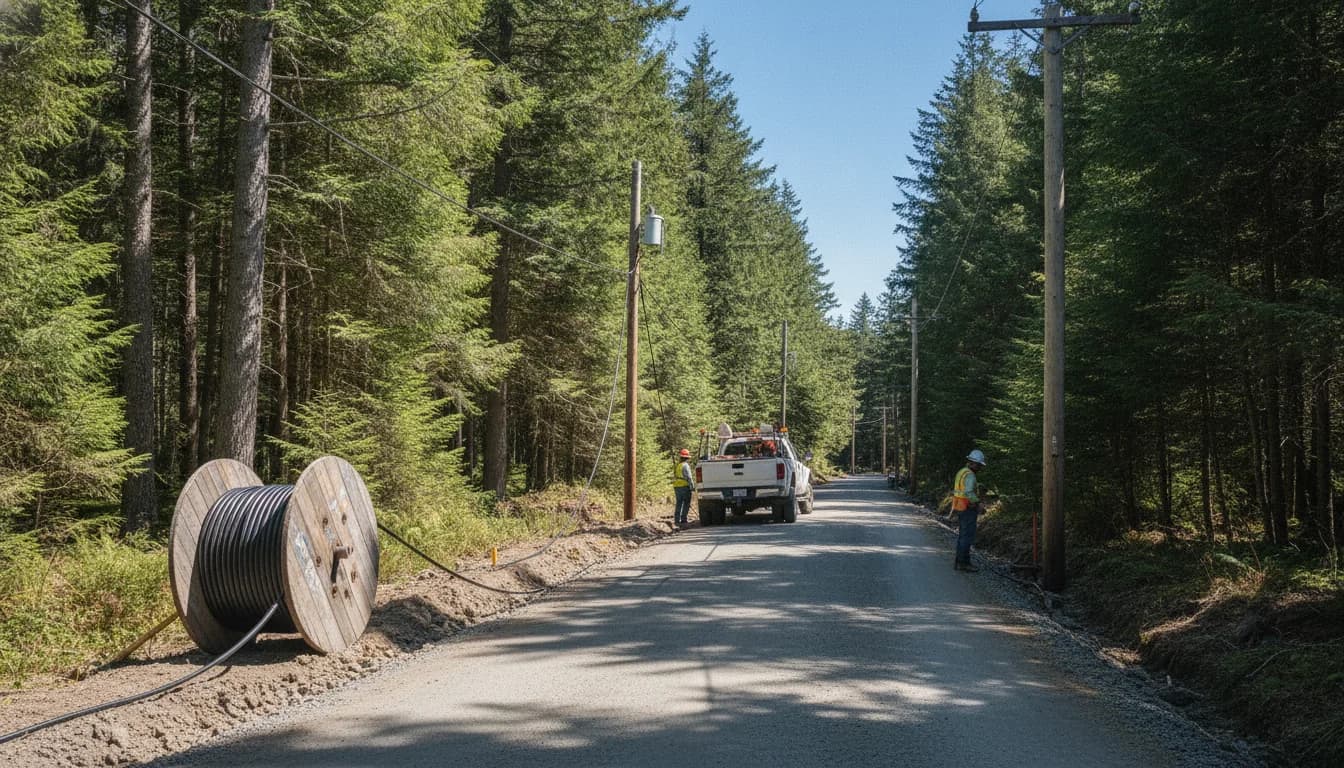
The Capital Regional District (CRD) and CityWest announced a landmark partnership to bring fibre internet to Galiano and Saturna Islands, marking a major step in expanding high-speed connectivity across British Columbia’s Gulf Islands. The announcement, dated June 25, 2026, confirms that last‑mile fibre infrastructure will be layered onto the Connected Coast subsea backbone, with construction slated to begin on Galiano Island in June and July 2026 and on Saturna Island in the fall. The project is supported by a mix of provincial and federal funding, underscoring a coordinated effort to close broadband gaps in rural and remote communities. This development is central to the CRD fibre CityWest Galiano funding 2026 narrative, reflecting the region’s push to deliver dependable digital access for homes, businesses, and essential services. (crd.ca)
As the island communities prepare for construction, CRD officials emphasize that the fibre upgrade is not merely a technical upgrade but a strategic investment with broad social and economic implications. CityWest, a BC‑owned telecommunications provider, will lead construction and delivery, leveraging its experience in expanding broadband to rural and island communities. The municipalities and electoral areas connected by this initiative expect improved service for education, healthcare, remote work, and local commerce, aligning with broader provincial and national efforts to expand internet access in underserved regions. The practical impact on residents will unfold over the coming months as crews mobilize and community information channels scale up to support signups and service availability. (crd.ca)
Opening
CRD fibre CityWest Galiano funding 2026 represents a milestone for Gulf Island connectivity and regional digital strategy. The project’s backbone funding mix and the schedule set the stage for a measured, transparent rollout that aims to minimize disruption while maximizing long‑term benefits. The move is also a signal of how public‑private collaboration, anchored by provincial and federal support, can accelerate resilient and scalable broadband in remote communities. As much as it is about speed, the initiative focuses on reliability, coverage breadth, and long‑term economic resilience for Galiano and Saturna. The following sections unpack what happened, why it matters, and what comes next.
What Happened
Announcement Details
The CRD’s June 25, 2026 announcement frames this as a connected coast‑driven fibre expansion, integrating CityWest’s last‑mile capability with the national and provincial funding programs supporting rural infrastructure. Construction activities are planned to begin on Galiano Island in June and July 2026, with work on Saturna Island slated for the fall. This sequencing aligns with the Connected Coast network’s strategy to extend fibre access to rural and island communities along British Columbia’s coast, ensuring service continuity and future scalability as demand grows. The funding framework comprises a provincial grant of $495,000 from the Rural Economic Diversification and Infrastructure Program and federal support totaling $5.27 million through the Universal Broadband Fund. The CRD notes that the project will help connect roughly 50 businesses and 1,049 homes on Galiano Island, along with about 20 businesses and 598 homes on Saturna. The project is designed to provide last‑mile fibre connections to residents and businesses, delivering speeds capable of supporting telehealth, education, remote work, and multimedia services. (crd.ca)
Timeline and Milestones
Key milestones highlighted in the release include the formal kick‑off in June 2026, site mobilization and contractor onboarding in the weeks that follow, and a phased construction approach that prioritizes critical anchor locations and high‑demand corridors. CityWest will manage the construction and rollout schedule, coordinating with municipal authorities, First Nations communities where applicable, and local residents to minimize disruption while maximizing access where fibre is most needed. The Connected Coast backbone’s involvement ensures alignment with other regional fibre projects and facilitates eventual service expansion to additional Gulf Islands as demand conditions evolve. The CRD’s press materials also point to ongoing engagement activities, service interest collection, and opportunities for households and businesses to express interest and receive updates on installation timelines. (crd.ca)
Eligibility and Community Impact
CityWest’s daily operations and Gulf Island activities will be informed by population and business density figures used to assess service eligibility and potential uptake. On Galiano Island, approximately 1,049 homes and 50 businesses are listed as eligible for fibre service, while Saturna Island accounts for about 598 homes and 20 businesses. These estimates underpin the scope of the last‑mile deployment and the projected subscriber base that will sustain long‑term maintenance and service improvements. The CRD emphasizes that the Connected Coast framework ensures that the benefits extend beyond individual households to local institutions, including schools, clinics, and municipal facilities that increasingly rely on high‑speed connectivity for core operations. The collaboration’s governance framework also contemplates returns to the region, with CityWest’s local presence and CRD’s regional leadership reinforcing a shared objective of sustainable economic value. (crd.ca)
Why It Matters
Economic and Social Impacts
The fibre expansion is positioned as a foundational infrastructure project with ripple effects across the Gulf Islands’ economy and quality of life. High‑speed internet is increasingly treated as essential as roads or water services in rural regions, enabling telemedicine, online education, and remote employment opportunities. The CityWest and CRD partnership aims to reduce long‑standing connectivity gaps that have limited business growth, workforce participation, and access to digital government services. Analysts attentive to regional development note that reliable broadband can improve business retention in small communities and open pathways for new economic sectors, including digital tourism, remote‑work hubs, and local content creation. The project’s endurance will depend on ongoing service uptake, device adoption, and the durability of the fibre assets over time. (crd.ca)
Connectivity, Public Services, and Public Perception
Beyond economics, improved connectivity is linked to enhanced public safety, health care delivery, and educational outcomes. As Gulf Island residents increasingly rely on online resources and virtual services, stable fibre connections mitigate the risk of service outages and bandwidth bottlenecks during emergencies or peak usage periods. Local leaders also emphasize the symbolism of city‑level and provincial‑level investment in rural communities, signaling a broader commitment to equity in digital access. The CRD and CityWest partnership serves as a visible example of how public agencies and private service providers can align incentives to achieve shared outcomes for communities historically underserved by traditional broadband models. The inclusion of Saturna and Galiano within the Connected Coast framework highlights a broader policy intent to connect all Gulf Islands under a coherent, regional strategy. (crd.ca)
Funding Context and Policy Environment
The CRD fibre CityWest Galiano funding 2026 initiative exists at the intersection of provincial program design and federal broadband objectives. Provincial support comes through the Rural Economic Diversification and Infrastructure Program, which provides targeted capital funding for rural connectivity projects. Federal backing is delivered via the Universal Broadband Fund, a cornerstone of Canada’s national strategy to close the digital divide by funding last‑mile infrastructure and related network upgrades. This multi‑source financing approach reflects a broader trend in how rural broadband projects are being financed—through complementary federal, provincial, and local contributions that enable projects with longer amortization periods and higher capital intensity. The partnership’s funding model may also influence the design and procurement approach for future rural internet projects in British Columbia and across Canada. (crd.ca)
Market and Competitive Context
CityWest operates within a competitive and regulatory environment shaped by national policy and regional market dynamics. In Canada, broadband funding and eligibility are administered through federal bodies such as the CRTC and federal innovation ministries, with project approvals documented in official orders and notices. The regulatory framework emphasizes accountability, project milestones, and performance reporting to ensure public funds are used effectively. For the Gulf Islands, the collaboration with CRD positions CityWest as a local provider with experience delivering fibre‑to‑the‑home services to rural communities, differentiating its approach through local knowledge, customer engagement, and a focus on long‑term community value. The CityWest‑CRD case also serves as a reference point for how other rural communities might leverage public‑private partnerships to accelerate fibre deployments in Island geographies. (crtc.gc.ca)
This partnership aligns with ongoing regional broadband planning efforts. The CRD has previously outlined a Gulf Islands regional broadband strategy, and the Connected Coast initiative is a central component of regional planning intended to deliver resilient fibre access to the southern Gulf Islands and beyond. The collaboration with CityWest for Galiano and Saturna represents a practical extension of these plans, bringing concrete, near‑term deployment timelines to fruition. Observers note that while the funding announcements provide important milestones, execution will hinge on permitting, environmental considerations, and coordination with local stakeholders. (crd.ca)
What It Means for Stakeholders
Residents and businesses stand to gain faster, more reliable internet access, enabling more robust remote work, online education, e‑health services, and digital participation in public life. For local institutions, higher bandwidth can support telemedicine programs, digital archiving, and real‑time collaboration with external partners. Households previously limited by slower connections may experience improved streaming quality for entertainment, gaming, and smart home devices. While the initial focus is on Galiano and Saturna, the Connected Coast backbone and the CRD’s strategic planning open pathways for future expansions to other Gulf Islands as demand signals evolve and additional funding becomes available. The partnership’s long‑term success will depend on sustained service uptake and ongoing investments to maintain and upgrade the fibre network to keep pace with evolving technology standards. (crd.ca)
As‑Needed Public Communication and Community Relations
The CRD and CityWest have signalled ongoing community updates as construction proceeds. Local media briefings, community information sessions, and dedicated project pages are expected to provide residents with installation schedules, service availability timelines, and details on what to expect during construction. CityWest’s own communications portal emphasizes accessible information and options for households to express interest and stay informed about service rollout. The CRD’s public affairs channels will likely continue to summarize progress, funding disbursements, and any adjustments to timelines or budgets as the project advances. For readers seeking the latest, official announcements and FAQs remain the best sources for current facts and pragmatic guidance. (citywest.ca)
What’s Next
Construction Scheduling and Community Engagement
With June and July 2026 identified for Galiano’s construction mobilization, residents can anticipate crews arriving on site, preliminary trenching, and the installation of conduit, pull boxes, and fibre pathways in target corridors. Saturna Island’s phase is planned for the fall, which may involve seasonal considerations such as weather windows and coastal access constraints. CityWest and CRD are expected to roll out a coordinated communication plan detailing service availability dates by neighborhood, along with signup instructions for residents and businesses. In parallel, the Connected Coast project governance will monitor progress, coordinate interdependencies with other regional builds, and ensure alignment with safety and environmental standards. (crd.ca)
Next Milestones and Monitoring
As the project progresses, several milestones will frame accountability and visibility. These include completion of the landing site work on Galiano, installation milestones along feeder routes, and the final activation of last‑mile connections for eligible premises. The CRD’s governance framework and CityWest’s project management practices are expected to produce periodic progress reports, with published milestones and performance metrics aligned to funding obligations. Given the scope of the funding—$495,000 provincial plus $5.27 million federal—and the scale of households and businesses served, stakeholders will watch closely for on‑time delivery, service reliability metrics, and subscriber uptake rates as indicators of project success. (crd.ca)
What Happens If Delays Occur?
In major rural broadband projects, delays can arise from permitting, environmental approvals, supply chain challenges, or adverse weather conditions, particularly on islands. In such cases, the CRD and CityWest have mechanisms to adjust work plans, reallocate resources, or revise schedules in a way that preserves overall project objectives. Transparent communication with residents remains a priority, ensuring that households and businesses understand revised timelines and updated service expectations. The federal and provincial funders typically require progress updates and documentation to verify milestones, which helps maintain accountability and continuity of funding for subsequent phases. (crtc.gc.ca)
What It Means for the Market
From a market perspective, the Galiano and Saturna fibre deployments demonstrate how targeted regional investments can de‑risk rural broadband expansion by combining public grants with private sector execution. The CityWest approach leverages local expertise and a recognized regional footprint, which can shorten deployment windows and improve service quality compared with more centralized models. Observers may look to this case as a potential template for other coastal or island communities seeking to close digital gaps through similar public‑private collaborations. The project’s progress will be watched by other municipalities and island authorities as they evaluate funding pathways, procurement strategies, and the practical implications of integrating last‑mile fibre into existing coastal infrastructure. (crtc.gc.ca)
Ongoing Context and Related Developments
The CRD remains active in broadband strategy development for the region, with previous materials and ongoing updates detailing how Connected Coast and other initiatives fit into a broader plan. For readers following the broader policy landscape, Canada’s emphasis on universal access to high‑speed internet continues to drive funding programs and project approvals that can influence timelines, outcomes, and community expectations. The CRD–CityWest collaboration on Galiano and Saturna Island is one example among a broader set of connectivity efforts across rural Canada, illustrating how multi‑source funding, community engagement, and private sector participation can converge to deliver tangible digital infrastructure improvements. (crd.ca)
What’s Next (Wrap‑Up)
Next steps for residents, businesses, and local institutions include staying tuned for official installation timelines, accepting project updates, and confirming service readiness as fibre connections become live. CityWest’s and CRD’s communications channels are expected to provide up‑to‑date information on appointment windows, installation processes, and device requirements, along with guidance on how to manage transition periods from existing connections to fibre services. As the Galiano and Saturna deployments unfold, observers will be watching not only the technical execution but also the broader social and economic outcomes—whether improved connectivity translates into measurable gains in education, public safety, and community vitality. The CRD fibre CityWest Galiano funding 2026 initiative is more than a single upgrade; it represents a scalable, replicable model for rural broadband expansion through coordinated public‑private action. (crd.ca)
Closing
In the end, the CRD fibre CityWest Galiano funding 2026 project embodies a deliberate effort to connect Gulf Island communities to the digital mainstream, with concrete funding commitments, a clear construction cadence, and a governance framework designed to maximize long‑term value for residents and businesses. As the schedule unfolds, community members and local organizations should monitor official updates through CRD and CityWest channels to verify timelines, service availability, and signup instructions. The partnership signals an important step toward bridging the rural‑urban digital divide, and its success could influence future collaborations that extend fibre connectivity to other remote communities across British Columbia and beyond. (crd.ca)