News
Cross-Border Coastal Resilience Financing with NbS
BC Times examines Cross-Border coastal resilience financing and nature-based solutions shaping North American climate policy.
By Nina Kowalski · July 20, 2026 · 10 min read
 By Nina Kowalski · July 20, 2026 · 10 min read
A wave of investment frameworks for coastal resilience is taking shape across North America, underpinned by nature-based solutions (NbS) and cross-border finance mechanisms. As communities face intensifying storm surges, sea-level rise, and erosion, a growing coalition of public agencies, multilateral institutions, and private sector partners is pursuing coordinated funding streams designed to scale NbS—such as mangrove restoration, wetlands rehabilitation, and dune systems—that protect shorelines while delivering co-benefits for biodiversity, fisheries, tourism, and local livelihoods. The central promise of these efforts is to reduce risk while unlocking new value from natural capital, a strategy now central to climate resilience agendas in both Canada and the United States. Cross-Border coastal resilience financing and nature-based solutions are emerging as a core approach to shore up communities against climate risks.
Observers say the momentum reflects a broader shift in how resilience is financed: from stand-alone gray infrastructure toward blended-finance models that combine public funding, concessional capital, and private investment to deploy NbS at scale. In recent months, analysts and practitioners have highlighted cross-border opportunities as a practical way to share risk, pool expertise, and accelerate project development along transboundary coastlines. This trend is reinforced by high-level policy work and funding announcements from international organizations and regional authorities that emphasize NbS as a central tool for resilience and sustainable blue economies.
What Happened
Announcement Details
A growing coalition of international development organizations, financial partners, and coastal planners is advancing a cross-border framework that explicitly ties resilience funding to nature-based solutions. The initiative draws on established NbS financing platforms and cross-border collaboration models to mobilize capital for coastal protection, habitat restoration, and risk reduction. This push builds on the World Bank’s ongoing emphasis on NbS as a scalable instrument for disaster resilience and climate adaptation, including programs that blend grants, concessional financing, and private investment to support NbS projects. In a World Bank briefing, NbS are described as essential levers for climate resilience that can be embedded in development operations, with cross-sector partnerships expanding the reach of NbS investments across cities and coastal regions. > "Mangroves provide endless benefits for communities, protecting them from climate risks and supporting income through ecotourism and related products." (worldbank.org)
Timeline and Key Facts
- February 2023: The Asian Development Bank established the Ocean Resilience and Coastal Adaptation Trust Fund (ORCATF) to broaden grants and technical assistance for ocean health, resilience, NbS, and coastal adaptation. ORCATF’s mandate aligns with NbS-based approaches and aims to increase the pipeline of bankable coastal resilience projects. This foundational work supports cross-border financing through knowledge sharing and capital mobilization. (adb.org)
- July 2025: The World Bank and its Global Facility for Disaster Reduction and Recovery (GFDRR) spotlight NbS as a transformative channel for climate resilience financing, noting that NbS investments have already supported millions of people and restored vast areas of ecosystems globally. The Bank’s drive to scale NbS includes cross-border collaboration and blended finance to attract private capital. (worldbank.org)
- 2026: The European and transatlantic policy community continues to emphasize NbS for coastal resilience, with calls for innovative proposals that advance NbS, climate resilience, and community-led adaptation across borders. These calls illustrate a broader international trend toward bridging public funds and private capital to deliver NbS-based coastal protection and habitat restoration. (atlantic-maritime-strategy.ec.europa.eu)
- 2030 Target: An ocean-risk and resilience alliance backed by UNFCCC aims to mobilize roughly $500 million into finance and insurance products that incentivize NbS investments by 2030, signaling a concrete capital target for cross-border NbS projects. (climateaction.unfccc.int)
Stakeholders and Early Reactions
Representatives from multilateral institutions, national and subnational governments, insurers, and private-sector investors are weighing the implications of a cross-border NbS framework. The World Bank’s NbS portfolio emphasizes a trio of actions—awareness and knowledge, guidance, and strategic partnerships—to scale NbS across continents, with cross-border pilots and knowledge-sharing platforms helping local and regional governments prepare investable NbS projects. The collaboration includes partnerships with UN agencies, environmental networks, and the private sector to unlock investment and reduce perceived risk for NbS deployments. The World Bank’s ecosystem-building approach includes performance metrics, knowledge products, and blended-finance instruments designed to attract private capital to coastal resilience. (worldbank.org)
Why It Matters
Economic and Community Impacts

Photo by Kiril Dobrev on Unsplash
Coastal communities are on the frontlines of climate risk, facing erosion, flooding, and salinization that threaten infrastructure, housing, fisheries, and tourism. NbS projects—such as mangrove restoration, living shorelines, and dune evolution—offer multiple benefits beyond shoreline stabilization, including carbon sequestration, habitat restoration, and local employment opportunities in maintenance and ecotourism. The World Bank’s NbS results show that well-structured NbS investments can create jobs, restore ecosystem services, and deliver long-term resilience outcomes for populations living in coastal zones. The bank’s evidence highlights that NbS projects can reduce long-term maintenance costs when paired with traditional infrastructure, extending asset lifespans while delivering socio-economic co-benefits. A key insight from World Bank materials is that NbS scaling depends on finance, governance, and knowledge-sharing that mobilizes both public and private capital. (worldbank.org)
“Mangroves provide endless benefits for communities. They protect communities from the impact of climate change and generate income through ecotourism,” said Nani Hendiarti, Deputy Minister for Environment Coordination and Forestry, Coordinating Ministry for Maritime Affairs and Investment (CMMAI) of Indonesia. The quote underscores NbS as a hybrid asset class that offers protective and economic dividends, a model increasingly cited in cross-border resilience discussions. (worldbank.org)
Policy and Regulatory Context
Policy frameworks across regions increasingly recognize NbS as a credible, scalable pathway to climate resilience. The UNFCCC and affiliated initiatives have highlighted financing and policy tools that accelerate NbS adoption for coastal resilience, including blended finance approaches, insurance mechanisms, and public-private investment structures. These tools are intended to lower the cost of capital for NbS and improve project bankability, particularly for cross-border initiatives that span regulatory regimes and financing ecosystems. The emphasis on NbS within policy instruments is mirrored in European Union funding calls that explicitly promote nature-based solutions for climate-resilient coastal communities, including cross-border collaboration and innovation. (unfccc.int)
Risks, Barriers, and Mitigation
Despite strong momentum, financing NbS at scale faces notable challenges. Barriers include high upfront costs, complex governance needs, and the need for robust evidence on long-term performance and co-benefits. Financing literature and practitioner reports emphasize blended-finance models, risk-sharing instruments, and standardized evaluation frameworks to de-risk NbS investments and attract private capital. The Netherlands’ Dutch development agency (RVO) has published guidance on financing NbS for coastal protection, highlighting the importance of clear project design, performance metrics, and blended funding strategies to overcome financial and technical gaps. These insights are especially relevant for cross-border NbS projects that must harmonize standards, reporting, and risk assessment across jurisdictions. (rvo.nl)
Broader Context and Global Trends
Global programs and alliances are coalescing around NbS as a central tool for climate resilience. The World Bank’s NbS agenda aligns with other international efforts to accelerate NbS adoption, including cross-border finance vehicles, innovative insurance instruments, and nature-positive finance. The Oce an-related finance ecosystem is expanding to include green bonds, resilience guarantees, and platform-based matchmaking to connect investors with NbS opportunities. The cross-border dimension is particularly salient for transboundary coastlines and shared ecosystems where coordinated funding and governance can deliver more efficient risk reduction and ecosystem protection. (worldbank.org)
What’s Next
Near-Term Milestones
- 2026–2030: The confidence-inspiring target from the Ocean Risk and Resilience Alliance outlines a goal to mobilize $500 million of investment into NbS-focused coastal resilience by 2030, with emphasis on risk transfer, insurance products, and blended-finance mechanisms designed to accelerate NbS deployments in cross-border contexts. Watch for pilot projects along transboundary coastlines and for announcements detailing instrument design, governance models, and performance metrics that quantify resilience benefits. (climateaction.unfccc.int)
- Ongoing ORCATF Activities: ORCATF continues to advance ocean health, coastal adaptation, and NbS-oriented projects through grant financing and capacity-building work. Stakeholders should monitor ORCATF-related calls for proposals, partnerships, and project pipelines, as these activities lay the groundwork for cross-border NbS financing in the region. (adb.org)
- European and Transatlantic Signals: EU funding announcements and Horizon Europe calls stress the importance of cross-border NbS and coastal resilience. While Europe’s programs operate within a distinct framework, they provide important signals about standards, evaluation criteria, and potential instrument designs that could inform North American cross-border initiatives. (atlantic-maritime-strategy.ec.europa.eu)
Next Steps for North American Coastal Regions
- Institutional Alignment: Regional and national agencies in Canada and the United States should prioritize harmonization of reporting standards, data-sharing protocols, and resilience metrics to facilitate cross-border NbS investments. The goal is to reduce transaction costs for blended-finance deals and to align regulatory approvals for NbS deployments along shared coastlines.
- Public-Private Collaboration: Local governments, insurers, and private investors will increasingly partner to co-finance NbS projects. The World Bank and other institutions emphasize partnerships with municipal authorities, the private sector, and civil society to build a robust project pipeline and to scale NbS deployments that deliver measurable risk-reduction and co-benefits.
- Knowledge Platforms and Data: Enhanced knowledge platforms—such as NbS opportunity scans and best-practice guidance—will be critical to identifying bankable opportunities, estimating co-benefits, and communicating value to investors. Cross-border pilots will likely pilot NbS benefit-cost analyses, carbon finance pathways, and ecosystem service valuations to strengthen project viability.
Section 2: Why It Matters
Economic and Social Impacts
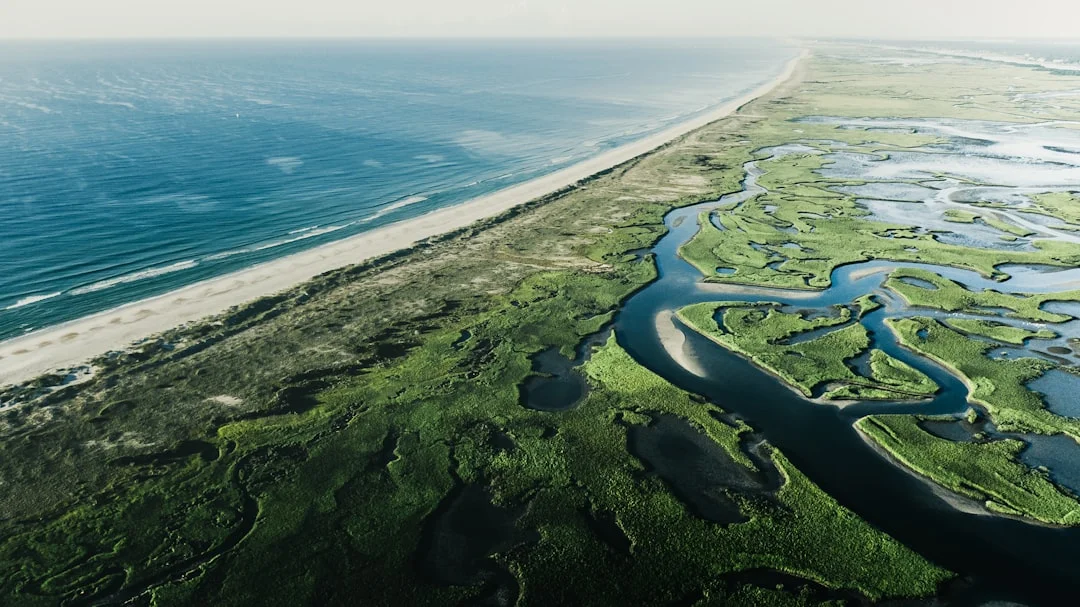
Photo by Alex Diaz on Unsplash
Coastal resilience financing powered by NbS can transform how communities prepare for and respond to climate risks. NbS projects create jobs in design, implementation, monitoring, and maintenance while delivering long-term savings by reducing vulnerability to flooding and erosion. They also expand revenue streams for coastal communities through nature-based tourism, ecosystem services markets, and carbon finance mechanisms. The World Bank’s NbS programs provide a practical blueprint for blending public funds with private capital to realize these benefits at scale, including knowledge products and investment identification support that helps translate NbS concepts into bankable projects. (worldbank.org)
Policy and Governance Implications
Cross-border NbS financing requires concerted governance arrangements that span jurisdictions, funding streams, and regulatory regimes. International policy work under the UNFCCC and regional commissions emphasizes financing tools, policy alignment, and risk-sharing mechanisms that can overcome cross-border barriers. The EU’s funding calls illustrate how cross-border collaboration and NbS-focused criteria shape investment opportunities, enabling governments to coordinate and scale resilient coastal infrastructure and habitat restoration across borders. As North American authorities pursue similar models, they can draw on these proven approaches to shape governance structures, performance metrics, and accountability mechanisms for NbS investments. (unfccc.int)
“Coastal NbS financing and policy tools” are essential to accelerate resilience outcomes, linking capital to measurable ecological and social benefits, and enabling cross-border collaboration to address shared risks. The UNFCCC and its partners are actively advancing these policy instruments to unlock capital for NbS-scale coastal projects. (unfccc.int)
Market Dynamics and Competitive Landscape
A key driver of growth in this space is the development of specialized financial instruments designed to reduce risk and attract private investment to NbS projects. Examples include blended finance facilities, parametric insurance linked to NbS performance, and dedicated resilience bonds or blue bonds that finance coastal protection and ecosystem restoration. The World Bank and allied institutions have demonstrated success with such tools by mobilizing capital for NbS, creating bankable project pipelines, and fostering private-sector engagement. While the cross-border dimension adds complexity, it also unlocks greater scale and resource pooling, particularly for transboundary coastlines that share ecosystems and risk profiles. (worldbank.org)
What’s Next (Continued)
Upcoming Opportunities and Watch Points
- Calls for Proposals and Pilot Projects: North American agencies and regional consortia are likely to issue calls for NbS-based coastal resilience projects that cross borders. These opportunities will favor projects with clear governance plans, measurable resilience outcomes, and robust co-benefits for local communities.
- Data and Measurement Standards: The credibility of cross-border NbS finance hinges on standardized measurement of resilience outcomes, ecological co-benefits, and social impacts. Expect more guidance notes, case studies, and measurement frameworks from international organizations and national programs to guide project developers and investors.
- Public Awareness and Stakeholder Engagement: As cross-border NbS financing scales, effective stakeholder engagement will be critical to secure local buy-in, address equity considerations, and align community goals with investment timelines. Community-led NbS initiatives, local capacity-building, and transparent reporting will be central to sustaining momentum.
Closing
The convergence of cross-border coastal resilience financing and nature-based solutions signals a pragmatic pivot in how coastal risk is financed and managed. By blending public funding with private investment and centering NbS as the core resilience strategy, North American coastal regions can reduce climate risk while delivering ecological, economic, and social co-benefits. The experience of international programs—ranging from ORCATF in the Asia-Pacific and Pacific regions to World Bank NbS finance and EU initiatives—offers a clear playbook for turning NbS concepts into investable, scalable projects. As these frameworks mature, BC Times will continue to track progress along the timeline to 2030 and beyond, reporting on project pipelines, policy developments, and on-the-ground outcomes for coastal communities.

Photo by Aleksandr Galichkin on Unsplash
Readers interested in following this topic can stay tuned for official updates from participating institutions, regional government briefings, and investor-focused sessions that detail instrument structures, governance arrangements, and performance metrics. The cross-border NbS financing pathway is complex, but it is increasingly anchored by strong data, proven finance mechanisms, and a shared recognition that protecting coastlines must be both an ecological and an economic investment.
To stay updated, follow developments from the World Bank’s NbS program, ORCATF activities, UNFCCC initiatives, and EU/North American cross-border resilience efforts as outlined in ongoing policy and funding announcements.