News
Cross-border Port Electrification Pilot Gains Momentum
Cross-border port electrification pilot advances in the Pacific Northwest with data-driven updates on trucking, shore power, and cross-border cooperation.
By Craig Burrows · July 29, 2026 · 10 min read
 By Craig Burrows · July 29, 2026 · 10 min read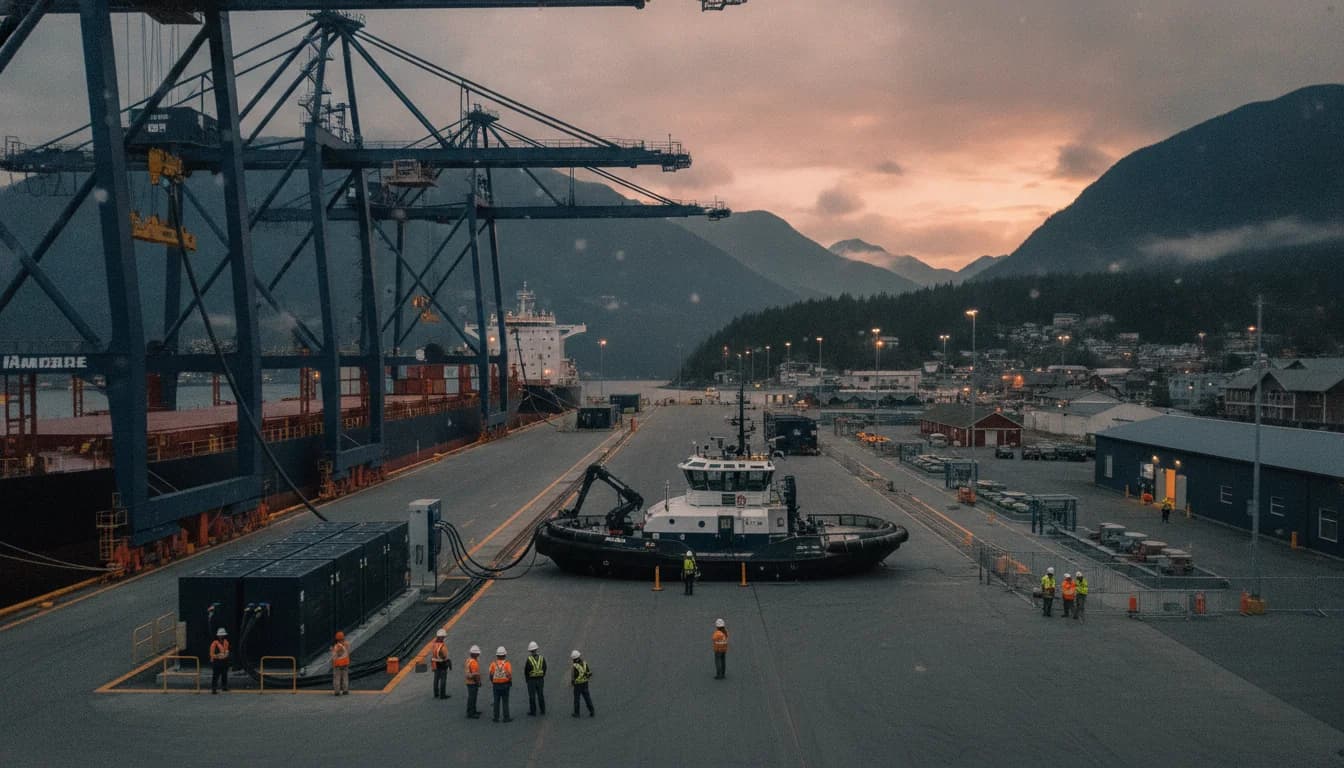
The Pacific Northwest is seeing a cross-border port electrification pilot move from concept to concrete action as part of a broader regional effort to decarbonize trade routes. The pilot ties together key players on both sides of the border and across multiple port ecosystems, aiming to demonstrate how electrified trucking, shore power at berth, and coordinated energy management can cut emissions, improve air quality, and enhance operational efficiency for a high-volume trade corridor. The effort builds on a multi-year collaboration among ports, cruise-and-cargo operators, and regional governments that began taking shape in the early 2020s and has evolved into a formal cross-border program framework. (portseattle.org)
In late May 2026, a notable milestone emerged from the Port of Vancouver, where six battery-electric container trucks are now operating under the ELECTRA pilot, a battery-electric trucking program funded through a Low Emission Technology Initiative partnership. The ELECTRA program—deliberately designed to lower barriers for fleets to test zero-emission equipment in real port operations—has a total program budget of about CA$3 million and involves Transport Canada, the Province of British Columbia, the Vancouver Fraser Port Authority, and BC Hydro, with 7Gen handling vehicle deployments and maintenance. This real-world trucking pilot complements broader cross-border decarbonization work that includes shore power pilots and energy-management efforts at port facilities. (transportroutier.ca)
The cross-border port electrification pilot is unfolding within a wider regional framework that has been explicitly chartered and tracked for several years. In March 2023, the Pacific Northwest to Alaska Green Corridor project formalized its governance and objectives, outlining a phased approach to evaluating low- and zero-emission fuels and technologies across a corridor that includes Washington state, British Columbia, and Alaska. The corridor’s first-mover partners include the Port of Seattle and Vancouver Fraser Port Authority, among others, with ongoing work to measure emissions, align policy, and pursue early action opportunities. This trajectory demonstrates a concrete commitment to cross-border collaboration as a path to scalable electrification. (portseattle.org)
Opening with the news: who, what, when, where, and why The Cross-border port electrification pilot is the centerpiece of a cross-border effort in the Pacific Northwest that seeks to align port authorities, shipping operators, and regional policymakers around electrified port operations. The immediate focus includes test deployments of electric trucking at the Port of Vancouver, with coordinated planning and data-sharing activities designed to inform next steps for other terminals and intermodal hubs along the corridor. The pilot’s rationale centers on reducing emissions from port activities, improving air quality for communities near terminals, and demonstrating a replicable model for other ports facing similar decarbonization pressures. The cross-border angle matters because the corridor connects major gateways to Asia and North American markets, where port emissions and energy costs influence competitiveness and resilience. (portseattle.org)
Section 1: What Happened
Announcement Details
- The Pacific Northwest to Alaska Green Corridor, which now serves as the backbone for a broader cross-border port electrification pilot, was established to test zero-emission shipping and port operations along routes linking Washington, British Columbia, and Alaska. The program formalized its cross-border collaboration, with partners including Port of Seattle and Vancouver Fraser Port Authority, among others, and set the stage for joint demonstrations of electrified equipment, cleaner fuels, and interoperable standards. This effort traces its roots to a 2022 partnership launch at the International Association of Ports and Harbors World Ports Conference in Vancouver, BC, and the subsequent Project Charter signed in 2023 to guide feasibility work and governance. (portseattle.org)
- In parallel, the ELECTRA program at Port of Vancouver—part of the province’s Low Emission Technology Initiative (LET)—launched a battery-electric container trucking pilot at the port. The program, designed to de-risk fleet electrification and accelerate adoption, involves six battery-electric trucks across five trucking companies and has a total project value of about CA$3 million. It is delivered with support from Transport Canada, BC Hydro, the Vancouver Fraser Port Authority, and the participating fleets, with 7Gen providing deployment and ongoing maintenance support. The ELECTRA pilot represents a concrete, in-situ step in the broader cross-border electrification effort by proving fleet operations and charging infrastructure can function together in port settings. (transportroutier.ca)
Timeline and Milestones
- 2022: The Pacific Northwest to Alaska Green Corridor initiative was publicly launched, establishing the cross-border collaboration framework later leveraged by the electrification pilot. The project framed a multiyear plan to test zero-emission technologies on routes and at ports across the region. (portseattle.org)
- 2023: Partners signed a Project Charter and began a feasibility-oriented exploration of decarbonization options for cruise and cargo activities in the Northwest corridor, signaling an organized commitment to verifiable, data-driven pilots and policy alignment. (portseattle.org)
- 2024: The corridor’s priorities included emissions measurement, policy coordination, and early action opportunities, setting the stage for subsequent demonstrations in both shore-side and vessel-related applications. (portseattle.org)
- 2025–2026: The ELECTRA battery-electric trucking pilot at Port of Vancouver advanced, with six electric trucks in operation and CA$3 million in funding secured from national, provincial, and port authorities, plus additional support from BC Hydro’s EV Fleet program. This phase marks a critical point where real-world operations generate data to inform broader cross-border deployment. (transportroutier.ca)
- Beyond trucking, port-scale electrification activities have included shore power capabilities for ships at berth and broader energy-management initiatives to improve efficiency and reduce peak demand, reflecting an integrated approach to port decarbonization. (bchydro.com)
Stakeholders Involved
- Core partners include Port of Seattle and Vancouver Fraser Port Authority, with participation from Greater Victoria Harbour Authority and Alaskan port communities (Haines, Juneau, Sitka, Skagway) on the cruise and cargo mix. The group’s leadership is complemented by major cruise lines and industry associations, forming a multi-stakeholder ecosystem designed to scale proven solutions. The project’s partner roster was publicly listed in the Green Corridor materials, highlighting a broad coalition spanning public, private, and nonprofit sectors. (portseattle.org)
- In the ELECTRA trucking pilot, participating fleets include Aheer Transportation, Lally Bros. Holding, Simard Westlink, TransBC Freight, and West Coast Freight, with 7Gen supplying the fleet-electrification solution and ongoing support. This arrangement demonstrates how port authorities can combine public funding with private-sector fleet electrification expertise to accelerate adoption. (transportroutier.ca)
Section 2: Why It Matters
Environmental and Economic Impacts
- The cross-border port electrification pilot is designed to reduce emissions at port terminals, cut local air pollutants, and improve community health near port operations. The Green Corridor framework explicitly targets a pathway for zero-emission ships and port activities, focusing on the synergy between policy, technology, and finance to drive faster decarbonization outcomes. The effort aligns with international and regional decarbonization agendas that emphasize cross-border cooperation and shared infrastructure investments. (portseattle.org)
- A core rationale for electrification initiatives in the port sector is the potential to stabilize or reduce operating costs over time as fleet electrification matures and charging infrastructure scales. The ELECTRA pilot illustrates how reduced diesel use at the port can translate into lower fuel costs for fleets, while also delivering environmental benefits that public programs increasingly reward through incentives and pilots. Regulatory contexts, public funding, and industry partnerships together help de-risk these long-term investments. (transportroutier.ca)
Operational and Industry Implications
- For port operators and trucking fleets, the electrification pilot signals a shift in the way terminal operations are staged and managed. The energy-management focus at the Port of Vancouver, supported by BC Hydro, showcases how ports are embracing strategic energy planning to balance electricity demand with terminal throughput. The energy-manager model offers a blueprint for other ports seeking to optimize energy use, incorporate solar storage, and coordinate charging so as not to disrupt peak-terminal activity. (bchydro.com)
- Shore power for ships at berth is a complementary technology that reduces the reliance on on-board diesel generators while vessels are in port. The Port of Vancouver sustainability materials note that shore power connections are already in place at several key berths, enabling ships to plug in and cut emissions while docked. This approach, combined with on-road electrification, creates a more comprehensive decarbonization pathway for port operations. (portvancouver.com)
Policy and Regulatory Context
- The cross-border electrification push sits within a broader regulatory and policy context that favors decarbonization in the maritime sector and across the supply chain. International initiatives and regional clean-air strategies provide a governance backdrop that supports pilots, data-sharing, and inter-port coordination. The Green Corridor materials reference policy engagement and funding opportunities as essential elements of scaling pilot results into widespread practice. (portseattle.org)
- The Clydebank Declaration and related cross-border green shipping conversations, while global in scope, underscore a common understanding: if jurisdictions align on standards, measurement, and funding, pilots can evolve into replicable business models across ports and corridors. The Port of Seattle’s public materials emphasize the role of green corridors in accelerating the adoption of zero-emission fuels and technologies, reinforcing the idea that cross-border pilots are vehicles for broader industry transformation. (portseattle.org)
Section 3: What’s Next
Upcoming Phases and Milestones
- The Green Corridor feasibility and scoping work entered a critical phase in 2023, with a formal project charter defining governance, scope, and performance metrics. The ongoing work includes refining the scope of zero-emission fuels, assessing logistics and operational feasibility, and aligning port policies and funding streams. The multi-year timeline is designed to produce measurable results that can inform future deployments beyond cruise corridors into broader cargo and intermodal activities. (portseattle.org)
- For the ELECTRA trucking pilot in Vancouver, early data collection is foundational to evaluating performance, reliability, and total cost of ownership for battery-electric port equipment. The five-year funding horizon and collaboration with BC Hydro indicate a staged approach to ramping up charging, storage, and fleet-scale electrification as fleets gain experience and as grid capacity and pricing evolve. Observers should expect continued data reporting, expanded fleet participation, and potential adjustments to incentives based on initial results. (transportroutier.ca)
What to Watch For
- Expanded scope beyond trucking and berthing electricity: The Green Corridor and related pilots are designed to scale across other port activities and potentially into other regions if initial pilots meet performance thresholds. The feasibility studies and policy engagements point to a structured path for broader deployment, including potential cross-border electrification of additional terminal equipment or vessel-support operations. (portseattle.org)
- Data-sharing and standardization: A key driver of success for cross-border pilots is the sharing of performance data, energy usage, and emissions reductions in a way that can be used to optimize operations, justify investments, and harmonize technical interfaces across ports and fleets. The Green Corridor’s emphasis on measurement and policy coordination signals that transparent reporting will be an ongoing feature of the program. (portseattle.org)
- Community and economic impacts: As port electrification reduces emissions and improves air quality, nearby communities may experience better local environmental outcomes. The economic story includes potential job creation in electrification services, grid modernization, and new fleet deployments, reinforcing the case for continued public investment and private-sector participation. The environmental and economic narratives are interwoven in corridor planning materials and port sustainability reporting. (portseattle.org)
Closing
The Cross-border port electrification pilot represents more than a single technology demonstration; it embodies a concerted, data-driven approach to maritime decarbonization that leverages collaboration, shared infrastructure, and policy alignment to drive scalable change. From the ELECTRA trucking pilot at Port of Vancouver to the Pacific Northwest to Alaska Green Corridor’s cross-border governance, the region is testing practical, replicable models for electrified port operations, energy management, and clean fuels. For readers and stakeholders in British Columbia and the broader Pacific Northwest, these efforts offer a clear signal: decarbonization at the port is not a distant goal but an advancing program with real-world pilots, measurable results, and a governance framework that can inform future investments and policy choices. Stay tuned for updated data on fleet performance, energy use, and emissions reductions as the cross-border port electrification pilot continues to unfold across the corridor. (transportroutier.ca)
As BC Times continues to monitor the cross-border port electrification pilot, readers should expect periodic updates on trucking pilots, shore power deployments, and grid-support initiatives that shape the corridor’s decarbonization trajectory. Readers can follow Port of Seattle and Vancouver Fraser Port Authority communications for primary project materials, and BC Hydro’s and provincial program updates for energy-management developments that influence port operations. These sources provide the most direct lens on how the cross-border port electrification pilot is evolving, what it means for regional trade, and how the broader maritime industry may adopt similar approaches in other cross-border corridors. (portseattle.org)
Note: This article synthesizes publicly available information about related port electrification pilots, cross-border corridor initiatives, and energy-management programs to provide a data-driven, neutral perspective on ongoing developments in the Pacific Northwest. Citations reference port authorities, government programs, and industry updates that inform the broader context for a cross-border port electrification pilot.