News
Indigenous-led Microgrids in British Columbia: a New Era
Data-driven update on Indigenous-led microgrids in British Columbia, detailing projects, timelines, and market implications.
By Nina Kowalski · July 28, 2026 · 11 min read
 By Nina Kowalski · July 28, 2026 · 11 min read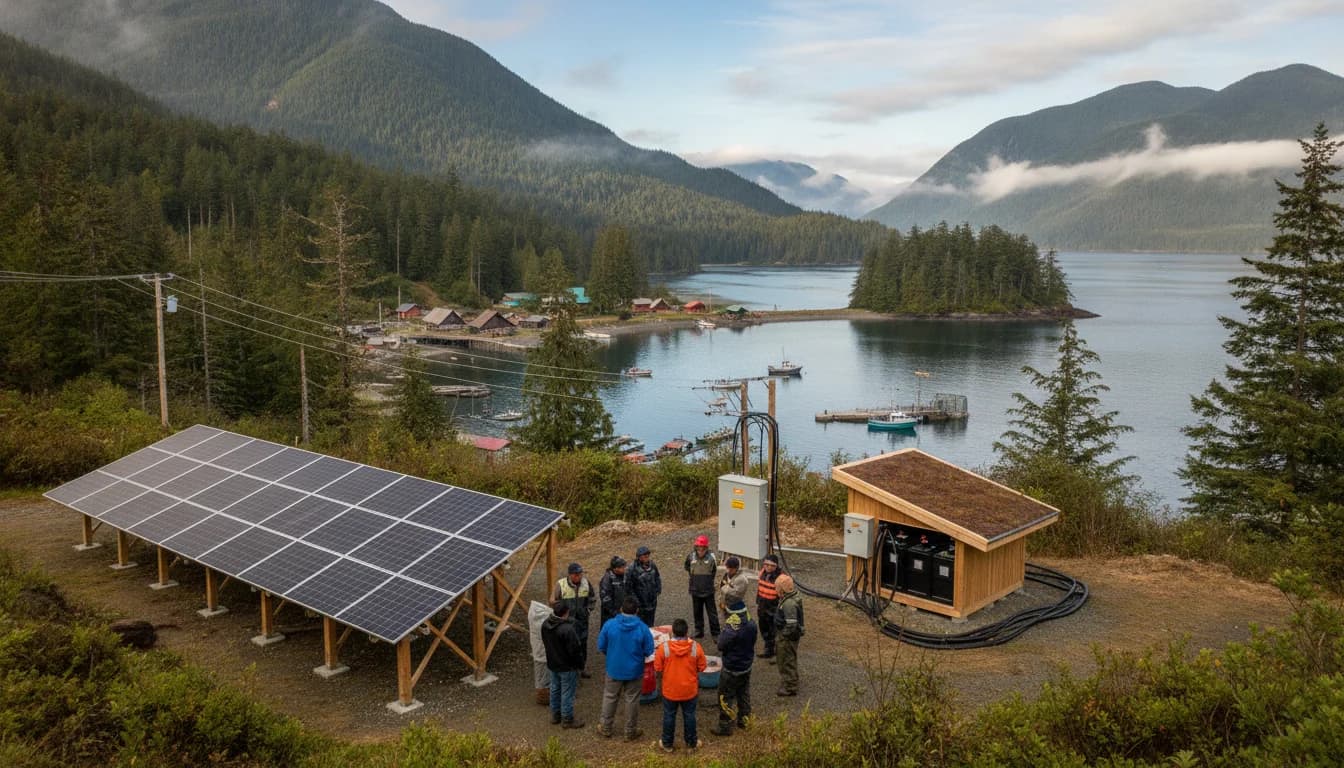
Indigenous-led microgrids in British Columbia are evolving from niche pilots into a broader, province-wide push toward energy sovereignty and diesel reduction in remote communities. In recent announcements, BC Hydro and government agencies have highlighted several flagship projects that exemplify this transition, from the Ulkatcho First Nation’s Anahim Lake Solar Farm integration to Haida Gwaii’s mass-scale microgrid improvements. These efforts illustrate a growing pattern: Indigenous leadership paired with public and private support is accelerating renewable energy adoption in British Columbia’s most dispersed, diesel-reliant communities. The implications reach beyond kWhs and megawatts, touching local economies, climate commitments, and the regulatory framework that governs off-grid energy.
BC Times’ examination of these developments centers on data-driven analysis, contextualized within the province’s broader clean-energy strategy. The focus remains on technology, project timelines, funding mechanisms, and the measurable impacts on reliability, emissions, and community resilience. As governments and utilities increasingly view Indigenous-led microgrids in British Columbia as a core component of rural electrification, readers will find a clear picture of what has happened, why it matters, and what to expect next—without the fluff of hype and with attention to concrete milestones and policy signals. The following overview synthesizes recent announcements from BC Hydro, the Province of British Columbia, and Indigenous partners to present a balanced, timely view of the current landscape.
What Happened
Announcement details BC Hydro’s news releases and related government communications have framed the last year as a turning point for Indigenous-led energy solutions in remote regions. A landmark upgrade at the Anahim Lake Station is designed to seamlessly integrate solar energy from the Anahim Lake Solar Farm, a 3.8-megawatt facility developed in partnership with Ulkatcho Energy Corporation. The project marks a first-of-its-kind integration in British Columbia, bringing solar power directly into a remote community microgrid that previously relied primarily on diesel. The core aim is to reduce diesel use and improve reliability by coupling solar generation with advanced microgrid controls and battery storage. Work on the Anahim Lake Station upgrade began as part of a broader Community Electricity Purchase Agreement that BC Hydro signed with Ulkatcho Energy Corporation in April 2024, and BC Hydro indicates the upgrade is under way with completion targeted for early 2026 and full service planned for the summer of 2026. This initiative is described as a model for future Indigenous-led clean-energy collaborations across the province. (bchydro.com)
Haida Gwaii progress and other Indigenous-led microgrid efforts Beyond Anahim Lake, BC Hydro has reported notable developments in Haida Gwaii. Masset’s Solar North project—developed by Tll Yahda Energy, a collaboration among Skidegate Band Council, Old Massett Village Council, and the Council of the Haida Nation—is a two-megawatt solar plant located at the Masset airport. It began delivering clean electricity to BC Hydro’s Masset microgrid on December 5, 2025, under a 20-year Community Electricity Purchase Agreement. The project is significant as the first renewable energy plant built and brought online in one of British Columbia’s non-integrated areas, where communities have historically relied on diesel. BC Hydro describes Solar North as a pivotal step toward energy sovereignty and resilience in Haida Gwaii, with upgrading work planned to enhance the microgrid’s capacity further, potentially displacing hundreds of thousands of litres of diesel annually and expanding the system’s reliability through integrated storage and advanced controls. Construction and upgrade work for the Masset station is scheduled to begin in spring 2026, framing a timeline that aligns with broader provincial clean-energy objectives. (bchydro.com)
A broader policy and funding context reinforces the momentum The Province of British Columbia and its energy ministries have repeatedly underscored that Indigenous leadership is central to the province’s clean-energy future. A 2026 government release highlights that 13 remote First Nations are receiving funding to support clean-energy projects under the Community Energy Diesel Reduction (CEDR) program, with total funding around $6.6 million and projects ranging from rooftop solar to energy efficiency upgrades. The release explicitly notes that British Columbia has 44 remote communities not connected to the provincial grid, underscoring the scale of the off-grid challenge and the potential for microgrid and distributed-generation solutions to deliver reliable, lower-emission power. In parallel, BC Hydro’s ongoing microgrid upgrades emphasize integration of renewables and storage to reduce diesel reliance across non-integrated communities, signaling a coordinated policy push toward Indigenous-led, grid-reducing energy models. (archive.news.gov.bc.ca)
The broader narrative is reinforced by academic and regional studies that spotlight the role of First Nations leadership in shaping utility models. A University of Victoria–led study, described as the First Nations Utility Study, is designed to identify pathways for First Nations to develop and operate their own energy utilities, outlining the financial, technological, and policy conditions needed for long-term success. The study is a multi-stakeholder effort involving ACET, CEBC, MECS, and participating First Nations, reflecting a formal, research-backed approach to Nation-led energy governance that complements project-level outcomes like Anahim Lake and Masset. This work is presented as foundational to scaling Indigenous-led energy solutions across British Columbia. (news.uvic.ca)
Timeline and key actions The timeline around these initiatives reveals a pattern of staged milestones. The Anahim Lake project’s timeline includes:
- April 2024: The Community Electricity Purchase Agreement (CEPA) with Ulkatcho Energy Corporation was signed, establishing a 20-year supply arrangement for solar energy from Anahim Lake Solar Farm. This agreement forms the baseline for subsequent microgrid upgrade work. (bchydro.com)
- June 12, 2025: BC Hydro announced the Anahim Lake Station Microgrid Upgrade, a major upgrade designed to accommodate solar integration and energy storage, marking a formal launch of the project’s next phase. The upgrade includes a Battery Energy Storage System and Microgrid Control System to enable efficient storage and distribution of solar power while maintaining grid stability. The entire project is scheduled to be completed by summer 2026, with testing and integration following construction. (bchydro.com)
- Early 2026 (target): Completion and commissioning of the Anahim Lake Station microgrid upgrade and the Anahim Lake Solar Farm integration, enabling reduced diesel use and improved reliability across the Ulkatcho community. (bchydro.com)
In Haida Gwaii, the Masset Solar North project introduces a parallel timeline:
- December 5, 2025: Solar North, the two-megawatt Indigenous-owned solar plant, began delivering power to the Masset microgrid under a 20-year Community Electricity Purchase Agreement with BC Hydro, marking a milestone for Indigenous energy sovereignty in a non-integrated area. (bchydro.com)
- Spring 2026: BC Hydro and Tll Yahda Energy are coordinating microgrid upgrades around Solar North, with construction activity continuing in 2026 to expand capacity and improve grid integration. This will support greater diesel displacement and more robust reliability for Masset as the Haida Nation’s energy transition progresses. (bchydro.com)
In addition to project-by-project milestones, provincial policy and funding programs provide a connective tissue for these developments:
- The 2025 and 2024 calls for power (and associated equity commitments) are shaping the pipeline of Indigenous participation in clean-energy generation. The 2025 call for power featured proposals that included a substantial emphasis on First Nations equity participation, with a framework suggesting potential future online dates in the early 2030s if procurement and permitting proceed on schedule. The province notes that the active proposals include a mix of wind and solar, with an explicit requirement for Indigenous equity participation. (news.gov.bc.ca)
- The First Nations Clean Energy Business Fund, which has funded more than 150 First Nations communities since its inception, continues to support feasibility studies, community energy planning, and initial capital investments that pave the way for microgrid and renewable-energy projects in off-grid communities. The 2025 release highlights that twelve Nations were awarded approximately $1.49 million in capacity and equity funding to advance clean-energy projects, including microgrid-related initiatives. This context helps explain the pipeline of projects like those at Anahim Lake and Mowachaht/Muchalaht, among others. (archive.news.gov.bc.ca)
- A 2026 government release emphasizes continued support for remote First Nations through the Community Energy Diesel Reduction program, including funding for energy efficiency upgrades and small-scale energy generation projects, reinforcing the idea that Indigenous-led energy solutions are a central plank of BC’s diesel-reduction strategy. (archive.news.gov.bc.ca)
Why It Matters
Resilience and diesel reduction for remote communities The most direct impact of Indigenous-led microgrids in British Columbia is improved reliability and a reduced diesel footprint for off-grid communities. The Masset Solar North project alone is projected to displace hundreds of thousands of litres of diesel annually, with the potential to scale further as storage and control systems are upgraded. In Anahim Lake, the integration of a 3.8 MW solar farm with advanced microgrid controls is expected to reduce diesel reliance and lower emissions while maintaining power security for the Ulkatcho community. These projects illustrate a clear alignment between energy resilience, climate leadership, and Indigenous sovereignty, demonstrating how microgrid architectures can deliver tangible benefits for rural populations that have historically faced higher energy costs and frequent outages. BC Hydro leaders emphasize that this transformation goes beyond technology; it’s about modernizing partnerships with First Nations to deliver sustainable, affordable energy for generations. (bchydro.com)
Economic empowerment and community leadership Indigenous-led energy projects reinforce local control and opportunity. The Ulkatcho and Haida Nation partnerships are examples of how community ownership and long-term revenue models can be embedded in energy projects. The funding flows from programs like the First Nations Clean Energy Business Fund and CEDR demonstrate a deliberate policy choice to couple capital support with Indigenous governance, ensuring that benefits accrue locally and that communities have a say in how energy systems are planned, built, and operated. This approach aligns with broader provincial statements about energy sovereignty and the importance of Indigenous leadership in the clean-energy transition. The practical implications include job creation, local capacity building, and the development of energy economies that are better aligned with the cultural and environmental priorities of Indigenous communities. (archive.news.gov.bc.ca)
Policy environment and regulatory context British Columbia’s energy policy framework explicitly recognizes the role of Indigenous Nations in shaping the province’s energy future. The government has highlighted that 44 remote communities remain off-grid, underscoring the scale of the challenge and the potential for microgrids and distributed generation to close the energy access gap. The BC Utilities Commission’s historical inquiries and subsequent policy initiatives have positioned Indigenous-led utility models as legitimate governance constructs in the evolving provincial energy landscape. The First Nations Utility Study, launched in 2026, further reinforces the idea that Nation-led energy governance can be both technically feasible and economically viable, offering models that can be adapted across communities. While policy details remain evolving, the trend line is clear: Indigenous leadership is increasingly integrated into planning, financing, and regulatory decisions around clean-energy infrastructure in British Columbia. (news.gov.bc.ca)
Broader market and technology implications From a technology standpoint, the integration of solar, storage, and smart microgrid controls in Indigenous-led projects demonstrates a broader trend toward modular, modularized, and scalable clean-energy solutions in remote areas. Battery energy storage systems, grid management software, and community-level energy planning capabilities are central to enabling reliable power in off-grid contexts while simultaneously reducing emissions and diesel costs. The Haida Gwaii and Anahim Lake projects show how distributed generation paired with storage can create more resilient systems, especially when paired with long-term offtake agreements that provide predictable revenue streams for Indigenous partners. In the policy sphere, government funding and procurement initiatives that require Indigenous equity participation help ensure that markets benefit Indigenous communities as energy projects mature. This combination of technology and policy signals positions Indigenous-led microgrids in British Columbia as a proving ground for scalable, community-owned clean-energy models. (bchydro.com)
What’s Next
Near-term milestones to watch Looking ahead, several concrete milestones will help readers gauge progress:
- Anahim Lake Station Microgrid Upgrade completion: Early 2026 is the target for completion of the upgrade and the integration of the Anahim Lake Solar Farm into BC Hydro’s Anahim Lake Station, with testing and full operation following into the summer of 2026. This will mark a tangible expansion of renewable generation within a remote, diesel-reliant grid and provide a model for other communities seeking similar transitions. (bchydro.com)
- Masset Microgrid enhancements: Spring 2026 will see construction activity to extend Solar North’s capabilities and further integrate the Masset microgrid with its solar and storage assets. The project’s continued evolution is expected to reduce diesel use further and improve resilience, potentially setting a benchmark for other off-grid communities. (bchydro.com)
- Funding and project pipeline: The province’s ongoing calls for power and the First Nations Clean Energy Business Fund continue to shape the flow of Indigenous-led generation and energy-efficiency investments. As proposals move through evaluation and contracting, more microgrid and renewable-energy projects could come online in the subsequent years, broadening the footprint of Indigenous-led energy systems in British Columbia. (news.gov.bc.ca)
Longer-term outlook and watch points Beyond immediate milestones, several structural developments will influence the trajectory of Indigenous-led microgrids in British Columbia:
- The First Nations Utility Study, launched to map pathways for Nations to own and operate energy utilities, could yield replication-ready models across multiple communities. The study’s emphasis on tailored utility models and policy pathways suggests that success here could accelerate the formation of community-owned utilities that operate microgrids or distributed generation assets at scale. The study’s multi-stakeholder design and leadership by Indigenous Nations signal a durable framework for governance and investment decisions in the clean-energy transition. (news.uvic.ca)
- Policy integration and financing: As the market for clean energy expands, equity participation requirements, Indigenous equity initiatives, and blended finance approaches (including potential support from Canada Infrastructure Bank and other lenders) may become standard features of new projects. This would further embed Indigenous leadership in procurement, development, and operation of microgrid assets, aligning market incentives with community goals. (news.gov.bc.ca)
- Grid integration and reliability across remote areas: The Non-Integrated Areas Strategy and related BC Hydro investment plans emphasize the modernization of microgrids, storage, and control systems to enable higher renewable penetration. As technology matures and lessons accumulate from Anahim Lake, Masset, and similar efforts, other off-grid communities could adopt similar architectures, expanding the reach of Indigenous-led energy sovereignty across the province. (bchydro.com)
Closing
The momentum around Indigenous-led microgrids in British Columbia reflects a meaningful shift in how energy resilience, Indigenous leadership, and public-private collaboration intersect. From Ulkatcho’s Anahim Lake collaboration to Haida Gwaii’s Solar North, the province is documenting a pathway for remote communities to reduce diesel reliance while expanding local control over energy futures. The integrated approach—combining solar generation, storage, advanced microgrid controls, and targeted funding—offers a concrete, scalable model for other Indigenous nations seeking energy sovereignty. As projects advance through 2026 and beyond, BC readers can expect continued updates on additional communities adopting similar approaches, guided by data-driven performance metrics, transparent timelines, and ongoing collaboration among First Nations, government, and industry partners.
For ongoing coverage of Indigenous-led energy initiatives in British Columbia, monitor updates from BC Hydro, the Province of British Columbia’s Ministry of Energy and Climate Solutions, and the First Nations governments involved in these projects. These sources collectively provide the most timely and authoritative information about new partnerships, funding opportunities, and project milestones that shape Indigenous-led microgrids in British Columbia.
--