News
Transport Canada Implements Killer Whale Protection Measures
Transport Canada has announced new measures to protect the Southern Resident Killer Whale, enforcing stricter vessel-distance requirements and traffic…
By Joanna Flett · October 9, 2026 · 13 min read
 By Joanna Flett · October 9, 2026 · 13 min read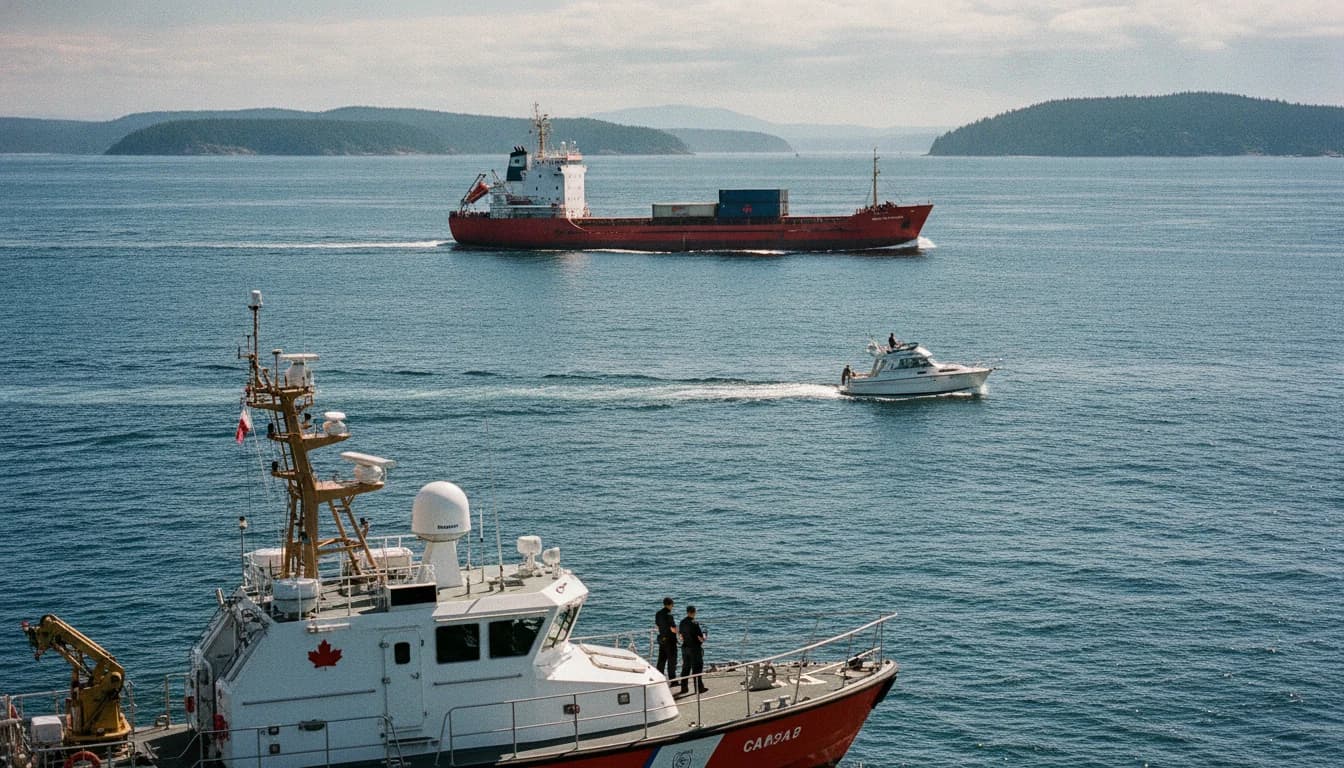
Vancouver-based reporters for BC Times are tracking a major development in marine safety and wildlife protection. On May 22, 2026, Transport Canada issued an Interim Order for the Protection of the Southern Resident Killer Whale in the waters of Southern British Columbia, with an enforcement window that begins June 1, 2026. The measure adds stricter vessel-distance requirements and new traffic controls in areas that are home to the critically endangered Southern Resident killer whale (SRKW) population, a keystone species whose survival is tied to the broader health of the Pacific Northwest marine ecosystem. The announcement signals a continuing, data-driven approach to balancing maritime activity with wildlife conservation—an approach that Canadian authorities have been refining for several years in collaboration with Fisheries and Oceans Canada, the Canadian Coast Guard, Parks Canada, Indigenous communities, port authorities, and industry partners. This development matters for coastal communities, commercial operators, and the broader public that relies on the West Coast’s marine economy and biodiversity.
The interim order comes into force on June 1, 2026, and, in tandem with parallel measures, is designed to reduce acoustic and physical disturbances to SRKWs by extending the minimum approach distance to 1,000 meters for Southern Resident killer whales and establishing additional zones with mandatory speed and navigation restrictions. In the notes accompanying the measure, Transport Canada emphasizes continued coordination with enforcement partners and stakeholders to ensure compliance while preserving essential marine activities. As the agency noted in its April 2, 2026 news release, these measures aim to “increase protection, simplify regulations for Canadians, and align with existing measures in Washington State,” reflecting a cross-border conservation effort. For readers and stakeholders seeking primary documents, the Interim Order and the agency’s related materials are available on Transport Canada’s website. Interim Order page • Transport Canada news release on SRKW protections, 2026.
"Southern Resident killer whales continue to face real pressures in our waters, and it’s important that we take practical steps to address them." — The Hon. Steven MacKinnon, Minister of Transport and Leader of the Government in the House of Commons, from Transport Canada’s 2026 measures announcement. (Quoted in the April 2, 2026 Transport Canada news release.)
What Happened
Announcement and Legal Basis
The core of the development is an Interim Order for the Protection of the Southern Resident Killer Whale (Orcinus orca) in the Waters of Southern British Columbia, 2026. The order was issued on May 22, 2026, by the Minister of Transport under subsection 10.1(1) of the Canada Shipping Act, 2001, and it comes into force on June 1, 2026. The order follows a sequence of measures aimed at reducing human-caused stressors on SRKWs, including vessel proximity, speed limitations, and restricted navigation zones. The official order text establishes the legal framework for prohibitions and exemptions, and it designates the waters covered by Schedule 1, along with vessel-restricted zones in Schedule 2 and speed restrictions in Schedule 3. The order explicitly repeals the prior Interim Order for 2025 on the effective date, ensuring a seamless transition to the updated regime. For readers seeking the formal text and legal scope, the Interim Order page is the primary source of record. Interim Order page (May 22, 2026; in force June 1, 2026). The document also notes that certain vessels and individuals are exempt from the prohibition in specific circumstances, preserving essential operations while prioritizing conservation. These exemptions reflect a balanced approach to enforcement.
Key provisions in the 2026 interim order include:
- 1,000-meter approach distance: A vessel must not approach within 1,000 meters of a Southern Resident killer whale in the waters described in Schedule 1. The prohibition includes exceptions for vessels in distress, those assisting, or others operating under specific authorizations. [Interim Order page]
- Vessel Restricted Zones: Substantial sections of the coast are designated as restricted zones through Schedule 2, with navigation restrictions in effect through November 30, 2026. Exemptions exist for certain practical access needs and Indigenous rights, but general vessel passage through these zones is constrained. [Interim Order page]
- Speed Restrictions: A mandatory speed limit of up to 10 knots over ground is imposed in certain zones (Schedule 3) through November 30, 2026, with narrow exceptions for non-motorized vessels. [Interim Order page]
- Repeal and transition: The 2025 interim order is repealed as part of the transition to the 2026 measures, ensuring legal coherence and continuity of protections. [Interim Order page]
The measures come with a scheduled transition window that aligns June 1, 2026, as the official enforcement date, commonly referenced in agency communications and the published order. This alignment between the order’s issue date and its enforcement date helps ensure stakeholders have a clear transition path and time to adjust. The official text and schedules can be reviewed directly on the Interim Order page. Interim Order page (May 22, 2026; in force June 1, 2026).
The measures were publicly announced in tandem with Transport Canada’s broader 2026 SRKW protection package, which includes additional measures and coordination efforts with partner agencies. The announcement stated that the 1,000-meter rule “would be implemented as an Interim Order under the Canada Shipping Act, 2001,” with the aim of reducing risks to both vessels and wildlife in the SRKW critical habitat. [Interim Order page] • Backgrounder: 2026 Measures (Backgrounder link included in the related materials).
Key Provisions in Practice
The interim order is designed to cover crucial behavior changes by vessels operating in SRKW habitat. The main mechanistic changes in 2026 include the following:
- Approach distance: The 1,000-meter requirement applies to SRKWs in Schedule 1 waters, with exceptions for vessels in transit and certain other operations. This marks a shift from prior lower-distance rules. The enforcement framework foregrounds risk-based compliance and the enforcement capacity of the TC Whale Enforcement Unit. The 1,000-meter rule is intended to reduce acoustic disturbance and physical proximity that can disrupt SRKW behavior. [Interim Order page]
- Restricted zones: Schedule 2 outlines critical coastline zones where navigation is restricted during the period through late November 2026. The zones were selected based on SRKW presence data and habitat use, with provisions intended to minimize contact while still enabling essential movement and access for local communities. [Interim Order page]
- Speed regimes: Schedule 3 introduces speed-restricted zones with a 10-knot cap in the specified areas during the same window. The goal is to reduce noise and vessel-strike risk, complementing the approach-distance rule. [Interim Order page]
- Exceptions and enforcement: The order explicitly lists exceptions (e.g., distress scenarios, government operations) while outlining enforcement pathways. It also references co-management and enforcement through TC Whale Enforcement Unit in coordination with other agencies. [Interim Order page]
The measures reflect a broader policy arc that Canadian authorities have pursued for SRKW protection since 2019 and beyond, emphasizing mandatory protections in the most sensitive habitat while encouraging voluntary compliance elsewhere. To understand the evolutionary context, readers can also consult the related government materials and the suite of measures linked from the Transport Canada page. [Interim Order page] • [Suite of measures – pac.dfo-mpo.gc.ca link from the Transport Canada materials page] (Background materials).
Enforcement and Stakeholder Response
Transport Canada’s enforcement approach emphasizes cross-agency collaboration with Fisheries and Oceans Canada, the Canadian Coast Guard, Parks Canada, the Royal Canadian Mounted Police, as well as U.S. partners in Washington State. The objective is to monitor compliance, issue advisories, and ensure that protective measures are harmonized with cross-border conservation efforts. The April 2, 2026 Transport Canada news release notes the long-standing collaboration with a broad network of agencies and Indigenous communities to enforce the protection measures and support SRKW recovery. It also highlights the Enhanced Cetacean and Habitat Observation (ECHO) program, led by the Vancouver Fraser Port Authority, which coordinates threat-reduction measures for commercial vessels. In 2025, the program’s voluntary participation rate exceeded 85%, marking a sustained level of industry engagement in coexistence practices. [Transport Canada news release] • [Backgrounder: 2026 Measures]
The policy package also resonates with ongoing cross-border considerations, including alignment with Washington State measures, a fact repeatedly emphasized by Transport Canada in its communications because SRKWs frequently traverse shared coastal waters. The agency’s materials stress that the measures are designed to complement existing Washington State protections, a factor that has been highlighted in several news releases and government statements over the past two years. These elements collectively illustrate how Canada’s policy response is both data-driven and collaborative, incorporating scientific advice and stakeholder feedback. Bibiliographic footnotes and associated links in the Transport Canada materials confirm the cross-jurisdictional nature of the SRKW protection efforts. [Transport Canada news release] • [Washington State SRKW measures context in related materials]
Why It Matters
Conservation Context and Species Status
The Southern Resident killer whale population remains a high-priority conservation concern, with distribution patterns concentrated in coastal British Columbia and Puget Sound. The SRKWs depend on a stable prey base (primarily salmon) and relatively low anthropogenic disturbance to recover from historical threats. The government’s measures reflect ongoing efforts to address threats from vessel traffic, noise pollution, and related human activities. The April 2, 2026 release and the 2026 interim order emphasize that protecting SRKWs aligns with broader ocean stewardship goals and the importance of partnerships among federal agencies, Indigenous communities, port authorities, and industry. The official messaging frames SRKW protection as essential to the health of the marine ecosystem and to Canada’s commitments to biodiversity and sustainable maritime activity. The official materials also acknowledge that the measures complement other regulatory actions addressing contaminants and habitat protection, reinforcing the idea that whale conservation is an integrated policy priority. [Transport Canada news release]
“Protecting Southern Resident killer whales means taking decisive action to reduce the pressures they face in our shared waters.” — Julie Dabrusin, Minister of Environment and Climate Change Canada, in related remarks accompanying the 2026 measures. The quote exemplifies the policy stance that SRKW protection requires concrete, enforceable actions supported by cross-agency collaboration. [Transport Canada news release quotes]
Industry and Economic Impacts
The 2026 SRKW protection measures introduce clear constraints on vessel operations in sensitive zones, which will have ripple effects for commercial shipping, port operations, and the growing ecotourism and whale-watching sectors along British Columbia’s coast. The measures’ design—combining mandatory distances, zone restrictions, and speed limits—creates a predictable compliance framework, which can help operators plan more efficient routes and schedules. The 2026 measures also reflect a shift away from the prior model in some contexts, with an emphasis on 1,000-meter approach distances for SRKWs and a tapering of engagement rules in certain non-SRKW populations, consistent with modern wildlife viewing norms. The News Release indicates that the whale-watching industry no longer requires a separate Whale Watching Authorization for viewing non-SRKW populations, provided they follow voluntary best practices. This change reduces regulatory friction for some operators while maintaining strict protections for the SRKW population. For industry stakeholders, the policy creates both compliance costs and opportunities for innovation—such as enhanced vessel-traffic management technologies, smarter routing guided by real-time whale sightings, and improved offshore monitoring systems. The ECHO program’s ongoing participation rates and expanded coverage offer a practical example of how collaboration can yield measurable reductions in vessel-related threats year over year. [Transport Canada news release] • [Backgrounder: 2026 Measures]
Technology Implications and Market Trends
The 2026 measures underscore an ongoing trend toward technology-enabled compliance and proactive risk management in marine transportation. Vessels operating in SRKW habitat are now subject to standardized distance and speed requirements, which motivates operators to adopt or upgrade navigational tools, vessel speed governors, and real-time whale-alert integrations. The ECHO program, which coordinates threat reduction measures with port authorities and commercial vessels, serves as a practical model for leveraging data analytics, berth management, and voyage planning to minimize disturbances. As regulators push for more precise enforcement, the role of onboard observers, remote sensing, and automated alert systems is likely to grow, creating demand for new capabilities in marine traffic management. The measures’ dependence on cross-border cooperation with the U.S. also suggests a future where data-sharing and joint monitoring platforms become a standard feature of SRKW protection programs. The government’s 2026 materials highlight that the program has successfully engaged hundreds of vessels annually, providing a scalable blueprint for other regions facing similar wildlife protection challenges. [Transport Canada news release] • [Backgrounder: 2026 Measures]
Public Policy Context and International Alignment
Canada’s SRKW strategy fits into a broader global pattern of coastal nations implementing precautionary measures to protect endangered whale populations from vessel traffic and other anthropogenic stressors. The 2026 measures explicitly align with measures implemented or contemplated in neighboring jurisdictions, and they reflect an approach that is both precautionary and collaboration-based. The cross-border dimension—particularly with Washington State—illustrates the practical reality that SRKWs do not recognize political boundaries, and therefore, regulatory strategies must be coherent across borders to maximize effectiveness. The 2026 package also signals a continued willingness to adjust measures in response to new scientific findings and stakeholder input, while keeping the focus on clear, enforceable rules. The combination of mandatory measures and voluntary best practices creates a dual-pathway model that could influence policy design in other biodiversity and maritime safety contexts. [Transport Canada news release] • [Washington State measures context in related materials]
What’s Next
Timeline and Next Steps
With June 1, 2026 as the enforcement start date, stakeholders should expect ongoing monitoring and adjustments as more data accumulate from the first summer season of enforcement. The Transport Canada materials emphasize that enforcement will be carried out in partnership with multiple agencies, and that the ECHO program will continue its threat-reduction work for commercial vessels traveling to and from British Columbia ports. The program’s ongoing participation—already at high levels in 2025—provides a backbone for evaluating whether the new measures meet their stated conservation objectives. The next milestones are likely to include enforcement data releases, potential regulatory updates, and continued cross-border collaboration with U.S. agencies. [Interim Order page] • [News release: 2026 measures]
Monitoring and Evaluation
Canada’s SRKW strategy has historically relied on a combination of monitoring, enforcement, and cooperation with Indigenous communities and industry partners. The 2026 measures are designed to support recovery by reducing direct disturbances and enabling safer vessel operations during SRKW presence. The ECHO program’s results—such as participation rates and measured reductions in vessel speed and proximity in key corridors—will continue to inform policy refinements in 2027 and beyond. The government’s materials suggest that monitoring will be ongoing, with data collected from port authorities, fisheries observers, and coastal communities. As new scientific findings emerge about SRKW habitat use and prey dynamics, adjustments to the zones, exemptions, and enforcement protocols could be considered. [Transport Canada news release] • [Backgrounder: 2026 Measures]
What to Watch For
- Enforcement outcomes: The performance of the TC Whale Enforcement Unit in issuing advisories, warnings, and penalties under the new regime will be a key indicator of how effectively the rules are being followed. The 2026 measures and prior enforcement activity suggest a sustained emphasis on compliance and deterrence. [Transport Canada background materials]
- Industry adaptation: Whale-watching and ecotourism operators may adjust by refining viewing routes, investing in quieter vessel technology, and collaborating more closely with port authorities to schedule compliant voyages. The shift away from requiring a Whale Watching Authorization for certain experiences could simplify operations for some firms while heightening the need for responsible viewing practices. [Transport Canada news release]
- Cross-border cooperation: Continued alignment with Washington State measures will be a barometer for regional effectiveness. Any updates or extensions to the cross-border framework will be noteworthy for operators navigating SRKW habitat during the crucial spring and summer seasons. [Washington State measures context]
Closing
The 2026 measures mark a notable milestone in Canada’s ongoing effort to protect Southern Resident killer whales while maintaining responsible maritime activity along the West Coast. The Interim Order, effective June 1, 2026, expands the protection perimeter with a 1,000-meter approach distance, broadens restricted-zone coverage, and introduces speed limits aimed at reducing acoustic and physical stress on SRKWs. The measures reflect a data-driven, collaborative approach that acknowledges both conservation needs and the practical realities of Canada’s vibrant coastal economy. For readers who follow maritime policy, wildlife conservation, or the West Coast economy, this development is a clear signal that Canada intends to pursue stronger, more enforceable protections—while staying connected to regional partners and industry through programs like ECHO and cross-border coordination with Washington State. To stay updated, monitor Transport Canada’s SRKW materials and the related press releases, and keep an eye on port authority briefings and industry associations that frequently summarize enforcement results and economic implications.
As BC Times continues to report, the SRKW protection measures will unfold over the coming seasons, with the first full year of enforcement providing the most tangible test of how the balance between marine safety, wildlife protection, and coastal economies can be achieved in practice. Readers are encouraged to review the primary sources linked throughout this article for the official text, enforcement guidance, and program data that underpins these conclusions. The core documents—Interim Order for the Protection of the Southern Resident Killer Whale in the Waters of Southern British Columbia, 2026 and Transport Canada’s 2026 measures news release—offer the authoritative foundation for any further reporting and analysis. [Interim Order page] • [Transport Canada news release]